Tabelog 100 #53
Our verdict
Japoni is an Osaka tachinomi in Nakatsu selected for Tabelog 100 - Tachinomi - 2025, a useful signal in a category where reputation is built through repeat local use rather than ceremony. The format belongs to the city’s compact stand-up drinking culture: low-friction, drink-led, and better judged against everyday Osaka counters than formal restaurant dining.

Pearl is the En Primeur Club membership app, where members save venues, book tables and use the concierge.
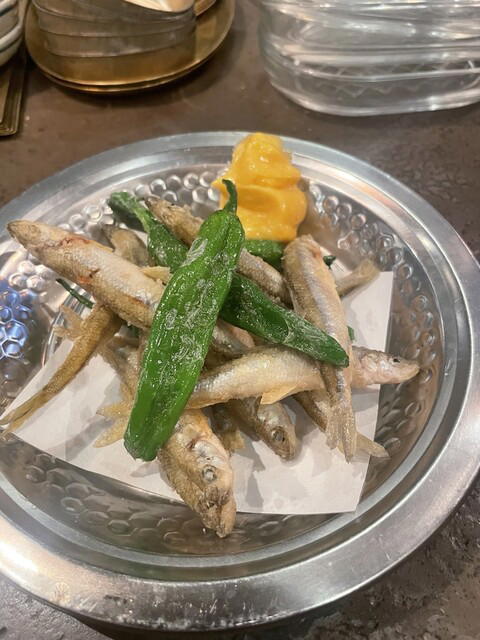
Approaching a good tachinomi in Osaka is not about ceremony. The signal is compression: a small frontage, a quick change of pace from the street, regulars reading the room without needing a host to choreograph the evening. In Osaka, that format carries a charge distinct from the city’s larger, more obvious drinking zones. It is connected to the city’s everyday rhythm, but compact enough for a stand-up bar to live or die on local repetition rather than spectacle.
Japoni belongs to that compact Osaka grammar. Its selection for Tabelog 100 - Tachinomi - 2025 matters because tachinomi is a category where formal luxury markers have limited use. There are no tasting-menu theatrics to hide behind, and the room’s economics tend to reward pace, value, and consistency. A score of 3.56 on Tabelog places it in a serious local conversation for a stand-up bar, where incremental differences in reputation often come from regular use rather than international attention.
Why Osaka suits Osaka's stand-up drinking culture
Osaka’s drinking identity has always been more democratic than polished. Tachinomi counters grew around speed, proximity, and the appetite for a second or third stop, which is why they read differently from izakaya built around long tables and settled groups. The appeal is not privacy or grand service. It is a sharper rhythm: order, drink, eat lightly, move when the room tells you to move.
Osaka gives that rhythm useful context. The city’s smaller drinking rooms leave space for independent places that do not need a hotel lobby, a tasting counter, or a branded concept to justify attention. For a visitor mapping Osaka beyond the obvious routes, Japoni is better understood as part of this local drinking infrastructure than as a conventional restaurant appointment.
That distinction also explains the award signal. Tabelog’s tachinomi list does not reward the same things as a fine-dining guide. It points toward places that have traction inside Japan’s everyday bar culture: tight operations, approachable spending, and enough identity to remain memorable in a crowded field. In Osaka, where casual eating can be as competitive as formal dining, that recognition carries practical weight.
The reputation case is stronger than the luxury case
The mistake would be to judge Japoni against Osaka’s destination dining rooms. Its competitive set is narrower and more interesting: small-format drinking places where the standing counter is not a gimmick but the operating model. In that bracket, the absence of elaborate framing is part of the point. The room has to function on immediacy, not explanation.
Within the comparison set supplied for Osaka, names such as SOMA, DIAMOND BIRYANI, TXAGORVA, Spice Curry Maruse, and Think Shokudo show how varied the city’s compact dining landscape can be. Japoni’s listed dinner budget is JPY 3,000 - JPY 3,999, which makes the value proposition concentrated rather than ceremonial: a short, socially alert stop that can anchor a night without consuming it.
For readers building an Osaka itinerary, the useful comparison is less cuisine-to-cuisine than format-to-format. Other Osaka dining rooms and casual city staples solve different parts of the day. Japoni solves the early-evening or late-afternoon drinking slot, when flexibility matters more than a long reservation arc.
How to place it in a wider Osaka day
Osaka rewards itineraries that move by appetite rather than by monument. A stand-up bar in Osaka can sit between coffee, shopping, and a later meal, or become the central stop for travellers interested in the city’s less formal food culture. The better plan is to treat it as a high-reputation tachinomi rather than to force it into a restaurant schedule built around courses and table time.
For broader planning, use Our full Osaka restaurants guide alongside Our full Osaka bars guide; the city makes more sense when eating and drinking are planned together. Travellers pairing the night with a stay can cross-check Our full Osaka hotels guide, while adjacent planning sits in Our full Osaka experiences guide and Our full Osaka wineries guide.
Other EP Club listings show how wide Japan’s casual and specialist dining spectrum has become, from unnamed Osaka stops to other dining rooms across Japan and overseas Japanese drinking and snack culture. The through-line is not luxury; it is precision at a small scale.
Frequently asked questions
Where do I go for Japoni?
Osaka.
What price level is Japoni?
Pricing at Japoni is listed as JPY 3,000 - JPY 3,999 JPY 2,000 - JPY 2,999 View spending breakdown.
Do they take walk-ins at Japoni?
Japoni is listed as a stand-up bar in Osaka, so it is best to check the venue's official channels for the latest visiting details.
What do critics highlight about Japoni?
The key signal is its selection for Tabelog 100 Tachinomi 2025, where it appears in the stand-up bar category. The venue is in Osaka, a city with a strong casual drinking culture as well as formal dining.
Do they accommodate allergies at Japoni?
Those details are not published. With a stand-up bar format in Osaka, it is sensible to check before ordering. Check the venue's official channels for the latest details.
Booking and Cost Snapshot
Comparable venues by cuisine and price in the same metro.
| Venue | Cuisine | Price | Awards | Notes |
|---|---|---|---|---|
| JaponiThis venue (the venue you are viewing) | Modern izakaya | Not listed | Tabelog 100 #53 | Not listed |
| Ramen Chonmage Osaka Tenroku | Japanese Ramen | $10–20 | Not listed | Tenjinbashi, Japanese Ramen |
| Rakuraku Udon | Handmade Udon | $10–20 | Not listed | Katano, Handmade Udon |
| sumibi yaki tori kamo jin Ohatsu tenjin ten | Japanese Yakitori & Duck Hot Pot | $30–50 | Tabelog 100 #78 | Kita, Japanese Yakitori & Duck Hot Pot |
| Gokan Kitahama honkan | Japanese Patisserie & Cafe | $10–20 | Tabelog 100 #62 | Chūō, Japanese Patisserie & Cafe |
| wad omotenashi cafe | Chūō, Japanese tea & wagashi cafe | $10–20 | Tabelog 100 #28 | Not listed |
Recognition history
Dated appearances from independent guides and award organizations, with the underlying list record or original source where available.
Tabelog 100 #53 · No. 53
Tabelog · Tabelog 100 - Tachinomi - 2025
Continue exploring