
Tokyo’s curry counter culture rewards focus over breadth, and Japanese Supaisu Curry Karisshu sits firmly in that compact, lunch-driven tradition. The Shinkawa shop has Tabelog Curry TOKYO 100 recognition for 2024, a 3.74 Tabelog score, and a seven-seat counter format that suits solo diners who understand the rhythm of a small curry room.
Pearl is the En Primeur Club membership app — saves, bookings, and concierge access live there. Same editors, same standards.
- Address
- 1 Chome-9-9 Shinkawa, Chuo City, Tokyo 104-0033, Japan
- Phone
- +81 3-5541-3188
- Website
- tabelog.com
 Saves & bookings on Pearl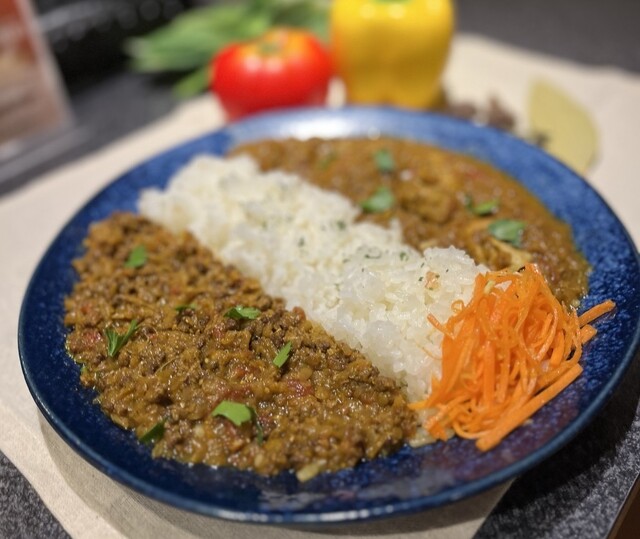
Shinkawa is not the Tokyo of hotel lobbies and ceremonial dining rooms. Around Kayabacho, lunch has a sharper tempo: office workers crossing bridges, narrow storefronts switching from quiet to full in minutes, and small counters built for one plate, one decision, and a quick reset. In that setting, curry is less a comfort-food cliché than a disciplined urban ritual, especially when the room has only seven seats and the menu identity is built around spice rather than scale.
Japanese Supaisu Curry Karisshu belongs to the city’s compact curry-counter category, where reputation is earned through repeat lunch traffic and specialist recognition rather than theatrical service. Its inclusion in Tabelog Curry TOKYO 100 for 2024, alongside prior selections in 2023 and 2022, places it in a competitive field that Tokyo diners take seriously. A 3.74 Tabelog score matters in this genre because curry shops compete on consistency, clarity of seasoning, and how well a plate holds attention without the support of a long menu or a dining-room performance.
Tokyo curry as a short, focused lunch ritual
Japanese curry in Tokyo splits into several lanes: old-school yoshoku gravies, South Asian-influenced spice plates, soup curry offshoots, and hybrid counters that borrow techniques without surrendering to a single template. Karisshu sits in the spice-curry lane, a format that has become one of the city’s more interesting affordable dining categories. The point is not luxury; it is compression. A small kitchen, a narrow service window, a defined plate, and enough aromatic structure to justify the queue culture that surrounds serious curry in Tokyo.
The public description points to a curry made with more than 19 spices, onions cooked to a caramelized color, and no wheat, additives, or commercial roux. Those details are not decoration. They explain why this kind of curry sits apart from the thick, flour-bound Japanese curry associated with chain dining and home cooking. The emphasis shifts from sweetness and weight toward spice layering and vegetable depth, which is why the meal reads closer to a specialist lunch counter than a casual café stop.
That distinction matters for travelers who already have sushi, tempura, and kaiseki penciled into a Tokyo itinerary. Curry is one of the city’s great everyday obsessions, and its specialist shops show how much precision can sit inside a modest price tier. Compared with higher-spend Tokyo dining rooms such as Ushiko Honten or French-leaning rooms such as Le Jardin de Kamo, this category asks for a different kind of attention. The meal is shorter, the room is tighter, and the measure of success is whether spice, rice, and pacing line up cleanly before the next diner takes the seat.
Seven seats change the etiquette
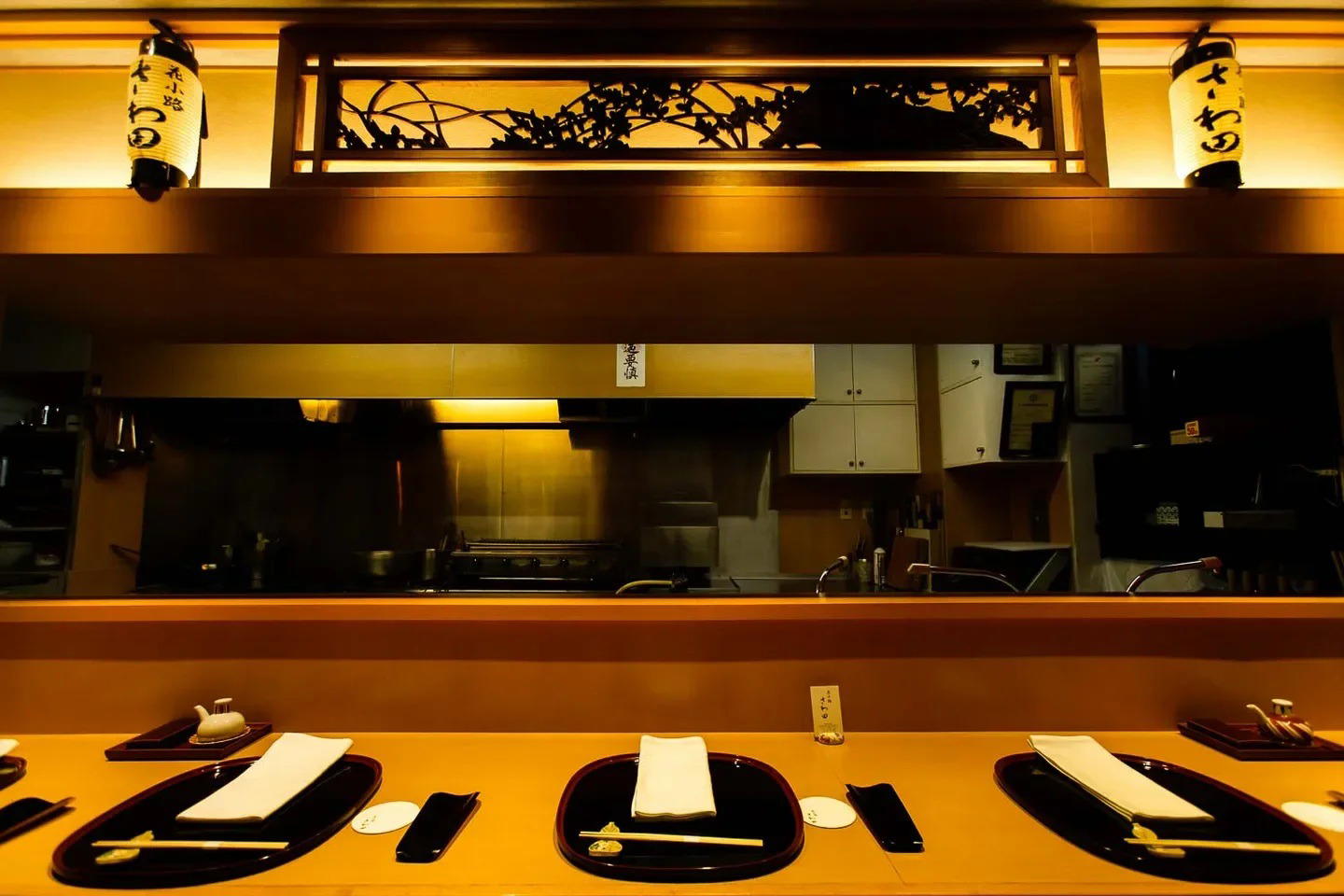
A seven-seat counter alters the social contract. Conversation drops, ordering becomes efficient, and lingering reads differently than it would in a café built around laptop time. Tokyo’s small curry counters often function as solo-dining spaces by design, not by accident. The format suits people who want a composed plate and minimal ceremony, and it rewards diners who arrive ready to move with the room’s cadence.
The location near Kayabacho also shapes the experience. This is a business-district lunch environment rather than a destination nightlife pocket, so the energy is daytime, practical, and compressed. The shop’s take-out service fits that neighborhood logic, but the counter remains the clearer expression of the format: close range, direct kitchen rhythm, and little distance between preparation and eating.
Reservations are unavailable, which puts timing back in the diner’s hands. In a small counter room, that is not a minor detail. The better strategy is to treat the meal as a focused lunch stop rather than a flexible add-on between major appointments. Sunday and public-holiday closures also reinforce the workweek character of this part of Chuo. Payment is another piece of the ritual: credit cards and electronic money are not accepted, while PayPay is accepted. In Tokyo, the friction is manageable, but it favors diners who plan rather than improvise.
Where it fits in a Tokyo food itinerary
Karisshu is strongest when used as a corrective to itinerary inflation. Tokyo can push travelers toward long counters, reservation anxiety, and dinner bills that climb quickly. A recognized curry specialist brings the city back to lunch scale without dropping seriousness. Tsutsui and Suikou Dou Honten occupy their own everyday Tokyo lanes, while Sushi Dai represents a different form of queue-driven devotion. Curry’s version is less ceremonial, but no less revealing: it shows how Tokyo turns a single dish category into a field of technical argument.
For readers mapping a broader day, the surrounding guide rails help. Use Our full Tokyo restaurants guide for nearby dining context, then branch into Our full Tokyo hotels guide, Our full Tokyo bars guide, Our full Tokyo wineries guide, and Our full Tokyo experiences guide when building the rest of the stay. Within the restaurant map, contrast curry with 3 Chome no Curry Ya San, casual visual café culture at 2D Cafe, yakitori at 124. KAGURAZAKA (Yakitori), Shinjuku dining at 12/10 Shinjuku ten, and charcoal-grilled fish at. 鮪と炭火焼き うお炭 秋葉原店.
Japan’s broader casual-specialist scene gives useful perspective too: -Grilled beef Sukiyaki- KAMAKURA TANUKIAN 鎌倉 たぬき庵 in Kamakura.cafe in Osaka.know in Kumamoto, (Shoku) Vietnam in Kawasaki, [Curry Senmon Ten] Maruyama Kyoju. in Sapporo, and [ki:] in Kyoto each show how compact formats travel across regions. For overseas comparisons in Japanese-adjacent casual dining, Jōdo Saké Bar in Los Angeles and Onigiri Time in Pasadena sit in a different market, but the same lesson applies: narrow formats often reveal more than broad menus.
The editorial call is clear. This is not a room for diners seeking ceremony, extended service, or a chef-led narrative. It is for a Tokyo lunch built around a precise curry idiom, a small counter, and recognition from a platform that Japanese diners use heavily for category specialists. In a city where meals can become overplanned, that restraint is the appeal.
A Lean Comparison
Comparable venues by cuisine and category.
| Venue | Cuisine | Price | Notes |
|---|---|---|---|
| Japanese Supaisu Curry KarisshuThis venue — the venue you are viewing | Chūō, Japanese Spice Curry | $ | Not listed |
| Japanese Spice Curry wacca | Chūō, Japanese spice curry | $ | Not listed |
| Seijuken | Not listed | $ | Chūō, Traditional Japanese wagashi & dorayaki shop |
| Motenashi Kuroki | Taitō, Modern Japanese Ramen | $ | Not listed |
| One More | Not listed | $ | Edogawa, Traditional Japanese kissaten café |
| Cha no Ikedaya | Not listed | $ | Shinjuku, Japanese tea shop & matcha soft serve |
Recognition history
Dated appearances from independent guides and award organizations, with the underlying list record or original source where available.
Tabelog 100 #40 · No. 40
Tabelog · Tabelog 100 - Curry - TOKYO - 2024




At a Glance
- Cozy
- Quiet
- Intimate
- Solo
- Family
- Casual Hangout
- Standalone
- Zero Proof
Current opening hours
- Monday
- 11 AM–3 PM
- Tuesday
- 11 AM–3 PM
- Wednesday
- 11 AM–3 PM
- Thursday
- 11 AM–3 PM
- Friday
- 11 AM–3 PM
- Saturday
- 11 AM–3 PM
- Sunday
- Closed
Hours can change for holidays and private events. Last verified .
A compact, relaxed counter-style venue with a hidden-gem feel and a calm, solo-lunch-friendly atmosphere.