Jagdhaus Heiligendamm
Our verdict
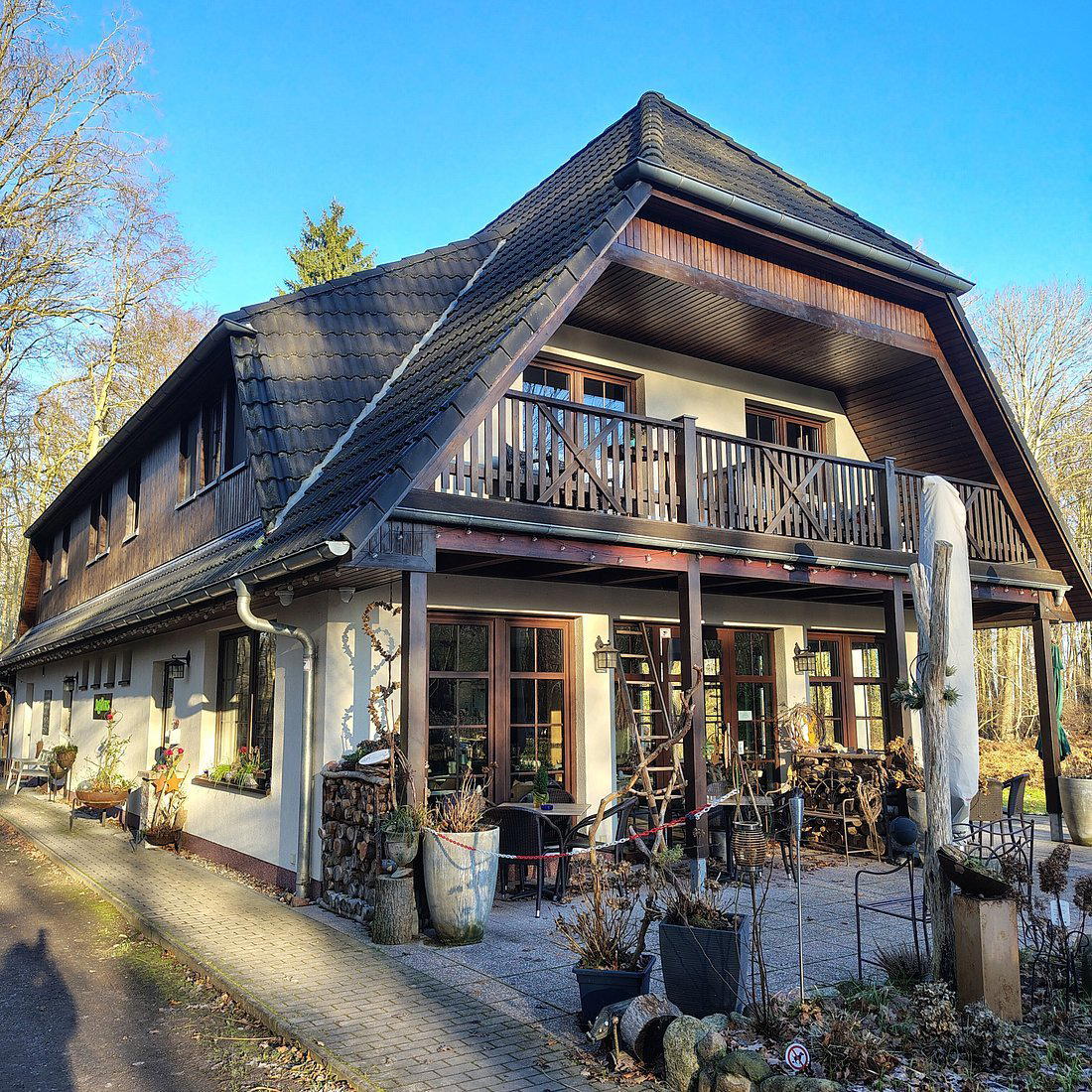
A hunting lodge turned restaurant-pension in the Baltic coastal town of Bad Doberan, Jagdhaus Heiligendamm draws on the agrarian and forested traditions of the Mecklenburg region. The setting signals a particular kind of German country dining: rooted in local landscape and seasonal supply rather than metropolitan ambition. For visitors exploring the Heiligendamm coast, it functions as a grounded alternative to the grander hotel dining rooms nearby.

Pearl is the En Primeur Club membership app — saves, bookings, and concierge access live there. Same editors, same standards.
- Address
- Jagdhaus Heiligendamm Restaurant & Pension, 18209 Bad Doberan, Germany
- Phone
- +4938203735775
- Hours
- Mon 5–10 PMTue–Wed ClosedThu–Sun 5–10 PM
- Website
- jagdhaus-heiligendamm.de
- Directions
- Get directions
The menu
What to order
- Venison roulade
- Pike-perch fillet
- Duck breast in orange sauce
- Forest mushroom soup
- Boar
Mecklenburg's Hunting Lodge Tradition and What It Means at the Table
The Baltic coastal belt between Rostock and Wismar has a culinary character that German fine dining rarely acknowledges in its awards cycles. While three-Michelin-star operations like Aqua in Wolfsburg or Schwarzwaldstube in Baiersbronn command national attention, the Mecklenburg-Vorpommern region operates on a quieter register — one defined by proximity to the sea, dense managed forests, and agricultural estates that have supplied this area's tables for centuries. Jagdhaus Heiligendamm sits inside that tradition. The name alone orients you: a Jagdhaus is a hunting lodge, and in this part of Germany that designation carries specific culinary implications. Game from the surrounding Mecklenburg forests, fresh Baltic catch, and produce from the agricultural flatlands between the coast and the interior have historically shaped what arrives on plates in houses like this one.
Bad Doberan itself is a small spa town with a population under twelve thousand, better known for the Heiligendamm resort strip — Germany's oldest seaside resort, established in 1793, than for any particular dining scene. The restaurant offer here is compact. Friedrich Franz and Medinis represent the town's other notable dining options; see our full Bad Doberan restaurants guide for a broader picture. In that context, Jagdhaus Heiligendamm functions less as a destination restaurant in the metropolitan sense and more as an anchor property for visitors spending two or three nights along the coast.
Ingredient Geography: Why the Mecklenburg Supply Chain Matters
The editorial angle on German regional cooking has shifted over the past decade. The country's most-discussed tables, from Vendôme in Bergisch Gladbach to Victor's Fine Dining by Christian Bau in Perl, tend to emphasise technique and international reference points. But a parallel conversation has been building around provenance-led cooking in regions where the supply chain is genuinely distinct. Mecklenburg is one of those regions. The Bodden waters behind the Fischland-Darß peninsula produce flatfish and herring in quantities that never quite reach Hamburg's wholesale markets in prime condition. The managed Mecklenburg forests hold roe deer and wild boar populations that regional hunters have supplied to local kitchens for generations. And the heavy clay soils of the inland estates yield root vegetables and grains with flavour profiles shaped by the same cold Baltic climate that defines the coastline.
A hunting lodge format, by its nature, aligns kitchen identity with this supply geography. The pension element of the Jagdhaus Heiligendamm operation, accommodation alongside the restaurant, reinforces this: guests arriving for two nights are more likely to eat from the regional pantry across multiple sittings than to drop in for a single urban dining transaction. That rhythm changes what a kitchen can reasonably offer and how it communicates its sourcing story.
Germany's urban fine dining circuit, represented by places like CODA Dessert Dining in Berlin or Restaurant Haerlin in Hamburg, operates on a different logic entirely. Those kitchens source internationally, price against European peer sets, and design for a guest who arrives specifically for the dining experience. The Jagdhaus model inverts this: the region arrives at the table because it surrounds the building, and the experience is inseparable from the Baltic environment outside.
Within Bad Doberan's modest dining scene, Jagdhaus Heiligendamm occupies the country-house end of the spectrum rather than the resort-hotel-dining end. That distinction matters when setting expectations. Resort dining along the Heiligendamm strip tends toward international formats designed for mixed-nationality leisure guests. The Jagdhaus format is more specifically German in register: the pension-restaurant combination, the hunting-lodge architectural language, the implied seasonal menu rotation tied to what the surrounding forests and fields produce at a given point in the year.
For visitors calibrating ambition levels: this is not a kitchen competing in the register of ES:SENZ in Grassau or Schanz in Piesport, both of which carry Michelin recognition and operate at a national competition level. Jagdhaus Heiligendamm's value is regional and contextual: it is where the Mecklenburg supply chain becomes legible on a plate in a setting that makes geographic sense of what you are eating.
Comparable formats elsewhere in Germany, the Waldhotel Sonnora in Dreis, for instance, have demonstrated that the country-house pension-restaurant model can reach serious gastronomic ambition. What the format and location do confirm is a particular alignment with regional identity that more technically ambitious kitchens sometimes sacrifice in pursuit of international relevance.
Planning a Visit: What the Context Suggests
Bad Doberan sits approximately twenty kilometres west of Rostock, accessible by regional rail on the historic Molli narrow-gauge line that connects the town to the coast at Kühlungsborn. Visitors arriving from Hamburg face roughly two and a half hours by train via Rostock. The pension format at Jagdhaus Heiligendamm makes it practical to stay on-site, which removes the question of transport back to Rostock after dinner, a relevant consideration given the limited evening public transport options in this part of Mecklenburg. Given the absence of confirmed booking channels in available data, direct contact with the property is the appropriate starting point for reservation enquiries. The Baltic coast season runs from late spring through early autumn, when the regional supply chain is at its most active and the coastal environment most accessible. Winter visits align with game season, which is a defensible reason to visit a hunting-lodge format in the colder months, even if the broader tourist infrastructure thins out considerably after October.
Those planning a broader German dining itinerary that includes coastal and country-house formats alongside urban reference points might consider how Jagdhaus Heiligendamm functions as a counterweight to metropolitan tables. JAN in Munich, Bagatelle in Trier, or ATAMA by Martin Stopp in Sankt Ingbert each represent a different facet of the German dining conversation. Jagdhaus Heiligendamm represents the quieter, regionally embedded end of that same conversation, a format that international visitors, accustomed to the European country-house dining model established by French relais or British gastropubs, will recognise even if the Mecklenburg context is unfamiliar. For international context on what ingredient-led coastal dining can achieve at its outer limits, the fish-focused discipline of Le Bernardin in New York City or the Korean provenance storytelling at Atomix in New York City illustrates how seriously sourcing geography can be used as an editorial framework, a standard against which any regionally positioned kitchen can usefully be measured.
Frequently asked questions
Does Jagdhaus Heiligendamm work for a family meal?
The country-house format at Jagdhaus Heiligendamm, set in Bad Doberan rather than a resort hotel, tends to suit relaxed, unhurried meals rather than buzzy, high-turnover dining rooms. That character generally works well for multigenerational groups who want a proper sit-down meal in a settled setting. For specific room configurations or children's options, contacting the venue directly is advisable, as those details are not published centrally.
Is Jagdhaus Heiligendamm better for a quiet night or a lively one?
Jagdhaus Heiligendamm occupies the country-house end of Bad Doberan's dining spectrum, which points firmly toward the quieter end of the register. The pension element reinforces that: this is not a venue built around bar energy or late-night atmosphere. Guests looking for a convivial, unhurried evening in a historic Baltic coastal setting will find the format appropriate; those seeking a lively crowd should look elsewhere in the Rostock area.
How does the pension side of Jagdhaus Heiligendamm compare to staying in Heiligendamm's resort hotels?
Jagdhaus Heiligendamm operates as both a restaurant and a pension at its Bad Doberan address, which places it in a different category from the large spa and resort properties along the Heiligendamm seafront. The pension format means fewer rooms, a more personal scale, and direct proximity to the restaurant without the infrastructure of a full hotel. For visitors prioritising the dining experience and a quieter base over resort amenities, the combination is a practical fit for this stretch of the Baltic coast.
What do people recommend at Jagdhaus Heiligendamm?
Published menu detail for Jagdhaus Heiligendamm is not centralised online, but the Mecklenburg region's culinary identity is built around game, freshwater fish, and Baltic seafood drawn from a short local supply chain. A hunting lodge setting in this part of Germany typically foregrounds those ingredients. For current dishes or seasonal specials, reaching out to the restaurant directly, or checking upon arrival in Bad Doberan, will give the most accurate picture.
How do I find Jagdhaus Heiligendamm?
Jagdhaus Heiligendamm is located at Jagdhaus Heiligendamm Restaurant & Pension, 18209 Bad Doberan, Germany, Bad Doberan.
Comparison Snapshot
Comparable venues nearby, for context on price, style, and recognition.
| Venue | Cuisine | Price | Awards | Notes |
|---|---|---|---|---|
| Jagdhaus HeiligendammThis venue — the venue you are viewing | Modern German Seasonal Cuisine | $50–100 | Not listed | Not listed |
| Medinis | Authentic Italian Fine Dining | Not listed | Not listed | Heiligendamm |
| Friedrich Franz | Modern Fine Dining | $150–200 | 1 Michelin Star | Heiligendamm |
| Gutshaus Stolpe | Modern Regional German with French Technique | $100–150 | Michelin Plate | Stolpe an der Peene |
| Capital Grill | Upscale Classic Grill | Not listed | Not listed | Mitte |
| Natürlich Büttners | Modern Regional German Bistro | $30–50 | Not listed | Zentrum |
Continue exploring
More in Bad Doberan
Restaurants in Bad Doberan
Browse all →
Bars in Bad Doberan
Browse all →
Details
- Romantic
- Cozy
- Rustic
- Elegant
- Intimate
- Date Night
- Special Occasion
- Celebration
- Private Dining
- Terrace
- Garden
- Local Sourcing
- Set Menu
- A La Carte
- Regional Schnapps
- German Wine Selection
- Vegetarian Friendly
Current opening hours
- Monday
- 5–10 PM
- Tuesday
- Closed
- Wednesday
- Closed
- Thursday
- 5–10 PM
- Friday
- 5–10 PM
- Saturday
- 5–10 PM
- Sunday
- 5–10 PM
Hours can change for holidays and private events. Last verified .
Warmly lit with lovingly decorated interiors, flickering fireplace, and terrace seating overlooking forest surroundings; unobtrusive background music creates an intimate, refined yet welcoming atmosphere.