1 Michelin Star · Gault & Millau Remarkable Restaurant
Our verdict
Jacques Faussat occupies a specific position in Paris's dining map: a 17th-arrondissement address where Gascon tradition, shaped by a decade at Le Trou Gascon under Alain Dutournier and the influence of Michel Guérard, arrives without the price architecture of the city's grand tables. Awarded 'Remarkable' by Michelin, it draws a 4.6 rating across 658 reviews, a strong signal for a neighbourhood room that trades in substance over spectacle.

Pearl is the En Primeur Club membership app, where members save venues, book tables and use the concierge.
The menu
What to order
- Potato and Foie Gras Compression with Truffle Juice
- Pigeon Flambéed with Capucin
- Hot Soufflé (Pear or Strawberry)
- Slow-Roasted Lamb Shoulder from the Pyrenees
- Lobster Ceviche with Almond Foam
The Quiet Persistence of Gascon Cooking in the 17th
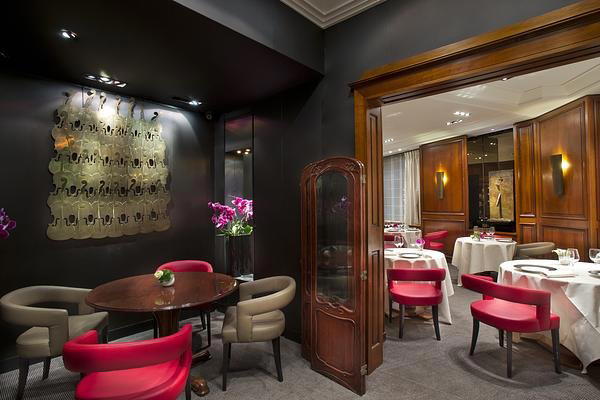
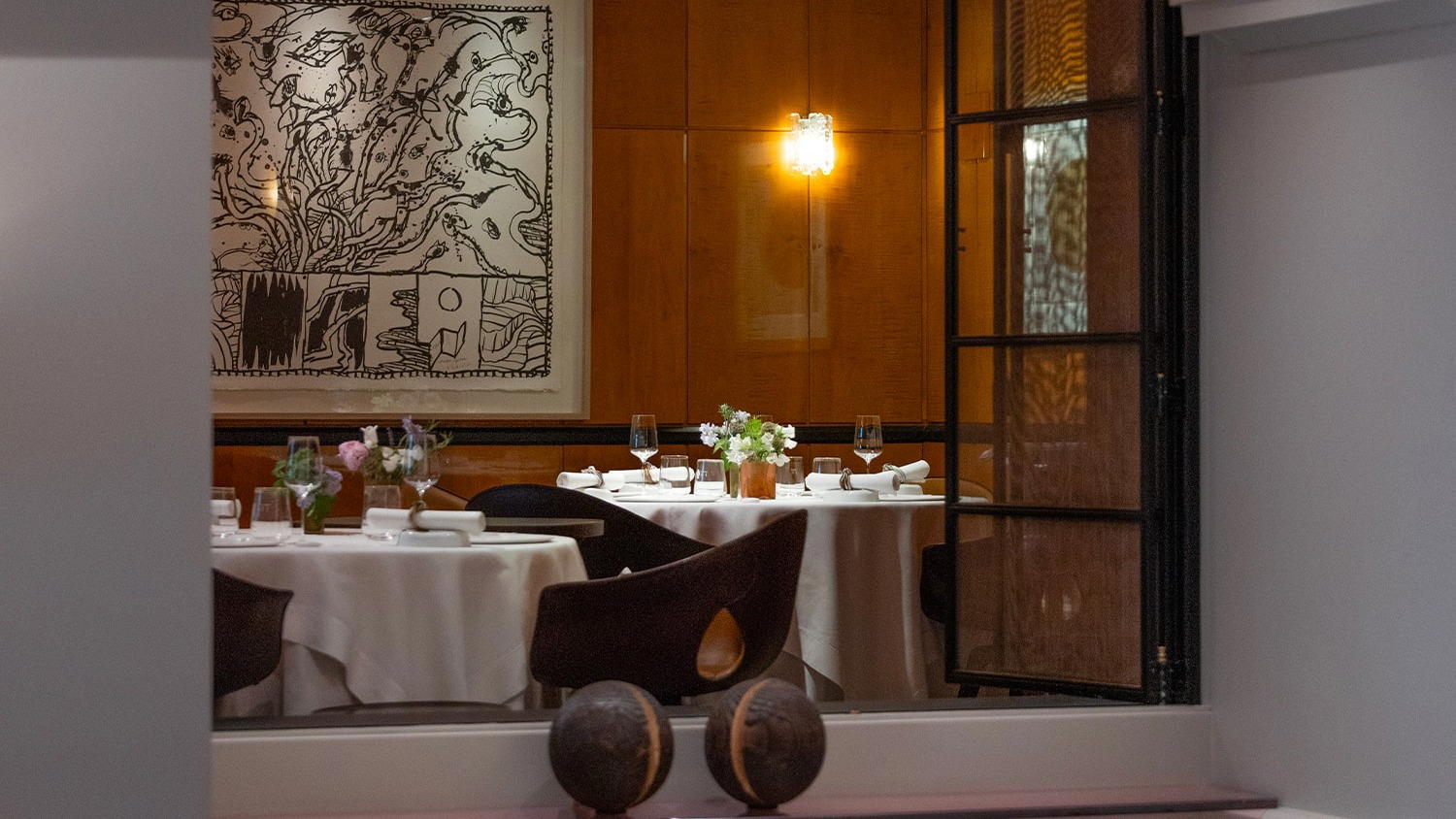
Rue Cardinet runs through a part of the 17th arrondissement that most visitors to Paris never reach, a residential stretch between the Batignolles market quarter and the Plaine Monceau, where the restaurants serve the neighbourhood rather than the postcard. It is the kind of address where longevity functions as its own credential. The room at 54 Rue Cardinet is discreet by design, a deliberate counterpoint to the theatrically lit dining rooms that have come to define Parisian ambition in the years since Jacques Faussat opened his own table. There is nothing provisional about arriving here: the door, the scale, the unhurried pace of a Tuesday lunch service all communicate that the person who runs this kitchen has already made his choices and has no interest in revising them for trend.
That confidence matters in a city where the dominant critical conversation over the past two decades has circled around creative reinvention. Paris's upper tier, Alléno Paris au Pavillon Ledoyen, Pierre Gagnaire, Le Cinq at the Four Seasons George V, L'Ambroisie, Kei, operates at the €€€€ ceiling and competes largely on the axis of technical ambition or ingredient provenance pushed to its furthest expression. Jacques Faussat occupies a different register entirely: €€€ pricing, a Michelin 'Remarkable' designation, and a programme rooted in the cuisine of Gers rather than in the logic of contemporary tasting menus.
A Lineage Written in Southwest France
The southwest French tradition that underpins the cooking here is one of France's most coherent regional platforms: duck fat, foie gras, armagnac, the long-cooked preparations that characterise Gascony's farmhouse inheritance. It is also a tradition with a pronounced Parisian pedigree. Le Trou Gascon, the late Alain Dutournier's bistro in the 12th arrondissement, was for years one of the city's most respected addresses for precisely this kind of cooking, produce-driven, regionally honest, technically careful without being ostentatious. A decade in that kitchen provides a formation that is less about a single teacher's philosophy and more about an accumulated understanding of how Gascon ingredients behave under pressure, over time, and in a Parisian context. Michel Guérard's influence runs alongside that, pointing toward a version of simplicity that is earned rather than imposed.
What is relevant for the reader is not the biographical sequence but what it produces at the table: a cuisine built around intelligently sourced produce, where the goal is to preserve and focus flavour rather than to transform or interrogate it.
Evolution Without Reinvention
The editorial angle that makes Jacques Faussat interesting in 2024 is not dramatic change but a specific kind of durability: the restaurant has not pivoted toward the formats that have reshaped Paris dining over the past decade. When the city's ambitious rooms moved toward omakase-influenced tasting menus, high-concept carte blanche formats, and the celebrity-chef spectacle economy, Faussat maintained a service structure built around the traditional French lunch and dinner clock, noon to 2:30 PM, 7:30 to 10 PM, Monday through Friday, closed weekends. That choice carries consequences for who the room serves and how it is experienced.
The closed-weekend schedule is the clearest signal of the restaurant's orientation: this is a cooking that addresses itself to the working week, to the professional lunch, to the neighbourhood dinner rather than to the destination-dining weekend itinerary. It is a model that several of France's most respected regional tables have maintained, Auberge Grand'Maison in Mûr-de-Bretagne and Auga in Gijón each operate within analogous frameworks of regional focus and selective hours, and it requires a different kind of planning from visitors who would otherwise treat the address as a Saturday dinner option.
Within France's broader canon of serious regional cooking, the lineage that includes Flocons de Sel in Megève, Bras in Laguiole, and Auberge de l'Ill in Illhaeusern, Faussat represents the urban-embedded strand: the chef who has brought a regional sensibility to a Parisian address without diluting it to meet metropolitan expectations, and without the scale of an Auberge du Pont de Collonges or a Troisgros to insulate the project from commercial pressure. The Michelin 'Remarkable' category acknowledges this position: a recognition of quality and coherence without the three-star architecture that would fundamentally alter the restaurant's character and economics.
Where the 17th Fits in Paris Dining
The 17th arrondissement has not historically been Paris's most legible dining destination for visitors. The 6th, the 8th, and the 1st draw the concentrated critical attention; the 17th is more diffuse, its serious tables spread across a large and varied district. But the neighbourhood's Batignolles section has developed genuine density over the past decade, with addresses such as 19.20 by Norbert Tarayre and Anecdote adding to a local dining circuit that no longer requires the visitor to travel for comparison. For the reader who follows our full Paris restaurants guide, the 17th now warrants inclusion in a serious itinerary rather than as a detour from the recognised arrondissements. The broader Paris offer, covered in our guides to hotels, bars, wineries, and experiences, frames the city's range, but the case for Faussat rests on the specificity of a single address that has maintained its position through consistency rather than expansion.
For a restaurant of this scale, closed on weekends and operating a traditional service model, that number represents a sustainable reputation rather than a social-media moment.
There is also a value argument. At the €€€ tier in a city where the upper-table experience starts at significantly higher spend, Mirazur and the Paris three-star rooms operate in a different financial category, and where the 20 Eiffel neighbourhood offers its own price-tier comparisons, Faussat delivers Michelin-recognised cooking at pricing the guide itself describes as eater-friendly. That combination, regional depth, formal skill, accessible price, occupies a narrower slot in Paris than the city's reputation suggests.
Planning Your Visit
Address: 54 Rue Cardinet, 75017 Paris. Hours: Lunch Monday through Friday, noon to 2:30 PM; dinner Monday through Friday, 7:30 to 10 PM; closed Saturday and Sunday. Price range: €€€. Awards: Michelin 'Remarkable' designation. Reservations: Advance booking advised, particularly for weekday lunches, which can fill with local regulars; weekday evenings generally have slightly more availability. Getting there: The Malesherbes (line 3) and Villiers (lines 2 and 3) Métro stations both place the restaurant within comfortable walking distance along Rue Cardinet.
Frequently asked questions
Is Jacques Faussat open every day?
Hours at Jacques Faussat: Monday 12 PM-2:30 PM 7:30 PM-10 PM Tuesday 12 PM-2:30 PM 7:30 PM-10 PM Wednesday 12 PM-2:30 PM 7:30 PM-10 PM Thursday 12 PM-2:30 PM 7:30 PM-10 PM Friday 12 PM-2:30 PM 7:30 PM-10 PM Saturday closed Sunday closed.
What distinctions does Jacques Faussat have?
Jacques Faussat has received recognition including: Category: Remarkable; Jacques Faussat, born in Gers and proud of it, clearly aspires to the simplicity of his childhood roots. A simplicity also passed down by Michel Guérard and above all, Alain Dutournier. Jacques’ meeting with the latter….
What's the must-try dish at Jacques Faussat?
Michelin's own description of the restaurant focuses on the southwest French orientation of the cooking rather than individual dishes, and the venue does not publish a fixed menu online. The safest guide is the cuisine type itself: Gascon tradition means duck, foie gras, and produce from the Gers, the region where chef Jacques Faussat grew up and where his mentor Alain Dutournier also trained him over a decade at Le Trou Gascon. Ask the room what's arrived from the southwest that week; that conversation is part of how the restaurant works.
What type of food is Jacques Faussat known for?
How much does it cost to eat at Jacques Faussat?
Pricing at Jacques Faussat is listed as €€€.
How do I find Jacques Faussat?
Jacques Faussat is located at 54 Rue Cardinet, 75017 Paris, France, Paris.
The Quick Read
| Venue | Cuisine | Price | Awards | Notes |
|---|---|---|---|---|
| Jacques FaussatThis venue (the venue you are viewing) | Michelin-Starred Southwest French Gastronomique | $50–100 | 1 Michelin Star · Gault & Millau Remarkable Restaurant | Not listed |
| Alléno Paris au Pavillon Ledoyen | Modern French Fine Dining | $150–200 | 3 Michelin Stars · World's 50 Best #79 | Creative |
| Kei | Modern French with Japanese Influences | $300–500 | 3 Michelin Stars · World's 50 Best #93 | Contemporary French, Modern Cuisine |
| L'Ambroisie | Classic French Haute Cuisine | $300–500 | 2 Michelin Stars · World's 50 Best #23 | French, Classic Cuisine |
| Le Cinq - Four Seasons Hôtel George V | Modern French Fine Dining | $300–500 | 3 Michelin Stars · World's 50 Best #24 | French, Modern Cuisine |
| Plénitude | Modern French Sauce-Led Fine Dining | $300–500 | 3 Michelin Stars · World's 50 Best #14 | Contemporary French |
Recognition history
Dated appearances from independent guides and award organizations, with the underlying list record or original source where available.
Michelin 1 Star
Michelin
Gault & Millau Remarkable Restaurant
Gault & Millau
Full recognition history (4 entries)
Michelin 1 Star
Michelin
Michelin 1 Star
Michelin