Izakaya Sozai
On Irving Street in San Francisco's Inner Sunset, Izakaya Sozai occupies the neighborhood izakaya role that Japanese drinking-dining culture has long defined: small plates, sake, and a rhythm that rewards unhurried evenings. The format sits well outside the Michelin-chasing tier of the city's Japanese dining scene, operating instead as a local anchor in a district shaped by decades of Japanese-American community presence.
Pearl is the En Primeur Club membership app — saves, bookings, and concierge access live there. Same editors, same standards.
- Address
- 1500 Irving St, San Francisco, CA 94122
- Phone
- +14153719721
- Website
- izakayasozai.com
- Directions
- Get directions
 Saves & bookings on Pearl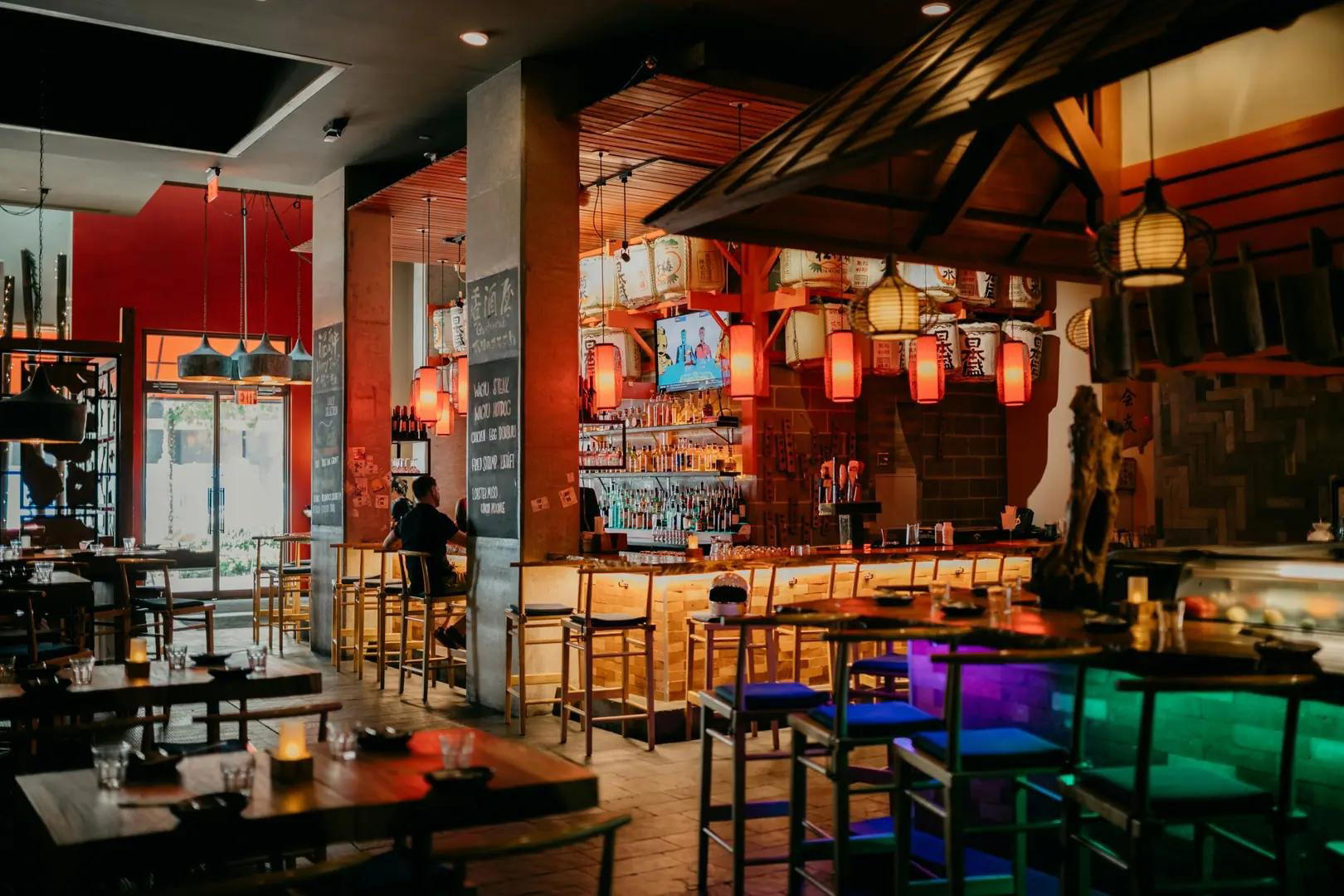
The Inner Sunset and the Izakaya Tradition
San Francisco's Inner Sunset sits a short walk from Golden Gate Park, its avenues lined with a density of Japanese restaurants, bakeries, and grocers that reflects a community presence stretching back generations. In that context, the izakaya format carries specific weight. Where the city's high-end Japanese dining, the omakase counters in SoMa or the tasting menus that draw comparison with destinations like Benu or Atelier Crenn, operates on ceremony and controlled scarcity, the izakaya tradition operates on the opposite logic: abundance of choice, informality of order, and a structure designed for groups who want to drink and graze across an evening rather than submit to a fixed sequence.
Izakaya Sozai, at 1500 Irving Street, fits squarely into that second category. The address places it at the edge of a stretch that functions as one of the more coherent Japanese-neighborhood corridors in the western United States outside of Los Angeles's Little Tokyo or Seattle's International District. The dining room operates as a neighborhood institution, where the format itself is the draw before any individual dish.
What the Izakaya Format Actually Means
The izakaya model arrived in Japan as a hybrid of the sake shop and the eating house, a format that eventually became the dominant mode of after-work social dining across the country. In its contemporary form, it typically involves a long menu of small dishes spanning grilled skewers, cold starters, deep-fried bites, simmered items, rice, and noodles, all designed to arrive in no particular order and to sustain a table across several rounds of drinks. The format resists the Western instinct to separate appetizer from main, and it resists the omakase model of surrendering choices to the kitchen.
In San Francisco, izakaya culture has developed along two tracks. A smaller group of venues have moved toward refined interpretations, tightening menus and raising prices to position alongside the city's broader fine-dining tier, the same circuit that includes Lazy Bear, Quince, and Saison. A larger group have maintained the format's essential informality, keeping menus broad, prices accessible, and the atmosphere oriented toward regulars rather than out-of-town visitors. Izakaya Sozai belongs to the latter category, and that positioning is not a compromise, it is the point.
The Inner Sunset as Dining Context
Understanding Izakaya Sozai requires understanding the Inner Sunset's dining character, which differs materially from the neighborhoods where San Francisco's most-discussed restaurants tend to cluster. The Mission, Hayes Valley, and SoMa generate most of the critical attention. The Inner Sunset operates on a different register: longer-established, more residential, and shaped by a customer base that prioritizes consistency over novelty. A restaurant that has held its place on Irving Street has done so by serving its immediate community well across years, not by cycling through media cycles.
That dynamic is not distinctive to San Francisco. Japanese-American neighborhoods across the West Coast, and beyond, in cities like New York, which has its own deeply anchored Japanese dining corridors, sustain izakaya-format venues through repeat local custom rather than tourist traffic. The comparison is closer to Atomix in New York representing one pole of Korean fine dining while neighborhood Korean barbecue anchors sustain an entirely parallel ecosystem. Both are legitimate; they serve different needs and different relationships to a cuisine's culture.
Positioning Within San Francisco's Japanese Dining Tier
San Francisco supports a wide range of Japanese dining formats, from the high-investment omakase counters that price against a national comparable set to ramen shops operating on volume economics. The izakaya tier sits in the middle: higher investment in kitchen scope than a ramen-only operation, lower ceremony than an omakase format. Within that tier, neighborhood izakayas like Sozai face less direct competition from the city's marquee restaurants and more from each other, the question is not how they compare to The French Laundry in Napa or Single Thread Farm in Healdsburg, but how they hold their place within a local community across years.
The broader American fine-dining circuit, venues like Alinea in Chicago, Le Bernardin in New York, Providence in Los Angeles, or Addison in San Diego, operates on criteria of scarcity and tasting-menu structure. The izakaya format is structurally incompatible with those criteria, and the better neighborhood izakayas are not trying to meet them. The value proposition is different: range, regularity, and the specific pleasure of a format that rewards returning visitors who know what to order.
Cultural Roots and Why They Matter Here
The izakaya's cultural origins inform what to expect and how to read the experience. The format developed not as a showcase for individual chef vision, the mode that drives critical attention in Western fine dining, from Blue Hill at Stone Barns to Bacchanalia in Atlanta, but as a social infrastructure. The kitchen's job is to sustain a table across an evening, not to deliver a narrative arc. That means menus that are deliberately wide-ranging, covering enough ground that a group of four or six can order broadly without redundancy.
In Japan, izakayas are where the formality of the workday drops away. In Japanese-American communities in San Francisco, that function has shifted slightly: the izakaya becomes one of the clearest expressions of a food culture that most visitors to the city encounter only at its most formal or most touristy ends. For anyone tracing how Japanese cuisine actually lives in a city, rather than how it performs for a special-occasion dining audience, the Inner Sunset's izakaya corridor is a more honest starting point than the omakase tier.
Neighborhood institutions occupy an essential layer of any city's dining culture.
Planning a Visit
Izakaya Sozai is located at 1500 Irving Street in the Inner Sunset, reachable by the N-Judah Muni line and within walking distance of the park. The format suits groups of two to six who want an extended evening rather than a quick dinner: order in rounds, let dishes arrive as they're ready, and treat the menu as a list to work through across multiple visits rather than a single occasion. Current hours run Monday through Thursday and Sunday from 5 to 9 PM, and Friday and Saturday from 5 to 10 PM; reservations are essential.
Same-City Peers
Comparable venues nearby, for context on price, style, and recognition.
| Venue | Cuisine | Price | Notes |
|---|---|---|---|
| Izakaya SozaiThis venue — the venue you are viewing | Authentic Japanese Izakaya | $$ | Not listed |
| Orenchi Beyond | Authentic Japanese Ramen | $$ | Mission District |
| Miyabi Sushi 2 Go | Japanese Sushi | $$ | North Beach |
| Sake Bomb | Japanese Sushi | $$ | Mission |
| Echigo Home cook | Japanese Sushi and Izakaya | $$ | Mission |
| Ebisu | Authentic Japanese Sushi | $$ | Inner Sunset |
Continue exploring
More in San Francisco
Restaurants in San Francisco
Browse all →
Bars in San Francisco
Browse all →
Hotels in San Francisco
Browse all →
At a Glance
- Cozy
- Lively
- Intimate
- Casual Hangout
- Group Dining
- After Work
- Late Night
- Open Kitchen
- Sake Program
Current opening hours
- Monday
- 5–9 PM
- Tuesday
- 5–9 PM
- Wednesday
- 5–9 PM
- Thursday
- 5–9 PM
- Friday
- 5–10 PM
- Saturday
- 5–10 PM
- Sunday
- 5–9 PM
Hours can change for holidays and private events. Last verified .
Small and cozy space with authentic Japanese izakaya atmosphere created through decorative curtains; becomes loud and energetic when full.