Our verdict
Izakaya brings Japanese pub-dining to central Roskilde, operating from a station-adjacent address that makes it one of the more accessible Asian dining options in a city better known for its Viking heritage than its restaurant scene. The format sits within a broader Scandinavian trend of adopting izakaya-style sharing and grazing over formal plating, placing it alongside a growing cohort of casual Japanese concepts outside Copenhagen.

Pearl is the En Primeur Club membership app — saves, bookings, and concierge access live there. Same editors, same standards.
- Address
- Stationscentret 11, 4000 Roskilde, Denmark
- Phone
- +4546370688
- Hours
- Daily 11 AM–10 PM
- Website
- izakaya4000.dk
- Directions
- Get directions
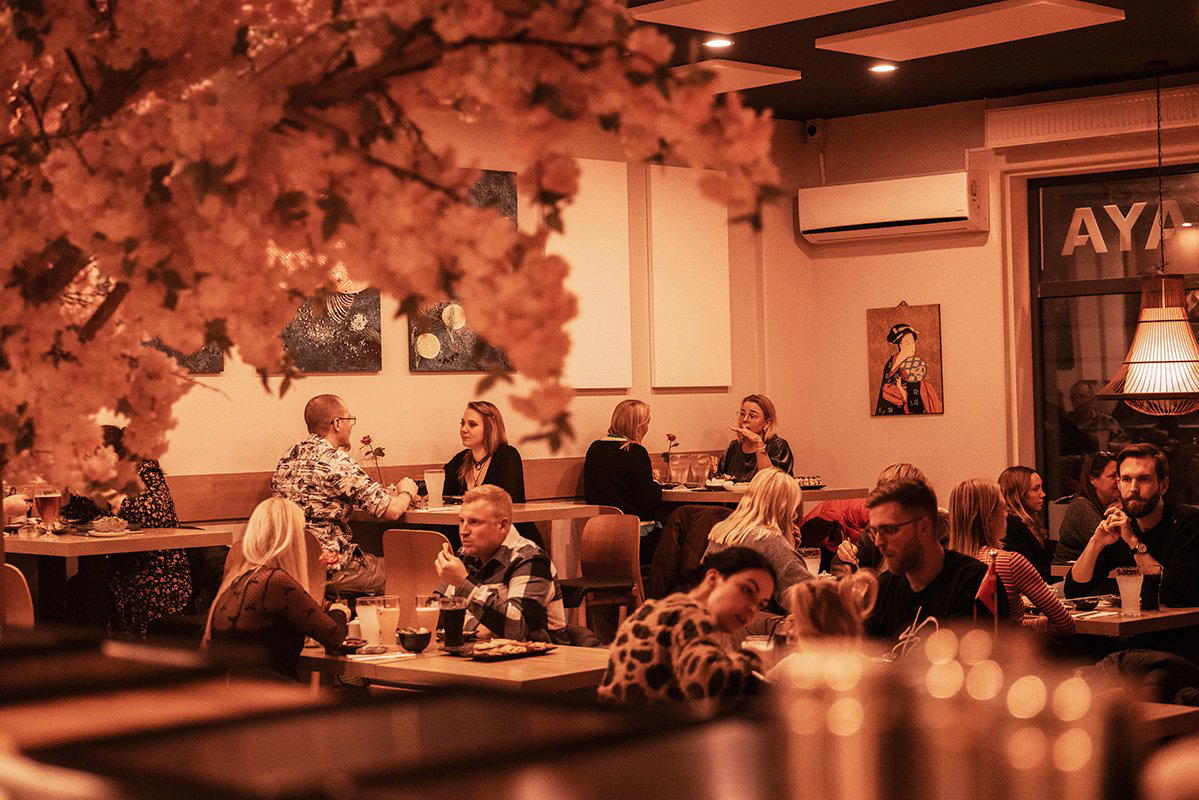
Japanese Pub Culture in a Danish Cathedral City
Roskilde is not a dining destination in the way Copenhagen is, and that distinction matters when reading its restaurant scene. The city draws visitors primarily for its cathedral, its Viking Ship Museum, and its summer festival, and its food and drink options reflect that mixed, transient audience. Within that context, the izakaya format occupies a particular niche: informal, share-friendly, and anchored in a drinking-and-eating culture that translates reasonably well across cultural contexts. Izakaya, located at Stationscentret 11 in central Roskilde, sits at the practical heart of that accessibility, positioned near the train station in a part of the city that serves commuters, festival visitors, and locals in roughly equal measure.
The izakaya tradition itself originates in Japan as a category of casual drinking establishment where food arrives in small, rotating portions alongside beer, sake, and shochu. Unlike the formal omakase counter model practiced at places such as Aji Sushi in Roskilde, the izakaya format is deliberately unpretentious: order what you want, when you want it, and eat at a pace that suits the conversation rather than the kitchen's sequencing. That structural looseness is part of the appeal, and it is also what makes izakaya-style dining relatively forgiving as a format for a mid-sized Danish city where dining out remains more occasion-driven than routine.
The Arc of an Izakaya Meal
The progression through an izakaya meal differs fundamentally from the tasting-menu model that dominates Denmark's Michelin tier. At restaurants such as Geranium in Copenhagen or Jordnær in Gentofte, the kitchen dictates pacing, and each course arrives as a considered editorial statement. The izakaya counter runs the opposite way: the table governs the sequence, and the meal builds laterally rather than upward. A typical progression might open with lighter, cold preparations, move through grilled skewers or small hot dishes, and settle into the kind of unhurried end-of-evening rhythm that suits the format's pub-adjacent origins.
That contrast is not a criticism of either model. It reflects two genuinely different purposes. Denmark's fine-dining circuit, which extends beyond Copenhagen to Frederikshøj in Aarhus, Henne Kirkeby Kro in Henne, and LYST in Vejle, operates in a register defined by precision, seasonality, and narrative coherence across ten or more courses. The izakaya register is defined by abundance, flexibility, and the social logic of communal ordering. Both are valid; they simply answer different questions about what a meal is for.
In Roskilde's specific dining context, which includes Italian-adjacent options at Basilico and Bella Capri, American-style formats at Bash Burger & Grill, and pan-Asian alternatives at An No, an izakaya-format venue offers something the city's dining inventory otherwise lacks: a middle register between fast food and sit-down dining that prioritises social eating over individual plate composition.
Where This Fits in the Danish Asian Dining Picture
Asian dining in Denmark outside Copenhagen has historically clustered around Chinese, Thai, and sushi formats adapted to local tastes. The specifically Japanese izakaya model represents a more recent evolution, one that gained momentum in Scandinavian cities partly through the region's existing comfort with small-plate and sharing formats, and partly through a broader European interest in Japanese drinking culture that accelerated through the 2010s.
The reference points at the high end of that interest in Denmark are venues like the Korean-influenced Atomix in New York City, which demonstrates how East Asian dining traditions can be reframed for Western premium audiences, or the technically exacting seafood work at Le Bernardin in New York City, where Japanese technique has long been absorbed into European fine-dining grammar. Those points of comparison are not meant to suggest equivalence with Roskilde's izakaya scene; they illustrate how the appetite for Japanese dining conventions has moved decisively outward from specialist urban enclaves into broader markets. Roskilde's Izakaya operates in that broader market, serving the accessible end of that appetite rather than its rarefied peak.
The rest of Denmark's provincial dining circuit, including Alimentum in Aalborg, ARO in Odense, Domæne in Herning, Dragsholm Slot Gourmet in Hørve, and Frederiksminde in Præstø, concentrates its ambition in Scandinavian-rooted tasting formats. The casual Japanese category in those markets remains comparatively thin, which gives an izakaya-format venue in a city like Roskilde a clearer lane than it might find in Copenhagen, where competition in the Japanese casual segment is considerably denser.
Planning a Visit
Stationscentret 11 places the venue directly within walking distance of Roskilde train station, which sits on the main Copenhagen-to-Roskilde rail line with trains running at high frequency throughout the day. For visitors arriving from Copenhagen, the journey runs approximately 25 minutes from Copenhagen Central Station, making Roskilde a comfortable day-trip or early-evening destination without the need for a car. The station-adjacent location suits the izakaya format particularly well: the venue is accessible without planning, which aligns with the format's walk-in, low-ceremony dining culture. For a broader view of where Izakaya sits within the city's dining options, the full Roskilde restaurants guide maps the scene by cuisine type and format.
Frequently asked questions
Where is Izakaya located?
Izakaya is located at Stationscentret 11, 4000 Roskilde, Denmark, Roskilde.
Is Izakaya in Roskilde a good option after visiting the Viking Ship Museum?
Stationscentret 11 sits directly adjacent to Roskilde train station, roughly ten minutes on foot from the Viking Ship Museum along the city centre route. The izakaya format, with its informal pace and shared small plates, suits a post-museum meal where guests arrive at different times or want to graze rather than commit to a set structure. Roskilde's compact centre makes it a practical last stop before catching the train back toward Copenhagen.
What's the best thing to order at Izakaya?
In the izakaya format generally, the ordering logic favours range over depth: several smaller plates across protein, vegetable, and fried categories rather than one large main. That approach also suits the informal, rotating pace the format is built around.
Do they take walk-ins at Izakaya?
Izakaya-format venues in Denmark outside Copenhagen tend to carry lighter reservation pressure than their capital counterparts, which often means walk-in seats are available, particularly on weeknights. Calling ahead or checking the venue directly before a weekend visit remains the sensible approach.
Where the Accolades Land
Comparable venues nearby, for context on price, style, and recognition.
| Venue | Cuisine | Price | Notes |
|---|---|---|---|
| IzakayaThis venue — the venue you are viewing | Japanese Izakaya & Sushi | Not listed | Not listed |
| Zhiki Sushi | Japanese Sushi | Not listed | Ro's Torv |
| Nira Sushi | Japanese Sushi | Not listed | Roskilde |
| Florentz Cafe & Brasserie | French Brasserie with Danish Influences | $20–30 | Roskilde Centrum |
| Namaste | Authentic North Indian Cuisine | $20–30 | Roskilde city center |
| Det Mexicanske Bøfhus | Mexican-Inspired Steakhouse | Not listed | Central Roskilde |
Continue exploring
More in Roskilde
Restaurants in Roskilde
Browse all →
Bars in Roskilde
Browse all →
Hotels in Roskilde
Browse all →
Wineries in Roskilde
Browse all →
Details
- Cozy
- Modern
- Family
- Group Dining
- Casual Hangout
- Open Kitchen
- Sake Program
- Small Plates
- A La Carte
- Vegetarian Friendly
Current opening hours
- Monday
- 11 AM–10 PM
- Tuesday
- 11 AM–10 PM
- Wednesday
- 11 AM–10 PM
- Thursday
- 11 AM–10 PM
- Friday
- 11 AM–10 PM
- Saturday
- 11 AM–10 PM
- Sunday
- 11 AM–10 PM
Hours can change for holidays and private events. Last verified .
Cozy Eastern-inspired decor with Japanese influences, friendly atmosphere that can get noisy when busy.