Izakaya Futago


Michelin Plate
Our verdict
A Midtown fixture for hand-cut soba and yakitori, Soba Totto has held a Michelin Plate and Opinionated About Dining recognition through 2025, placing it among New York's most consistent Japanese casual dining addresses. Located on East 43rd Street, it draws a lunch crowd from the surrounding office corridors and a more deliberate dinner set seeking craft-forward Japanese cooking at a price point well below the city's omakase tier.

Pearl is the En Primeur Club membership app, where members save venues, book tables and use the concierge.
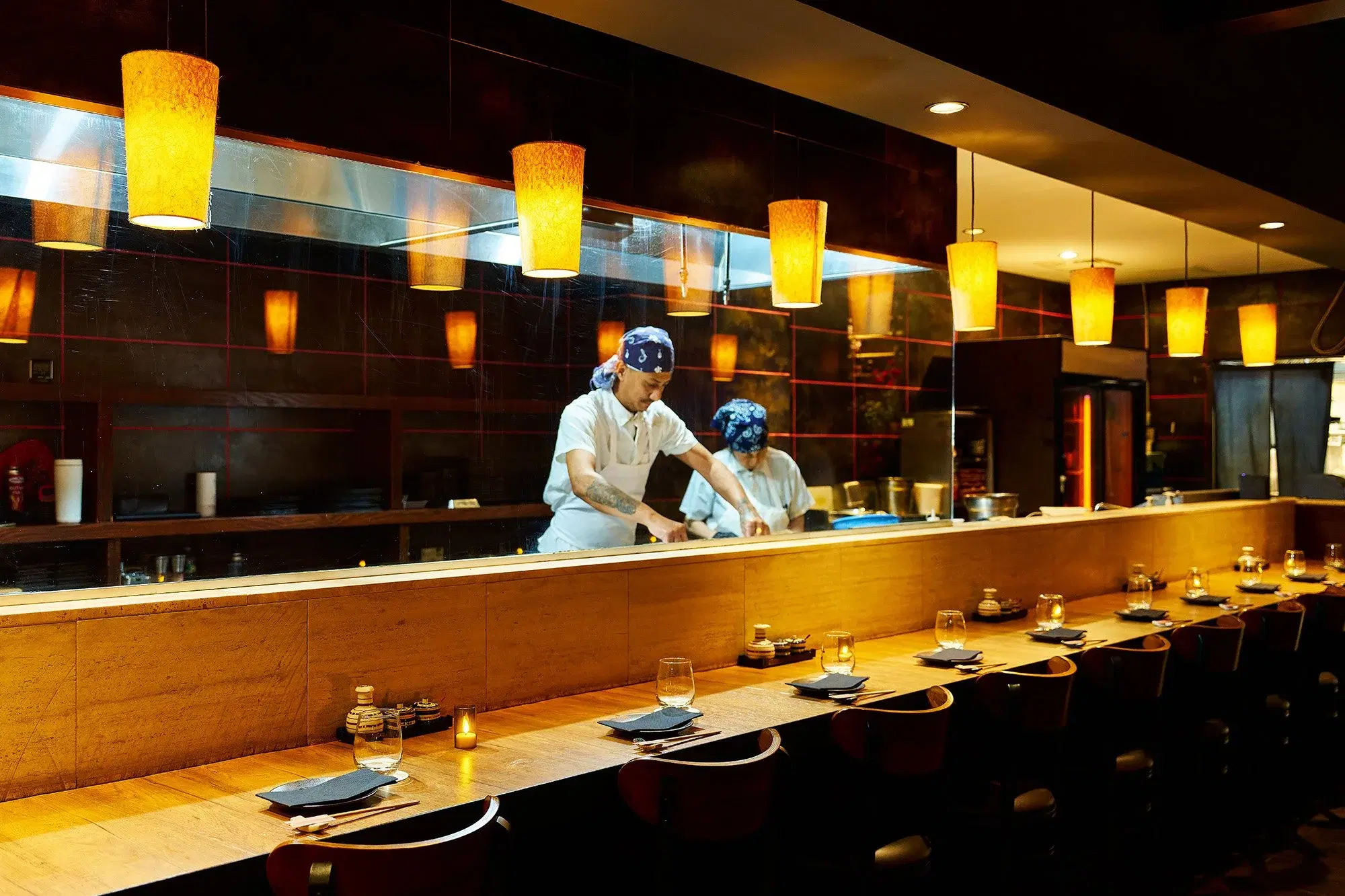
The menu
What to order
- Uni soba
- Yakitori
- Cold soba
- Salmon roe soba
- Pork belly yakitori
Soba in the Shadow of Grand Central: The Case for Craft at the $$ Level
New York's Japanese restaurant scene has bifurcated sharply over the past decade. At one end, omakase counters at venues like Noda and Tsukimi push well past the $300-per-head threshold, operating in a category defined by scarcity, reservation difficulty, and theatrical presentation. At the other, a smaller tier of craft-oriented casual restaurants holds ground on technique and sourcing without the ceremony.
The restaurant's dual identity as a soba house and yakitori bar is itself an editorial statement about a particular strain of Japanese casual dining. In Tokyo, soba specialists and yakitori-ya typically occupy entirely separate categories, each with its own rituals and competitive hierarchies. The pairing here reflects an adaptation that has become characteristic of mid-tier Japanese dining in New York, one kitchen, two distinct craft traditions, and a menu that rewards a certain sequencing if you know what to order and when.
The Arc of the Meal: How the Menu Unfolds
The logic of eating well at Soba Totto is a progression rather than a single-dish decision. Japanese casual dining in this register is at its most coherent when approached the way a Japanese diner might approach a multi-stop evening: small shared plates to open, a protein sequence in the middle, and the soba as a closing act rather than an anchor.
Yakitori in its more considered forms, as opposed to the fast-grilled convenience versions found across Japanese train station corridors, demands attention to the coal temperature, the cut of the bird, and the balance between tare-glazed and salted preparations. A table that works through a yakitori sequence before landing on soba is eating in a way that mirrors the meal's internal architecture. The soba, freshly made and served either chilled with dipping broth or hot in a clear dashi, functions as a palate resolution: clean, direct, and a deliberate contrast to the fat and smoke of grilled proteins.
This sequencing matters because it changes how you evaluate the restaurant. Judged as a soba shop alone, Soba Totto competes in a narrower category. That format is well-represented across the city, from the more casual end of the spectrum at Blue Ribbon Sushi Izakaya to the tighter, more conceptual execution at Chikarashi.
What the Award Record Actually Signals
Soba Totto carries a Michelin Plate for both 2024 and 2025, a designation that signals consistent kitchen quality without the tasting-menu ambition required for star consideration. Its trajectory on Opinionated About Dining's Casual North America list is worth reading carefully: Recommended in 2023, ranked #400 in 2024, and climbing to #320 in 2025. That upward movement in OAD's crowd-sourced but editorially curated rankings suggests a restaurant gaining traction with a community of engaged diners rather than coasting on earlier recognition.
For context, the restaurants that dominate OAD's upper tiers in New York include places operating at price points two to three times higher, including ambitious multi-course formats. Soba Totto's position at #320 in the casual category places it in a competitive set of restaurants that punch above their price point, a characteristic that OAD's methodology tends to reward.
| Venue | Cuisine Focus | Price Range | Michelin Recognition | OAD 2025 |
|---|---|---|---|---|
| Soba Totto | Soba, Yakitori | $$ | Plate (2025) | #320 Casual |
| Tsukimi | Japanese | $$$$ | ||
| Noda | Japanese | $$$$ | ||
| Odo | Japanese | $$$$ | ||
| Blue Ribbon Sushi Izakaya | Sushi, Izakaya | $$$ |
East 43rd Street and the Midtown Casual Problem
Midtown Manhattan has a well-documented dining credibility problem. The area's restaurant stock skews toward expense-account steakhouses, tourist-facing chains, and lunch-trade operations that optimize for throughput rather than craft. Against that backdrop, a restaurant holding consecutive Michelin recognition and rising OAD placement at the $$ price point represents something structurally unusual for its zip code.
The Grand Central corridor attracts a workforce-dense lunch market, and Soba Totto's hours reflect that reality, running a tight 11:45am to 2:30pm lunch service Monday through Friday. The dinner window, open until 10:30pm Monday through Saturday, catches a different crowd: people choosing to be in Midtown rather than passing through it. Saturday dinner service without a Saturday lunch suggests the kitchen's priorities tilt toward considered evening eating rather than maximizing daytime covers.
For visitors staying in Midtown hotels or attending events at Grand Central-adjacent venues, the restaurant offers a caliber of Japanese cooking that the immediate neighbourhood rarely sustains. For those building a broader New York itinerary, our full New York City restaurants guide maps the city's dining across price points and neighbourhoods. The New York City hotels guide, bars guide, and experiences guide cover the wider picture.
Placing Soba Totto in a Wider Frame
The craft-soba category in New York remains small. Unlike ramen, which has attracted significant investment and concept development, soba has stayed closer to its traditional roots, buckwheat-heavy, technique-dependent, relatively unspectacular in presentation but demanding in execution. Restaurants working seriously in this format tend to sit outside the mainstream dining conversation, which partly explains Soba Totto's position: well-regarded within a specific community of engaged diners, less visible in the general press cycle that drives reservation demand.
That dynamic places it in interesting company globally. Japanese casual restaurants earning consistent recognition without operating in the high-ticket omakase format follow a similar pattern in Tokyo, where specialists at the level of Myojaku and more formal dining addresses like Azabu Kadowaki demonstrate that Japanese cuisine rewards depth of focus rather than breadth. The soba counter equivalent in New York is a rarer thing, and Soba Totto's multi-year recognition record suggests it is holding that position with some discipline.
For context on how this caliber of casual dining compares against the full range of the American dining scene, the ambition gap between a Michelin Plate recipient at the $$ level and the country's tasting-menu flagships, Alinea in Chicago, The French Laundry in Napa, or Lazy Bear in San Francisco, is obvious in format and price. What connects them is a commitment to craft within a defined tradition, which is what consecutive Michelin recognition at any level is designed to signal.
Planning Your Visit
Soba Totto is closed Sundays. Lunch runs Monday through Friday from 11:45am to 2:30pm; dinner runs Monday through Saturday from 5pm to 10:30pm. The address is 211 East 43rd Street, a short walk from Grand Central Terminal.
The restaurant is under the direction of Chef Shuichi Kotani. For those building a Japanese dining itinerary across the city, pairing an evening at Soba Totto with more format-intensive Japanese addresses elsewhere in Manhattan gives a useful sense of where craft-casual Japanese cooking sits in New York's current hierarchy.
Frequently asked questions
What should I order at Soba Totto?
The menu spans two distinct craft traditions, yakitori and soba, and the most coherent way to eat here is to treat them as a sequence rather than a choice. Work through yakitori selections first, using them as you would a series of small courses: varied cuts, a mix of tare-glazed and salt-finished preparations. Follow with soba as a closing course rather than a main. Chilled soba with dipping broth (zaru or mori style) shows off the noodle's texture most directly; hot preparations suit colder months. The Michelin Plate recognition and OAD ranking signal that the kitchen executes both sides of the menu at a level above casual expectations, so the full progression is worth the time rather than treating either element as a side order. Chef Shuichi Kotani oversees the kitchen.
Peers Worth Knowing
| Venue | Cuisine | Price | Awards | Notes |
|---|---|---|---|---|
| Soba TottoThis venue (the venue you are viewing) | Traditional Japanese Soba & Yakitori Izakaya | $20–30 | Michelin Plate | Not listed |
| Le Bernardin | French Seafood Fine Dining | $300–500 | 3 Michelin Stars · World's 50 Best #13 | French, Seafood |
| Atomix | Modern Korean Tasting Menu | $300–500 | 2 Michelin Stars · World's 50 Best #11 | Modern Korean, Korean |
| Masa | Seasonal Hokkaido Tempura Omakase | $150–200 | Tabelog 100 #34 | Sushi, Japanese |
| Per Se | French Fine Dining Tasting Menu | $300–500 | 3 Michelin Stars · World's 50 Best #40 | French, Contemporary |
| Eleven Madison Park | Contemporary Plant-Based Fine Dining | $300–500 | 3 Michelin Stars · World's 50 Best #4 | French, Vegan |
Recognition history
Dated appearances from independent guides and award organizations, with the underlying list record or original source where available.
Michelin Plate
Michelin · 2026 Michelin Plate
Opinionated About Dining Casual in North America Recommended
Opinionated About Dining
Full recognition history (7 entries)
Michelin Plate
Michelin
Opinionated About Dining Casual in North America Ranked #320
Opinionated About Dining
Michelin Plate
Michelin
Opinionated About Dining Casual in North America Ranked #400
Opinionated About Dining
Opinionated About Dining Casual in North America Recommended
Opinionated About Dining