Izakaya
Izakaya brings the Japanese pub-dining format to Palm Hills, Sheikh Zayed, placing it within a pocket of Greater Cairo where demand for Asian casual dining has grown steadily alongside the area's residential expansion. The setting inside Palm Central gives it a polished retail-complex context, situating it closer to the neighbourhood's international-leaning dining tier than to city-centre Japanese specialists like Kazoku in Cairo or Mori Sushi further east.
 Discover on Pearl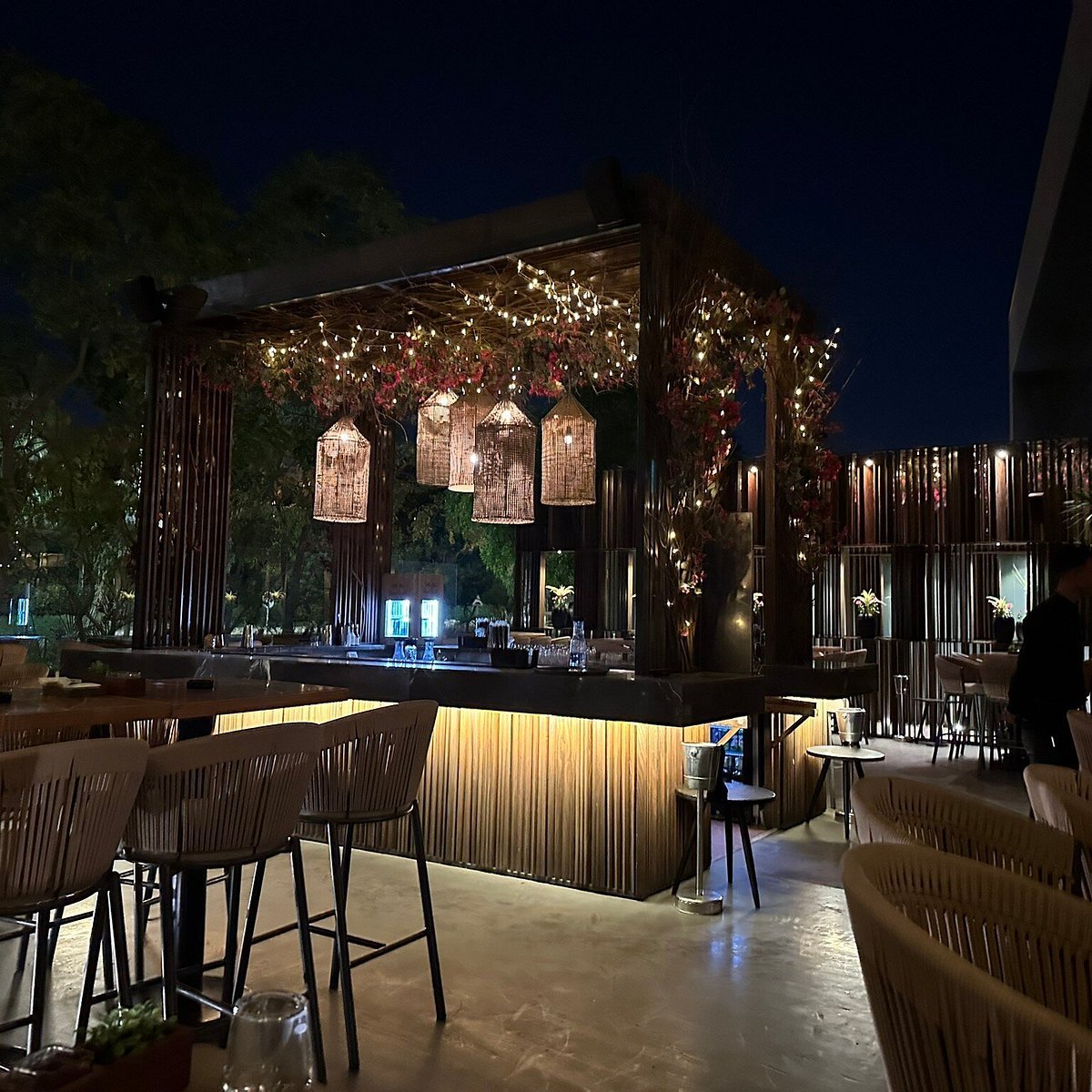
There is a particular discipline required to transplant the izakaya format — Japan's working-through-the-evening pub-dining tradition — into a context as different from Shinjuku as Sheikh Zayed City, Giza. The original model depends on proximity, repetition, and informality: a regular crowd, small plates arriving without ceremony, the meal structured around drinking as much as eating. What happens when that format lands inside a polished retail development on the western fringe of Greater Cairo, where the dining occasion is more deliberate and the commute home is measured in motorway kilometres rather than metro stops? Izakaya, positioned within Palm Central at Palm Hills, sits at the centre of that tension, and how it resolves it tells you something meaningful about where Egyptian appetite for Japanese casual dining currently sits.
The Palm Hills Context
Palm Hills is a gated residential development that has become one of the more self-contained communities in the Greater Cairo orbit. Its retail and dining infrastructure, including Palm Central, has evolved to serve a population that skews affluent, internationally educated, and time-constrained. That demographic creates a specific demand pattern: diners who recognise Japanese cuisine from travel or from the growing number of Japanese concepts in New Cairo and Zamalek, but who want access without the cross-city drive. Our full 6th Of October restaurants guide maps how this western corridor has developed its own dining identity, distinct from the older Cairo core.
The shortlist, unlocked.
Hard-to-book tables, cellar releases, and concierge-planned trips.
Get Exclusive Access →The broader Sheikh Zayed and 6th of October corridor has accumulated a range of mid-to-upper casual dining options, from Andrea El Mariouteya in Sheikh Zayed City, which anchors the Egyptian grill tradition in the area, to Mayrig in Sheikh Zayed, which represents the area's Armenian-Lebanese strand. Izakaya enters a corridor that is assembling range rather than depth, which means a Japanese pub-format concept occupies relatively clear space.
Ingredient Sourcing and the Japanese Format in Egypt
The editorial question that the izakaya format always raises outside Japan is one of ingredient integrity. The format's genius in its home country is inseparable from access: fresh seafood arriving daily from Tsukiji or Toyosu, regional sake and shochu stocked as a matter of course, vegetables sourced from nearby farmland. Export the format without that supply chain and the kitchen faces a structural choice , either it sources high-quality Japanese imports at significant cost, it adapts the menu toward ingredients available locally, or it does some combination of both.
Egypt's Japanese restaurant sector has navigated this unevenly. Concepts closer to the formal end, such as Kazoku in Cairo, operate in a context where import costs are partially absorbed by price positioning. The izakaya format, which is fundamentally casual and portion-led, creates tighter margin pressure when ingredient sourcing is taken seriously. Egyptian aquaculture has improved enough to supply some of the whitefish and shellfish that appear across izakaya menus; Japanese condiments and fermented bases are importable but add cost; premium proteins like wagyu or high-grade tuna remain expensive to source reliably.
What this means in practice is that a well-run izakaya in this market is making constant calibration decisions about which dishes hold their integrity with locally or regionally available ingredients and which require imports to remain credible. Yakitori, for instance, depends more on technique and seasoning than on a specific provenance of chicken, and translates reasonably well. Sashimi-forward dishes are more exposed to sourcing constraints. The composition of the menu in any Egyptian izakaya is therefore partly a map of where the kitchen is confident its supply chain holds up.
For comparison, Mori Sushi at City Center Almaza operates a sushi-forward format where sourcing is the central challenge; the izakaya model distributes that pressure across a broader range of preparations, which can actually make it more viable in markets where premium seafood supply is inconsistent.
Where It Sits in the Cairo Japanese Scene
Cairo's Japanese dining tier has stratified over the past decade. At one end sit formal omakase and high-end sushi counters with import-dependent menus and pricing to match. At the other, fast-casual ramen and bento formats have proliferated in shopping malls across New Cairo and beyond. The izakaya model occupies a middle band , more informal than the former, more considered than the latter , and that middle band has been slower to develop than either end.
Reif Kushiyaki, which has operated a skewer-focused concept in Cairo, represents one interpretation of Japanese casual in this market. Izakaya at Palm Hills is positioned geographically to serve the western residential population that the New Cairo-anchored Japanese scene does not reach. In that sense, its location is its primary argument: it is accessible to a specific community rather than competing across the whole city.
Venues like Chinoix Restaurant in New Cairo illustrate how Asian fusion has found traction on the eastern side of the city; the western corridor has been slower to develop equivalent depth in Asian casual. Pier 88 in Zamalek and Khufus in Giza show that the Nile-adjacent dining belt has its own premium pull, but neither addresses the palm-tree-suburb demographic that Izakaya is positioned to serve.
The Broader Egyptian Dining Moment
Egypt's restaurant sector is in a period of genuine expansion at the casual-premium tier. Concepts that would have felt out of place a decade ago , Japanese pub dining, Armenian home cooking, modern Egyptian cuisine , now find audiences in the right postcodes. The comparison is not with global dining capitals; it is internal. Against where Cairo's western suburbs were five years ago, the presence of a Japanese-format dining room in Palm Central represents a meaningful shift in what the local market will support.
That shift has parallels in other Egyptian contexts: Castle Zaman in Noweiba is an example of a dining concept that has built identity through a specific sense of place and ingredient provenance. Abou Shakra in Al Haram shows how an Egyptian institution maintains relevance through consistent sourcing over generations. The ingredient-to-table integrity that those places represent in their own traditions is precisely what a well-operated izakaya needs to establish if it is to build a loyal neighbourhood following rather than function as a novelty visit.
The global reference point for what rigorous sourcing looks like at the leading of the food chain sits at places like Le Bernardin in New York City, where supply chain discipline defines the entire menu logic. That level of infrastructure is not what an Egyptian izakaya operates at, but the principle , that ingredient sourcing decisions should drive menu composition rather than follow it , applies regardless of market tier.
Planning a Visit
Izakaya is located within Palm Central at Palm Hills, Sheikh Zayed, in the Giza Governorate, accessible primarily by car from central Cairo or the 6th of October corridor. Given the venue's positioning inside a retail development, access by personal vehicle or ride-hailing is the practical approach for most visitors. Booking details, current hours, and pricing are leading confirmed directly through the venue, as no central reservations platform or published contact information is currently available through EP Club's database. The format suits an evening visit structured around sharing plates, in keeping with the izakaya convention of ordering progressively rather than front-loading the meal.
The shortlist, unlocked.
Hard-to-book tables, cellar releases, and concierge-planned trips.
Get Exclusive Access →Frequently Asked Questions
Comparison Snapshot
These are the closest comparables we have in our database for quick context.
| Venue | Cuisine | Price | Awards | Notes |
|---|---|---|---|---|
| Izakaya | This venue | |||
| Khufus | Egyptian Modern | World's 50 Best | Egyptian Modern | |
| Le Restaurant | Egyptian Mediterranean | Egyptian Mediterranean | ||
| La Maison Bleue | Egyptian Mediterranean | Egyptian Mediterranean | ||
| Kazoku | World's 50 Best | |||
| Reif Kushiyaki Cairo | World's 50 Best |
Need a table?
Our members enjoy priority alerts and concierge-led booking support for the world's most difficult tables.
Get Exclusive AccessThe shortlist, unlocked.
Hard-to-book tables, cellar releases, and concierge-planned trips.
Get Exclusive Access →