
Le Restaurant in El Gouna brings Egyptian Mediterranean cooking to the Red Sea coast under chef Bordier, earning recognition for cooking classics in a resort town where serious food is harder to find than the turquoise water. With a 4.8 Google rating from 43 reviews, it occupies the upper tier of El Gouna dining and draws both residents and visitors looking for something beyond poolside fare.
 Discover on Pearl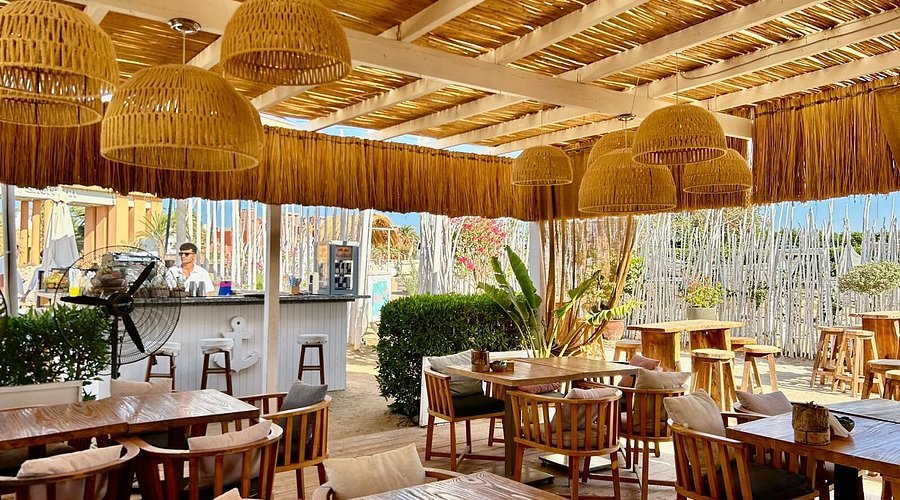
The Table El Gouna Has Been Waiting For
El Gouna operates on a different clock to Cairo or Alexandria. The resort town on the Red Sea Governorate coast was built around lagoons and leisure, and its dining scene reflects that DNA: most restaurants here calibrate for holiday convenience rather than serious cooking. Against that backdrop, a restaurant earning consistent recognition for cooking classics carries more weight than the same accolade would in a competitive metropolitan market. Le Restaurant, positioned in the tourist village at the heart of El Gouna, occupies that upper bracket. Its Egyptian Mediterranean menu under chef Bordier sits in a peer set closer to La Maison Bleue than to the resort buffets that dominate the area's volume.
Egyptian Mediterranean at the Table: What the Format Means
Egyptian Mediterranean cooking is not a single codified tradition but a living negotiation between two culinary inheritances. On one side sits the deep larder of Egyptian cooking: broad beans, spiced legumes, slow-cooked proteins, herb-forward sauces, and the kind of grain and pulse work that predates most Mediterranean cuisines. On the other sits the lighter, acid-driven register of the Mediterranean littoral — olive oil, citrus, fresh vegetables, and a bias toward sharing rather than plating. When the two traditions are handled with discipline, the result is a table culture built around communal small plates, where the rhythm of the meal is set by the arrival of dishes rather than a fixed sequence of courses.
The shortlist, unlocked.
Hard-to-book tables, cellar releases, and concierge-planned trips.
Get Exclusive Access →This meze-adjacent approach is the natural frame for Egyptian Mediterranean dining, and it rewards a different kind of eating attention. The quality of a table like this is not measured course by course but in aggregate: how the flavours move across the spread, whether the kitchen's understanding of spice is precise or blunt, and whether the Mediterranean lightness is earned or simply imposed over heavier foundations. In contexts where this format works, it is one of the most sociable meal structures available anywhere in the region. For anyone familiar with the communal table traditions covered in our full El Gouna restaurants guide, Le Restaurant represents that tradition handled at a credible level.
Cooking Classics: What the Recognition Signals
The HIGHLIGHTS: COOKING CLASSICS distinction is the trust signal in Le Restaurant's record, and it is worth reading carefully. In the broader range of culinary recognition, a cooking classics designation typically points toward technical execution of established forms rather than innovation or concept-driven novelty. It does not suggest a kitchen chasing trends. It suggests a kitchen that has decided to do familiar things well, which in a resort context is a more demanding commitment than it sounds. Holiday dining economies often reward novelty and atmosphere over precision. A classics-oriented kitchen is making a different bet.
For comparison, consider what that commitment looks like at the level of formally decorated rooms. Alain Ducasse at Louis XV in Monte Carlo or Alléno Paris au Pavillon Ledoyen have built reputations on the mastery of classical technique applied over decades. The gap in scale is obvious, but the underlying orientation is the same: execute known forms with enough consistency that the execution itself becomes the point. At Le Restaurant's level and context, that orientation produces a different kind of dining from what you find at concept-driven counters like Atomix in New York City or tasting-menu-led rooms like Lazy Bear in San Francisco. Neither orientation is superior in the abstract; they serve different reader intentions.
Where Le Restaurant Sits in El Gouna's Dining Tier
El Gouna is a self-contained resort development, which means its restaurant scene operates more like a captive market than a competitive urban dining district. The practical consequence is that the upper tier of El Gouna restaurants is thinner than it would be in Cairo or Alexandria, and the distance between tiers is larger. A 4.8 Google rating across 43 reviews, while a small sample, places Le Restaurant among the better-reviewed addresses in the area. That score, combined with the cooking classics recognition, positions it above casual resort dining without entering the formal fine-dining category that venues like Khufus in Giza represent in a more strictly culinary-destination context.
For visitors already planning a broader Egypt trip with serious eating in mind, the contrast is instructive. Cairo's restaurant scene, including addresses like Kazoku in Cairo, operates at a different competitive density. El Gouna's appeal is not as a dining destination in itself but as a place where, if you know which table to find, the cooking exceeds what the setting might lead you to expect. Internationally, the Egyptian Mediterranean register has analogs in coastal Adriatic kitchens and parts of the eastern Mediterranean coast, though comparisons to rooms like Aponiente in El Puerto de Santa María or Arzak in San Sebastián quickly highlight how different the ambition levels are. That is not a criticism of Le Restaurant; it is a calibration for the reader.
Planning Your Visit
Le Restaurant sits within the tourist village of El Gouna, at the Red Sea Governorate address. The venue is walkable from most of El Gouna's lagoon-side accommodation, which reduces the transfer logistics that can complicate dinner reservations in the broader Hurghada area. For visitors staying outside El Gouna, the drive from Hurghada International Airport takes roughly thirty minutes under normal traffic conditions, making an evening reservation a direct decision. Booking ahead is advisable during the October-to-April high season, when occupancy in El Gouna rises sharply and the better tables at upper-tier restaurants fill faster than the resort's relaxed pace might suggest. Full logistics for the area are covered in our El Gouna hotels guide, with additional recommendations across bars, wineries, and experiences in the town. For a broader reference point on what serious kitchen credentials look like elsewhere in the Mediterranean-adjacent world, the decorated rooms at 8½ Otto e Mezzo Bombana in Hong Kong or Atelier Moessmer Norbert Niederkofler in Brunico illustrate the upper end of the classics-grounded tradition. Le Restaurant operates at a different scale, but with a recognisably similar set of priorities at the table.
The shortlist, unlocked.
Hard-to-book tables, cellar releases, and concierge-planned trips.
Get Exclusive Access →Frequently Asked Questions
A Pricing-First Comparison
A fast peer set for context, pulled from similar venues in our database.
| Venue | Price | Awards | Notes |
|---|---|---|---|
| Le Restaurant | HIGHLIGHTS: • COOKING CLASSICS | This venue | |
| Khufus | World's 50 Best | Egyptian Modern | |
| La Maison Bleue | Egyptian Mediterranean | ||
| Kazoku | World's 50 Best | ||
| Le Petit Cornichon | World's 50 Best | ||
| Reif Kushiyaki Cairo | World's 50 Best |
Need a table?
Our members enjoy priority alerts and concierge-led booking support for the world's most difficult tables.
Get Exclusive AccessThe shortlist, unlocked.
Hard-to-book tables, cellar releases, and concierge-planned trips.
Get Exclusive Access →