Istmo Oaxacan Cuisine
On a stretch of North Clark Street where Lakeview's dining options tilt heavily toward American and pan-Asian formats, Istmo Oaxacan Cuisine brings the regional cooking of Mexico's southern isthmus into a Chicago neighbourhood context. The kitchen draws on the culinary traditions of the Zapotec and Huave peoples, a more specific regional lens than the generalised Mexican menus common in the city. Worth seeking out for those interested in the depth of Oaxacan technique beyond mole and mezcal.
Pearl is the En Primeur Club membership app — saves, bookings, and concierge access live there. Same editors, same standards.
- Address
- 3231 N Clark St, Chicago, IL 60657
- Phone
- +18723152034
- Website
- istmochicago.com
- Directions
- Get directions
 Saves & bookings on Pearl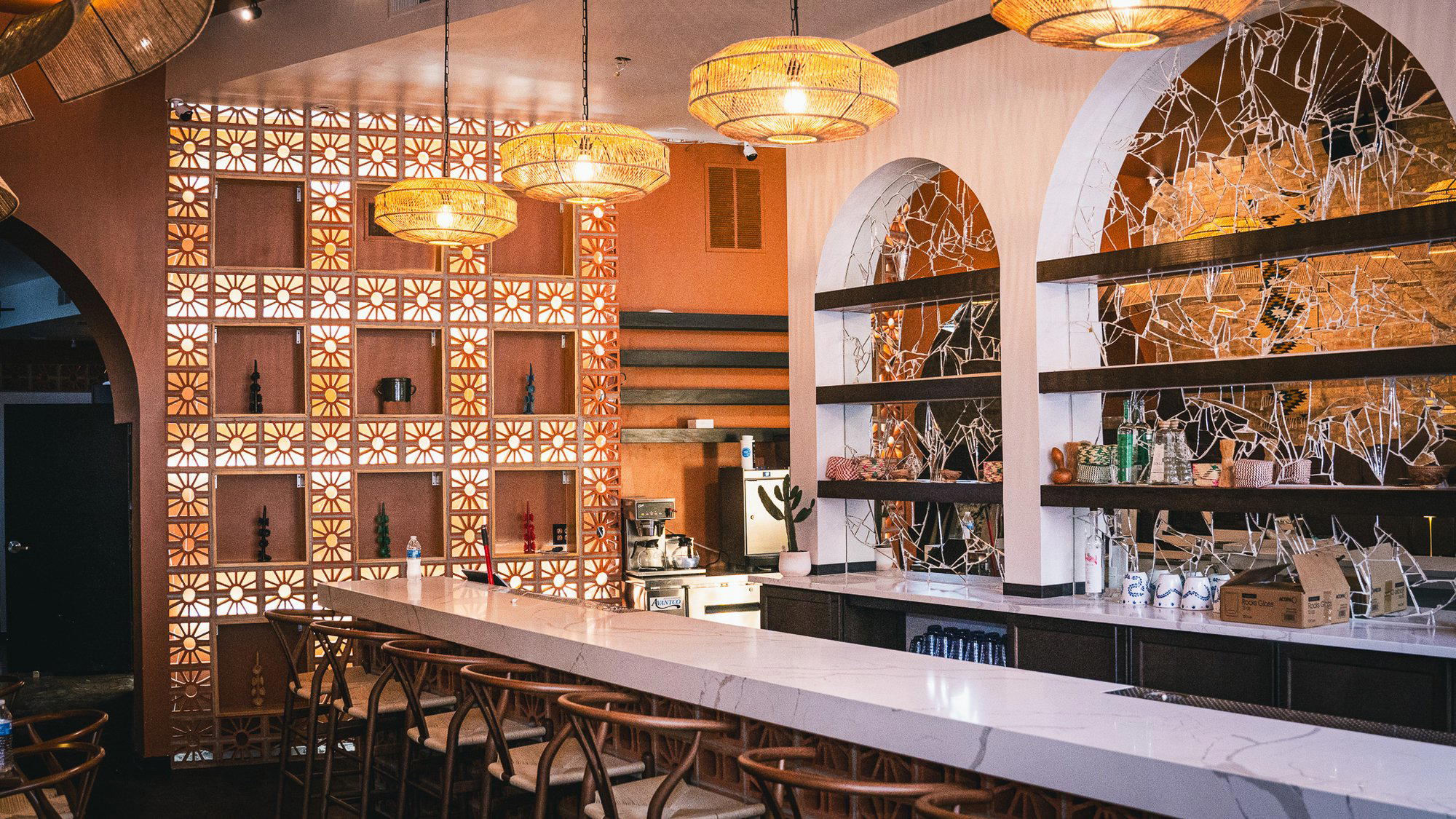
North Clark Street and the Case for Regional Mexican in Lakeview
Chicago's Mexican restaurant scene splits, broadly, into two tiers. The first is the deep-rooted Pilsen and Little Village corridor, where decades of community presence have produced some of the country's most serious regional Mexican cooking. The second is a scattered collection of higher-visibility spots in North Side neighbourhoods, where formats range from upscale pan-Mexican to fast-casual. Istmo Oaxacan Cuisine, at 3231 N Clark St in Lakeview, occupies an interesting position in that second tier: a restaurant named explicitly for a region, the Isthmus of Tehuantepec in southern Oaxaca, rather than for a cuisine broadly defined.
The Isthmus designation matters. Oaxacan cooking is itself a broad category, encompassing seven distinct sub-regional traditions. Istmo specifically refers to the low-lying isthmus that connects the rest of Mexico to the Yucatán Peninsula, home to Zapotec and Huave culinary traditions that differ from the highland Oaxacan cooking more commonly represented in American cities. When a Chicago restaurant anchors its identity to that geography, it signals a narrower and more specific regional focus than the word "Oaxacan" alone would suggest.
The Lakeview Setting: What the Address Tells You
North Clark Street in Lakeview runs through one of Chicago's more commercially active residential corridors. The immediate stretch around 3231 N Clark sits between Belmont and Addison, a block set populated by bars, neighbourhood restaurants, and retail that serves a dense, largely professional residential base. This is not a destination dining district in the way that the West Loop or River North operate. Restaurants here succeed by becoming neighbourhood regulars as much as by attracting cross-city traffic.
That neighbourhood dynamic shapes what Istmo is doing. The cooking tradition it draws from, Oaxacan isthmus cuisine, has a strong festive and communal character. The region's cuisine is historically associated with large collective celebrations called velas, where food is prepared and shared at a scale that reflects community rather than fine dining formality. A Lakeview setting, with its mix of regulars and curious visitors, may suit that communal register better than a more formal dining district would.
For context on where Istmo sits in Chicago's broader restaurant spectrum, the city's most decorated tables, Alinea, Smyth, Oriole, and Next Restaurant, operate in an entirely different register. Istmo positions itself outside that tier, as a neighbourhood-facing restaurant rooted in a specific regional tradition rather than a progressive tasting menu format. The comparison that holds is less to those high-ceremony Chicago rooms and more to the emerging class of regional-specific Latin American restaurants that have gained attention nationally, of which Kasama in Ukrainian Village represents a Filipino parallel in Chicago's own market.
What the Cuisine Actually Represents
Istmo cooking has a distinct visual and flavour vocabulary that separates it from the highland Oaxacan food that American diners are more likely to know. The highlands produce the moles, negro, coloradito, amarillo, that have become the reference points for Oaxacan cuisine in the United States. The Isthmus, by contrast, is known for different preparations: tasajo (a thin, air-dried beef), cecina enchilada (spiced, dried pork), and enfrijoladas made with the black beans that grow in the region's lowland climate. Seafood also features more prominently given the Pacific and Gulf proximity, with preparations that carry Huave cultural influence.
The regional specificity also extends to corn culture. Oaxaca's isthmus has its own tortilla tradition, with the region's memelas and tlayudas taking on locally particular forms. Beverages connected to the region include not just mezcal but also tejate and agua de chilhuacle, drinks that rarely appear in Mexican restaurant programs outside of Oaxaca itself. Istmo's menu draws on these threads in varying degrees.
For diners familiar with other regional Mexican programs nationally, or who have tracked how Mexican regional cooking is handled in cities like New York, Los Angeles, or San Francisco, where Oaxacan restaurants have proliferated over the last decade, the Istmo framing will read as a more considered positioning than generic Oaxacan branding. That level of regional precision is, in a fragmented restaurant market, a form of curatorial argument.
Planning a Visit: What to Know
Istmo sits at 3231 N Clark St, accessible from the Belmont CTA Red, Brown, and Purple Line station, which puts it roughly a ten-minute walk south along Clark. Parking on North Clark is available but competitive during evening hours, and the transit access makes it a practical choice from most central Chicago neighbourhoods. Istmo represents the kind of neighbourhood-anchored regional cooking that rewards visitors willing to move beyond the West Loop and River North concentration of the city's most-discussed restaurants.
Given the Lakeview location and neighbourhood character, booking ahead for weekend evenings is advisable, but the restaurant is unlikely to operate on the months-ahead booking windows of Chicago's tasting menu rooms. Current hours, pricing, and reservation availability should be confirmed directly. The restaurant's address places it within easy reach of Wrigley Field, which means Friday and Saturday evenings during baseball season will see higher surrounding foot traffic than usual.
For those building a broader dining itinerary, Chicago's restaurant scene rewards geographic clustering. Lakeview pairs well with Lincoln Park and Andersonville dining if you are spending multiple evenings on the North Side. Those looking to cover the full range of what Chicago's Mexican food scene offers would do well to pair a Lakeview visit with time in Pilsen, where the density of serious regional Mexican cooking is higher and the price points tend to be lower.
How Istmo Fits Chicago's Regional Mexican Conversation
Chicago's reputation as a Mexican food city rests largely on its South and West Side communities, where the cooking is driven by decades of migration from Guerrero, Michoacán, Jalisco, and Oaxaca. The North Side has historically been less associated with that tradition, which makes a restaurant like Istmo an interesting data point in how regional Mexican cooking is spreading geographically within the city.
Nationally, the broader movement toward regional specificity in Mexican restaurant programming has accelerated. Restaurants focused on Yucatecan, Veracruzano, Sonoran, and Oaxacan isthmus cooking have opened in New York, Los Angeles, and Chicago over the past several years, driven partly by a cohort of Mexican-American chefs who trained in serious kitchens, including some at the level of Le Bernardin or Lazy Bear, before returning to cook from their regional heritage. The Istmo name fits squarely within that pattern, positioning the restaurant in a conversation about what Mexican cuisine in American cities can mean when it moves past generalisation.
That ambition, calibrated to a Lakeview neighbourhood block rather than a West Loop flagship address, is itself a reasonable argument for the kind of cooking Istmo appears to be doing: specific, community-rooted, and outside the obvious dining circuit. It is not the approach of Blue Hill at Stone Barns or Providence in terms of scale or ceremony, but the underlying logic, cook from somewhere specific, not from everywhere in general, is the same.
Price and Positioning
Comparable venues nearby, for context on price, style, and recognition.
| Venue | Cuisine | Price |
|---|---|---|
| Istmo Oaxacan CuisineThis venue — the venue you are viewing | Lakeview, Modern Oaxacan Cuisine | $$ |
| Frida Room Pilsen | Pilsen, Mexican-American Brunch | $$ |
| Bocaditos Chicago | West Loop, Authentic Mexican | $$ |
| La Cantina Grill | South Loop, Authentic Mexican | $$ |
| Senoritas Cantina On Dearborn | Printers Row, Authentic Mexican Cantina | $$ |
| Su Casa Mexican Restaurant | River North, Traditional Mexican | $$ |





At a Glance
- Modern
- Rustic
- Cozy
- Brunch
- Casual Hangout
- Group Dining
- Standalone
Current opening hours
- Monday
- Closed
- Tuesday
- Closed
- Wednesday
- Closed
- Thursday
- 4:30–10 PM
- Friday
- 4:30–10 PM
- Saturday
- 9:30 AM–2 PM, 5–10 PM
- Sunday
- 9:30 AM–2 PM, 5–10 PM
Hours can change for holidays and private events. Last verified .
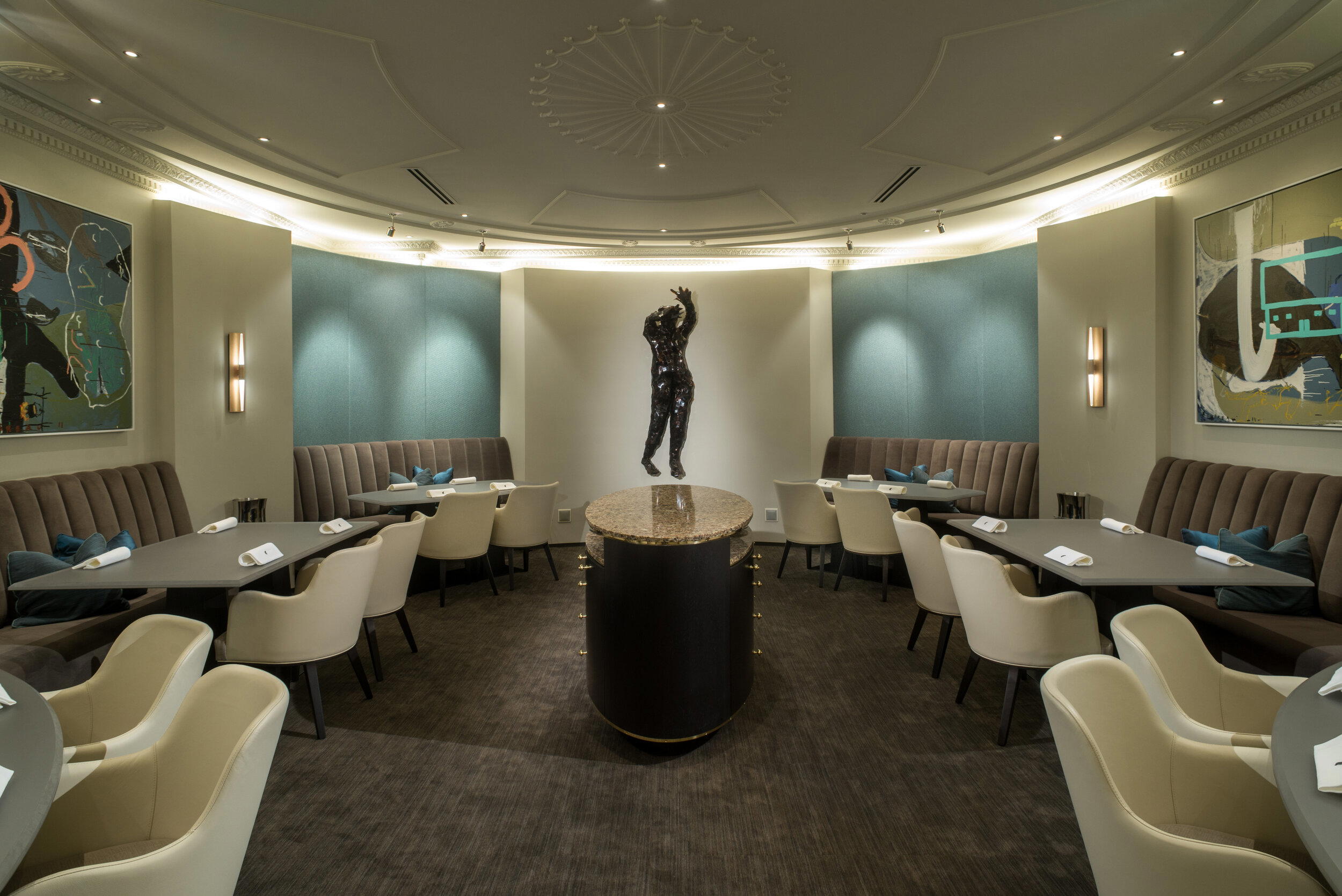
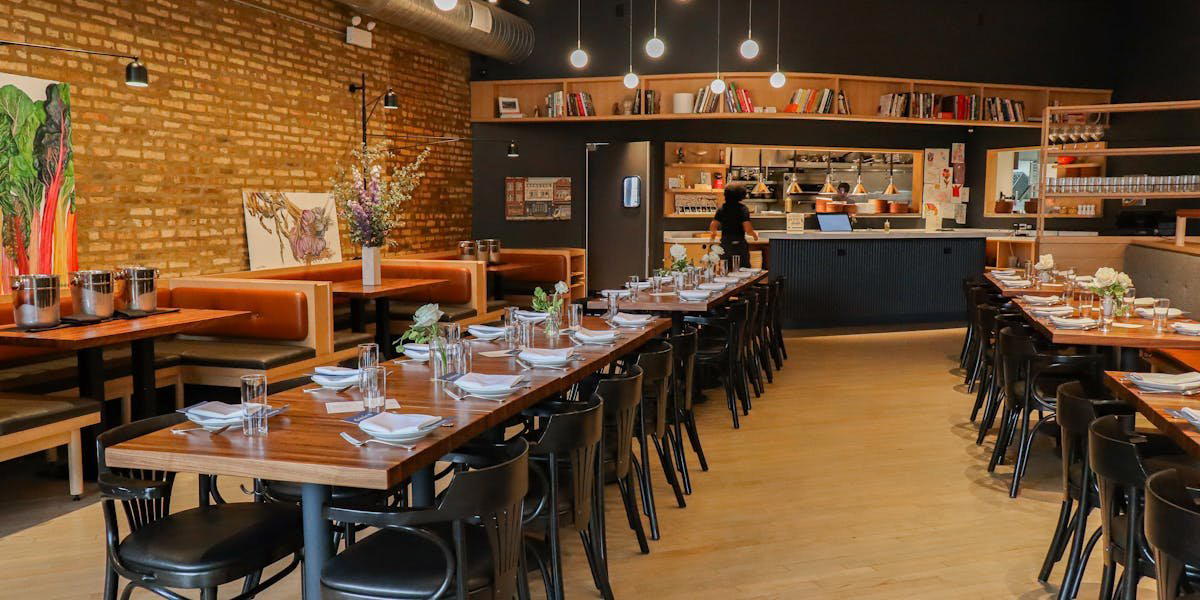
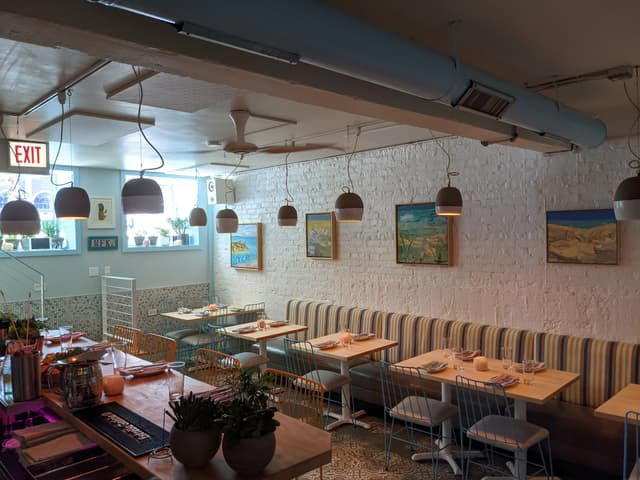
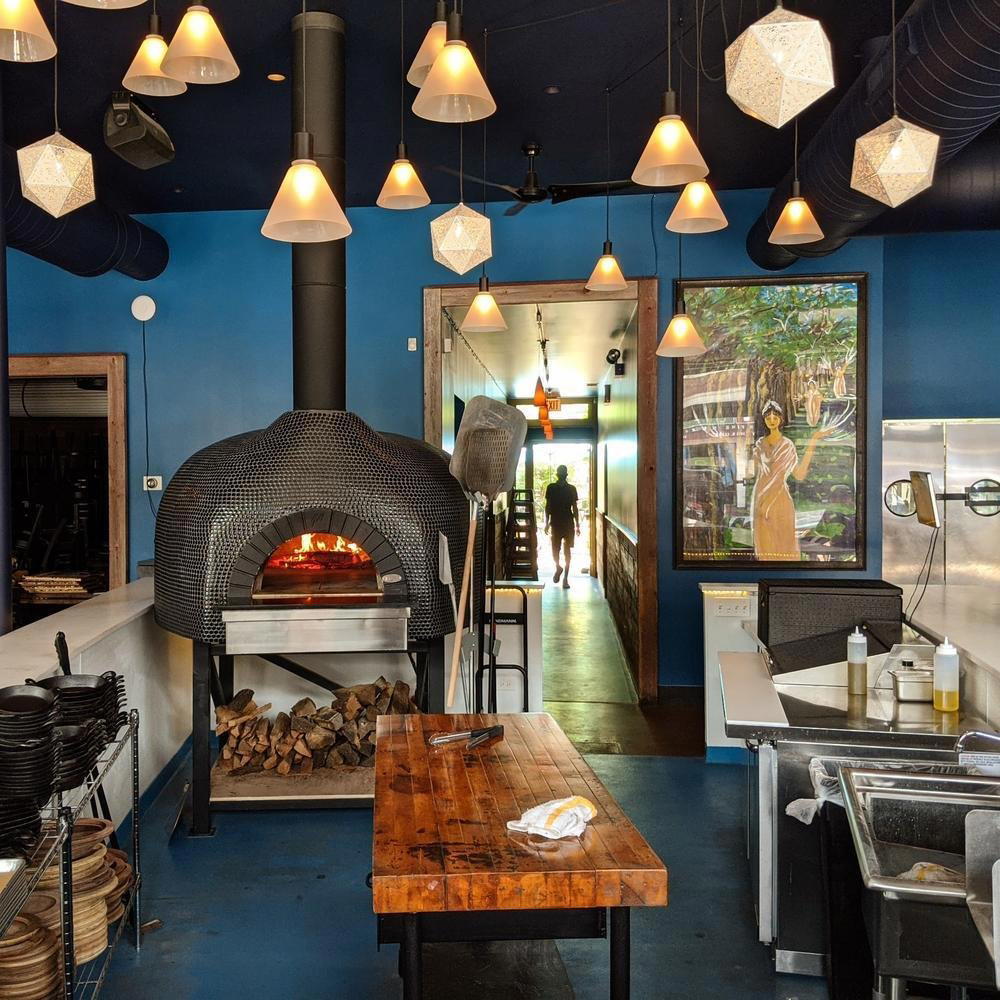
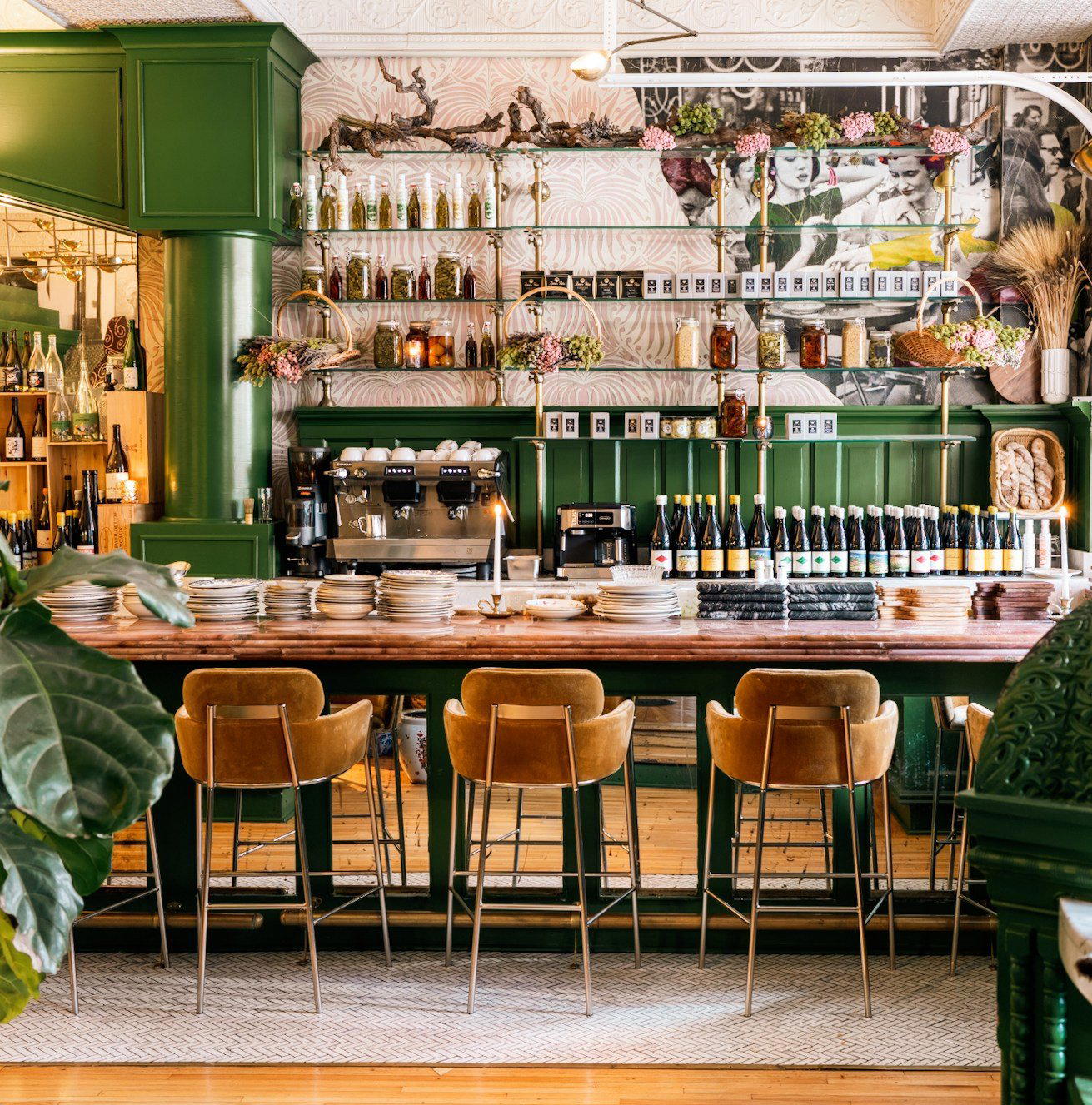
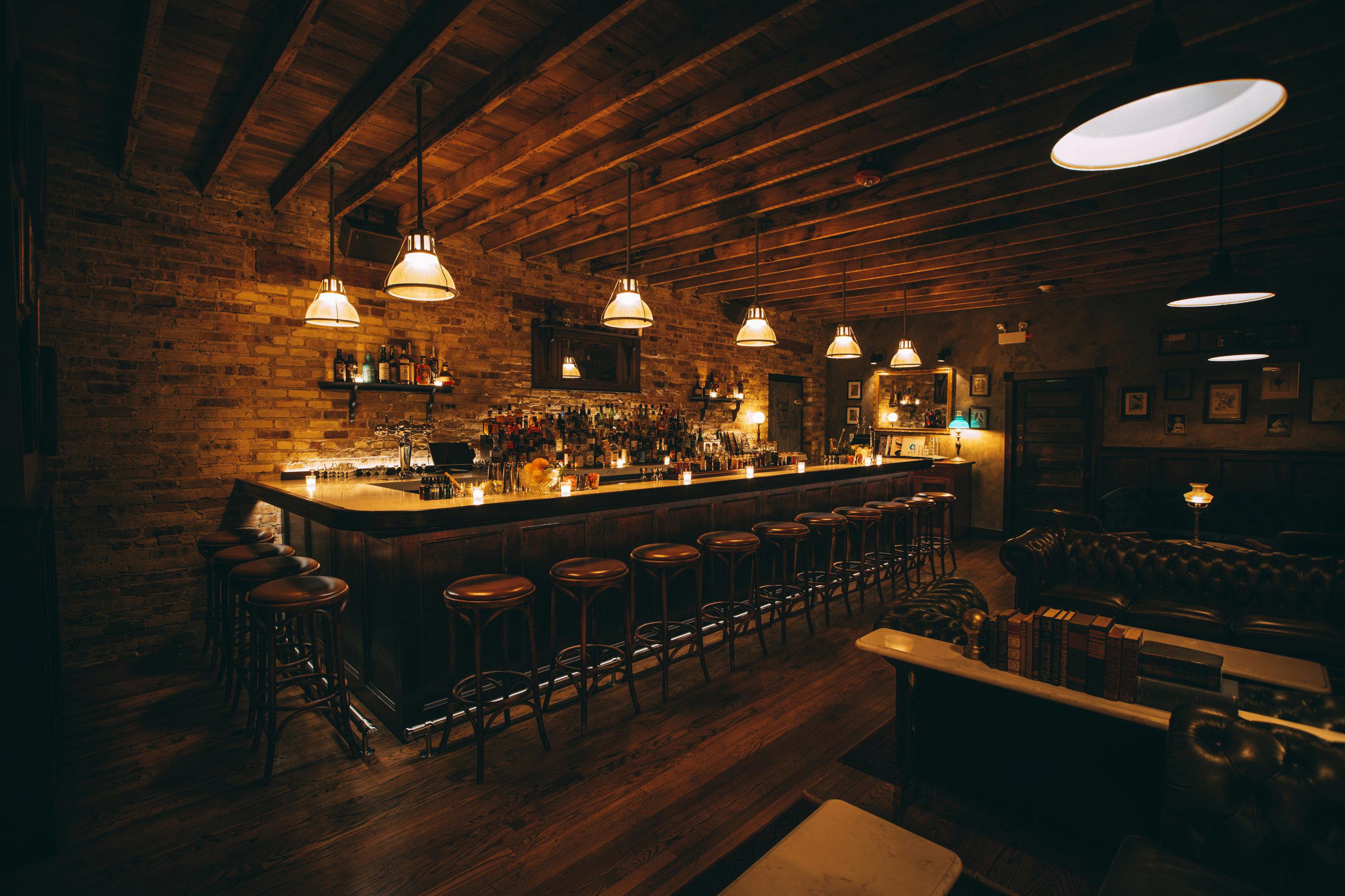
Modern architecture merges with traditional Oaxacan elements, creating an inviting space that celebrates culinary heritage with refined, polished presentation.