
Tabelog 100 #49
Our verdict
Toyama’s wagashi culture rewards precision over ceremony: rice, beans, sugar and timing do the work. Ishitani Mochiya Toyama chuo dori honten is a low-cost, take-out-led stop for Japanese sweets and daifuku, recognized in Tabelog’s 2023 Japanese traditional sweets / sweets cafe WEST 100 selection.

Pearl is the En Primeur Club membership app — saves, bookings, and concierge access live there. Same editors, same standards.
- Address
- 富山県富山市中央通り1-5-33
- Phone
- +81764212253
- Website
- ishitani-mochiya.jp
- Directions
- Get directions
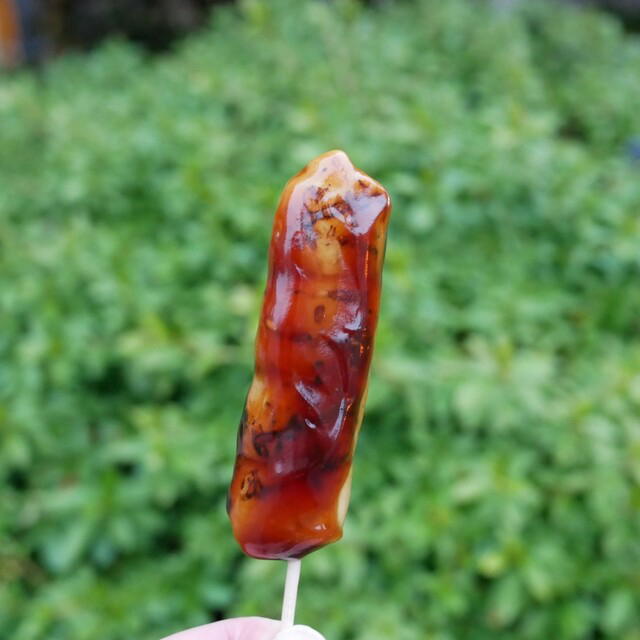
The menu
What to order
- Ayame dango
- Tobikiri mochi (kelp)
- Black sugar honey dango
Toyama’s everyday city rhythm suits wagashi better than a hushed dining room. The format is quick, local and ingredient-led: sweets chosen across a counter, carried out into the city or enjoyed simply rather than stretched into a formal sitting. In Toyama, that matters. This is a place where rice is not just background starch but part of the wider food identity, and the same attention that shapes everyday eating also gives mochi its authority.
Ishitani Mochiya Toyama chuo dori honten belongs to that older register of Japanese food culture: modest in spend, specific in craft, and more revealing than many longer meals. Its 2023 Tabelog Hyakumeiten recognition for Japanese traditional sweets, Japanese sweets cafe and daifuku places it in a curated category bracket, but the deeper point is discipline. Wagashi does not forgive excess. Texture, sweetness and temperature have narrower margins than travelers often expect.
Mochi as Toyama logic, not dessert decoration
Japanese sweets are sometimes treated by visitors as an afterthought after sushi, ramen or kaiseki. That misses the structure of the tradition. Wagashi is built around agricultural material and seasonality: rice flour, beans, sugar, tea culture, gift etiquette and daily neighborhood habits. Daifuku, the category specifically attached here, is not a luxury signal. It is a test of proportion, where the rice cake wrapper and red bean paste have to meet without one flattening the other.
Toyama gives that category a sharper frame because the area’s food reputation is tied to careful handling and direct ingredients. The city’s dining conversation can quickly turn toward seafood or counter restaurants with higher spends, yet its sweets shops show another side of the same regional logic: freshness, controlled handling and a preference for directness over spectacle. For visitors comparing a snack stop with a longer meal, that difference is useful. A sub-JPY 999 wagashi purchase can say more about everyday Toyama than a polished dining room trying to summarize the area in courses.
The sweets-shop format also changes expectations. This is not the place to look for a chef’s narrative or a composed tasting sequence. It is closer to the Japanese habit of buying something precise, seasonal and portable, then fitting it into the day. That makes it a strong counterpoint to Toyama’s reservation-driven restaurants and a sensible pause between heavier meals.
A low-cost stop with serious category recognition
The 2023 Tabelog Hyakumeiten recognition matters because wagashi is a crowded field across Japan, and sweets shops rarely rely on the same international award language as fine dining. A Tabelog score of 3.66 gives another signal: local diner attention rather than imported prestige. The value proposition is unusually clear for a traveler. The spend sits in the lowest listed band, while the category recognition places the shop in a more selective conversation than the price suggests.
That contrast is part of the appeal. Toyama has restaurants where the commitment is measured in time, counter seats and tasting-menu pacing. Wagashi compresses the decision. It is a short stop, not a replacement for dinner, and that makes it easier to fit around the city’s broader dining plan. Travelers building a Toyama day around savory addresses and other local dining rooms should treat this as a different kind of eating: concise, local and tied to ingredients rather than occasion.
Compared with higher-spend Toyama dining, the shop’s role is not to compete on ceremony. Tachigui Sushi Jinjin and Thai Nanraku, for example, sit in different dining lanes, while Ishitani Mochiya Toyama chuo dori honten is best understood through Japanese traditional sweets, cafe-style sweets and daifuku. The assessment should be made against other Japanese sweets counters and confectionery specialists, where freshness, handling and balance are more relevant than menu breadth.
How to place it in a Toyama itinerary
The smartest use is as a daytime food stop in Toyama, especially when the itinerary already includes heavier regional eating. Its role within the city is practical rather than ceremonial: a focused sweets address that can sit between general city plans and larger meals without demanding the full architecture of a restaurant reservation.
Payment and timing expectations are worth treating simply in Japan’s smaller specialist shops. The key point is not glamour but ease: plan a low-spend visit, keep the transaction uncomplicated, and treat the shop as a concise stop rather than a long meal. That frame fits the listed budget of up to JPY 999 and the everyday character of Japanese traditional sweets.
For a wider read on the city, use wagashi as a punctuation mark rather than a headline meal. Toyama’s food identity is broader than one category, and the contrast between sweets, seafood, casual counters and destination restaurants is where the city becomes legible. Start with Our full Toyama restaurants guide, then build the rest of the trip through Our full Toyama hotels guide, Our full Toyama bars guide, Our full Toyama wineries guide and Our full Toyama experiences guide.
Readers comparing Japan’s casual and specialist food formats beyond Toyama may also find useful contrasts in other focused sweets shops, casual counters, bars and neighborhood food stops. The comparison is not about cuisine similarity; it is about how focused formats can carry a city’s food habits with less ceremony than formal dining.
Frequently asked questions
Is Ishitani Mochiya Toyama chuo dori honten okay with children?
Yes. It is a Japanese sweets shop in Toyama, with a low price range up to JPY 999. That makes it an easy stop for families rather than a formal dining room.
What's the overall feel of Ishitani Mochiya Toyama chuo dori honten?
Expect a compact wagashi stop, with the focus on Japanese traditional sweets, cafe-style Japanese sweets and daifuku. The 2023 Tabelog Hyakumeiten recognition gives it credible category status, while Toyama keeps it practical for a daytime city itinerary.
What should I budget for a meal at Ishitani Mochiya Toyama chuo dori honten?
Pricing at Ishitani Mochiya Toyama chuo dori honten is listed as - JPY 999.
What is Ishitani Mochiya Toyama chuo dori honten known for?
Ishitani Mochiya Toyama chuo dori honten is known for Japanese traditional sweets, cafe-style Japanese sweets and daifuku in Toyama.
How It Stacks Up
Comparable venues by cuisine and price in the same metro.
| Venue | Cuisine | Price | Awards | Notes |
|---|---|---|---|---|
| Ishitani Mochiya Toyama chuo dori hontenThis venue — the venue you are viewing | Japanese Traditional Sweets Cafe | $1–10 | Tabelog 100 #49 | Not listed |
| Ito Sho Honten | Traditional Japanese Udon | $1–10 | Tabelog 100 #66 | Taromaru Honmachi |
| Boteyan | Okonomiyaki (Japanese Savory Pancake) | $10–20 | Not listed | Toyama Station area |
| Daruma | Traditional Sushi Counter | $20–30 | Tabelog 100 #89 | .null |
| Gin Gyo | Izakaya Seafood | $30–50 | Tabelog 100 #12 | Shintomicho |
| Tonjinchi Ramen | Toyama Himi Niboshi Ramen | $1–10 | Not listed | Himi |
Recognition history
Dated appearances from independent guides and award organizations, with the underlying list record or original source where available.
Tabelog 100 #49 · No. 49
Tabelog · Tabelog 100 - Japanese traditional sweets / Japanese sweets cafe - WEST - 2023
Continue exploring
More in Toyama
Restaurants in Toyama
Browse all →
Hotels in Toyama
Browse all →

Wineries in Toyama
Browse all →
Details
- Quiet
- Cozy
- Classic
- Casual Hangout
- Solo
- Family
- Standalone
- Local Sourcing
- Street Scene
- A La Carte
A traditional, understated Japanese sweets shop with a small cafe-like feel and a calm, neighborhood atmosphere.