
Inui places Habikino’s soba culture inside Osaka’s broader appetite for precise, low-friction specialist rooms. The draw is not luxury theatre but a 14-seat buckwheat-noodle counterpoint to central Osaka’s louder dining circuits, backed by Tabelog 100 Soba WEST selections in 2024 and 2025 and a compact sake offering that suits the format.
Pearl is the En Primeur Club membership app — saves, bookings, and concierge access live there. Same editors, same standards.
- Address
- 2 Chome-23-1 Nonoue, Habikino, Osaka 583-0871, Japan
- Phone
- +81 72-952-1011
- Website
- tabelog.com
 Saves & bookings on Pearl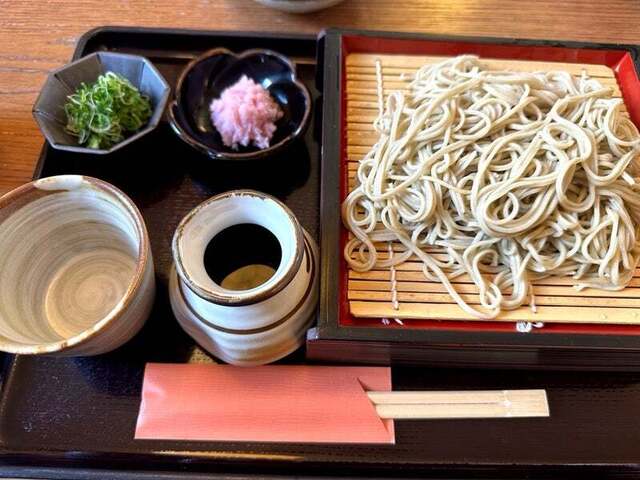
Approaching the quieter edges of Habikino changes the rhythm of an Osaka meal. The city’s central food image is often neon, queue management, and late-night appetite, but its noodle culture has another register: small rooms, short services, and craft measured in restraint rather than spectacle. Inui belongs to that second Osaka, where soba is treated less as a filler between bigger meals and more as a complete expression of buckwheat, broth, timing, and drink.
That matters in a city better known abroad for takoyaki, okonomiyaki, kushikatsu, and the snack-counter abundance around Namba and Shinsekai. Soba has a different tempo. It rewards attention to texture, temperature, and the clean finish of the dipping broth or soup base. In Osaka, where udon often dominates the noodle conversation, a soba specialist with repeated Tabelog 100 Soba WEST recognition carries a specific signal: this is a narrow craft category judged against other Kansai and western Japan specialists, not a general Japanese restaurant competing on range.
Habikino soba with a sake-list sensibility
The useful way to read Inui is through curation. The format is small, 14 seats, and the listed category is soba, with sake noted as the drink direction. That combination says more than a long beverage inventory would. In compact soba rooms, sake works less as a trophy cellar and more as a calibration tool: dry, rice-driven, and clean enough to sit beside buckwheat without crowding it. The absence of a sprawling drinks program is part of the point. This is pairing by discipline, not by volume.
Osaka has plenty of meals where the drink order leads the evening. Yakitori rooms such as TORILABO and Yakitori BLACK sit in higher dinner-budget territory, where smoke, skewers, and pacing naturally encourage a longer arc. Inui occupies a leaner lane: soba first, drink as support, and a meal structure built around focus. That makes it useful for travellers who want to understand Osaka beyond the central-market grazing model.
The Tabelog 100 Soba WEST selections in 2024 and 2025 are the key external credential here. They place the restaurant inside a regional soba conversation rather than simply a local neighbourhood one. Tabelog’s user culture can be unforgiving toward everyday Japanese categories because the baseline is high; a 3.61 score in a craft noodle genre carries different weight from a score attached to a large-format destination restaurant. For soba, repetition across annual lists is a stronger signal than a single flash of attention.
Why the room size changes the meal
Small soba restaurants depend on rhythm. With 14 seats, a kitchen can keep the meal close to the product’s timing instead of stretching service to fit a crowd. That does not mean luxury in the conventional sense; it means fewer buffers between preparation and the table. In this category, the margin for error is narrow. Buckwheat noodles lose definition quickly, and broth balance has little room to hide behind garnish or showmanship.
That compactness also separates Inui from Osaka’s casual-value end. Takara Ya, Jikoryu Ramen Watamen, and Kei Chan sit in a lower or similarly accessible price universe, but ramen, casual set meals, and soba answer different cravings. Ramen often thrives on fat, tare, and density. Soba asks for a cleaner frame. The comparison is not about hierarchy; it is about choosing the correct register for the day’s eating. After a morning of heavier Osaka staples, soba offers a reset without becoming austere.
For broader city planning, it helps to place this meal alongside rather than inside the usual central Osaka itinerary. The full EP Club Osaka restaurant map includes bakery stops such as 52CHO-ME BAKERY, casual institutions such as 551 Horai (551蓬莱), Italian rooms including a canto (Italian) and 99 Pizza Napoletana Gourmet, and quieter café addresses such as .cafe. Inui gives that map a western-Osaka soba anchor, especially for diners who prefer specialist formats over all-purpose menus.
How to fit it into an Osaka eating itinerary
The decision is logistical as much as culinary. Habikino is not the same proposition as dropping into a station-adjacent lunch counter between shopping stops. The reward is context: a look at how Osaka-area dining functions outside the visitor-heavy core, where small restaurants can be supported by repeat local use and category loyalty rather than a broad tourist funnel. For travellers building a food-led day, this is better treated as a planned soba stop than an incidental detour.
That planning should sit within the wider city rather than replace it. Use Our full Osaka restaurants guide for the food map, then pair the meal with Our full Osaka hotels guide if the day starts from central Osaka. Evening drink plans belong in Our full Osaka bars guide, while Our full Osaka experiences guide helps frame the suburb-to-city movement around more than lunch. Our full Osaka wineries guide is useful for readers tracking regional drinking culture, though here the more relevant pour is sake beside soba.
The wider Japan map shows why category specificity matters. A sukiyaki address such as -Grilled beef Sukiyaki- KAMAKURA TANUKIAN 鎌倉 たぬき庵 in Kamakura, a Tokyo grill room such as. 鮪と炭火焼き うお炭 秋葉原店 in Tokyo.know in Kumamoto, (Shoku) Vietnam in Kawasaki, [Curry Senmon Ten] Maruyama Kyoju. in Sapporo, and [ki:] in Kyoto all make different promises before the first order is placed. In Los Angeles and Pasadena, Jōdo Saké Bar in Los Angeles and Onigiri Time in Pasadena show how Japanese formats travel abroad. Inui’s appeal is more local and narrower: Kansai soba, small-room pacing, and sake kept in its proper supporting role.
The editorial call is simple: choose it when the goal is precision over range. In a city that can overwhelm with abundance, a specialist soba room offers a clean read on craft, proportion, and regional confidence. The value is not in maximal choice. It is in seeing how much a short, disciplined meal can say about Osaka when the volume is turned down.
The Quick Read
Comparable venues by category and price.
| Venue | Cuisine | Price | Notes |
|---|---|---|---|
| InuiThis venue — the venue you are viewing | Not listed | $ | Not listed |
| Okonomiyaki Momiji | Not listed | $ | Tennōji, Osaka-style okonomiyaki restaurant |
| Gyokusei Ya | Not listed | $ | Chūō, Traditional Japanese wagashi & ohagi specialty shop |
| Naniwa Menjiro | Not listed | $ | Chūō, Modern ramen counter inside Osaka Namba Station |
| Umeda Kamatake Udon | Kita, Osaka Sanuki Udon Shop | $ | Not listed |
| Nishinakajima Koryumasu | Yodogawa, Japanese Ramen & Tsukemen | $ | Not listed |
Recognition history
Dated appearances from independent guides and award organizations, with the underlying list record or original source where available.
Tabelog 100 #4 · No. 4
Tabelog · Tabelog 100 - Soba - WEST - 2025
Continue exploring
More in Osaka
Restaurants in Osaka
Browse all →




Bars in Osaka
Browse all →




Hotels in Osaka
Browse all →



Wineries in Osaka
Browse all →
At a Glance
- Cozy
- Quiet
- Classic
- Casual Hangout
- Solo
- Standalone
- Sake Program
Current opening hours
- Monday
- Closed
- Tuesday
- Closed
- Wednesday
- Closed
- Thursday
- 11:30 AM–1 PM
- Friday
- 11:30 AM–1 PM
- Saturday
- 11:30 AM–1 PM
- Sunday
- Closed
Hours can change for holidays and private events. Last verified .
A small 14-seat, non-smoking house restaurant on a quiet street, described as a hideout-style spot with a calm, classic soba-shop feel ideal for relaxed daytime visits with friends.