Industry

Diners, Drive-Ins and Dives Featured Restaurant
Our verdict
On East 5th Street in Austin's rapidly changing 78702 corridor, Industry occupies a space where the city's appetite for locally sourced ingredients meets technique drawn from a broader global repertoire. The address places it squarely within a dining district that has become one of the more consequential stretches of new American cooking in Texas. Arrive with a reservation and an open schedule.

Pearl is the En Primeur Club membership app, where members save venues, book tables and use the concierge.

The menu
What to order
- Industry Nachos
- Chicken Tinga Tacos
- Fish Tacos
East 5th and the Argument for Technique Over Trend
Austin's East Side has undergone the kind of transformation that food cities tend to produce once: a compressed window in which former light-industrial blocks fill with restaurants serious enough to draw comparison beyond city limits. The stretch around East 5th Street now functions as a proving ground for cooks who want access to Central Texas's agricultural depth without the constraints of a cuisine tradition that demands they stay inside it. Industry, at 1211 E 5th St, sits within that corridor and within that argument.
The address itself is a signal. Suite 150 in a mixed-use building on a block that has attracted kitchens with similar ambitions is not an accident of real estate. This part of Austin selects for a particular kind of operator: one interested in what the city's farms and ranchers can supply, and equally interested in applying methods that have less to do with Texas tradition than with a wider set of culinary references. That intersection, local ingredients read through imported or formally trained technique, is increasingly where Austin's most considered dining happens.
The Wider Pattern: Where Austin's New American Scene Has Landed
To understand what Industry represents, it helps to map the broader shape of serious dining in Austin right now. The city's New American tier has split between two approaches. One leans into Texas specificity: live-fire cooking, beef-forward menus, and an aesthetic that frames the state's ranching culture as the primary text. Hestia operates fluently in that register. The other approach treats Texas as a larder rather than an identity, pulling from its produce and proteins while applying technique that might feel at home in San Francisco or Chicago. Barley Swine has long worked that second lane.
Industry belongs to the second camp. The East 5th address connects it geographically to a dining district that has always been more interested in what cooks are thinking globally than in reaffirming what Texas cooking is supposed to be. That positioning is not a rejection of place, it is a different way of honoring it: let the ingredients speak to their origin, let the technique speak to wherever the cook was trained.
This is a pattern visible at restaurants across American cities. At Blue Hill at Stone Barns in Tarrytown, the farm drives everything and the technique serves it. At Single Thread Farm in Healdsburg, Japanese precision is applied to Northern California produce. The version of this conversation happening in Austin is younger and less institutionally recognized, but the underlying logic is the same: sourcing discipline plus technique rigor, in a city whose agricultural infrastructure can actually support it.
The East Side as Dining Context
The 78702 zip code now contains a concentration of kitchens that would have been implausible a decade ago. Within walking distance or a short drive of Industry's address, you have la Barbecue, which holds its position as one of the city's most referenced pitmasters, and InterStellar BBQ, which has accumulated award recognition that puts it in Austin's serious barbecue tier. The neighborhood supports a reader who moves between registers, who might eat smoked brisket one afternoon and a tasting-menu format the same evening.
That reader is increasingly who Austin's East Side is designed for. The neighborhood's dining density means that a single visit to Industry can be part of a broader itinerary rather than a destination in isolation. For visitors building an Austin program, the East 5th corridor is the logical anchor. Our full Austin restaurants guide maps the wider city context.
Local Ingredients, Global Frame
The editorial angle that applies to Industry is one that applies to a generation of American restaurants that came of age after the farm-to-table era had already normalized sourcing transparency. The question for those kitchens is no longer whether to use local ingredients, that is baseline, but what to do with them technically. A Central Texas peach treated with French pastry discipline is a different object than one served with regional simplicity. A Hill Country lamb loin approached through the same conceptual rigor you find at Alinea in Chicago or Le Bernardin in New York City becomes an argument about what Texas cooking can absorb and transform.
This is the more demanding version of the local-ingredient proposition, and it is the version that tends to produce the most interesting dining. It requires a kitchen that has done the technical work, not just the sourcing work. The presence of serious kitchens nearby, including Craft Omakase, which applies Japanese counter discipline to the Austin context, suggests that the East Side is building the kind of density where cross-pollination between techniques becomes possible.
For comparison, consider what similar intersections have produced elsewhere: Lazy Bear in San Francisco built a format around collective dining and tasting-menu discipline applied to California produce. Providence in Los Angeles brought French technique to Pacific seafood. Addison in San Diego became the first California restaurant outside the Bay Area to earn multiple Michelin stars by applying classical rigor to Southern California ingredients. The Texas version of this conversation is still consolidating, but venues in Austin's East Side are the place where it is most actively happening.
Positioning in Austin's Dining Tier
Austin's restaurant market has developed a functional middle tier between the $$ casual end, where barbecue joints and taquerias dominate, and the small number of formal tasting-menu operations with national profiles. That middle tier, roughly $$$ by price and serious by intent, is where most of the city's most considered cooking now happens. Venues like Olamaie and Odd Duck operate in this register. Industry's East 5th address and the character of its block suggest it belongs to this same functional tier, aimed at a reader who is past novelty and interested in kitchen discipline.
Internationally referenced kitchens such as The Inn at Little Washington, Atomix in New York City, and 8 1/2 Otto e Mezzo Bombana in Hong Kong represent the outer edge of the global technique-meets-local-ingredient argument. Austin is not competing at that tier yet, but the trajectory of its East Side dining is pointing in a direction where comparison becomes less implausible each year. Emeril's in New Orleans demonstrated two decades ago that a Southern city could develop a cuisine identity distinct from its regional tradition. Austin is in an earlier phase of that same process.
Is Industry worth the price?
Pricing data is not confirmed at time of publication. As a reference point, Austin's serious mid-tier dining, comparable venues in the $$$ range, tends to price between $60 and $120 per person before beverage. If Industry's kitchen is executing at the level its East 5th positioning suggests, that range represents defensible value relative to comparable cooking in cities like San Francisco or New York, where equivalent technique costs considerably more.
Does Industry suit a visiting diner building a broader Austin itinerary?
The East 5th location makes it direct to combine with other serious kitchens in the 78702 corridor. A two-day Austin dining program anchored on this block, incorporating Industry alongside nearby options like Craft Omakase or la Barbecue, covers a meaningful range of Austin's current culinary moment: Japanese-influenced counter dining, serious barbecue, and the local-ingredient, global-technique register that Industry appears to occupy. For a fuller map of the city's dining options, see our Austin restaurants guide.
Frequently asked questions
What's Industry's location?
Industry is located at 1211 E 5th St. Ste 150, Austin, TX 78702, Austin.
Does Industry fit into a broader East Austin dining crawl?
The Suite 150 address at 1211 E 5th St sits within the 78702 zip code, which now holds enough serious kitchens to support a two-day Austin program without leaving the east side. Industry works as an anchor reservation around which earlier drinks or a follow-up late stop can be built, given the concentration of bars and lower-key operations on and around East 5th. For a visiting diner with one focused Austin evening, this corridor is a more efficient use of time than splitting across the city.
What's the best thing to order at Industry?
Confirmed menu data is not available at time of publication, so a specific dish call isn't possible here. For kitchens operating in Austin's East Side corridor at this address, the pattern tends toward produce-driven plates built around technique rather than trend. Check the current menu directly before visiting, as offerings in this tier typically rotate with season and supplier availability.
How far ahead should I plan for Industry?
Austin's East 5th corridor has become genuinely competitive for weekend reservations at kitchens with this kind of profile. A safe planning window for a Friday or Saturday table is two to three weeks out; Thursday can be tighter than diners expect. If you're building an Austin itinerary around the 78702 zip code, book Industry before finalising the rest of the schedule.
What's the standout thing about Industry?
The positioning at 1211 E 5th St places Industry inside one of Austin's most concentrated stretches of considered cooking, a block that would have been unrecognisable as a dining destination a decade ago. The kitchen's orientation toward craft over novelty is what separates the venue from the trend-chasing end of the Austin scene. That combination of address and apparent kitchen discipline is what draws a specific kind of Austin diner back.
Is Industry allergy-friendly?
For any serious allergy, check the venue's official channels at 1211 E 5th St, Suite 150, Austin, TX 78702 before booking. Kitchens in this tier of Austin dining generally have the technical range to work around common restrictions, but verbal confirmation before arrival is the only reliable approach.
Is Industry worth the price?
For context, Austin's serious mid-tier kitchens in the 78702 corridor typically run $60–$100 per person with drinks and tip, placing them well above the city's barbecue and taqueria tier but below the small-format tasting menu operations. Whether Industry lands at that benchmark or above it, the East 5th address is a reasonable anchor for a considered Austin dining night.
What It’s Closest To
Comparable venues nearby, for context on price, style, and recognition.
| Venue | Cuisine | Price | Awards | Notes |
|---|---|---|---|---|
| IndustryThis venue (the venue you are viewing) | Texas Comfort | $20–30 | Diners, Drive-Ins and Dives Featured Restaurant | Not listed |
| Citizens All Day | Aussie-inspired all-day café and restaurant | $20–30 | Not listed | North Austin |
| Hoover's Cooking | Texas Home Cooking | $20–30 | Not listed | Blackland |
| Patika | Modern American Cafe | $10–20 | Not listed | Galindo |
| Hillside Farmacy | New American Bistro | $20–30 | Not listed | Central East Austin |
| True Food Kitchen | Health-Conscious American | $20–30 | Not listed | North Burnet |
Recognition history
Dated appearances from independent guides and award organizations, with the underlying list record or original source where available.
Diners, Drive-Ins and Dives Featured Restaurant
Diners, Drive-Ins and Dives · 2026 Diners, Drive-Ins and Dives Featured Restaurants
Industry
Featured Guides

Continue exploring
More in Austin
Restaurants in Austin
All restaurants in Austin →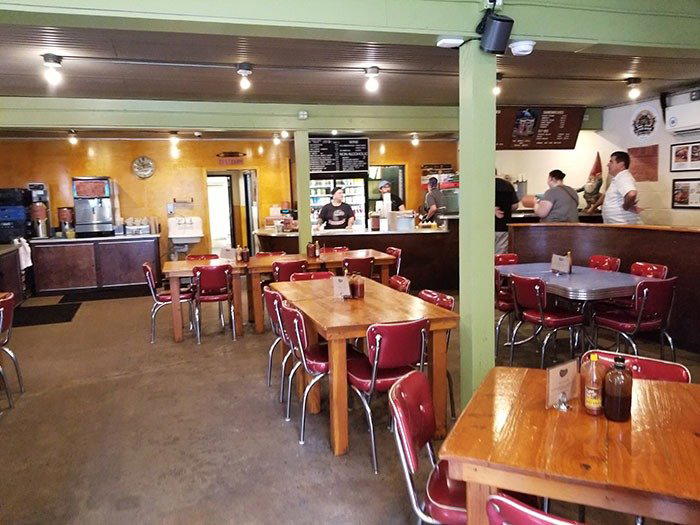
Bars in Austin
All bars in Austin →
Details
- Casual
- Lively
- Casual Hangout
- Family
- Brunch
- Open Kitchen
- Craft Cocktails
- Beer Program
- A La Carte
- Beer Program
- Cocktails
- Vegetarian Friendly
Current opening hours
- Monday
- 9 AM–12 AM
- Tuesday
- 9 AM–1 AM
- Wednesday
- 9 AM–1 AM
- Thursday
- 9 AM–1 AM
- Friday
- 9 AM–2 AM
- Saturday
- 10 AM–2 AM
- Sunday
- 10 AM–12 AM
Hours can change for holidays and private events. Hours as of .
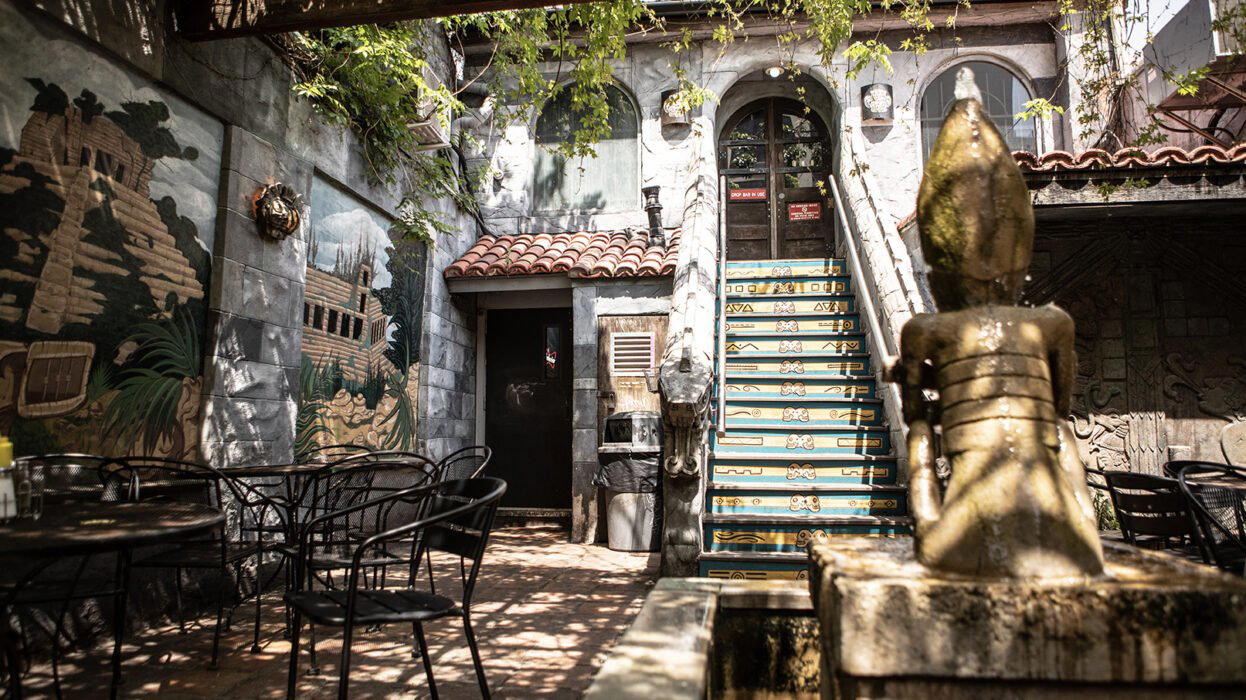
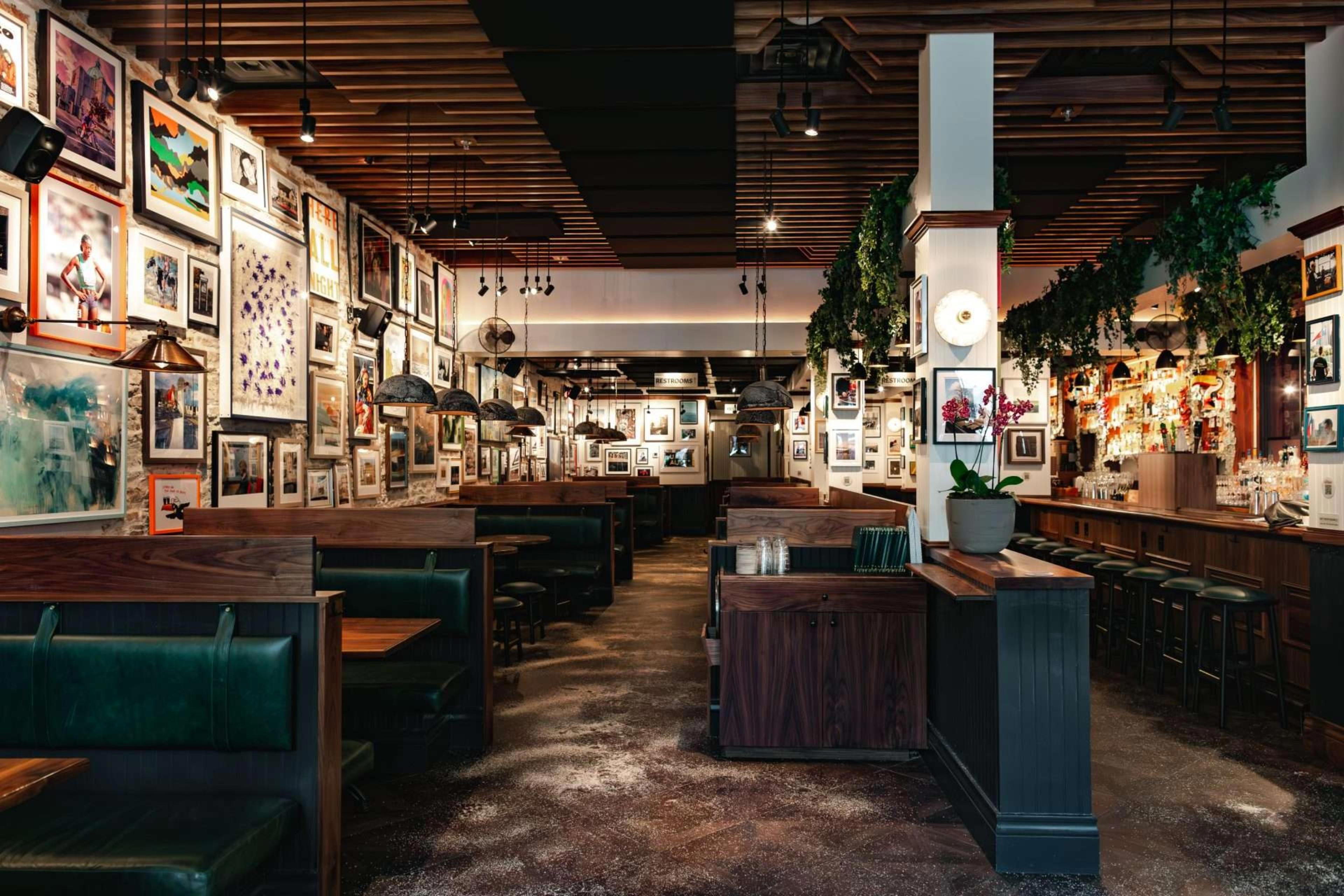
Casual yet thoughtful with lively atmosphere and moderate noise.