
Tabelog 100 #7
Our verdict
IN CURRY gives Sapporo’s soup-curry culture a compact, serious address in Kotoni, with Tabelog Curry EAST 100 selection in 2024 anchoring its credibility. The appeal is less about spectacle than format: a small room, counter seating, take-out, and a price tier that keeps it in the everyday-curry conversation rather than special-occasion dining.

Pearl is the En Primeur Club membership app, where members save venues, book tables and use the concierge.
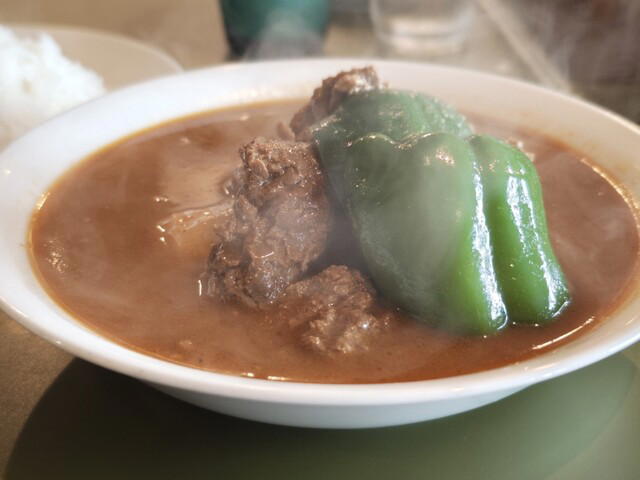
Approaching a Sapporo soup-curry room in winter, the city’s food logic is clear before the first spoonful: warmth, vegetables, rice, spice, and speed matter because the climate encourages them. Hokkaido’s curry shops are often read through practical, ingredient-led bowls rather than formal dining ceremony. In the available record, IN CURRY fits that Sapporo frame through its listed soup-curry category and recognition that places it in the city’s serious curry conversation rather than its tourist shorthand.
Sapporo soup curry is often misunderstood outside Hokkaido as a lighter cousin of Japanese curry rice. That misses the format’s point: separation. Broth and rice, spice and texture, vegetables held as individual components rather than dissolved into sauce. The better bowls depend on sourcing because they expose ingredients instead of hiding them. Hokkaido’s agricultural reputation matters: potatoes, carrots, squash, dairy culture, and cold-weather appetite shaped a curry style less about gloss than how a kitchen handles produce, stock, and spice in one serving.
Soup curry in Sapporo, away from the shorthand
Sapporo gives the meal a clear local register. Outside the broad tourist shorthand, its curry audience can be practical and exacting in expectation. A focused soup-curry room suits that pattern and narrows the margin for error: in this category, pacing, rice, broth temperature, and turnover are part of the experience, not background logistics.
The city’s curry map has several lanes. Other Sapporo dining rooms point toward older curry lineages, while specialist curry shops show how focused casual restaurants build followings beyond the largest commercial streets. In that context, IN CURRY reads as specialist-tier rather than a general casual restaurant. Its 2024 Tabelog Hyakumeiten recognition gives that position a public marker, and the listed Tabelog score of 3.60 suggests a shop that has earned attention in a category where Japanese diners are exacting.
Comparison inside Sapporo helps because soup curry is not one style. SAKURA BROWN and Rakkyo sit in the same broader city conversation, while Univers S. belongs to another dining register and Asahikawa Ramen Nanashi belongs to another comfort-food register. The point is not ranking, but reading the city correctly: Sapporo rewards restaurants that define a narrow category and execute it consistently. Curry, ramen, bread, French bistronomy, and other casual cooking follow that pattern, which is why a focused soup-curry address can matter as much to the local dining fabric as a larger dining room.
Ingredient logic matters more than ornament
Soup curry pressures ingredients because its structure is transparent. A heavy curry sauce can smooth over weak produce; soup curry cannot. Vegetables need distinct texture, protein must hold against broth, and spice has to register without flattening the bowl. Hokkaido’s pantry gives Sapporo an advantage. The region’s farming identity is not decorative; it helped make the city a natural home for a curry style that lets root vegetables, seasonal produce, and broth share attention.
IN CURRY’s recognition sits inside that ingredient-led tradition. The category listed is soup curry, not generic curry, and the distinction matters. In Sapporo, diners understand the difference between rice-and-sauce comfort and a bowl built for broth, spice, and separate components. The latter requires balance rather than abundance. It is a cuisine of construction: rice on one side, soup on the other, toppings arranged for texture, and spice level functioning as architecture rather than decoration.
That discipline explains why solo dining is common in this category. A soup-curry meal needs no long table, wine pairing, or group order. The format suits quick, focused eating and the city’s practical habits. IN CURRY belongs to the Sapporo casual-dining conversation through a clearly listed soup-curry identity and recognition tied to that category.
Travelers building a Sapporo food itinerary should not treat curry as a fallback between seafood and ramen. The city’s casual food culture is broader. Other Sapporo dining rooms show the city’s appetite for spice in different forms, while unnamed bakeries, seafood counters, and casual specialists point toward Hokkaido’s broader produce culture. For broader planning, Our full Sapporo restaurants guide gives the clearest frame, with adjacent city context in Our full Sapporo hotels guide, Our full Sapporo bars guide, Our full Sapporo wineries guide, and Our full Sapporo experiences guide.
How to place it in a Japan dining itinerary
For travelers moving across Japan, IN CURRY represents a regional category with real local identity. Tokyo and Osaka can offer scale; Kyoto can offer refinement; Hokkaido often offers ingredient clarity and weather-shaped appetite. A Sapporo curry stop adds something different to an itinerary otherwise leaning on sushi, tempura, ramen, and kaiseki. It is closer in spirit to regional casual formats that define daily life: quick, focused, highly specific, and built around repeatable comfort rather than ceremony.
The broader Japanese dining map is increasingly shaped by narrow-format specialists rather than encyclopedic menus. That applies across categories, from small counters to casual rooms and city-specific comfort-food specialists. Sapporo’s soup-curry rooms belong in that conversation not because they are luxurious, but because they show how a city turns climate, produce, and lunch culture into a repeatable form. IN CURRY is worth reading through that lens: a Sapporo soup-curry restaurant with 2024 Tabelog Hyakumeiten recognition and a listed score of 3.60, enough third-party context to justify making room for curry in a serious Sapporo schedule.
Frequently asked questions
What's IN CURRY's location?
Sapporo.
What's the price range at IN CURRY?
Pricing at IN CURRY is listed as JPY 1,000 - JPY 1,999.
What days is IN CURRY closed?
Specific closing days are not provided here; check current opening information before visiting.
What do critics highlight about IN CURRY?
The clearest marker is its inclusion in Tabelog Hyakumeiten 2024. The listed category is soup curry, and its Tabelog score is 3.60.
Can IN CURRY handle vegetarian requests?
The listed category is soup curry, so vegetarian ordering depends on broth and topping choices rather than a fixed template. The practical move is to ask before ordering.
Can I bring kids to IN CURRY?
IN CURRY is a casual soup-curry stop in Sapporo. For family visits, check current service details before going.
Comparable Spots, Quickly
Comparable venues by cuisine and price in the same metro.
| Venue | Cuisine | Price | Awards | Notes |
|---|---|---|---|---|
| IN CURRYThis venue (the venue you are viewing) | Sapporo soup curry | Not listed | Tabelog 100 #7 | Not listed |
| Ramenya Kirita Seimen | Sapporo Ramen Counter | $1–10 | Tabelog 100 #43 | Chūō |
| 薄野 鮨金 | Edomae-style Omakase Sushi | $200–300 | Tabelog Bronze #430 | Chūō |
| Ramen Shinwa | Japanese Ramen | $10–20 | Tabelog 100 #9 | Toyohira |
| Asahikawa Ramen Nanashi | Traditional Asahikawa-style Ramen | $10–20 | Tabelog 100 #46 | Nishi |
| 東雲 | japanese | Not listed | Tabelog 100 #19 | Chūō |
Recognition history
Dated appearances from independent guides and award organizations, with the underlying list record or original source where available.
Tabelog 100 #7 · No. 7
Tabelog · Tabelog 100 - Curry - EAST - 2024
Continue exploring
More in Sapporo
Restaurants in Sapporo
All restaurants in Sapporo →
Bars in Sapporo
All bars in Sapporo →

Details
- Solo
- Casual Hangout
- Standalone
- A La Carte
Current opening hours
- Monday
- Closed
- Tuesday
- Closed
- Wednesday
- 11:30 AM–5 PM
- Thursday
- 11:30 AM–5 PM
- Friday
- 11:30 AM–5 PM
- Saturday
- 11:30 AM–5 PM
- Sunday
- 11:30 AM–5 PM
Hours can change for holidays and private events. Hours as of .
Casual, everyday local curry spot with a simple setting where guests come for hearty soup curry at lunchtime and early afternoon, often selling out of soup by later in the day.