Our verdict
Cibo sits on 2nd Avenue in Midtown East, a neighbourhood where Italian restaurants range from expense-account standbys to quiet neighbourhood fixtures with real kitchen ambition. The address places it within walking distance of the UN corridor's working lunch crowd, but the format here runs closer to the latter category than the former. Worth knowing before you book.
The menu
What to order
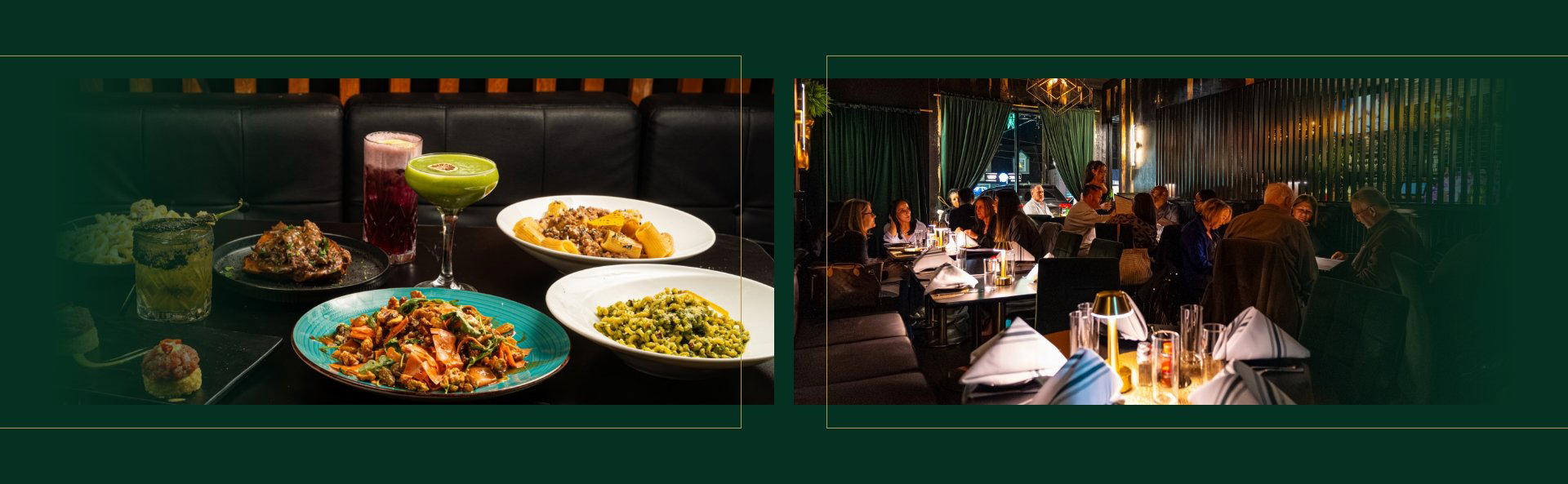
- Penne alla vodka
- Pizza
Midtown East and the Italian Restaurant Equation
Midtown East's restaurant population sorts itself quickly. Along 2nd Avenue and the blocks radiating toward the UN corridor, Italian restaurants occupy a spectrum that runs from red-sauce institutions kept alive by neighbourhood loyalty to tighter, more considered rooms where the cooking takes the lead. The address at 767 2nd Avenue places Cibo squarely in that contested middle ground, where a restaurant's actual character is harder to read from the outside than at the extremes of the market.
That ambiguity is, in a way, a Midtown East condition. The neighbourhood lacks the curatorial density of the West Village or the critical mass of Michelin-tracked rooms that gives the NoMad corridor its legibility. Restaurants here survive on repeat custom, on office accounts, on the quiet loyalty of residents who live east of Lexington and eat locally most nights of the week. To read Cibo accurately, you need to understand that the competitive set is not Le Bernardin or Per Se. It is the Italian restaurant that a UN diplomat or a Sutton Place resident returns to twice a month without needing a reason beyond reliability.
The Arc of an Italian Meal in This Format
Italian dining in New York has always maintained a parallel track to the city's formal tasting-menu culture. While Eleven Madison Park and Atomix operate on the logic of sequenced courses with a predetermined narrative arc, most Italian rooms in the city follow a different rhythm: the guest constructs the meal, moving from antipasto through pasta to secondo at their own pace, with the kitchen's role being execution rather than authorship of the sequence.
That distinction matters when you are thinking about how to approach a meal at a place like Cibo. The progression here is reader-directed rather than chef-directed, which places different demands on the kitchen and different expectations on the diner. The quality of the pasta course carries disproportionate weight in this format, because it sits at the centre of the meal's arc and has nowhere to hide. A well-made risotto or a properly sauced tagliatelle in a room like this does the work that a composed mid-course does at a tasting-menu counter: it is the moment the kitchen either justifies your attention or fails to hold it.
This structure, where the guest sequences their own evening, is what separates most Italian dining from the format you find at places like Lazy Bear in San Francisco or Smyth in Chicago, where the tasting progression is fixed and the chef controls the narrative entirely. At The French Laundry in Napa or Single Thread Farm in Healdsburg, the sequencing is the point. At a Midtown East Italian room, the sequencing is yours to manage.
What Midtown East Demands from Its Italian Rooms
The neighbourhood exerts specific pressures on any restaurant that opens here. Lunch service matters in a way it does not in residential neighbourhoods. The crowd on a Tuesday at noon skews toward working professionals with a fixed window, which means the kitchen needs to function at two different speeds across the same day. Dinner tends to be quieter, more local, and more forgiving of a slower pace. Rooms that manage both modes tend to build the kind of sustained neighbourhood presence that keeps a restaurant on 2nd Avenue relevant across years rather than seasons.
The Italian category specifically has to contend with a New York market that is both deeply familiar with the cuisine and highly variable in its expectations of it. A diner who eats at Masa on one occasion and a Murray Hill red-sauce place the next is not confused; they are operating in two entirely different registers. Cibo sits in neither extreme. Its address and format position it as a room for people who want competent, consistent Italian cooking without the formality of a full tasting structure or the nostalgia of a decades-old institution.
That is a position that exists across the country wherever Italian cooking has put down roots. Frasca Food and Wine in Boulder occupies a version of it in a smaller market. Providence in Los Angeles and Addison in San Diego show how rooms in similar mid-to-upper registers manage the gap between neighbourhood fixture and destination restaurant. In Italy itself, Dal Pescatore in Runate demonstrates what sustained family-led Italian cooking looks like when it reaches its ceiling over decades. The frame of reference matters when you are trying to calibrate what a restaurant in this position is actually attempting.
Planning Your Visit
Midtown East operates on a different booking logic than the city's tasting-menu rooms. The restaurants that draw reservation lists months out in New York, including Blue Hill at Stone Barns in Tarrytown and the formal rooms referenced above, operate with fixed-capacity formats and prix-fixe pricing that makes demand management direct. A neighbourhood Italian room in this part of the city tends to be more walkable, but prime dinner hours on weekdays can fill faster than the room's casual register might suggest, particularly if the space is small.
For the broader New York picture, see our full New York City restaurants guide, which covers the city's dining by neighbourhood and format. Context on the city's Italian dining scene, and how it maps against comparable rooms, is useful reading before committing to this part of Midtown.
Restaurants in the broader Italian tradition worth tracking for comparison include Emeril's in New Orleans, The Inn at Little Washington, and the Alpine-influenced cooking at Atelier Moessmer Norbert Niederkofler in Brunico, which illustrates how the Italian culinary tradition ranges across formats, price points, and geographies.
Know Before You Go
- Address: 767 2nd Avenue, New York, NY 10017
- Neighbourhood: Midtown East, between 41st and 42nd Streets
- Format: À la carte Italian dining room
- Nearest transit: Grand Central Terminal (4/5/6/7/S lines) is within walking distance
- Leading for: Weekday lunch, neighbourhood dinner, pre-theatre in the Midtown corridor
Frequently asked questions
What's Cibo's location?
Cibo is located at 767 2nd Ave, New York, NY 10017, New York City.
Is Cibo a good option for a business lunch near the United Nations in Midtown East?
Cibo's address at 767 2nd Ave places it squarely in the UN corridor, a stretch of Midtown East where Italian restaurants have historically absorbed significant weekday lunch traffic from nearby offices and diplomatic institutions. That geography makes it a practical choice for a mid-day meal without crossing to Midtown West. Confirming hours and reservation availability directly with the restaurant before a business booking is advisable.
What's the must-try dish at Cibo?
Italian restaurants in this Midtown East corridor typically anchor their menus around housemade pasta and secondi built for a lunch-heavy, professional crowd. Check directly with the restaurant for current menu highlights before your visit.
How far ahead should I plan for Cibo?
Cibo sits on 2nd Avenue in Midtown East, a stretch where weekday lunch demand from the surrounding office and UN district can fill tables quickly. Unlike the city's destination tasting-menu rooms, neighbourhood Italian spots in this corridor tend to accommodate walk-ins at dinner more readily than at lunch. Calling ahead a few days before a weekday lunch is the safer approach.
What's the signature at Cibo?
Cibo's cuisine type positions it within New York City's Italian dining tradition, a format that in Midtown East has long balanced straightforward pasta and protein cookery with the pace demands of a working neighbourhood.
Do they accommodate allergies at Cibo?
Standard practice at Italian restaurants in New York City is to flag dietary requirements at the time of booking or on arrival. Contact Cibo directly at 767 2nd Ave, New York, NY 10017 to confirm what accommodations the kitchen can make.
In Context: Similar Options
| Venue | Cuisine | Price | Awards | Notes |
|---|---|---|---|---|
| CiboThis venue (the venue you are viewing) | Northern Italian Pizza & Pasta | Not listed | Not listed | Not listed |
| Le Bernardin | French Seafood Fine Dining | $300–500 | 3 Michelin Stars · World's 50 Best #13 | French, Seafood |
| Atomix | Modern Korean Tasting Menu | $300–500 | 2 Michelin Stars · World's 50 Best #7 | Modern Korean, Korean |
| Per Se | French Fine Dining Tasting Menu | $300–500 | 3 Michelin Stars · World's 50 Best #40 | French, Contemporary |
| Masa | Traditional Japanese Omakase | $500+ | 2 Michelin Stars · World's 50 Best #27 | Sushi, Japanese |
| Eleven Madison Park | Contemporary Plant-Based Fine Dining | $300–500 | 3 Michelin Stars · World's 50 Best #4 | French, Vegan |