Google: 4.6 · 920 reviews

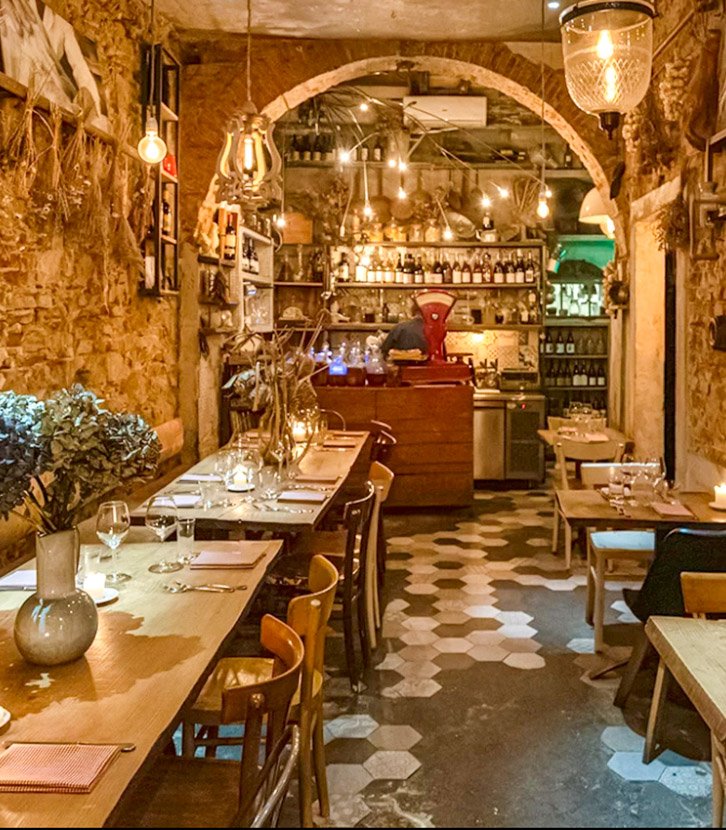
Occupying a 16th-century monastic cellar beneath Sorrento's Piazza Sant'Antonino, Il Buco holds a Michelin star for Campanian cuisine that balances regional tradition with measured reinterpretation. Chef Giuseppe Aversa's pasta dishes draw particular recognition, while a glass-fronted wine cellar stocked with over 1,600 labels gives the room a character that few southern Italian dining rooms can match at this price point.
 Discover on Pearl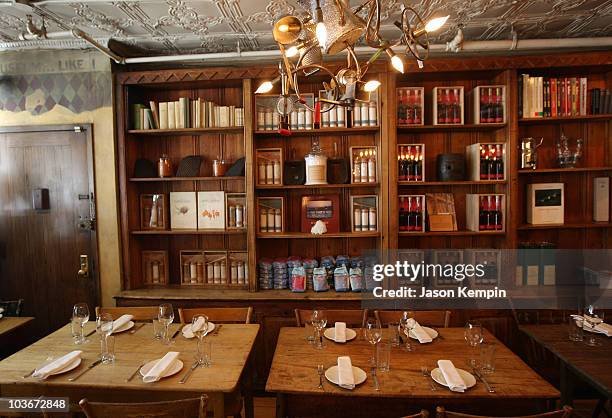
Stone, Salt, and the Southern Italian Table
The oldest dining rooms in Campania tend to precede the concept of a restaurant by several centuries. Il Buco's main space sits in a 16th-century cellar that once served as a monastic storeroom beneath Piazza Sant'Antonino, and the physical weight of that history shapes the meal before anything arrives on the table. Low vaulted ceilings in tufa stone, cool air preserved by metres of rock above — the room communicates a kind of permanence that newer, design-forward spaces in the coastal resort belt actively try to simulate and rarely achieve. For diners who find that context meaningful, it functions as a trust signal in its own right.
Sorrento operates as one of the peninsula's most concentrated intersections of tourism and culinary seriousness. The town draws a year-round international crowd, and the dining sector has responded with a spectrum that runs from tourist-facing trattorias on the main corso to Michelin-recognised tables that position themselves against the broader southern Italian fine dining conversation. Il Buco, holding one Michelin star as of 2024, sits at the upper end of that range alongside Lorelei and Terrazza Bosquet, each with its own Michelin recognition and a €€€€ price point that separates them clearly from mid-range alternatives. This is the tier where ingredient sourcing, kitchen technique, and wine programmes are expected to justify the price, not just the postcard setting.
Campania Through a Mediterranean Lens
The editorial angle that Il Buco navigates most interestingly is the tension between regional rootedness and Mediterranean breadth. Campanian cuisine has a logic of its own — structured around local tomatoes, buffalo dairy, the citrus of the Sorrentine peninsula, the seafood pulled from the bay , and the strongest restaurants in the region tend to treat that logic as a foundation rather than a limitation. The kitchen here works primarily within that Campanian framework, with a handful of reinterpretations that suggest familiarity with cooking traditions beyond the immediate coastline.
This approach places Il Buco within a wider Mediterranean dining conversation that has been reshaping Italian fine dining for the better part of two decades. Across the basin , from Provence to Liguria to the Greek islands , the most considered tables have moved away from rigid national or regional categories toward a sensibility defined by seasonal produce, olive-oil-led cooking, and the kind of restraint that lets primary ingredients carry the weight. Comparable coastal Mediterranean restaurants, such as La Brezza in Ascona and Arnaud Donckele and Maxime Frédéric at Louis Vuitton in Saint-Tropez, work within that same broad tradition from different geographic vantages. Il Buco's version of it remains distinctly southern Italian in character , the reinterpretations are measured rather than transformative , but the underlying sensibility connects it to this larger arc.
Chef Giuseppe Aversa's pasta dishes receive specific mention in the Michelin documentation, which is worth noting because pasta at this level in Campania is not a default strength. The region has strong pasta traditions , spaghetti alle vongole, pasta al pomodoro made from San Marzano stock , but translating those into a fine dining register without losing the directness that makes them compelling requires a particular kind of discipline. Recognition at that level of specificity, from an inspector assessing the full menu, suggests the kitchen has a genuine point of view there.
Two Rooms, One Cellar
The physical layout of Il Buco offers a choice that not many restaurants at this price point can make: the original 16th-century vaulted space, with its monastic austerity and tactile history, or a more contemporary room anchored by a glass-fronted wine cellar containing over 1,600 labels. The two spaces sit in genuine contrast rather than false opposition. One communicates age and permanence; the other signals a wine programme serious enough to be made architectural.
A cellar of 1,600 labels in a one-star coastal restaurant in southern Italy is a significant commitment. By way of comparison, wine programmes at Italian fine dining restaurants of similar standing , Enoteca Pinchiorri in Florence sits at the extreme end of that scale , tend to treat the list as a separate editorial statement. At Il Buco, the visual prominence of the cellar in the contemporary room makes the wine programme part of the room's identity, not an afterthought in a leather binder. For guests who treat wine selection as a meaningful part of the meal, the contemporary room may be the more rewarding choice; for those drawn by the spatial history, the cellar room delivers something that cannot be designed from scratch.
Where Il Buco Sits in the Sorrento Picture
Sorrento's upper dining tier has enough breadth now that the three Michelin-recognised tables are no longer the only frame of reference. Bellevue Syrene 1820 and La Pergola offer Italian dining in settings with significant hotel context, while Da Bob Cook Fish provides a lower price point with a focused seafood programme at €€. Each fills a different role in the town's restaurant ecology. Il Buco's particular position is that it combines architectural specificity , the cellar space is genuinely rare , with a kitchen operating at recognised fine dining standard. That combination, rather than any single element, is what distinguishes it within the local peer set.
At the national level, it belongs to a generation of Italian restaurants working between regional tradition and fine dining ambition, a group that includes addresses such as Dal Pescatore in Runate, Enrico Bartolini in Milan, Le Calandre in Rubano, and Osteria Francescana in Modena , though at different points on the ambition and price spectrum. Atelier Moessmer Norbert Niederkofler in Brunico represents a different but instructive parallel: strong regional rootedness translated through a fine dining lens, recognised at the highest level. Il Buco operates on a more intimate scale, but the underlying tension it manages , tradition versus reinterpretation, local versus Mediterranean , is the same one those kitchens are working through from their own geographic positions.
Planning a Visit
Il Buco is located at 2ª Rampa Marina Piccola, off Piazza Sant'Antonino, in central Sorrento. The address is walkable from the main Piazza Tasso and accessible from the Circumvesuviana rail line that connects Sorrento to Naples. At the €€€€ price point, this is a meal that warrants advance booking, particularly during the peak summer season when the Sorrentine peninsula draws significant international volume. The kitchen operates lunch service Tuesday and Thursday through Sunday from 12:30 PM to 2:30 PM, and dinner service Monday through Tuesday and Thursday through Sunday from 7 PM to 10 PM, with Wednesday closed entirely. Guests with strong wine ambitions should note that the 1,600-label cellar warrants time; arriving with a table agenda and leaving wine selection as an afterthought would be a practical waste of what the room offers.
For a broader view of where Il Buco sits within the town's hospitality picture, our full Sorrento restaurants guide covers the range across price tiers. Those extending a stay beyond dinner will find relevant context in our Sorrento hotels guide, and the bars guide, wineries guide, and experiences guide cover the rest of the peninsula's premium offering.
Cuisine and Recognition
A small comparison set for context, based on the venues we track.
| Venue | Cuisine | Awards | Notes |
|---|---|---|---|
| Il Buco | Mediterranean Cuisine | Michelin 1 Star | This venue |
| Lorelei | Mediterranean Cuisine | Michelin 1 Star | Mediterranean Cuisine, €€€€ |
| Terrazza Bosquet | Creative | Michelin 1 Star | Creative, €€€€ |
| Bellevue Syrene 1820 | Italian | Italian | |
| Da Bob Cook Fish | Seafood | Seafood, €€ | |
| La Pergola | Italian | Italian |
Continue exploring
More in Sorrento
Restaurants in Sorrento
Browse all →
Bars in Sorrento
Browse all →
Hotels in Sorrento
Browse all →
At a Glance
- Romantic
- Elegant
- Intimate
- Rustic
- Sophisticated
- Date Night
- Special Occasion
- Celebration
- Historic Building
- Wine Cellar
- Extensive Wine List
- Sommelier Led
- Local Sourcing
Warm and elegant atmosphere in a historic arched cellar with attentive, professional service and soft background music.