
IAKU belongs to Osaka’s small-format European dining tier, where French, Italian and innovative cooking meet the city’s counter culture. Its 2025 selection for Tabelog 100 French WEST, 3.95 Tabelog score, nine-seat counter format and fish-led orientation place it in a serious critical bracket rather than the casual Kitashinchi dining stream.
Pearl is the En Primeur Club membership app — saves, bookings, and concierge access live there. Same editors, same standards.
- Address
- Japan, 〒530-0002 Osaka, Kita Ward, 3, 曽根崎新地1-3-30 北新地KOHDAビル6F 606B号
- Phone
- +81 6-6131-8819
- Website
- tabelog.com
 Saves & bookings on Pearl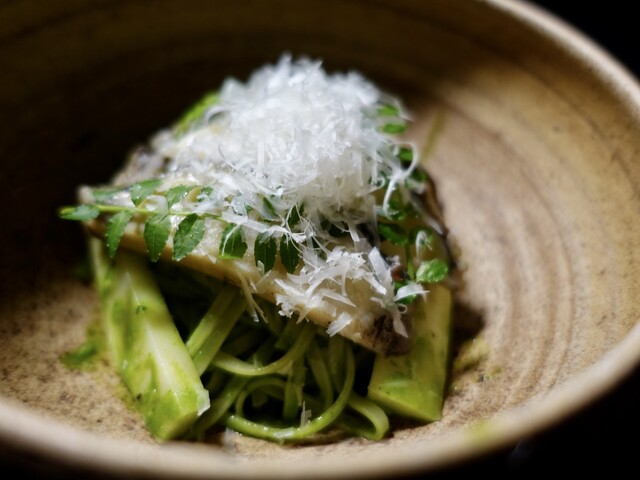
Kitashinchi changes character above street level. Polished ground-floor signs and late-evening traffic give way to compact rooms in commercial buildings, where serious meals often happen behind elevator doors rather than on showy façades. IAKU fits that Osaka pattern: a counter-led room in an expense-account district, with the intimacy and discipline of Japan’s smaller course-menu restaurants.
That setting matters because Osaka’s European dining scene is not a copy of Tokyo’s French hierarchy. The city absorbs outside technique into a local appetite for immediacy, seasonality and close-range service. French, Italian and innovative categories often blur here, especially at counters where guests watch the pacing of a course meal rather than read a long à la carte card. IAKU’s recognition in Tabelog 100 French WEST 2025 places it in that regional conversation: not as a grand dining room, but as a tightly scaled restaurant judged within western Japan’s French category.
Kitashinchi's small counters are where European technique gets an Osaka accent
Osaka’s counter culture is usually discussed through sushi, kappo and kushikatsu, yet the same physical logic now shapes much of the city’s ambitious European cooking. A counter narrows the distance between kitchen and guest; it rewards timing, temperature control and a course sequence read in real time. In that environment, French technique does not need chandeliers or ceremony. It needs a clear point of view, a confident beverage program and a room small enough for the service rhythm to hold.
IAKU’s nine counter seats put it firmly in that low-capacity category. The food is listed across French, Italian and innovative cooking, with emphasis on fish and drinks spanning wine, sake and shochu. That mix is telling. Osaka’s higher-end European restaurants increasingly use Japanese products and drinking habits without abandoning European structure. Sake beside wine is not decorative; it signals a room that expects guests to think beyond the inherited pairing script of French dining.
The Tabelog signal is useful because it reflects local critical gravity rather than international trophy-chasing. A 2025 French WEST Tabelog 100 selection, alongside a 3.95 score, puts the restaurant in a serious regional cohort. Tabelog’s Japanese user base can be exacting, especially where price, pacing and access raise expectations. The point is not that a score replaces judgement, but that this recognition gives IAKU a measurable position in Osaka’s French and hybrid-European tier.
Recognition matters more in Osaka when the format is this compressed
Small restaurants ask for different trust. With nine seats, a simultaneous-start course format and no private rooms, the experience depends less on menu choice than confidence in the kitchen’s sequencing. That is where awards and category placement become practical editorial evidence. Diners are not choosing between dozens of dishes; they are deciding whether the room’s reputation justifies surrendering control for the meal’s duration.
Compared with Washun Taiki in Osaka, which sits in a Japanese dining frame, IAKU belongs to the European-hybrid side of the city’s serious counter scene. Wagyu Matsushita Kamidoori ten points toward meat-led spending in Osaka, while BAR, K shows how the same neighbourhood economy supports compact, specialist drinking rooms. Those comparisons define the choice: not the broad comfort of an à la carte bistro, not the beef-focused luxury script, not a bar-first evening, but a course-menu counter using European technique within Japanese service grammar.
The restaurant’s 2022 opening also matters. Post-2020 Osaka dining has rewarded small rooms with controlled seating, focused procurement and a reservation-only model. Larger dining rooms can absorb uneven demand; nine-seat counters cannot. Selection for a 2025 regional award list so soon after opening suggests IAKU moved quickly from newcomer status into the city’s recognized dining conversation.
The practical implications are clear. A simultaneous-start format rewards punctuality. A cancellation policy tied to ingredient ordering indicates a kitchen built around planned courses rather than walk-in elasticity. Credit-card acceptance reduces friction for visitors, while no dress code keeps the tone closer to contemporary Osaka than old-formal French dining. Children are allowed under conditions tied to the course format: the room is not hostile to families, but the meal is structured for diners able to follow the same rhythm as adults.
Where it sits in an Osaka itinerary
For travellers using Osaka as a food city rather than a transit hub, separate meals by format. The city can handle a serious counter dinner, a bakery morning, a casual pork-bun stop and a late bar without repetition. Within that map, IAKU serves the polished, small-capacity European slot, best after lighter daytime eating rather than a long grazing crawl.
EP Club’s wider Osaka coverage helps place that decision in context. For daytime and casual planning, compare the city’s range through .cafe, 52CHO-ME BAKERY, 551 Horai (551蓬莱), 99 Pizza Napoletana Gourmet and a canto (Italian). For broader planning, use Our full Osaka restaurants guide, Our full Osaka hotels guide, Our full Osaka bars guide, Our full Osaka wineries guide and Our full Osaka experiences guide.
Readers building a wider Japan itinerary can compare how regional formats shift outside Osaka: -Grilled beef Sukiyaki- KAMAKURA TANUKIAN 鎌倉 たぬき庵 in Kamakura. 鮪と炭火焼き うお炭 秋葉原店 in Tokyo.know in Kumamoto, (Shoku) Vietnam in Kawasaki, [Curry Senmon Ten] Maruyama Kyoju. in Sapporo and [ki:] in Kyoto. For Japanese dining culture abroad, Jōdo Saké Bar in Los Angeles and Onigiri Time in Pasadena show how format, product and service codes travel differently outside Japan.
The editorial case for IAKU is clear: it represents the compact, reputation-led side of Osaka’s contemporary European dining, where recognition, counter format and fish-focused cooking matter more than décor theatrics. In a city often reduced to street food and exuberance, this is the quieter counterargument: Osaka also knows how to make a nine-seat room feel consequential.
Budget Reality Check
Nearby venues at a similar price tier for orientation.
| Venue | Cuisine | Price | Notes |
|---|---|---|---|
| IAKUThis venue — the venue you are viewing | Not listed | $$$$ | Not listed |
| Spice Curry Maruse | Kita, Osaka spice curry & Asian fusion | $$ | Not listed |
| Pres | Kita, Modern standing wine bar & bistro | $$$ | Not listed |
| Niku Kappou Yamaguchi | Kita, Meat Kappo | $$$$ | Not listed |
| Makisumi Madara | Not listed | $$$ | Kita, Creative wood & charcoal Japanese-Italian with yakitori focus |
| TOMONO | Kita, Creative Modern Chinese | $$$$ | Not listed |
Recognition history
Dated appearances from independent guides and award organizations, with the underlying list record or original source where available.
Tabelog 100 #42 · No. 42
Tabelog · Tabelog 100 - French - WEST - 2025
Continue exploring
More in Osaka
Restaurants in Osaka
Browse all →




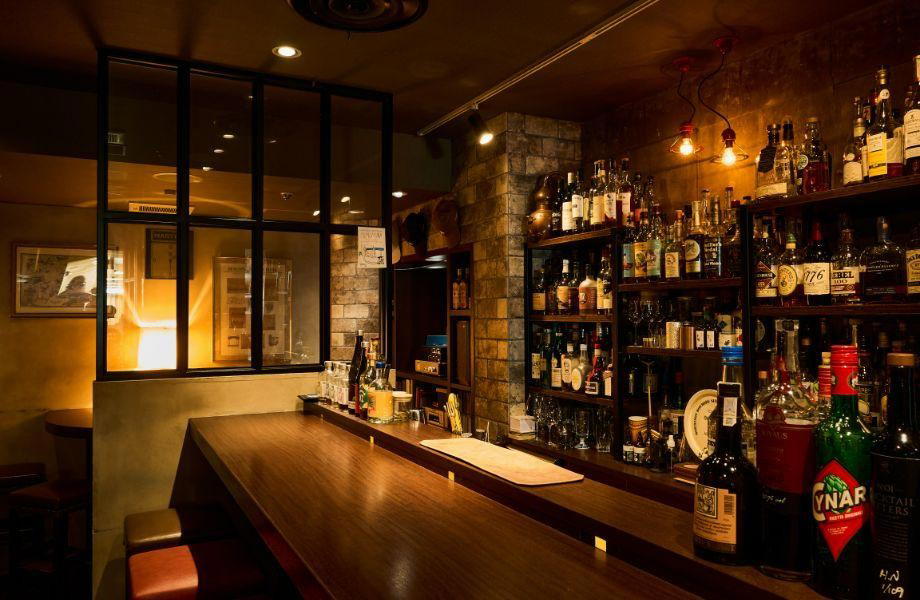
Bars in Osaka
Browse all →



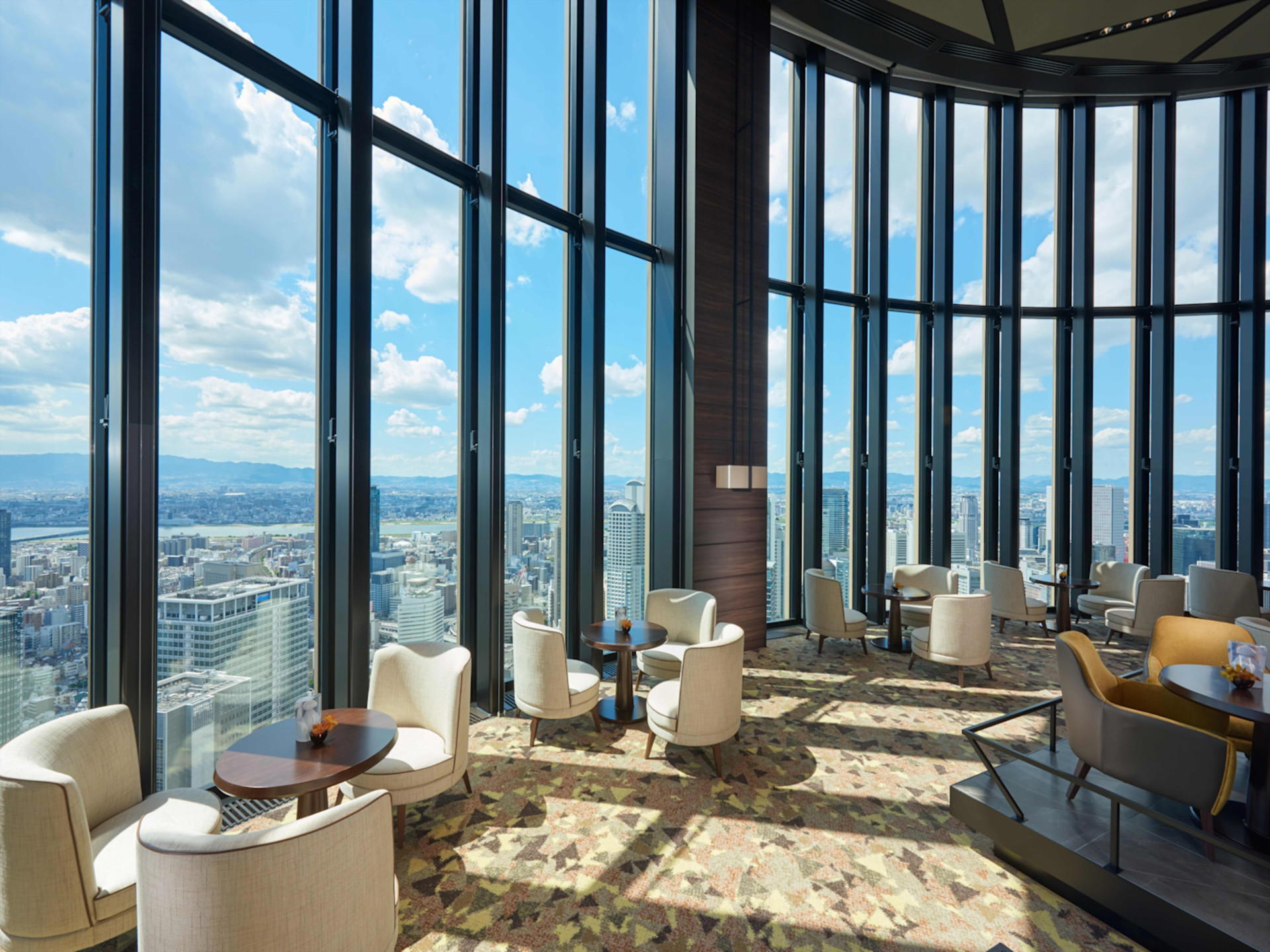
Hotels in Osaka
Browse all →



Wineries in Osaka
Browse all →
At a Glance
- Modern
- Elegant
- Intimate
- Trendy
- Sophisticated
- Date Night
- Special Occasion
- Business Dinner
- Celebration
- Solo
- Chefs Counter
- Open Kitchen
- Design Destination
- Standalone
- Extensive Wine List
- Sommelier Led
- Local Sourcing
Current opening hours
- Monday
- Closed
- Tuesday
- 6–10 PM
- Wednesday
- 12–10 PM
- Thursday
- 6–10 PM
- Friday
- 6–10 PM
- Saturday
- 12–10 PM
- Sunday
- Closed
Hours can change for holidays and private events. Last verified .
Dimly lit, contemporary counter-focused dining room with a strong sense of live kitchen theatre, where guests watch chefs prepare visually refined, seasonal courses in a calm but energetic atmosphere.