A Street That Has Been Baking Since the Mughal Era Lahore's old city does not ease you in gently. The lanes tighten, the noise compounds, and the smell of wood-fired ovens arrives before the ovens do. In this part of the city, bread is not a...
 Discover on Pearl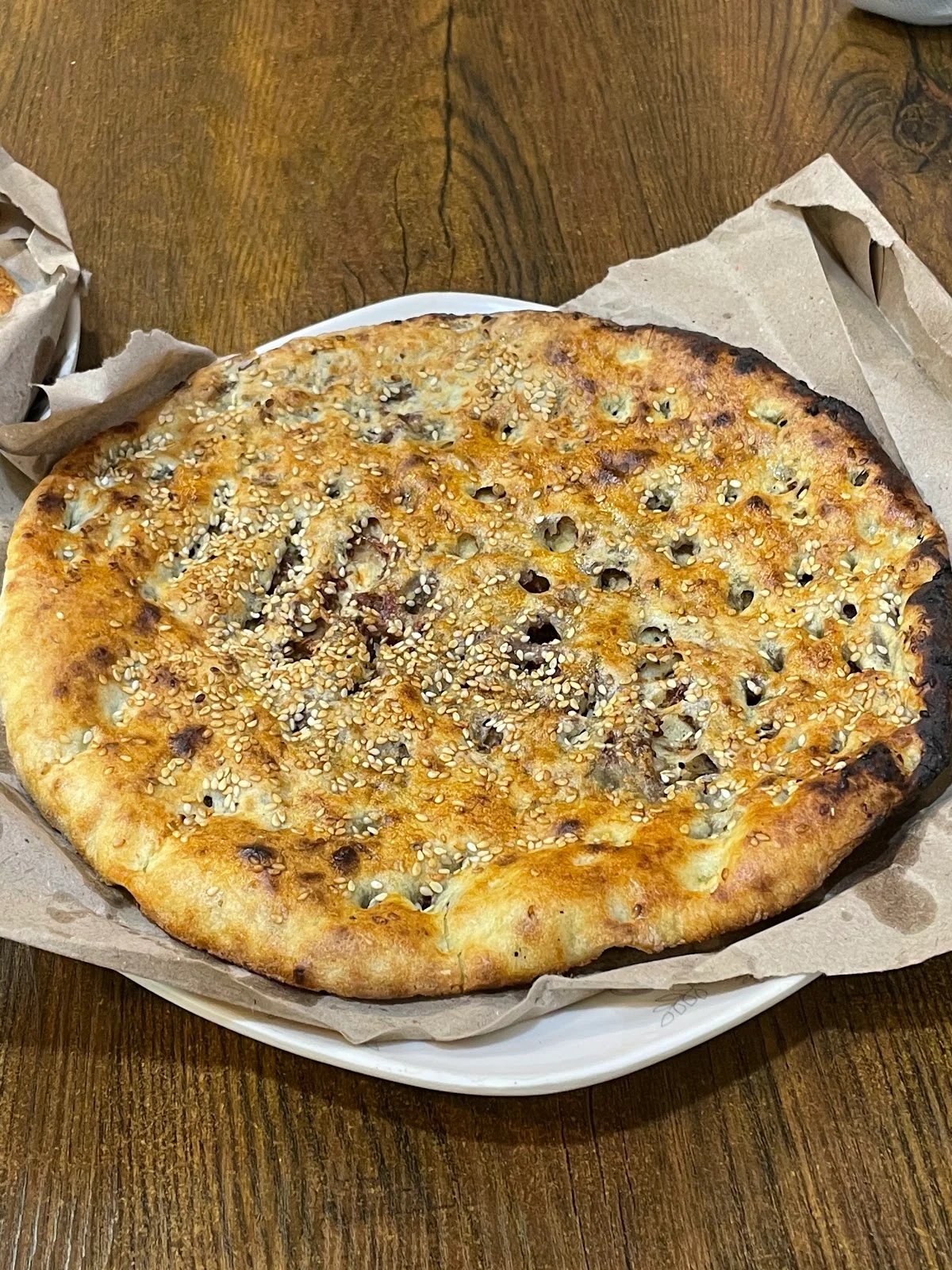
A Street That Has Been Baking Since the Mughal Era
Lahore's old city does not ease you in gently. The lanes tighten, the noise compounds, and the smell of wood-fired ovens arrives before the ovens do. In this part of the city, bread is not a side item. It is the point. Naan here is pulled, slapped, and pressed by hand onto the walls of tandoors that have been burning in the same neighbourhoods for generations, and the traditions governing that work are older than most countries. Khalifa Naan Shop Since 1869 sits inside that lineage, carrying a founding date that places it firmly in the late colonial period, when the walled city's food culture was already centuries deep.
The year 1869 is not incidental. It anchors this shop to a specific moment in Lahore's food history, when the artisan bread trade operated through a guild-adjacent system of master bakers passing technique to apprentices across family lines. The Khalifa title itself is historically a marker of that mastery in South Asian craft traditions, signalling a practitioner who has reached a recognised level of skill within a trade. A shop bearing that name and that founding date is making a very specific claim about where it sits in the city's baking hierarchy.
The shortlist, unlocked.
Hard-to-book tables, cellar releases, and concierge-planned trips.
Get Exclusive Access →Grain, Heat, and the Logic of Sourcing in Lahore's Bread Culture
The editorial angle on a naan shop of this age is not decorative nostalgia. It is about ingredients and process. Lahore sits in the Punjab, the agricultural province that produces a significant share of Pakistan's wheat. The province's flat, alluvial land has been under wheat cultivation for centuries, and the flour milled from that grain carries different protein and gluten characteristics than the imported or heavily processed alternatives that have entered commercial baking elsewhere in the region. A shop operating since 1869 would have built its reputation on the local supply chain that existed before industrialised flour production, and the leading of these old-city establishments have continued sourcing from that same regional base.
This matters because naan made with locally milled, regionally grown wheat behaves differently in a tandoor than bread made from standardised commercial flour. The hydration tolerances differ. The charring patterns differ. The crust texture and interior chew differ in ways that are immediately legible to anyone who eats bread with attention. At the oldest shops in Lahore's walled city, the flour sourcing is not a marketing position. It is the foundation of a product that has not needed to reinvent itself in over 150 years.
Compared to newer bread operations in Lahore's more developed commercial districts, where presentation and format have taken on greater weight, the old-city shops like this one operate on a different logic entirely. The product is the argument. There is no interior design making the case for you, and no menu engineering softening the ask. You are there for bread, and the bread is expected to carry the full weight of the experience.
Reading the Walled City Through Its Food Stops
Lahore's older food institutions do not exist in isolation. They form a circuit that serious visitors to the city treat as a single extended meal spread across a day. Butt Karahi represents the karahi tradition in the city's lineage of heavy, tallow-cooked meat dishes. Haveli positions itself at the heritage-dining end of the spectrum, where the architecture is as much a part of the offering as the food. A naan shop of this age sits at the foundational layer beneath all of it: the bread that accompanies karahi, nihari, and paye, without which those dishes are incomplete.
For visitors using our full لاہور restaurants guide, understanding the bread institutions is not optional context. It is the grammar of the city's food culture. Pakistan has a diverse national food geography, from the mountain-sourced produce at Hunza Food Pavilion in Karimabad to the northern comfort cooking at Rafsal in Skardu, but Lahore's wheat-and-tandoor tradition is the dominant culinary spine of the Punjabi lowlands, and it runs through institutions like this one.
Longevity as Evidence
In a city where food businesses open and close with significant frequency, a shop that has been operating since 1869 is making a structural argument about quality. Longevity in a trade this competitive is not accounted for by sentiment alone. A naan shop survives across 150-plus years because successive generations of customers in its immediate neighbourhood continue to choose it over available alternatives, and those alternatives in Lahore's old city have always been numerous. The competitive set for a bread shop in the walled city is not the polished restaurant scene of Gulberg or DHA. It is the dozen other tandoor operators within a short walk, each with their own established clientele and technique.
Within Pakistan's broader dining scene, this category of long-standing artisan shop occupies a different position than, say, a chef-driven tasting menu restaurant. There is no parallel to be drawn with Le Bernardin in New York City or Alinea in Chicago in terms of format or aspiration. The closer analogy is to the kind of trade institution that survives not through reinvention but through a refusal to compromise the core product. That refusal, repeated across generations, is its own form of discipline.
Other internationally recognised restaurants at the technique-forward end of global dining, from 8 1/2 Otto e Mezzo Bombana in Hong Kong to Alain Ducasse at Louis XV in Monte Carlo, earn their longevity through different mechanisms. A shop like this one earns it through the daily repetition of a craft that has no shortcut and no substitute.
Planning a Visit
Khalifa Naan Shop Since 1869 is located in Lahore, within the older food corridors of the city. Specific address details, hours, and contact information are not confirmed in our current record, and for a shop of this type in the walled city, arriving with a local guide or confirmed directions is advisable. Old Lahore's lane structure is not direct to read from maps alone, and the leading approach for first-time visitors is to combine this stop with other walled-city institutions, turning the logistics of the area into an asset rather than an obstacle. Buqayvia Restaurant in Lahore and other established names in the area make natural companions on the same circuit. No booking infrastructure is expected at a street-level naan shop of this type. Arrive, observe the queue if there is one, and order by volume.
Frequently Asked Questions
- Is Khalifa Naan Shop Since 1869 child-friendly?
- Street-level naan shops in Lahore's old city are, by default, open and informal. There are no age restrictions, and the accessible price point makes it a low-stakes stop for families moving through the walled city.
- What is the overall feel of Khalifa Naan Shop Since 1869?
- This is old-Lahore street food at its most direct. No awards architecture, no designed interiors. The shop's credibility rests on its 1869 founding date and its position within the city's artisan bread tradition, placing it in the same cultural register as the walled city's other long-standing food institutions.
- What is the leading thing to order at Khalifa Naan Shop Since 1869?
- Naan is the shop's entire reason for existence, and ordering anything other than the bread itself would miss the point. The tradition here connects to Lahore's broader wheat-and-tandoor cuisine, and the bread is intended to be eaten fresh from the tandoor, ideally alongside a heavy meat dish from a nearby karahi or nihari counter.
- Do they take walk-ins at Khalifa Naan Shop Since 1869?
- If this is a traditional walled-city naan shop, walk-in is the only model. No reservation system applies to street-level bread operations in Lahore. Arrival timing matters more than advance planning: early morning and late evening tend to be peak service windows at traditional tandoor shops in the old city.
- What makes Khalifa Naan Shop Since 1869 worth seeking out?
- Go because 1869 is a verifiable founding date that places this shop inside Lahore's pre-industrial bread tradition. The product has survived every subsequent wave of commercial food change in the city. That continuity, in a competitive artisan trade, is the credential.
- How does a shop founded in 1869 fit into Lahore's current food scene?
- Lahore's food culture has expanded significantly in recent decades, with modern restaurant formats in areas like Gulberg sitting alongside the walled city's older institutions. A shop carrying a founding date of 1869 belongs to the latter category entirely. It predates modern restaurant culture in Pakistan and operates by the logic of a craft trade rather than a hospitality business. For visitors who have covered Pakistan's wider dining geography, from mountain-region cooking at Sapna Shinwari Restaurant in Abbottabad to the newer urban formats, this shop represents the oldest surviving layer of Lahore's food identity.
Peer Set Snapshot
These are the closest comparables we have in our database for quick context.
| Venue | Cuisine | Price | Awards | Notes |
|---|---|---|---|---|
| Khalifa Naan Shop Since 1869 | This venue | |||
| Butt Karahi | ||||
| Haveli | ||||
| Hunza Food Pavilion | ||||
| China Hot Pot | ||||
| Buqayvia Restaurant |
Need a table?
Our members enjoy priority alerts and concierge-led booking support for the world's most difficult tables.
Get Exclusive AccessThe shortlist, unlocked.
Hard-to-book tables, cellar releases, and concierge-planned trips.
Get Exclusive Access →