
Horumon Nagaoka belongs to Osaka’s compact, offal-led yakiniku tradition rather than the polished steakhouse lane. The draw is menu architecture: tripe and Japanese barbecue organized for counter eating, drinks that stay in the sake, shochu and wine lane, and a small-room format recognized in Tabelog’s Yakiniku WEST 100 for 2025.
Pearl is the En Primeur Club membership app — saves, bookings, and concierge access live there. Same editors, same standards.
- Address
- Japan, 〒530-0023 Osaka, Kita Ward, Kurosakicho, 1−2 2f
- Phone
- +81 80-5707-8531
- Website
- s.tabelog.com
 Saves & bookings on Pearl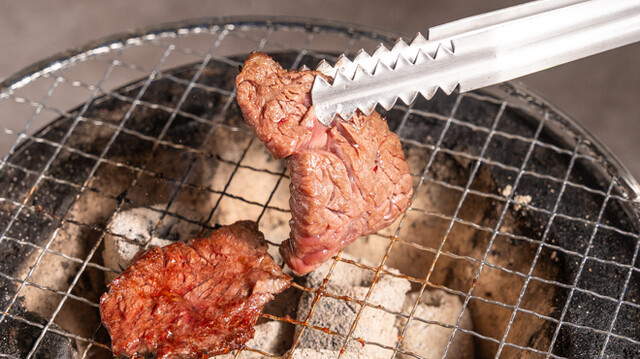
Upstairs in Kurosakicho, the room reads as Osaka yakiniku in its compact form: counter seating, close heat, and a menu built around horumon rather than prestige cuts. That matters in a city where beef culture splits into several lanes. There are celebratory wagyu rooms, casual grill tables, standing bars that keep the bill low, and a smaller group of specialists where offal is not a side category but the organizing principle.
Horumon Nagaoka sits in that last camp. Its public category is tripe and yakiniku, a pairing that says more than a generic Japanese barbecue label would. Tripe, intestines and other offal cuts reward a kitchen that understands trimming, seasoning and grill timing; they also attract a different kind of diner from the one chasing sirloin marbling alone. In Osaka, that distinction has cultural weight. The city’s appetite for value, texture and late-night conviviality has long made horumon a serious genre, not a compromise.
Offal-first yakiniku, structured for the counter
The menu’s premise is narrow in the right way. Rather than trying to cover every version of grilled beef, the format points diners toward horumon and Japanese barbecue, with sake, shochu and wine forming the drink frame. That architecture suits a small counter room: cuts can move quickly from order to grill, and the meal can be built as a sequence of textures instead of a procession of large-format beef plates.
This is where Osaka’s yakiniku scene differs from cities that treat beef primarily as luxury theater. Horumon requires appetite and attention, but it also encourages pace. A meal can move from leaner grilled items into richer offal, with drinks chosen for salt, smoke and fat rather than for ceremony. The result is less formal than a tasting-menu counter, yet more directed than a general izakaya grill.
The recognition signal is useful here. Selection for Tabelog’s Yakiniku WEST 100 in 2025 places the restaurant within a regional field of barbecue specialists rather than a catch-all Osaka dining list. Tabelog’s score of 3.63 is not a universal ranking system, but within Japan it is a meaningful local reference point, especially in categories where repeat diners and narrow specialties shape reputation. The award also helps separate a small horumon room from the many casual grills that operate on atmosphere alone.
That point is worth making because Osaka travelers often default to easier categories: takoyaki, okonomiyaki, ramen, or the pork buns at 551 Horai (551蓬莱). Those are valid parts of the city’s appetite, but they do not explain its grill culture. For that, horumon is a sharper lens. It shows a version of Osaka dining built on affordability, late hours, counter proximity and a willingness to treat less glamorous cuts with confidence.
What the room signals about the meal
The seating format is part of the editorial argument. A 19-seat room, with 14 counter seats and a single table for four to five, pushes the experience toward immediacy. This is not a private-room yakiniku model designed for long corporate dinners. It is closer to a focused grill counter, where the cooking format keeps the meal compact and social without diluting the specialty.
That scale also affects the kind of planning it rewards. In a larger barbecue restaurant, the menu can absorb indecision; here, the better approach is to treat the meal as a horumon-led session and let the category define the order. The venue lists counter seating, no private rooms and no private use, all of which reinforce the same idea: this is a specialist room, not a flexible banquet space.
Compared with nearby casual options in the broader Osaka orbit, the positioning is clear. Stand Ruten operates in a lower-price casual lane, while GARuRu KO-RI and Chuka Soba Ibuki occupy different quick-service or snack-driven categories. Kurubushi points toward Japanese dining at a higher spend. Horumon Nagaoka’s value is not that it replaces those choices, but that it fills a narrower barbecue slot: offal-led, compact, and recognized inside a regional yakiniku selection.
For readers mapping the city, this makes the restaurant useful as a counterpoint to Osaka’s broader table. Coffee and bakery stops such as .cafe and 52CHO-ME BAKERY show the daytime side of the city, while 99 Pizza Napoletana Gourmet and a canto (Italian) reflect Osaka’s appetite for non-Japanese specialist cooking. Horumon belongs to a more local night rhythm: smaller room, stronger grill identity, and a menu that assumes diners are there for the category rather than for general choice.
How to place it in an Osaka itinerary
The strongest reason to prioritize this table is specificity. A traveler looking for polished wagyu service may find the format too direct; a diner interested in how Osaka eats after dark will read the room correctly. The drinks list keeps to sake, shochu and wine, which is enough for the genre without turning the meal into a beverage program. The payment setup and smoking policy also mark it as an old-school local format rather than an internationalized dining room, so expectations should match the setting.
The opening date, December 2020, adds another useful layer. Osaka has seen heavy churn in small restaurants since the pandemic years, and a compact horumon counter earning a 2025 regional yakiniku selection signals traction in a competitive, locals-driven category. That does not make it a luxury address. It makes it a focused Osaka barbecue stop with enough recognition to merit attention from diners who care about the structure of a meal, not just the headline ingredient.
For wider city planning, use Our full Osaka restaurants guide alongside Our full Osaka hotels guide, Our full Osaka bars guide, Our full Osaka wineries guide and Our full Osaka experiences guide. To compare how Japanese specialists read across other cities, see -Grilled beef Sukiyaki- KAMAKURA TANUKIAN 鎌倉 たぬき庵 in Kamakura. 鮪と炭火焼き うお炭 秋葉原店 in Tokyo.know in Kumamoto, (Shoku) Vietnam in Kawasaki, [Curry Senmon Ten] Maruyama Kyoju. in Sapporo, [ki:] in Kyoto, Jōdo Saké Bar in Los Angeles and Onigiri Time in Pasadena.
How It Stacks Up
Comparable venues by category and price.
| Venue | Cuisine | Price | Notes |
|---|---|---|---|
| Horumon NagaokaThis venue — the venue you are viewing | Osaka yakiniku & horumon | $$ | Not listed |
| sumibi yaki tori kamo jin Ohatsu tenjin ten | Japanese Yakitori & Duck Hot Pot | $$ | Kita |
| ZEN LABORATORY | Modern ramen & tsukemen | $$ | Kita |
| Synergy | Japanese Curry | $$ | Kita |
| Saru Shokudo Honmachi honten | Japanese Western (Yoshoku) | $$ | Chūō |
| Mensho Yashima | Traditional Osaka Udon Shop | $$ | Moriguchi |
Recognition history
Dated appearances from independent guides and award organizations, with the underlying list record or original source where available.
Tabelog 100 #96 · No. 96
Tabelog · Tabelog 100 - Yakiniku - WEST - 2025
Continue exploring
More in Osaka
Restaurants in Osaka
Browse all →



Bars in Osaka
Browse all →



Hotels in Osaka
Browse all →



Wineries in Osaka
Browse all →
At a Glance
- Lively
- Cozy
- Energetic
- Casual Hangout
- After Work
- Late Night
- Group Dining
- Solo
- Standalone
- Open Kitchen
- Natural Wine
- Sake Program
- Beer Program
- Natural Wine
- Local Sourcing
Current opening hours
- Monday
- Closed
- Tuesday
- 6 PM–1 AM
- Wednesday
- 6 PM–1 AM
- Thursday
- 6 PM–1 AM
- Friday
- 6 PM–2 AM
- Saturday
- 6 PM–2 AM
- Sunday
- 6 PM–2 AM
Hours can change for holidays and private events. Last verified .
Casual and lively with the ‘live feeling’ of meat grilling at close-range counters and tables; a compact, smoky room that feels like a local Osaka low-profile address for relaxed late-night eating and drinking rather than a formal steakhouse.