Holy Basil

LA Times 101 Best Restaurants #33
Our verdict
Holy Basil brings Bangkok street food sensibility to downtown Los Angeles with an ambition that consistently outpaces its compact footprint. Ranked #33 on the LA Times 101 Best Restaurants 2024 list, the restaurant serves a short, revolving menu of noodles, curries, and fried rice that draws on Thai, Chinese, Indian, Mexican, and Japanese influences. Booking ahead is strongly advised.

Pearl is the En Primeur Club membership app, where members save venues, book tables and use the concierge.
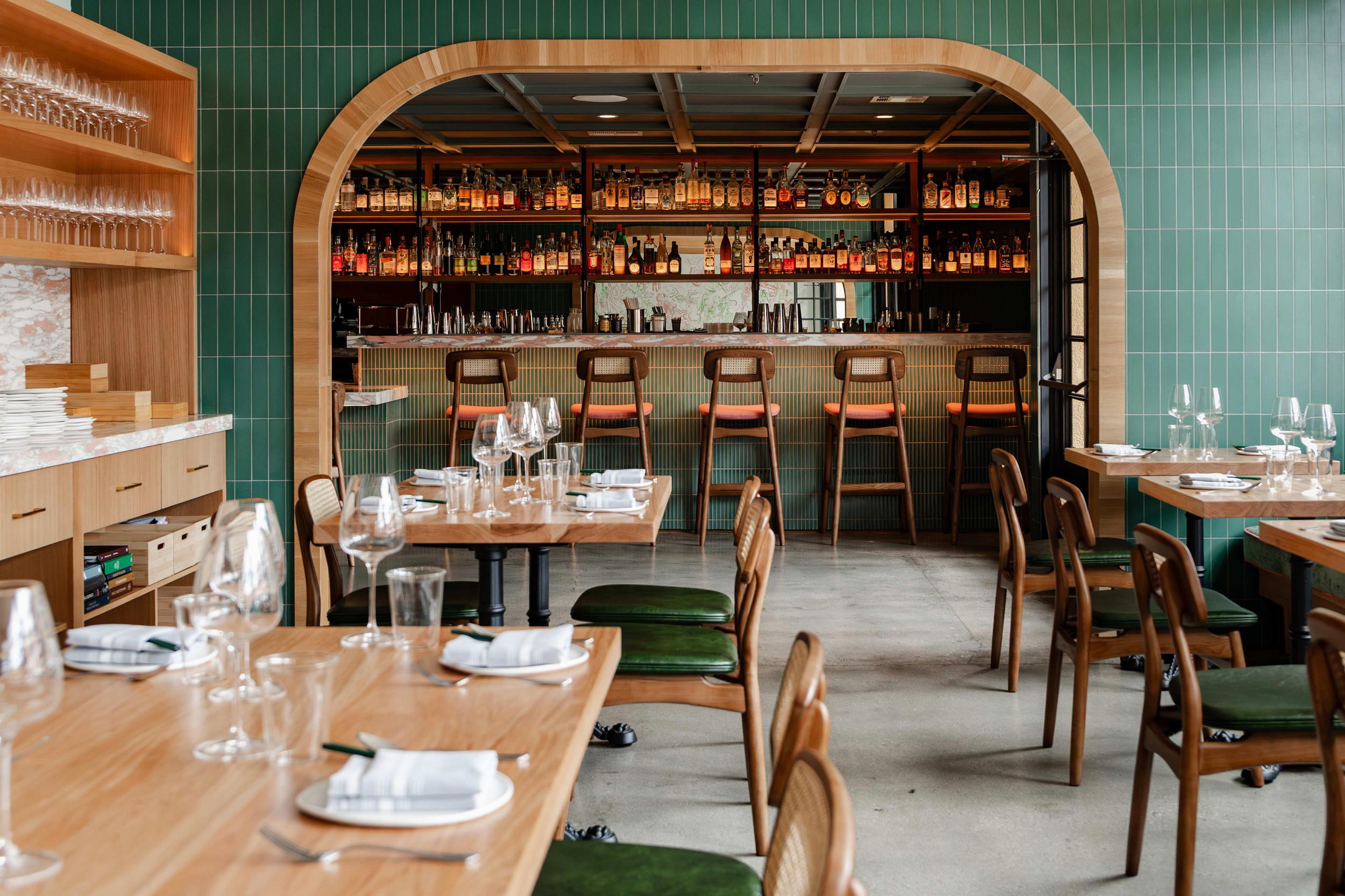
The menu
What to order
- Nam Tok Angus Beef Tataki
- Moo Krob
- Grandma's Fish and Rice
- Wild Shrimp Curry
- Soft Shell Crab with Salted Egg Yolk
- Pad See Ew
Between Two Buildings in Downtown Los Angeles
Santee Passage is not the address you expect to anchor one of Los Angeles's more talked-about restaurant experiences. The downtown fashion district's covered arcade has long operated at the intersection of commerce and foot traffic, not fine dining. But cities increasingly route serious cooking through unconventional infrastructure, and the meal at Holy Basil, much of whose seating runs along a wall between two buildings, is a useful illustration of how format and setting have decoupled in contemporary American dining. The cooking arrives with a force that makes the tight quarters feel deliberate rather than makeshift.
The Ritual of a Revolving Menu
At Holy Basil, the dining ritual is structured around uncertainty in a productive sense. The menu rotates, stays short, and offers no permanent anchor dishes that a first-timer can arrive expecting to find. That format asks something of the guest: you come without a fixed order in mind, read what is available that day, and build the meal from a handful of options spanning noodles, curries, fried rice, chicken wings, and vegetable preparations. It is a pacing more familiar to Bangkok street eating than to the prix-fixe logic that governs much of Los Angeles's decorated restaurant tier, see the tasting-menu formalism at Hayato, the progression-driven approach at Somni, or the structured narrative at Kato.
That informality is not an absence of intention. The short format keeps the kitchen focused and gives Wedchayan Arpapornnopparat room to change direction quickly, folding in new combinations without the commitment that a printed, permanent menu demands. It is also closer to the spirit of the original project: a window counter at the same food hall, where Arpapornnopparat had been serving full-throttle Bangkok street food since 2020, building a following among the kind of eater who tracks cooking by reputation rather than by room.
A Menu That Resists Easy Classification
Downtown Los Angeles has developed a notable concentration of restaurants working in the space between Asian culinary tradition and California-sourced ingredients. Holy Basil's approach is distinct within that group because the synthesis is biographical rather than conceptual. Arpapornnopparat's cooking draws visibly on Thai foundations, his father's Chinese heritage, time spent in India, and the Mexican and Japanese flavors that are part of everyday eating in Los Angeles. The result is a menu that does not announce its influences through obvious fusion moves but embeds them in sauces, technique, and texture.
The LA Times, in placing Holy Basil at #33 on its 2024 list of 101 Best Restaurants, described a fried soft-shell crab and shrimp dish set in a sauce built from salted egg yolk, browned butter, shrimp paste, and scallion oil. That combination does not map onto any single culinary tradition. The salted egg yolk draws from Chinese and Southeast Asian pantries; browned butter is French in lineage; shrimp paste is foundational to Thai cooking; scallion oil travels through multiple Asian cuisines. The combination moves between registers of salt, acid, and fermented depth in a way the LA Times described as disorienting in the leading sense, comparing it to traveling without a map. For a city whose restaurant conversation frequently concerns itself with authenticity and origin, that kind of cooking is genuinely difficult to place, and that difficulty is part of the point.
This cross-referential approach to flavor is not unique to Holy Basil within Los Angeles's broader scene. Kato works Taiwanese culinary memory through a California fine-dining lens; Osteria Mozza grounds Italian tradition in local produce; Providence builds a seafood-driven menu around Southern California's coastal geography. Where restaurants like The French Laundry in Napa or Alinea in Chicago ask for a significant financial and temporal commitment in exchange for complex cooking, Holy Basil compresses ambition into a format that does not require planning months in advance or spending at the level of a tasting menu.
Where Holy Basil Sits in the Los Angeles Restaurant Picture
Los Angeles has built a reputation over the past decade for doing something relatively rare in American dining: serious cooking delivered outside the formal restaurant container. The city's food hall culture, its taco counter canon, its ramen and Thai town institutions, these have always coexisted with its white-tablecloth tier. Holy Basil's emergence from a food hall window to a modest full-service space follows a trajectory that several LA restaurants have traced, including Lazy Bear in San Francisco, which began as a supper club before institutionalizing into a recognized fine-dining address. The form factor starts informal, the reputation builds, the project expands without losing the thing that attracted attention in the first place.
The LA Times 2024 ranking places Holy Basil in company that includes restaurants operating at significantly higher price points and with longer institutional histories. That kind of recognition matters not because rankings are definitive, but because they signal where critical attention is concentrated. For context, restaurants like Atomix in New York, Le Bernardin, or 8½ Otto e Mezzo Bombana in Hong Kong compete in a tier where investment in room and service is part of the proposition. Holy Basil's position in a similar conversation, without any of that infrastructure, says something specific about what the cooking is doing.
For a full map of where Holy Basil fits within downtown and the broader city, consult our full Los Angeles restaurants guide. The city's hospitality scene extends well beyond dining: our Los Angeles hotels guide, bars guide, wineries guide, and experiences guide cover the wider picture. Elsewhere in the US, comparable cooking ambition in different settings appears at Single Thread Farm in Healdsburg and Emeril's in New Orleans.
Planning Your Visit
Holy Basil is located at 718 S Los Angeles St, Space A, in downtown Los Angeles's Santee Passage. The space is small and the restaurant's profile has grown steadily since the 2020 food hall window; arriving without a reservation risks a wait or a missed seating. The menu rotates, so no specific dish can be guaranteed on any given visit. The setting and price point are accessible enough for repeat visits, which is arguably the right way to engage with a menu that changes.
Quick reference: Reservations recommended.
Frequently asked questions
Is Holy Basil a family-friendly restaurant?
The setting is informal and the menu spans recognizable categories, fried rice, noodles, chicken wings, alongside more experimental preparations that reference Thai, Chinese, Indian, Mexican, and Japanese influences. Younger diners comfortable with bold, funky flavors will likely find plenty to engage with. The Santee Passage location is compact and casual rather than formal.
What's the overall feel of Holy Basil?
Small, informal, and deliberately unpretentious: much of the seating runs along a wall between two buildings in downtown's Santee Passage. The cooking operates at a level of ambition that ranked the restaurant #33 on the LA Times 101 Best Restaurants 2024, but the room makes no attempt to signal that. Come for the food, not the space.
Has Holy Basil won any awards?
Holy Basil has received recognition including: LA Times 101 Best Restaurants 2024 - Ranked #33. Since 2020, food obsessives have been converging at the window in downtown’s Santee Passage food hall from which Wedchayan “Deau” Arpapornnopparat serves visceral, full-throttle interpretatio….
What dish is Holy Basil famous for?
The menu rotates and keeps no permanent fixtures, which is part of the kitchen's identity. The LA Times 2024 review singled out a fried soft-shell crab and shrimp in a sauce built around salted egg yolk, browned butter, shrimp paste, and scallion oil, a dish the critic described as among the year's most memorable. Earlier, the wok-smoked pad see ew and the moo krob, with its crackly skin over pork belly, established the kitchen's reputation at the original Santee Passage counter.
What's Holy Basil's location?
Holy Basil is located at 718 S Los Angeles St space A, Los Angeles, CA 90014, Los Angeles.
Do they take walk-ins at Holy Basil?
No fixed booking policy is published for Holy Basil. Given the small footprint of the space and the restaurant's placement at #33 on the LA Times 101 Best Restaurants 2024, arriving early or on off-peak hours gives the best chance of a seat. Checking the restaurant's current social presence before visiting is advisable.
Cuisine and Awards Snapshot
Comparable venues nearby, for context on price, style, and recognition.
| Venue | Cuisine | Price | Awards | Notes |
|---|---|---|---|---|
| Holy BasilThis venue (the venue you are viewing) | Bangkok Street Food Thai with Multicultural Fusion | $30–50 | LA Times 101 Best Restaurants #33 | Not listed |
| YhingYhang BBQ | Thai BBQ | $50–100 | Not listed | West Adams |
| Siam Chan | Thai-Chinese | $10–20 | Not listed | Sawtelle |
| Sanamluang Cafe | Authentic Thai | $10–20 | Not listed | Thai Town |
| Thai by 瓦城 | Modern Thai | Not listed | Not listed | Not listed |
| Vim | Thai & Chinese | $10–20 | Not listed | Thai Town |
Recognition history
Dated appearances from independent guides and award organizations, with the underlying list record or original source where available.
LA Times 101 Best Restaurants #33
LA Times
Continue exploring
More in Los Angeles
Restaurants in Los Angeles
All restaurants in Los Angeles →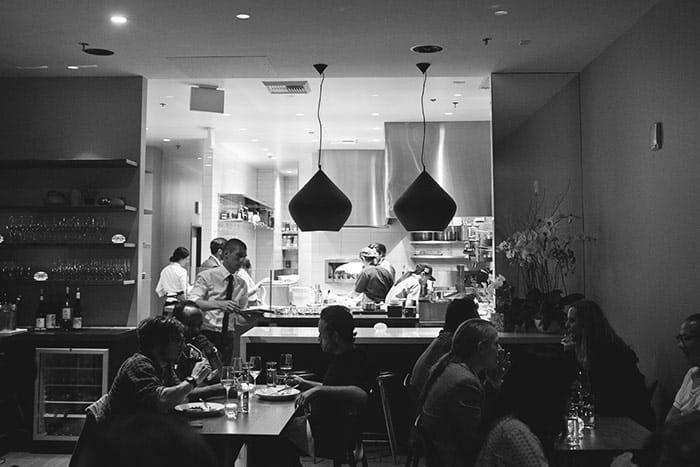
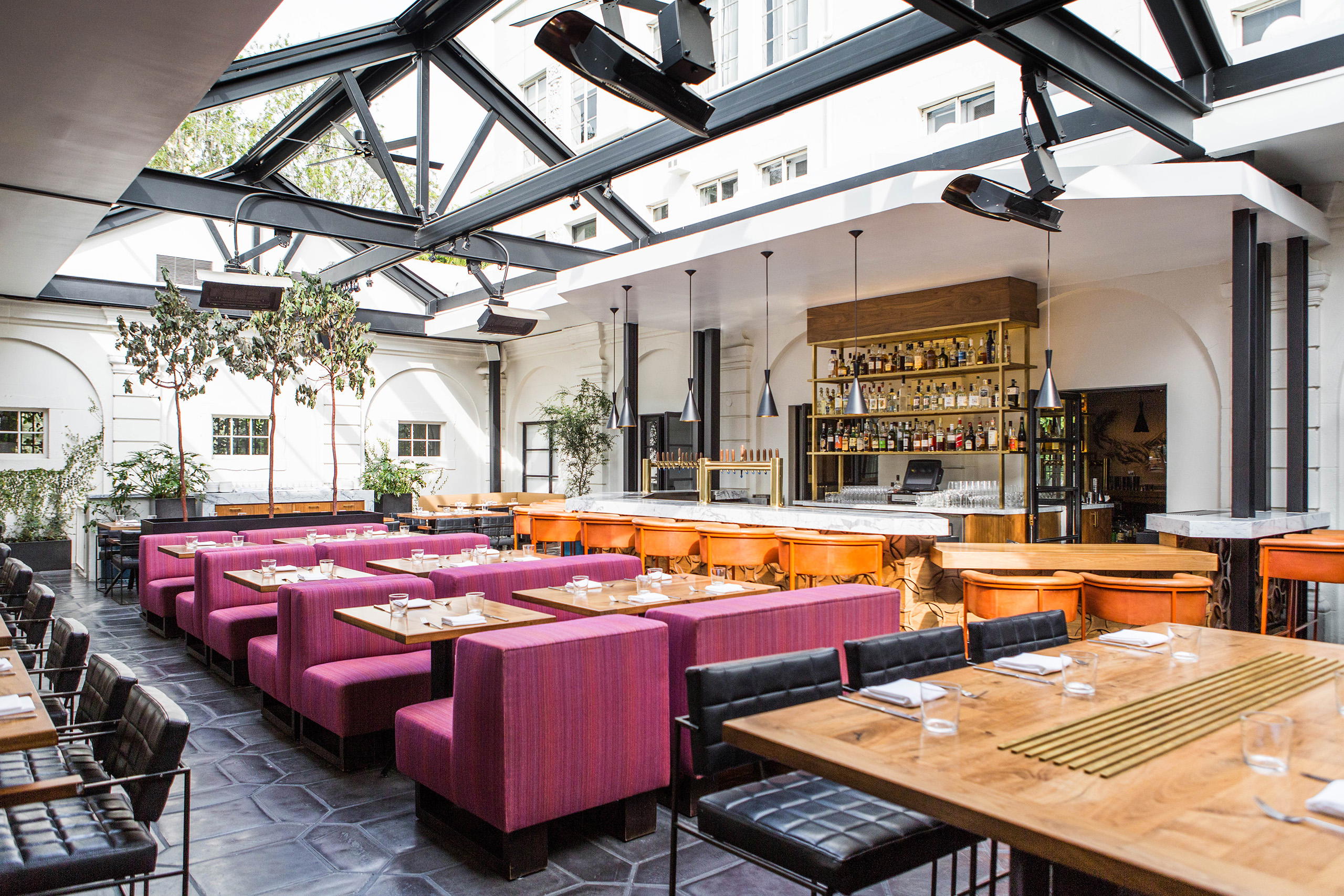
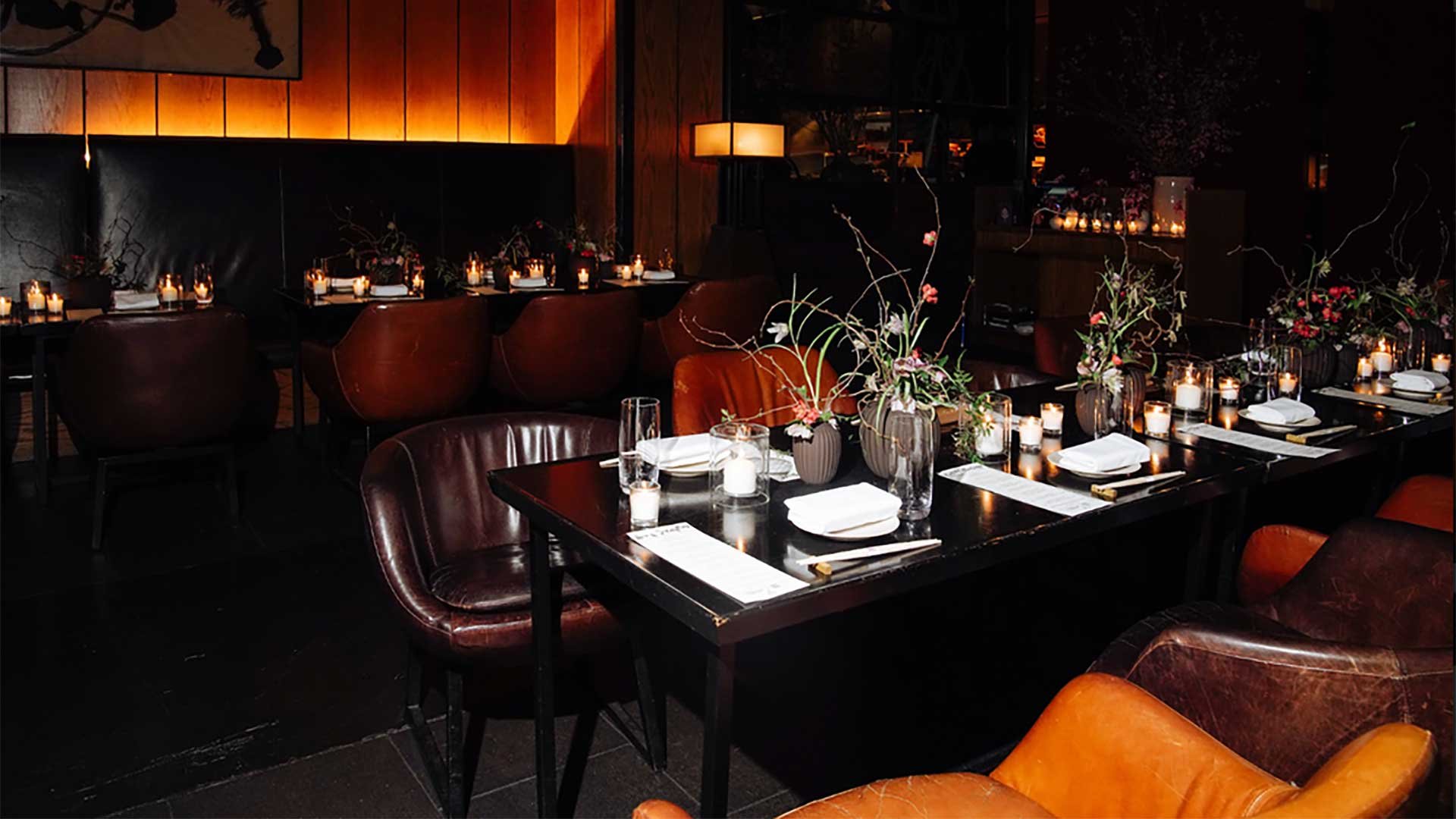
Bars in Los Angeles
All bars in Los Angeles →
Hotels in Los Angeles
All hotels in Los Angeles →
Wineries in Los Angeles
All wineries in Los Angeles →
Details
- Lively
- Trendy
- Intimate
- Casual Hangout
- Group Dining
- Celebration
- Date Night
- Open Kitchen
- Private Dining
- Sake Program
- Farm To Table
- Local Sourcing
- Sustainable Seafood
- A La Carte
- Family Style
- Small Plates
- Sake
- Thai Tea
- Vegetarian Friendly
- Allergy Accommodating
Current opening hours
- Monday
- 11 AM–3 PM, 5–8:30 PM
- Tuesday
- 11 AM–3 PM, 5–8:30 PM
- Wednesday
- 11 AM–3 PM, 5–8:30 PM
- Thursday
- 11 AM–3 PM, 5–8:30 PM
- Friday
- 11 AM–3 PM, 5–8:30 PM
- Saturday
- 12–3:30 PM, 5–8:30 PM
- Sunday
- Closed
Hours can change for holidays and private events. Hours as of .
Tiny, spirited dining room with an open kitchen wrapped around the counter, intimate row of outdoor tables set against an exterior wall, rare for seats to stay empty, energetic neighborhood vibe with neon signage.