
Tabelog 100 #77
Our verdict
Komaba’s everyday dining culture has a serious address in Hishida Ya, a fish-led shokudo with Tabelog 100 Diner recognition in 2026, 2024, and 2021. Its reputation sits less in luxury theater than in the older Tokyo grammar of set meals, handwork, Toyosu sourcing, and a neighbourhood rhythm shaped by the University of Tokyo.

Pearl is the En Primeur Club membership app, where members save venues, book tables and use the concierge.
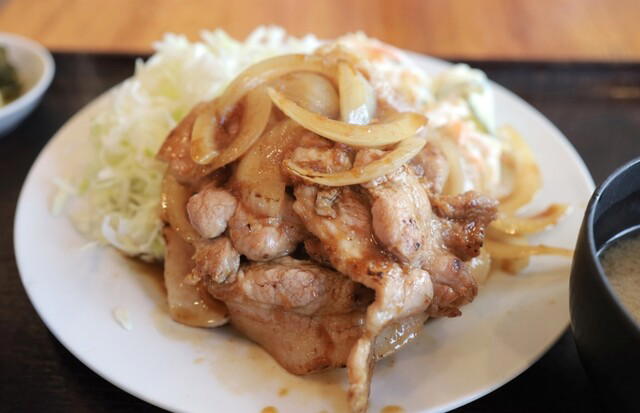
The menu
What to order
- Ginger grilled pork set meal
- Minced meat cutlet set meal
- Tonkatsu set meal
- Seafood set meals
Tokyo is not only its most theatrical dining districts, and that distinction matters. The approach to Hishida Ya is quieter and more everyday, pulling the city’s appetite toward useful food rather than spectacle. In that setting, Hishida Ya belongs to a Tokyo tradition that serious travellers often understand too late: the cafeteria-style dining room as civic infrastructure, where seafood, cutlets, rice, pickles, and miso soup can carry as much cultural weight as a tasting counter.
Tokyo’s international dining reputation is often filtered through sushi counters, formal Japanese rooms, and tasting menus. The city’s daily table is broader and less ceremonial. Cafeteria-style restaurants, seafood set-meal houses, and tonkatsu counters preserve another hierarchy, one built around repetition and consistency rather than theatrical scarcity. Tabelog’s 2026 recognition places Hishida Ya inside that vernacular canon, with a listed score of 3.72 and a price band of JPY 1,000 - JPY 1,999 for both lunch and dinner.
Tokyo's shokudo culture, viewed through fish and set meals
The restaurant’s category mix tells the story: cafeteria, seafood, and tonkatsu. That combination reads ordinary only if ordinary is mistaken for casual. In Tokyo, everyday set-meal culture is a disciplined format: a main plate, rice, soup, pickles, and small sides arranged around balance rather than excess. The diner judges the kitchen through rice temperature, fish handling, frying control, and whether the supporting elements have been treated as obligations or as part of the meal.
Here, the seafood emphasis is not decorative. Hishida Ya’s place in the cafeteria, seafood, and tonkatsu categories puts it in a part of Tokyo dining where everyday access and kitchen discipline have to coexist. The point is not to imitate a luxury counter, but to apply care to the working grammar of lunch and dinner. In a city where seafood can slide into either luxury fetish or convenience food, this middle register is culturally important: accessible, skilled, and rooted in the routines of regular customers.
The supporting details matter because they explain the restaurant’s reputation better than adjectives can. A low price band does not automatically mean a meal is simple-minded, and Hishida Ya’s appeal rests on the way familiar elements are made to feel complete rather than merely inexpensive. The pleasure is in the format: a practical table, a clear main focus, and the satisfaction of a Tokyo meal that does not need ceremony to feel considered.
A Tokyo lunchroom lineage without nostalgia cosplay
Hishida Ya’s importance is best understood through function rather than myth. It reads as the kind of restaurant designed for repeat use by people who want a dependable meal, not a one-time performance. That role matters in Tokyo because it frames the cooking as institutional in the honorable sense: food that supports daily life while still inviting close attention.
The restaurant’s recognition is useful not as mythology, but as a credential for why this type of everyday dining room can sit in conversation with more expensive Tokyo dining without pretending to be part of the same category. A Tabelog score of 3.72 and 2026 recognition help confirm that Hishida Ya’s reputation is not built only on sentiment. It is a reminder that the city’s dining hierarchy includes places where restraint, value, and repetition are the point.
Against selected comparison venues, the distinction sharpens. Hishida-ya Sakaba, Shinsen Ichinoya, and Shoto Ran Kan offer different ways to read Tokyo dining, while Cignale Enoteca and Keichitsu belong to other restaurant conversations rather than the set-meal tradition. Hishida Ya’s cultural value is precisely that it stays in the diner lane while applying serious attention to seafood, tonkatsu, and the structure of a complete everyday meal.
How to place it in a Tokyo itinerary
This is a strong counterpoint to the reservation-led version of Tokyo dining. It belongs in the same trip as high-control sushi, yakitori, or cocktail programs because it explains the city from the opposite direction: not scarcity, but repeatability.
For Tokyo dining contrasts, the useful comparison is not a single rival but a spread of formats. Seafood, set meals, counter cooking, cafés, and curry specialists all show how everyday formats can develop their own loyal audiences. Hishida Ya fits that larger map by showing how a practical cafeteria-style restaurant can still feel precise, memorable, and worth seeking out.
Across Japan and beyond, the same lesson holds: humble forms deserve close reading. Regional comfort food, café culture, local set-meal traditions, immigrant-food conversations, curry specialists, and contemporary casual dining all show how ordinary meals become culturally specific. Even outside Japan, Japanese everyday forms travel, adapt, and acquire new audiences, which makes a Tokyo example such as Hishida Ya especially useful as a reference point.
The editorial read is clear: Hishida Ya is not the Tokyo meal for spectacle seekers. It is the meal for understanding how a cafeteria-style restaurant can earn attention without abandoning the logic of set meals, familiar categories, and regular use. In a city that often rewards difficulty, that restraint is its own argument.
The Essentials
Comparable venues at similar price and category levels.
| Venue | Cuisine | Price | Awards | Notes |
|---|---|---|---|---|
| Hishida YaThis venue (the venue you are viewing) | Japanese teishoku cafeteria | $10–20 | Tabelog 100 #77 | Not listed |
| Hishida-ya Sakaba | Chinese-influenced Izakaya with Fresh Tuna | $30–50 | Tabelog 100 #79 | JPY 4,000 - JPY 4,999 JPY 1,000 - JPY 1,999 |
| Cignale Enoteca | Italian-Japanese Fusion Omakase | $200–300 | La Liste Top Restaurants · Tabelog 100 #97 | Italian |
| Shinsen Ichinoya | Traditional Kanto-style Unagi (grilled eel) | $50–100 | Tabelog 100 #13 | JPY 10,000 - JPY 14,999 JPY 5,000 - JPY 5,999 |
| Keichitsu | Modern French with Japanese Influences | $100–150 | Michelin Plate · We're Smart World 4 Radishes | French |
| Shoto Ran Kan | Refined Japanese Izakaya | $50–100 | Tabelog 100 #45 | JPY 10,000 - JPY 14,999 |
Recognition history
Dated appearances from independent guides and award organizations, with the underlying list record or original source where available.
Tabelog 100 #77 · No. 77
Tabelog · Tabelog 100 - Diner - 2026
Continue exploring
More in Tokyo
Restaurants in Tokyo
All restaurants in Tokyo →

Bars in Tokyo
All bars in Tokyo →






Details
- Solo
- Casual Hangout
- After Work
- Family
- Standalone
- A La Carte
- Set Menu
Current opening hours
- Monday
- 11:30 AM–2 PM, 5:30–10 PM
- Tuesday
- 11:30 AM–2 PM, 5:30–10 PM
- Wednesday
- 11:30 AM–2 PM, 5:30–10 PM
- Thursday
- 11:30 AM–2 PM, 5:30–10 PM
- Friday
- 11:30 AM–2 PM, 5:30–10 PM
- Saturday
- 5:30–10 PM
- Sunday
- Closed
Hours can change for holidays and private events. Hours as of .
Casual, no-frills cafeteria-style atmosphere with counter and table seating, focused on generous portions of home-style Japanese dishes rather than decor.