Tabelog 100 #13
Our verdict
Shinsen Ichinoya is a Tokyo unagi specialist in Shinsen, selected for Tabelog’s Unagi 100 in 2024 after prior selections in 2018, 2019 and 2022. The appeal is less about spectacle than regulars’ dining: eel as a focused meal, sake or shochu alongside it, and a room built for repeat visits rather than destination theatre.

Pearl is the En Primeur Club membership app, where members save venues, book tables and use the concierge.
The menu
What to order
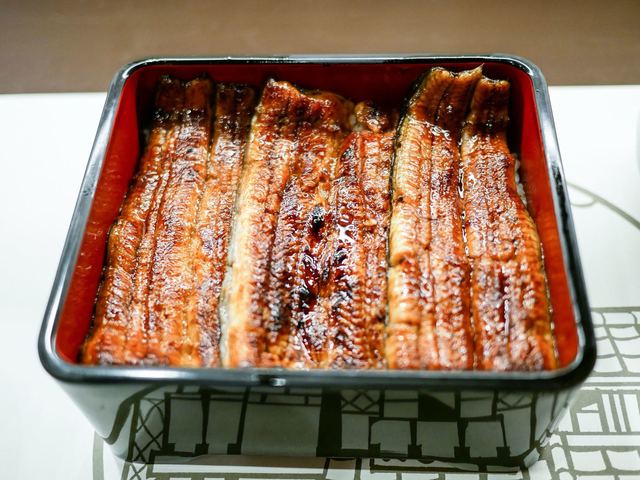
- Unajū (grilled eel over rice)
- Kabayaki grilled eel
- Eel liver dishes
- Fried eel bones
Shinsen Ichinoya filters Tokyo appetite neatly. In a city of glare, speed and constant new openings, the restaurant reads as a quieter specialist address, built less for discovery than return. Here, unagi makes sense: a cuisine of patience, timing and habit, eaten by people who know what they came for. Shinsen Ichinoya belongs to quieter Tokyo, where category focus and repeat confidence matter more than grand narrative.
Tokyo eel houses move differently from sushi counters and tasting-menu rooms. The meal is narrower, expectations sharper. Regulars want consistency, a familiar format and assurance that the kitchen treats unagi as discipline, not a menu section. Recognition on Tabelog’s Unagi 100 in 2024 places the restaurant in a specialist field where reputation is earned through repetition, not novelty.
Unagi in Tokyo, away from performance dining
The city matters. Tokyo has no single dining identity: convenience dining, late-night counter culture, cafés, izakaya habits and serious small restaurants. Nearby dining options across the broader Tokyo map include Shinsen Horumon Sambyakuya, ess. Kozasa-zushi, Shoto Ran Kan and other specialist rooms. In that mix, eel reads as deliberate, not fallback.
Unagi resists Tokyo’s tendency toward endless choice. Its appeal is concentration: one main tradition, a narrow lane, and customers who understand the codes before sitting. Regulars return because the meal is legible. Nothing here needs to suggest theatre; the appeal is the known grammar of a specialist eel restaurant and the comfort of a focused order.
For travellers building a Tokyo food itinerary, the distinction helps. A sushi counter asks for ceremony; yakitori asks for progression; a curry specialist asks for appetite and speed. Unagi asks for focus. Readers comparing categories can use Our full Tokyo restaurants guide for the broader map, then treat Shinsen Ichinoya as a corrective to louder Tokyo habits. The city also rewards lateral planning: Our full Tokyo bars guide, Our full Tokyo hotels guide, Our full Tokyo experiences guide and Our full Tokyo wineries guide help place the meal inside a full evening, not just a reservation.
The regulars' room: narrow focus, familiar codes
The strongest eel restaurants are rarely about novelty. They rely on confidence in a form Tokyo diners already understand. Shinsen Ichinoya is best read through that lens: a specialist unagi restaurant for diners who want the category itself, not a sprawling menu or a theatrical performance. The value is in familiarity, repetition and a format that makes sense to people who already know why eel is the point.
The Tabelog score of 3.67 is useful when read correctly. On that platform, specialist traditional restaurants often sit within narrow score bands, and category selection can say more than the number alone. Here, Unagi 100 inclusion is the stronger credential because it compares the restaurant with eel specialists, not the whole city. Unagi is not competing with omakase sushi, ramen queues or tasting rooms; it competes within a tradition where technique and reliability are judged by people who know the category.
The narrowness of the restaurant’s category reinforces this. Unagi is not a decorative add-on; it is the reason to go. That clarity helps separate specialist rooms from places designed mainly around breadth. In Tokyo, where new openings and hybrid formats can dominate attention, a focused eel restaurant offers a different kind of confidence.
For comparison inside the city’s wider casual-to-specialist spread, other Tokyo dining rooms show how fragmented the city is by format. The point is not hierarchy; each category rewards a different attention. Eel is for diners wanting depth inside a tight frame.
How to read it in a Tokyo itinerary
This is practical for travellers who have done the obvious Tokyo meal and want something more rooted. It works well when the evening is built around focus rather than a cross-town checklist. The 2024 category recognition makes advance planning sensible, especially for a specific date.
The spend sits in serious specialist territory rather than casual eel-shop territory, with dinner listed at JPY 10,000 - JPY 14,999 and lunch at JPY 5,000 - JPY 5,999. That suits diners who already value unagi as a main event. If the goal is variety, Tokyo has easier answers. If the goal is understanding how a traditional category keeps regulars loyal in a city addicted to new openings, this is the sharper reservation.
Outside Tokyo, Japan’s dining map can be read through other focused formats and unnamed specialist rooms, each with its own codes, pace and audience. For Japanese food culture abroad, generic counterpoints can be found in many cities, but Shinsen Ichinoya gives the Tokyo version: compact, coded, and sustained by people who come back for the same reason rather than a new surprise.
Frequently asked questions
Is Shinsen Ichinoya suitable for children?
Publicly provided details do not specify a children policy. Check the venue's official channels for the latest details.
What's the vibe at Shinsen Ichinoya?
The restaurant is best understood as a focused Tokyo unagi specialist rather than a high-drama dining room.
Is Shinsen Ichinoya more mid-range or high-end?
Pricing at Shinsen Ichinoya is listed as Dinner: JPY 10,000 - JPY 14,999; Lunch: JPY 5,000 - JPY 5,999.
What's Shinsen Ichinoya's location?
Tokyo.
Do I need a reservation for Shinsen Ichinoya?
The restaurant’s 2024 Tabelog Unagi 100 recognition makes planning ahead sensible. Check the venue's official channels for current booking details.
What is Shinsen Ichinoya known for?
Shinsen Ichinoya is known for unagi and its selection in Tabelog 100 Unagi 2024.
Similar Picks
Nearby venues at a similar price tier for orientation.
| Venue | Cuisine | Price | Awards | Notes |
|---|---|---|---|---|
| Shinsen IchinoyaThis venue (the venue you are viewing) | Traditional Kanto-style Unagi (grilled eel) | $50–100 | Tabelog 100 #13 | Not listed |
| ess. | Classic Italian with Seasonal Ingredients | $150–200 | Michelin Plate | Italian |
| Shinsen Horumon Sambyakuya | Japanese Yakiniku & Horumon | $50–100 | Tabelog 100 #47 | JPY 6,000 - JPY 7,999 |
| Shoto Ran Kan | Refined Japanese Izakaya | $50–100 | Tabelog 100 #45 | JPY 10,000 - JPY 14,999 |
| Kozasa-zushi | Traditional Edomae Sushi | $100–150 | Not listed | Sushi |
Recognition history
Dated appearances from independent guides and award organizations, with the underlying list record or original source where available.
Tabelog 100 #13 · No. 13
Tabelog · Tabelog 100 - Unagi - 2024