HATO
On Düsseldorf's MedienHafen waterfront, HATO occupies a space where sustainability and serious cooking converge. The address at Speditionstraße 2 places it inside one of Germany's most architecturally charged dining districts, where converted dock buildings house a newer generation of restaurants built around ethical sourcing and reduced-waste kitchens. For the city's growing cohort of environmentally conscious diners, HATO represents a considered alternative to conventional fine dining formats.
Pearl is the En Primeur Club membership app — saves, bookings, and concierge access live there. Same editors, same standards.
- Address
- Speditionstraße 2, 40221 Düsseldorf, Germany
- Phone
- +491634256196
- Website
- hato-restaurants.de
- Directions
- Get directions
 Saves & bookings on Pearl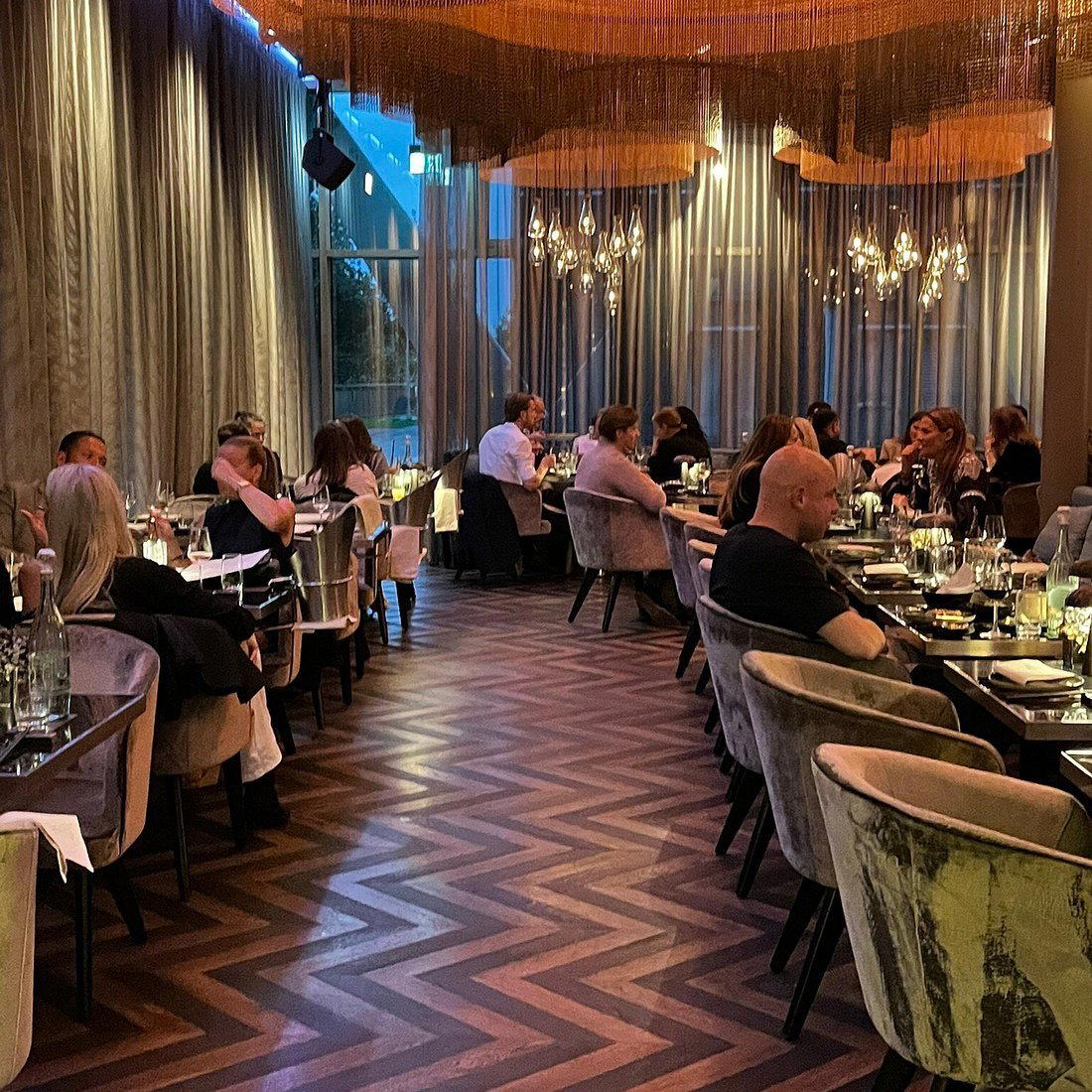
Where the MedienHafen Grows Up
HATO is a restaurant in Düsseldorf, Germany, at Speditionstraße 2. Düsseldorf's MedienHafen has spent two decades becoming the city's most spatially dramatic dining quarter. Converted dock warehouses, Gehry facades, and the low industrial light off the Rhine have attracted restaurants that match the architecture in ambition, venues that understand the setting demands a certain seriousness. HATO, at Speditionstraße 2, sits inside this district at a moment when one interesting conversation in German fine dining has shifted from technique-for-its-own-sake toward questions of provenance, waste, and what responsible kitchens actually look like in practice.
Arriving along Speditionstraße, the waterfront geometry does the atmospheric work before you reach the door. The converted port buildings carry an industrial quietness that separates this stretch of Düsseldorf from the Altstadt's older, denser grain, and restaurants here benefit from that contrast. It is a neighbourhood that rewards the deliberate visit rather than the spontaneous one, which shapes the clientele and, in turn, shapes what kitchens feel licensed to attempt.
Sustainability as Structure, Not Decoration
Across Germany's fine dining tier, sustainability has split into two recognisable camps. The first treats it as a marketing layer applied to an otherwise conventional operation: a composting program mentioned on the website, a regional supplier listed on the menu. The second camp treats environmental consciousness as a structural condition of the kitchen itself, letting it dictate sourcing geography, menu length, portioning logic, and what gets preserved or fermented rather than discarded. The more rigorous operators in cities like Berlin and Hamburg have demonstrated that the second approach produces genuinely different food, not just ethically different, but texturally and flavour-wise distinct, because working within tighter ingredient constraints forces compositional decisions that more permissive kitchens avoid.
HATO belongs to a Düsseldorf cohort beginning to work in that second register. The address in the MedienHafen is significant here: the neighbourhood's creative industry concentration has historically generated a clientele with the appetite for this kind of disciplined, concept-led dining. Where the Altstadt rewards familiarity, the harbour district rewards commitment to an idea. For context, Germany's most decorated sustainability-oriented kitchens, including operations like CODA Dessert Dining in Berlin and ES:SENZ in Grassau, have shown that a rigorous ecological framework does not soften ambition; it redirects it.
Düsseldorf's Broader Dining Position
It is worth placing HATO inside the wider Düsseldorf scene, because the city's dining identity is frequently underestimated relative to Munich, Hamburg, or Berlin. The concentration of corporate wealth from finance and fashion has produced a restaurant culture that skews toward polish and reliability rather than experimentation. The result is a city with strong mid-range and premium options but fewer venues willing to take structural risks with format or sourcing philosophy.
Germany's highest-decorated fine dining operations remain largely distributed across smaller cities: Aqua in Wolfsburg, Vendôme in Bergisch Gladbach, Waldhotel Sonnora in Dreis, and Victor's Fine Dining by Christian Bau in Perl. Düsseldorf itself has not historically concentrated that level of recognition, which creates room for a newer generation of restaurants to define the city's next chapter rather than compete with an entrenched hierarchy. Schwarzwaldstube in Baiersbronn, JAN in Munich, and Restaurant Haerlin in Hamburg represent the kind of sustained critical recognition that Düsseldorf's ambitious addresses are positioned to pursue.
The Ethical Sourcing Shift in German Kitchens
The conversation around ethical sourcing in German restaurants has matured considerably since the early 2010s, when regionality was often a blunt marketing instrument rather than a genuine operational commitment. The current generation of serious kitchens has developed more granular frameworks: traceability to named farms, attention to seasonal availability windows that go beyond the obvious, fermentation and preservation programs that reduce dependence on out-of-season supply chains, and waste-reduction protocols embedded into mise en place rather than bolted on as a separate initiative.
These are not easy commitments in a city like Düsseldorf, where premium ingredient supply chains are less developed than in, say, Copenhagen or Lyon, and where the dining public is accustomed to a certain breadth of menu choice that conflicts with strict seasonal discipline. Kitchens that accept these constraints tend to produce shorter menus with higher internal coherence, each element present because it belongs, not because the menu required a certain number of protein options. Internationally, Le Bernardin in New York City and Atomix in New York City demonstrate how philosophical coherence at the sourcing level translates into menus with genuine editorial logic. Schanz in Piesport offers a German example of that discipline applied to regional ingredients with ambition.
Planning Your Visit
HATO's Speditionstraße address is accessible from Düsseldorf's central station in under fifteen minutes by tram, with the MedienHafen stop placing you directly in the harbour district. The neighbourhood rewards arriving with time before your reservation: the waterfront architecture and the Rhine light at dusk offer a specific quality of approach that makes the meal feel properly framed. Given the district's creative-industry character, weekday evenings tend to draw a quieter, more focused crowd than weekend sittings, which can skew toward larger social tables. Those visiting Düsseldorf from further afield might also note that the city's dining scene is compact enough to explore across multiple evenings, with
The Short List
Comparable venues nearby, for context on price, style, and recognition.
| Venue | Cuisine | Price | Notes |
|---|---|---|---|
| HATOThis venue — the venue you are viewing | Hafen, Fine Asian Fusion | $$$$ | Not listed |
| thewaytonapoli | Düsseltal, Neapolitan Pizza | $$$ | Not listed |
| Le Bouchon | Pempelfort, French Bistro & Brasserie | $$$ | Not listed |
| Brasserie Hülsmann | Not listed | $$$ | Oberkassel, Classic French Brasserie with German Influences |
| Fish house W. Obst | Carlstadt, Classic Seafood Bistro | $$$ | Not listed |
| NØRDS | Flingern Nord, Modern Nordic | $$$ | Not listed |
Continue exploring
More in Düsseldorf
Restaurants in Düsseldorf
Browse all →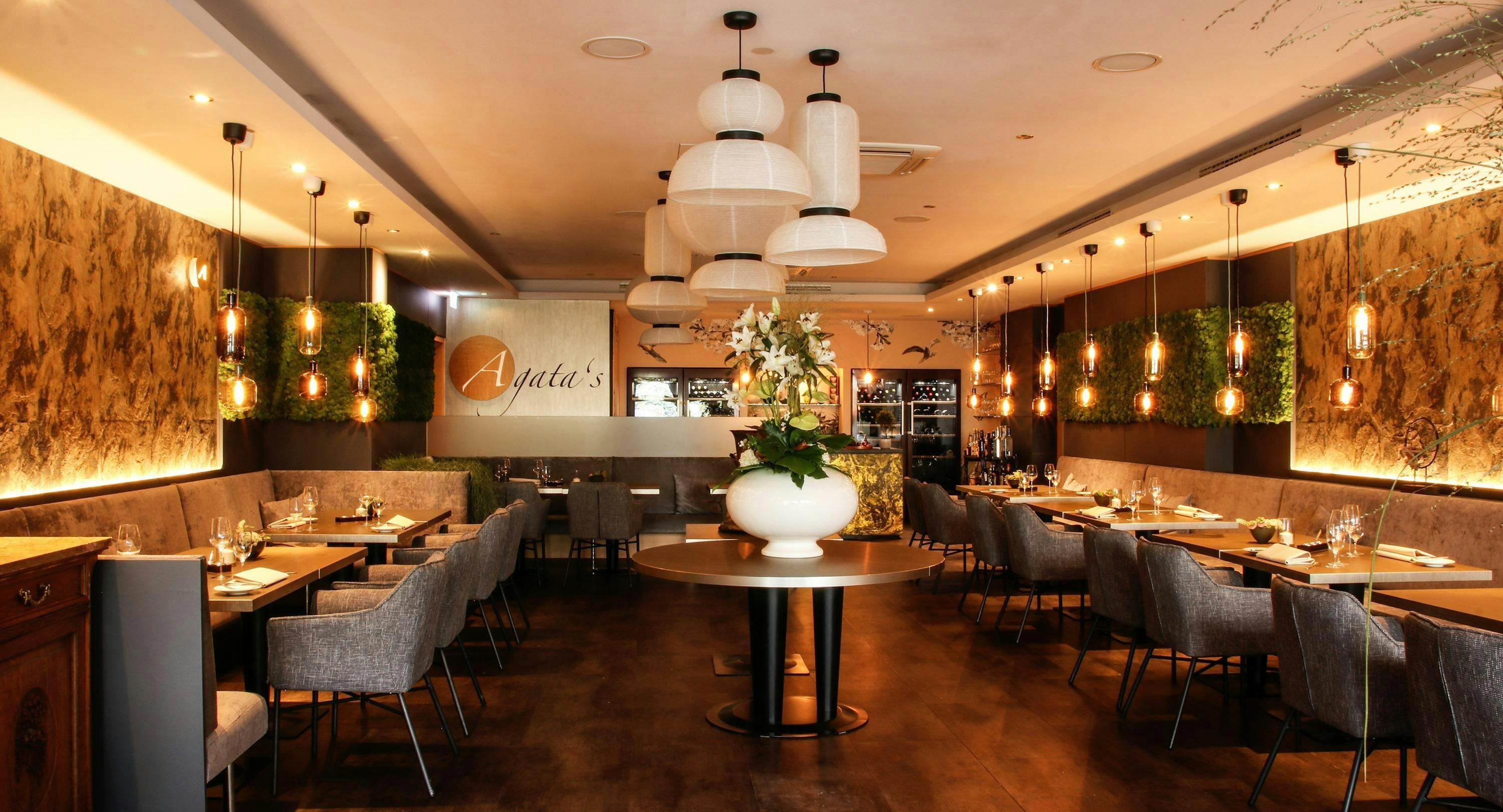
Bars in Düsseldorf
Browse all →
Hotels in Düsseldorf
Browse all →
Wineries in Düsseldorf
Browse all →
At a Glance
- Trendy
- Modern
- Elegant
- Sophisticated
- Date Night
- Business Dinner
- Special Occasion
- Terrace
- Waterfront
- Craft Cocktails
- Waterfront
- Street Scene
Current opening hours
- Monday
- 12–3 PM, 6 PM–12 AM
- Tuesday
- 12–3 PM, 6 PM–12 AM
- Wednesday
- 12–3 PM, 6 PM–12 AM
- Thursday
- 12–3 PM, 6 PM–12 AM
- Friday
- 12–3 PM, 6 PM–1 AM
- Saturday
- 6 PM–1 AM
- Sunday
- Closed
Hours can change for holidays and private events. Last verified .
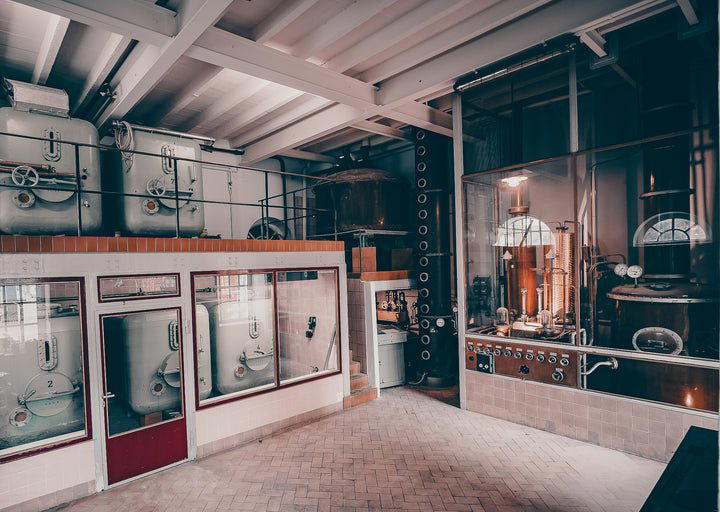
Urban elegance with sophisticated lighting and harbor views from the terrace.