Our verdict
A Vietnamese restaurant on a quiet Lisbon side street, Hanoi Green sits at the intersection of Chiado's neighbourhood character and Southeast Asian cooking traditions that have quietly taken hold in the Portuguese capital. The address on Travessa do Carvalho places it within walking distance of the city's most-discussed fine dining rooms, yet it operates in a distinctly different register, one defined by broth, herb, and the long arc of a Vietnamese meal.

Pearl is the En Primeur Club membership app, where members save venues, book tables and use the concierge.
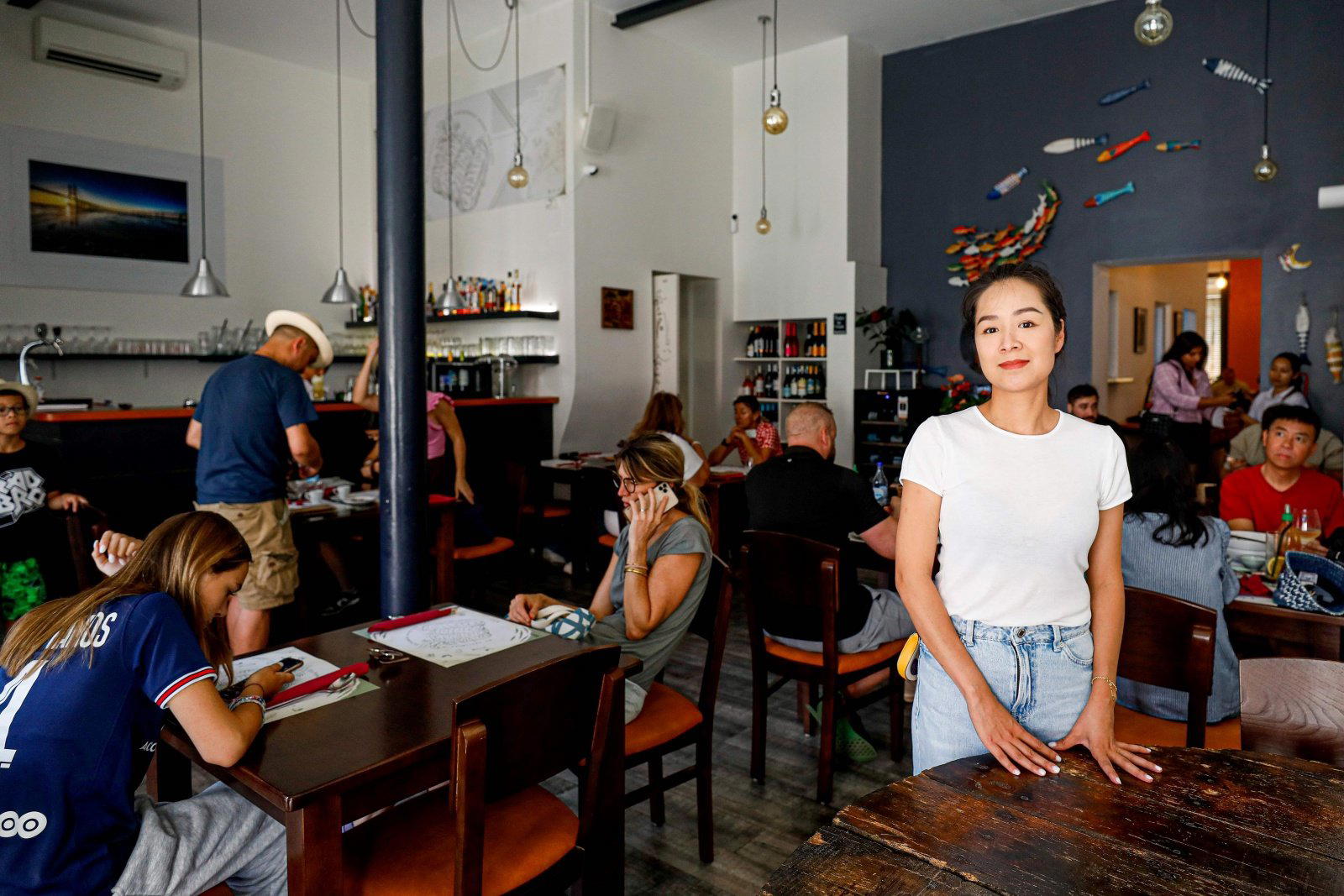
A Side Street in Chiado, a Cuisine Built on Sequence
Lisbon's most decorated dining rooms tend to cluster in Chiado and the Bairro Alto, where addresses like Belcanto, CURA, and 50 Seconds from Martin Berasategui define one end of the city's dining spectrum. Travessa do Carvalho 33 sits within the same neighbourhood geography but belongs to a different conversation entirely. The street itself is the kind Lisbon does well: narrow, slightly uphill, residential enough that it doesn't feel like a destination address even when you're already there. Hanoi Green occupies that physical register, and the Vietnamese cooking it serves follows a logic that rewards patience over spectacle.
Vietnamese cuisine, at its most considered, is structured around progression. A meal doesn't arrive as discrete courses so much as it unfolds: light pickled vegetables and spring rolls opening the palate, broths and noodles forming the gravitational centre, and slower, braised preparations closing things out. That arc is worth understanding before you sit down, because it determines how to order and, more importantly, how to eat.
How the Meal Moves
The architecture of a Vietnamese meal has more in common with certain East Asian tasting formats than with the European three-course structure. Dishes are generally meant to overlap, to share table space, and to be eaten in a sequence that the diner constructs rather than one the kitchen prescribes. This is the tradition Hanoi Green works within, and it shapes the experience from the first order to the last bowl.
In that context, the opening phase of a meal here is about texture and acidity: fresh rolls, herb-heavy preparations, and pickled elements that function as palate primers rather than standalone dishes. These are not the point of the meal, but they are its grammar. Skipping them in favour of going straight to pho or a heavier braised dish is technically possible but misses the sequencing logic that makes Vietnamese food coherent as a cuisine.
The middle of the meal is where broth comes in, and in Vietnamese cooking, broth is both technique and philosophy. Pho, the soup that has become the most internationally recognised expression of northern Vietnamese cooking, is built on stocks that simmer for hours, absorbing star anise, cloves, and charred ginger and onion in proportions that vary by cook and region. Hanoi-style pho specifically tends toward a cleaner, less sweet broth than its southern counterpart, with more emphasis on the quality of the beef and the clarity of the liquid. Whether Hanoi Green positions itself explicitly within that northern tradition or takes a more composite approach is something the menu will clarify once you arrive, but the name is a directional signal worth taking seriously.
Lisbon has seen Vietnamese food move from a handful of community-facing spots to a small but growing tier of restaurants that address a broader dining audience. The cuisine fits the city in ways that are partly practical: Portugal's relationship with fermentation, preserved fish, and long-cooked broth creates a palate already primed for the umami-forward notes that define Vietnamese cooking at its core. The herb culture, too, finds an analogue in Portuguese cooking traditions, even if the specific plants differ.
Where This Fits in Lisbon's Dining Picture
Lisbon's premium dining tier is well-documented. Restaurants like Eleven and 2Monkeys represent the creative and contemporary end of the city's restaurant scene, while the broader Portuguese fine dining conversation extends nationally to addresses like Vila Joya in Albufeira, Antiqvvm in Porto, The Yeatman in Vila Nova de Gaia, Casa de Chá da Boa Nova, Ocean in Porches, Il Gallo d'Oro in Funchal, Bon Bon in Lagoa, Al Sud in Lagos, A Ver Tavira in Tavira, and A Cozinha in Guimarães. Hanoi Green doesn't compete with any of these on format or ambition, and it isn't trying to.
That's a useful framing for the traveller deciding how to allocate evenings in Lisbon. A city whose restaurant culture has matured quickly over the past decade now has enough depth that not every meal needs to be a statement. Vietnamese cooking in this context functions as counterpoint: lower intensity of service, higher intensity of flavour contrast, and a pace that the diner controls rather than one the kitchen sets.
For comparison, internationally recognised Vietnamese-influenced cooking at places like Le Bernardin in New York or Korean-rooted precision formats like Atomix show what happens when Southeast and East Asian culinary traditions are refracted through fine dining structures. Hanoi Green operates closer to the source tradition, which is its own form of discipline.
Planning Your Visit
The address, Travessa do Carvalho 33 in the 1200-058 postal district, places Hanoi Green in walkable range of Chiado's main arteries and within easy reach of the Bairro Alto. For a neighbourhood overview that extends beyond this single address, the EP Club Lisbon restaurants guide maps the full dining picture across price tiers and cuisine types. Given the absence of published booking details, arriving directly or contacting the restaurant in person is the most reliable approach until online reservation information becomes available. Vietnamese restaurants in this format typically run well for solo diners at the bar or counter, for pairs sharing multiple dishes, and less naturally for large groups who may find the shared-dish logic harder to coordinate at scale.
Frequently asked questions
What's the address for Hanoi Green?
Hanoi Green is located at Tv. do Carvalho 33, 1200-058 Lisboa, Portugal, Lisbon.
Is Hanoi Green a good option for a Vietnamese meal near Chiado's main sights in Lisbon?
The address at Travessa do Carvalho 33 in the 1200-058 postal district places Hanoi Green within walking distance of Chiado's core, making it a practical stop in a neighbourhood otherwise dominated by Portuguese and European dining rooms. Lisbon's Vietnamese scene is smaller than its French or Spanish counterparts in the city, which means the few addresses that have established themselves in central locations carry more weight than their size might suggest.
What should I eat at Hanoi Green?
Vietnamese cooking is structured around sequencing rather than a single centrepiece dish, so ordering across registers gives the fullest picture of what the kitchen does. Start with herb-forward preparations or spring rolls before moving to broth-based dishes, which in northern Vietnamese cooking tend to be cleaner and less sweet than southern-style equivalents. Given the Chiado address and the foot traffic that neighbourhood draws, arriving with a clear order in mind rather than grazing through the menu tends to produce a more coherent meal.
What's the best way to book Hanoi Green?
No reservations platform or published phone number is currently listed for Hanoi Green. For a Chiado address at Travessa do Carvalho 33, walk-in during off-peak hours, early lunch or mid-afternoon, is the most reliable approach until a direct booking channel is confirmed. Checking the venue's presence on Google Maps for updated contact details before visiting is worth doing.
What's the signature at Hanoi Green?
In Hanoi-style Vietnamese cooking, pho is the reference point against which a kitchen is measured: the broth's clarity, depth, and balance of aromatics, star anise, charred ginger, cinnamon, define the standard.
Can Hanoi Green accommodate dietary restrictions?
Vietnamese cooking has structural advantages for certain dietary requirements: the cuisine relies heavily on fresh herbs, rice-based starches, and broths rather than dairy or gluten-heavy bases. That said, fish sauce and shrimp paste appear across many traditional preparations, so strict vegetarian or allergen-specific needs should be discussed directly with staff at Travessa do Carvalho 33 before ordering.
Awards and Standing
Comparable venues nearby, for context on price, style, and recognition.
| Venue | Cuisine | Price | Notes |
|---|---|---|---|
| Hanoi GreenThis venue (the venue you are viewing) | Authentic Vietnamese | $10–20 | Not listed |
| Brick Cafe Lisboa | International Brunch Cafe | $10–20 | Estefania |
| Zona Franca dos Anjos | Community Experimental Kitchen | Not listed | Estefania |
| Pharmacia | Portuguese Tapas & Mediterranean | $30–50 | Bairro Alto |
| Marítima de Xabregas | Traditional Portuguese Seafood & Grill | Not listed | Xabregas |
| Café Social Eatery | Lebanese-Inspired Middle Eastern | $10–20 | Belém |
Continue exploring
More in Lisbon
Restaurants in Lisbon
All restaurants in Lisbon →
Bars in Lisbon
All bars in Lisbon →

Details
- Cozy
- Casual Hangout
- Local Sourcing
- A La Carte
- Vegetarian Friendly
- Vegan Options
Current opening hours
- Monday
- 12–10 PM
- Tuesday
- 12–10 PM
- Wednesday
- 12–10 PM
- Thursday
- 12–10 PM
- Friday
- 12–10:30 PM
- Saturday
- 12–10:30 PM
- Sunday
- 12–10 PM
Hours can change for holidays and private events. Hours as of .
Lively and welcoming atmosphere with attentive service, ideal for casual dining.