Han Il Kwan
Han Il Kwan on Balboa Street sits in San Francisco's Outer Richmond, a neighbourhood that has long served as the city's most reliable address for Korean cooking outside of the Korean-American enclaves of Los Angeles. The restaurant draws a steady local following for its traditional preparation and measured pacing, making it one of the Richmond's more durable Korean dining destinations.
Pearl is the En Primeur Club membership app — saves, bookings, and concierge access live there. Same editors, same standards.
- Address
- 1802 Balboa St, San Francisco, CA 94121
- Phone
- (415) 752-4447
- Website
- hanilkwan.store
- Directions
- Get directions
 Saves & bookings on Pearl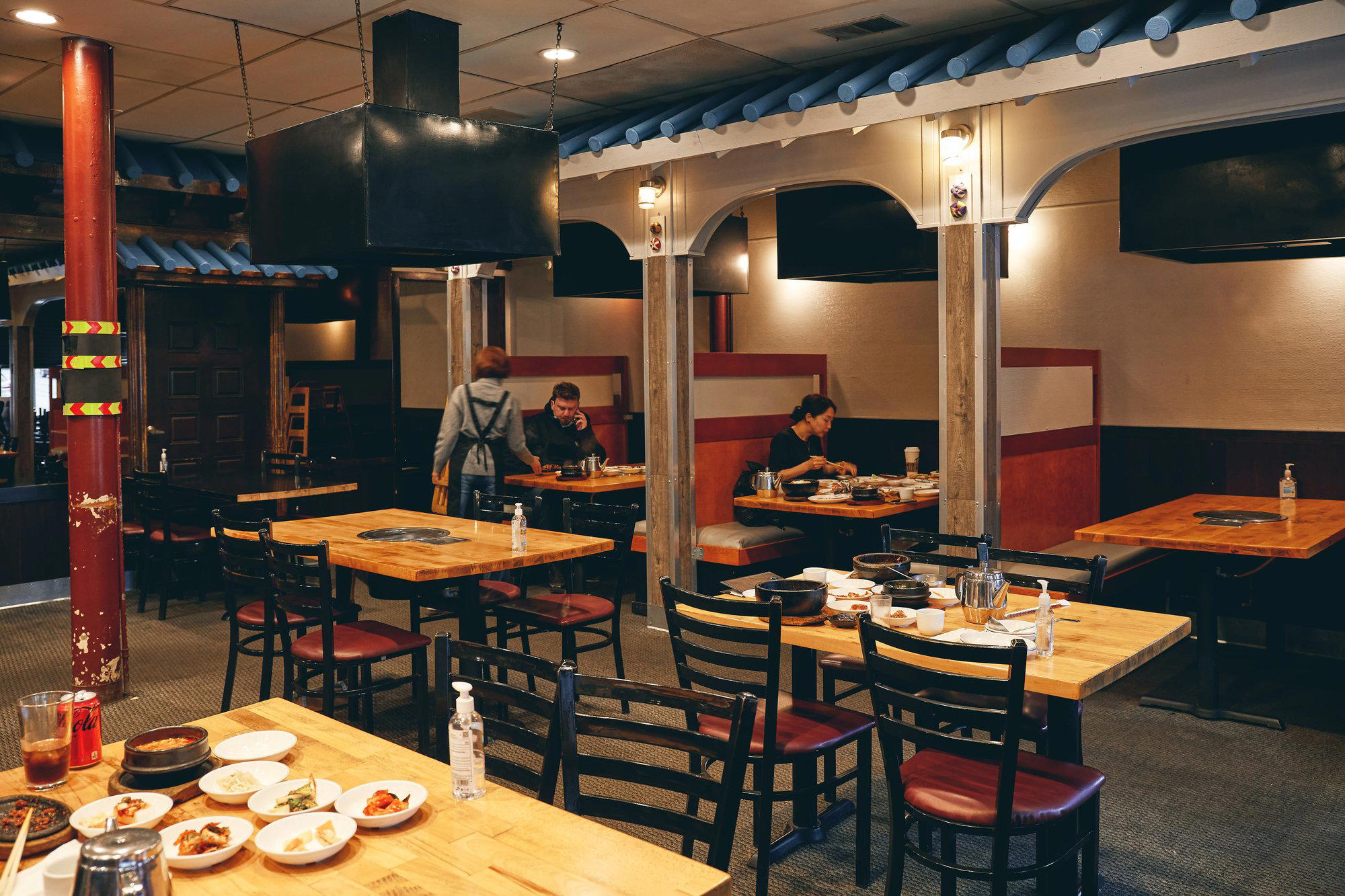
Balboa Street and the Outer Richmond's Korean Table
San Francisco's Outer Richmond runs west from Arguello toward the ocean, and the further you travel along Geary or Balboa, the more the dining scene shifts from destination restaurants toward neighbourhood institutions that have earned loyalty through consistency rather than press cycles. This is the part of the city where Korean, Chinese, and Russian kitchens have coexisted for decades, and where what arrives at the table matters more than guidebook recognition. Han Il Kwan at 1802 Balboa St occupies that world. The Richmond's Korean corridor operates in a different register than the tasting-menu circuit represented by Benu, Atelier Crenn, or Lazy Bear downtown, but it answers a different question entirely: where does a city eat when it wants food that has not been assembled for a critic's notebook?
The Scene on Balboa Street
Balboa Street in the low 1800s block is a low-key commercial strip, the kind that rewards slow walking. The storefronts are practical rather than designed, and the foot traffic at dinner skews toward families and regulars rather than reservation-chasers. Han Il Kwan has held this address long enough to become part of the neighbourhood's spatial memory. Entering, the environment reads as a working Korean dining room: no atmospheric conceits, no curated playlist audible above conversation, no theatrical plating station visible from the tables. The room communicates that the kitchen's priority is the food rather than the frame around it.
This positioning places Han Il Kwan in a local dining context shaped by consistency and repeat business. Quince to Saison, function in a distinct economic and cultural register, typically charging far more and building programs around wine lists, tasting sequences, and sourcing narratives. The Richmond's Korean restaurants, the restaurant among them, operate outside that framework entirely.
Korean Dining Tradition and What It Asks of a Kitchen
Traditional Korean cooking is one of the more demanding formats for a kitchen to execute well at volume. The banchan system, in which a dozen or more small fermented, pickled, braised, and stir-fried preparations arrive before the main dishes, requires constant production and rotation. A kitchen that takes this seriously is running a continuous operation: kimchi at various stages of fermentation, namul dressed to order, doenjang-based soups held at temperature, proteins prepared to the rhythm of the grill. The quality differential between Korean restaurants that treat banchan as a formality and those that invest in it is immediately legible to anyone paying attention.
Grilled meat formats, particularly galbi and bulgogi, have their own set of technical requirements around marinade balance and heat management. Soups like seolleongtang and haemul sundubu require long cooking and careful seasoning. These are not dishes that benefit from shortcuts. San Francisco's Korean dining scene, concentrated largely in the Richmond and parts of the Sunset, supports a range of kitchens from the perfunctory to the genuinely accomplished. The restaurant's longevity on Balboa Street speaks to where it sits in that spread.
Drinking at a Korean Table: What the Format Allows
Wine and drink curation is especially revealing at Korean restaurants. The traditional Korean table is built around soju, makgeolli, and occasionally beer, and the food is calibrated to those pairings: the salinity of fermented vegetables, the richness of grilled marinated meat, and the clean heat of gochugaru-based dishes all interact differently with rice-based spirits than with wine. Soju's clean, relatively neutral profile reads almost like a palate-reset between bites, functioning in a way that a tannic red cannot replicate.
The emergence of Korean fine dining in cities like New York, represented by operations like Atomix, has pushed the conversation about what a Korean wine list can look like at the upper tier, with sommelier programs that pair natural wines and aged Burgundy against fermented Korean flavours. Neighbourhood Korean restaurants like Han Il Kwan are not operating in that tier, and it would misrepresent the category to evaluate them by the same standard. What matters at a table like this is whether the drink selection is honest and appropriate: cold beer that cuts through BBQ fat, soju that pours clean, and a short list of accessible wines for the table that prefers them. A deep cellar is not the point here.
For comparison, high-profile wine programs elsewhere can carry the weight of the entire dining experience in a way that a neighbourhood Korean kitchen's drink selection does not. That is a difference in category architecture, not in ambition.
The Outer Richmond in Context
San Francisco's relationship with Korean food is geographically specific. The Outer Richmond is the city's most concentrated zone for the cuisine, and it functions as a genuine community dining district rather than a tourist draw. This distinguishes it from Korean dining scenes in Los Angeles and New York, which operate at larger scale. San Francisco's version is smaller and quieter. The restaurant is part of that quieter story.
Visitors approaching the city's dining scene from high-profile restaurants elsewhere will find the Richmond's Korean corridor a useful recalibration: a reminder that particularly durable restaurants in any city are often those that have never needed a reservation system to fill their seats.
Know Before You Go
- Address: 1802 Balboa St, San Francisco, CA 94121
- Neighbourhood: Outer Richmond
- Getting there: The 38 Geary and 31 Balboa Muni lines serve the area; street parking is available on Balboa and the surrounding blocks
- Booking: Reservations are recommended.
- Price range: About $25 per person.
- Nearby context: The Richmond corridor is compact, other Korean and Chinese kitchens are within walking distance on the same block and the adjacent cross streets
Cuisine and Awards Snapshot
Comparable venues nearby, for context on price, style, and recognition.
| Venue | Cuisine | Price | Notes |
|---|---|---|---|
| Han Il KwanThis venue — the venue you are viewing | Authentic Korean BBQ | $$ | Not listed |
| Gung Ho | Korean Street Food | $$ | San Francisco (Chinatown area) |
| Stone Korean Kitchen | Modern Korean Comfort Food | $$ | Financial District/South Beach |
| Cocobang | Korean BBQ and Fried Chicken | $$ | Tenderloin |
| bibim bar | Korean Bibimbap Specialist | $$ | Financial District |
| HRD Smokin' Grill | Korean-Asian Fusion BBQ | $$ | North Beach |
Continue exploring
More in San Francisco
Restaurants in San Francisco
Browse all →
Bars in San Francisco
Browse all →
Hotels in San Francisco
Browse all →
At a Glance
- Cozy
- Classic
- Group Dining
- Casual Hangout
- Open Kitchen
Current opening hours
- Monday
- 11 AM–8 PM
- Tuesday
- Closed
- Wednesday
- Closed
- Thursday
- 11 AM–8 PM
- Friday
- 11 AM–9 PM
- Saturday
- 11 AM–9 PM
- Sunday
- 11 AM–8 PM
Hours can change for holidays and private events. Last verified .
Cozy and welcoming atmosphere with table-side grilling creating a lively, communal dining experience.