Our verdict
Gursha sits on Poolbeg Street in central Dublin, bringing Ethiopian dining to a city whose African restaurant scene remains thin on the ground. The name itself — an Amharic word for the act of hand-feeding a guest — signals the communal logic at the core of the cuisine. For Dublin diners accustomed to Irish-French fine dining or the modern Irish tasting menu circuit, it represents a genuinely different frame of reference.

Pearl is the En Primeur Club membership app — saves, bookings, and concierge access live there. Same editors, same standards.
Ethiopian Dining in Dublin: A Different Frame of Reference
Dublin's restaurant conversation tends to orbit a familiar axis: the modern Irish tasting menu, the Irish-French hybrid, the neighbourhood bistro drawing on Atlantic produce. Venues like Chapter One by Mickael Viljanen and Patrick Guilbaud define one pole of that conversation; Bastible and Glovers Alley represent another. What is conspicuously absent from that circuit is sub-Saharan African cooking at any serious level of ambition. Gursha, on Poolbeg Street just off the quays in the city centre, occupies that gap.
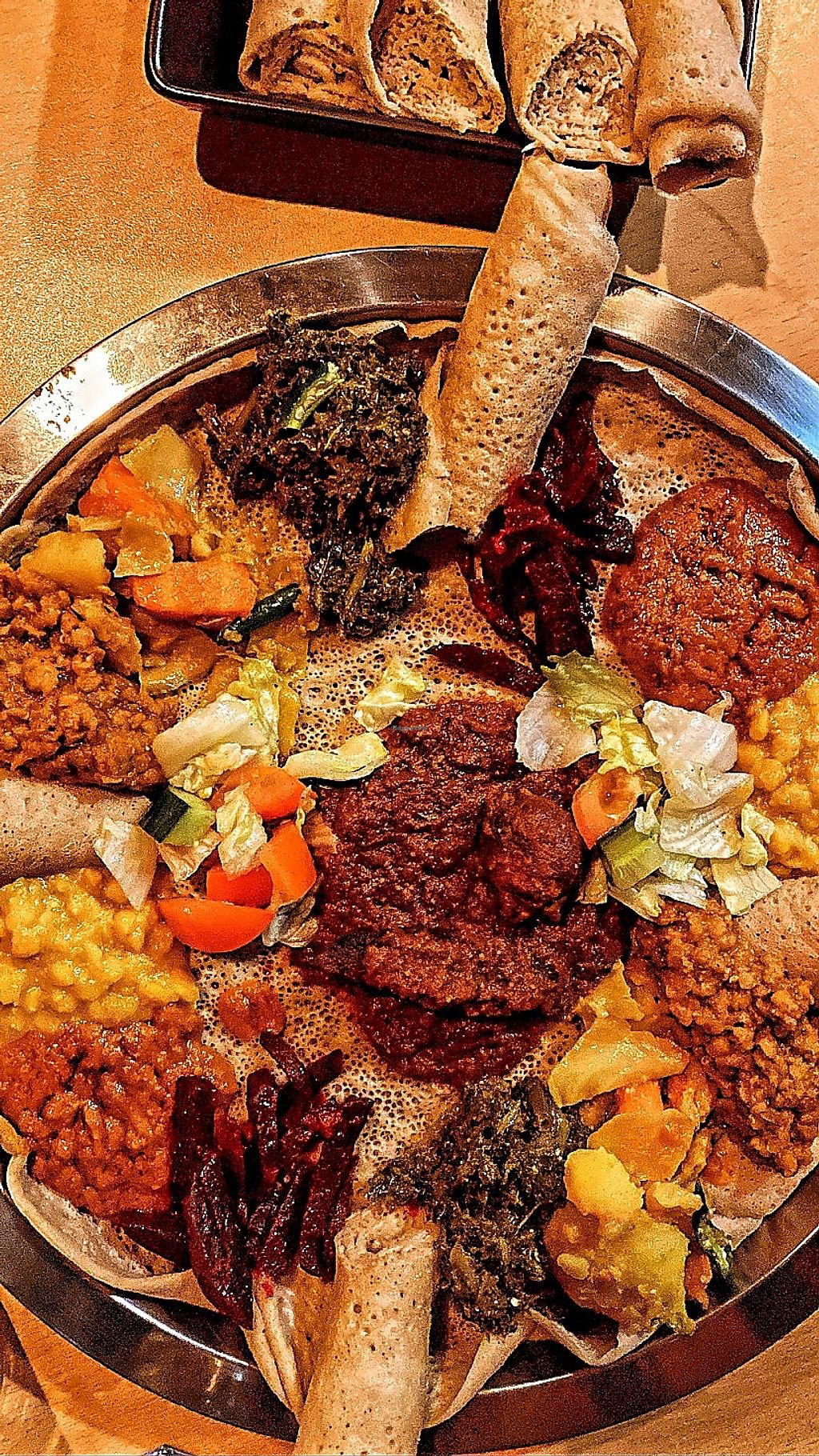
The name is drawn from the Amharic tradition of gursha: the act of wrapping food in injera and placing it directly into another person's mouth as a gesture of affection and hospitality. That ritual framing is not decorative. Ethiopian dining is structurally communal in a way that most European restaurant formats are not. Large platters of stews, legumes, and vegetables arrive on a shared base of injera — the spongy, slightly sour flatbread made from teff — and the table eats from a single surface. The logic of sharing is built into the architecture of the meal itself, not bolted on as a concept.
What Ethiopian Cuisine Actually Looks Like on the Plate
For diners approaching Ethiopian food without much prior exposure, a few reference points help. The cuisine relies heavily on a spice blend called berbere, a complex mix of chilli, fenugreek, coriander, and several other aromatics, as well as niter kibbeh, a clarified butter infused with onion, garlic, and spices that serves as a cooking fat and flavour base across many dishes. Wots, the slow-cooked stews at the centre of most plates, range from the fiery doro wot (chicken, often with hard-boiled egg) to milder lentil and split pea preparations that anchor the substantial vegetarian and vegan side of the menu.
That vegetarian dimension is worth noting separately. Ethiopian Orthodox fasting traditions, observed on numerous days throughout the year, prohibit meat and dairy, which has produced a cuisine with an unusually deep and genuinely satisfying roster of plant-based dishes. This is not vegetarianism as culinary concession, it is vegetarianism as a fully developed tradition, and the fasting plates at a good Ethiopian restaurant tend to be as complex and filling as their meat counterparts.
In this respect, Ethiopian cooking sits in interesting company globally. The communal platter format has parallels in Korean and Middle Eastern traditions, while the fermented-grain base of injera has something in common with the sourdough revival that has preoccupied European bakers for the better part of a decade. Diners familiar with the banchan logic of a restaurant like Atomix in New York City, where multiple preparations arrive simultaneously and the meal is navigated as a whole rather than sequentially, will recognise a similar underlying structure.
Poolbeg Street and the City Centre Context
Gursha's address on Poolbeg Street places it in a part of the city centre that functions as a transitional zone between the financial district, the quays, and the older fabric around Dame Street and College Green. It is not a destination dining corridor in the way that, say, the streets around D'Olier Street have become, but it is accessible from most central Dublin points on foot. For visitors staying in the city centre, the location requires no planning beyond finding the street itself.
The broader Irish dining scene provides useful context for understanding where Gursha sits. Outside Dublin, the island's ambitious cooking tends to cluster around specific towns and regions: Aniar in Galway, Bastion in Kinsale, Campagne in Kilkenny, and destination spots like Lady Helen in Thomastown or Terre in Castlemartyr. Within Dublin, the ambition tends toward modern European frameworks. What is rarer in the Irish capital is a restaurant drawing on an entirely different culinary geography. Dede in Baltimore offers one example of a non-European tradition taking root in Ireland; Gursha offers another, closer to the capital.
Planning Your Visit: What to Know Before You Go
The editorial angle on Gursha is, necessarily, shaped by the limits of available public information. Phone numbers, booking platforms, current hours, and seating capacity are not published in a readily verifiable form at the time of writing, which creates a planning consideration worth addressing directly. Ethiopian restaurants in cities where the format is still relatively new often operate with informal booking practices, walk-ins during off-peak hours, limited online presence, and word-of-mouth as the primary discovery channel. That pattern holds across the category in several European cities.
Practical advice, then, is to approach Gursha with the kind of low-friction flexibility that suits a neighbourhood restaurant rather than the advance planning that a tasting-menu seat at Liath in Blackrock or a booking-months-ahead counter would demand. Arriving earlier in the evening on a weekday, or using Google Maps to confirm current opening hours before travel, represents the sensible approach when no booking infrastructure is publicly confirmed. The address, 7a Poolbeg Street, Dublin, D02 R990, is the reliable fixed point.
For diners building a broader Dublin itinerary, pairing a visit to Gursha with one of the city's more formally structured restaurants creates a useful contrast. The communal, shared-plate format that defines Ethiopian dining sits at a different register from the individual tasting menus of Glovers Alley or the produce-driven precision of Bastible. Both modes have value; they are simply asking different things of the diner. The full picture of what Dublin's restaurant scene can offer is available in our full Dublin restaurants guide, which maps the city's dining options across neighbourhoods and price points.
Those interested in exploring the wider Irish dining scene beyond the capital will find useful reference points at Chestnut in Ballydehob, Homestead Cottage in Doolin, and House in Ardmore, each representing a distinct strand of Irish hospitality well outside the capital's orbit. Gursha, by contrast, is distinctly urban in its orientation and distinctly non-Irish in its culinary reference points, which is precisely what makes it a useful addition to a city that could absorb more of both.
Frequently asked questions
What's the signature dish at Gursha?
Ethiopian restaurants typically centre the meal on a shared injera platter carrying multiple wots, slow-cooked stews built on berbere spice and niter kibbeh clarified butter. Doro wot, a spiced chicken preparation, is the most recognised dish in the tradition and appears on most menus in the category. A fasting platter of vegetarian preparations is equally central to the cuisine's identity, rooted in Orthodox fasting traditions that have shaped the cooking for centuries. For current menu specifics at Gursha, the restaurant's own channels are the reliable source.
Do I need a reservation for Gursha?
No confirmed online booking platform for Gursha has been publicly verified at the time of writing, which places it in the category of restaurants leading approached with flexible timing rather than advance planning. In Dublin's wider dining scene, restaurants at the formal end, Patrick Guilbaud or Chapter One, require booking weeks or months ahead. Gursha, based on its format and category positioning, is more likely to accommodate walk-ins, particularly earlier in the evening or on weeknights, though confirming directly before travel is advisable.
How does Gursha fit into Dublin's broader African dining scene?
Sub-Saharan African restaurants remain sparse in Dublin relative to the city's overall restaurant growth over the past decade, making Gursha a relatively rare example of Ethiopian cuisine in a recognisable restaurant format in the Irish capital. The communal eating tradition it represents, shared injera platters, multiple simultaneous preparations, has no strong parallel in the modern Irish or Irish-French cooking that dominates Dublin's higher-profile dining circuit. For diners with experience of Ethiopian restaurants in London or larger European cities, Gursha offers a point of comparison within the Irish context.
Recognition Snapshot
Comparable venues nearby, for context on price, style, and recognition.
| Venue | Cuisine | Price | Notes |
|---|---|---|---|
| GurshaThis venue — the venue you are viewing | Authentic Ethiopian | Not listed | Not listed |
| Dada | Authentic Moroccan Moorish Cuisine | $30–50 | Royal Exchange B |
| Café 1920 | Modern Irish Gastropub | $20–30 | Royal Exchange A |
| Pacino's | Authentic Italian Trattoria | $30–50 | Royal Exchange A |
| The Mongolian BBQ | Mongolian BBQ Stir-Fry | $20–30 | Royal Exchange A |
| Gallaghers Boxty House | Traditional Irish Boxty House | $20–30 | North City |
Continue exploring
More in Dublin
Restaurants in Dublin
All restaurants in Dublin →
Bars in Dublin
All bars in Dublin →

Details
- Cozy
- Trendy
- Intimate
- Group Dining
- Date Night
- Casual Hangout
- Small Plates
- Set Menu
- Vegetarian Friendly
- Vegan Options
- Gluten Free Options
Current opening hours
- Monday
- Closed
- Tuesday
- 5–9 PM
- Wednesday
- 5–9 PM
- Thursday
- 5–9 PM
- Friday
- 12:30–9:30 PM
- Saturday
- 12:30–9:30 PM
- Sunday
- 5–9 PM
Hours can change for holidays and private events. Last verified .
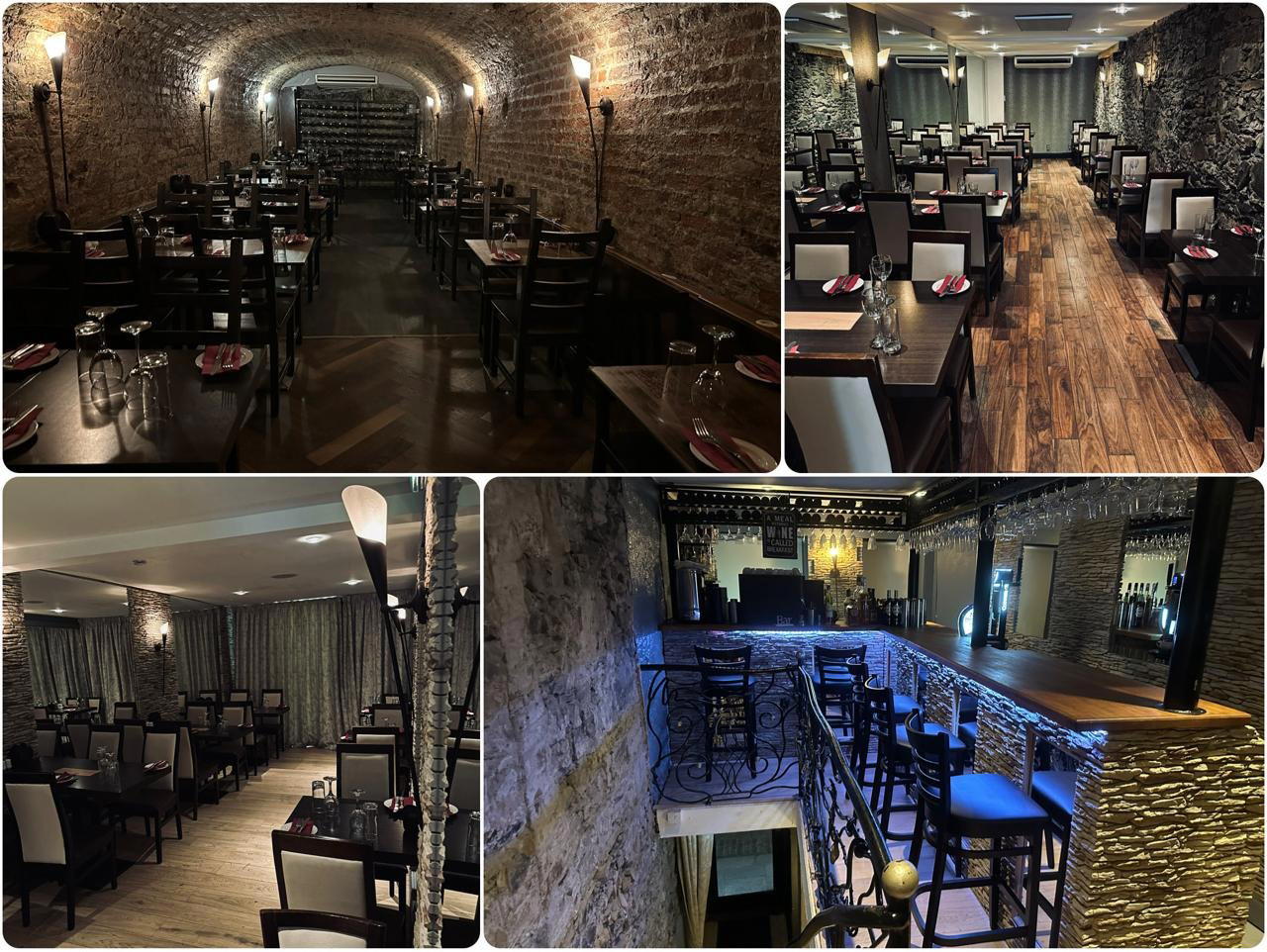
Cozy and homey atmosphere described as a warm hug, suitable for groups and dates with friendly service.