On Rue de Belleville in Paris's 19th arrondissement, Guo Xin Ravioli sits at the centre of one of the city's most concentrated stretches of Chinese regional cooking. The address places it squarely inside a neighbourhood where hand-folded dumplings and slow-braised preparations coexist with North African grocers and Vietnamese canteens, making it a reliable anchor point for anyone tracing the Chinese diaspora's culinary footprint across the French capital.
Pearl is the En Primeur Club membership app — saves, bookings, and concierge access live there. Same editors, same standards.
- Address
- 47 Rue de Belleville, 75019 Paris, France
- Phone
- +33 1 42 38 17 53
- Directions
- Get directions
 Saves & bookings on Pearl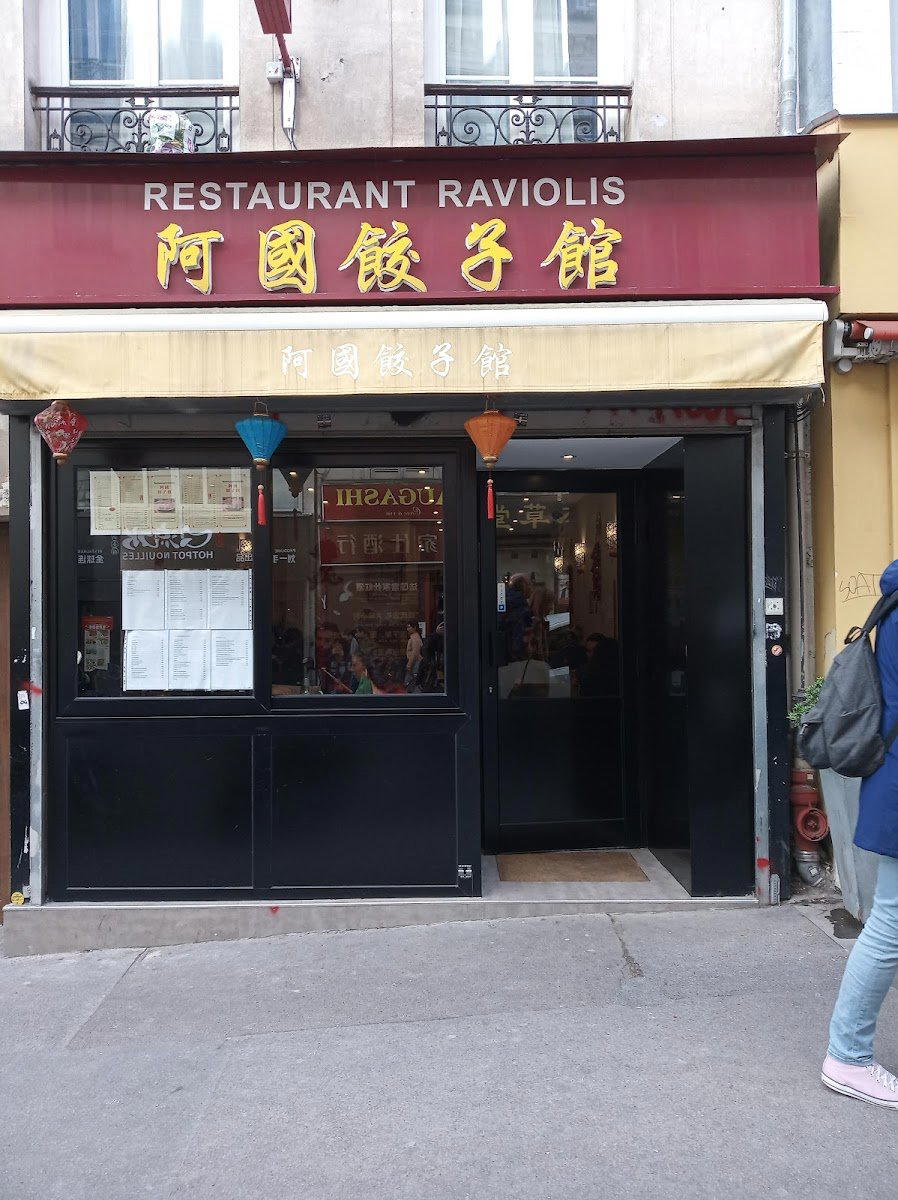
Rue de Belleville and the Chinese Cooking Corridor
The stretch of Rue de Belleville running through the 19th and 20th arrondissements functions as one of Paris's most instructive cross-sections of migrant food culture. Cantonese roast-meat shops, Wenzhou noodle houses, Sichuan hotpot parlours, and hand-folded dumpling counters share the pavement with North African épiceries and Vietnamese bánh mì stands. This is not a curated food quarter in the way that Le Marais has become; it is a working neighbourhood where cooking traditions arrived with communities rather than with developers. Guo Xin Ravioli, at 47 Rue de Belleville, 75019 Paris, sits inside that corridor as one of its dumpling-focused addresses, operating in a street-level register that has little overlap with the €€€€ tasting-menu world of Alléno Paris au Pavillon Ledoyen or L'Ambroisie.
The Dumpling Tradition in a French Context
Hand-wrapped ravioli, in the Chinese sense, cover a wide family: jiaozi, baozi, wonton, shaomai, and their regional cousins across Shandong, Sichuan, and the northeast. What distinguishes the serious end of this category from its casual end is labour: the wrapping is done to order or in small batches, the pleating is consistent, and the filling-to-wrapper ratio is deliberately managed. In the Paris context, that kind of discipline is relatively rare outside of the 13th arrondissement's more established Chinatown, which makes Belleville's cluster of dumpling-focused spots more significant than its low-rent shopfronts suggest.
The broader French culinary culture has engaged with wrapped, filled doughs for centuries, from the raviole du Dauphiné to the various pasta preparations that cross the Alpine border into Provence. What the Chinese diaspora brought to Paris was a different logic: thinner wrappers, steam and boil rather than bake, and a filling culture built on pork, cabbage, chive, and ginger rather than cheese and herbs. At spots like Guo Xin Ravioli, those two traditions do not exactly merge, but they coexist in a city where the customer base is genuinely mixed, and where French diners have grown more fluent in the grammar of Chinese regional cooking over the past two decades. For a sense of how French kitchens have absorbed East Asian influence at the formal end of the market, Kei represents a different but instructive point of comparison.
Local Ingredients, Imported Logic
The editorial angle most useful for understanding a place like Guo Xin Ravioli is not authenticity in a static sense, but the practical intersection of Chinese technique and French supply chains. Pork in France is well-regarded; French cabbage and leeks are widely available; ginger and garlic arrive through the same wholesale networks that supply the city's Vietnamese and Cambodian restaurants. What the cook brings is the wrapping method, the seasoning logic, and the decision about whether to boil, steam, or pan-fry to a crisp base.
That last distinction matters. Pan-fried dumplings, known in Mandarin as guotie and often called potstickers in English, develop a lacquered, slightly chewy bottom crust through contact with a hot oiled pan before water is added and the lid goes on to steam the tops. The result is a textural contrast that boiled dumplings do not offer.
This kind of local-adaptation logic is visible at French restaurants at the opposite end of the price spectrum. At Mirazur in Menton, the cooking draws on cross-border ingredients and technique in a highly formalized way. At Bras in Laguiole, the logic is hyper-local sourcing married to a personal technique vocabulary. At Guo Xin Ravioli, the scale is different, but the underlying question is the same: what does a tradition look like when its practitioners are working with a different ingredient environment and a different customer base?
Belleville as a Dining Neighbourhood
For visitors approaching the 19th arrondissement as a dining destination, the area rewards a different orientation than the grands boulevards or the Left Bank. The concentration of Chinese, Vietnamese, and North African cooking on and around Rue de Belleville means that a single street walk covers more culinary ground than most curated food tours manage. The neighbourhood also operates at price points that make it practical for a longer afternoon: a plate of dumplings at one address, a Vietnamese pho at another, coffee from a Chinese bakery.
Getting there from central Paris is direct: the Belleville metro station, served by lines 2 and 11, deposits you directly onto the street. The 19th arrondissement sits at a remove from the tourist circuits of the 1st through 8th, which means the rhythm of the neighbourhood is set by its residents rather than by visitor traffic. That is a material difference in atmosphere. For a full picture of where this fits in the Paris restaurant picture, see our full Paris restaurants guide. If you are cross-referencing at the formal end of French dining, Le Cinq at the Four Seasons George V, Arpège, Flocons de Sel in Megève, Troisgros in Ouches, Paul Bocuse near Lyon, Auberge de l'Ill in Illhaeusern, Les Prés d'Eugénie in Eugénie-les-Bains, La Table du Castellet, Georges Blanc in Vonnas, Auberge du Vieux Puits in Fontjoncouse, Le Bernardin in New York, and Lazy Bear in San Francisco each represent a distinct approach to the question of what a serious restaurant does with its culinary inheritance.
Planning Your Visit
No confirmed booking data is available for Guo Xin Ravioli, but dumpling-focused neighbourhood restaurants in Paris's 19th arrondissement typically operate on a walk-in basis, with peak pressure at weekend lunch. Arriving before noon or after 2pm on weekdays usually clears the worst of the queue. The address, 47 Rue de Belleville, is easy to locate from the Belleville metro exit on lines 2 and 11.
A Credentials Check
Comparable options at a glance, pulled from our tracked venues.
| Venue | Cuisine | Price | Awards |
|---|---|---|---|
| Guo Xin RavioliThis venue — the venue you are viewing | Not listed | Not listed | Not listed |
| Alléno Paris au Pavillon Ledoyen | Creative | €€€€ | Michelin 3 Star |
| Kei | Contemporary French, Modern Cuisine | €€€€ | Michelin 3 Star |
| L'Ambroisie | French, Classic Cuisine | €€€€ | Michelin 3 Star |
| Le Cinq - Four Seasons Hôtel George V | French, Modern Cuisine | €€€€ | Michelin 3 Star |
| Pierre Gagnaire | French, Creative | €€€€ | Michelin 3 Star |
Continue exploring
More in Paris
Restaurants in Paris
Browse all →
Bars in Paris
Browse all →
Hotels in Paris
Browse all →





At a Glance
- Lively
- Cozy
- Casual Hangout
Current opening hours
- Monday
- Closed
- Tuesday
- 11:30 AM–3 PM, 7–11 PM
- Wednesday
- 11:30 AM–3 PM, 7–11 PM
- Thursday
- 11:30 AM–3 PM, 7–11 PM
- Friday
- 11:30 AM–3 PM, 7–11 PM
- Saturday
- 11:30 AM–3 PM, 6:30–11 PM
- Sunday
- 11:30 AM–3 PM, 6:30–11 PM
Hours can change for holidays and private events. Last verified .
Small, crowded canteen-style space with closely packed tables, kitsch decor, chaotic energy, and authentic Chinese atmosphere.
Know Before You Go
- Getting there
- 47 Rue de Belleville, 75019 Paris, France