On the Avenue de Choisy in Paris's 13th arrondissement, Fleurs de Mai occupies a corner of the city where Vietnamese and Chinese dining traditions have layered over decades into something genuinely its own. The address sits inside one of Paris's most concentrated Asian food corridors, where the ritual of the meal — shared plates, deliberate pacing, table-side service — remains the grammar of every sitting.
Pearl is the En Primeur Club membership app — saves, bookings, and concierge access live there. Same editors, same standards.
- Address
- 61 Av. de Choisy, 75013 Paris, France
- Phone
- +33144243771
- Website
- fleursdemai-13.fr
- Directions
- Get directions
 Saves & bookings on Pearl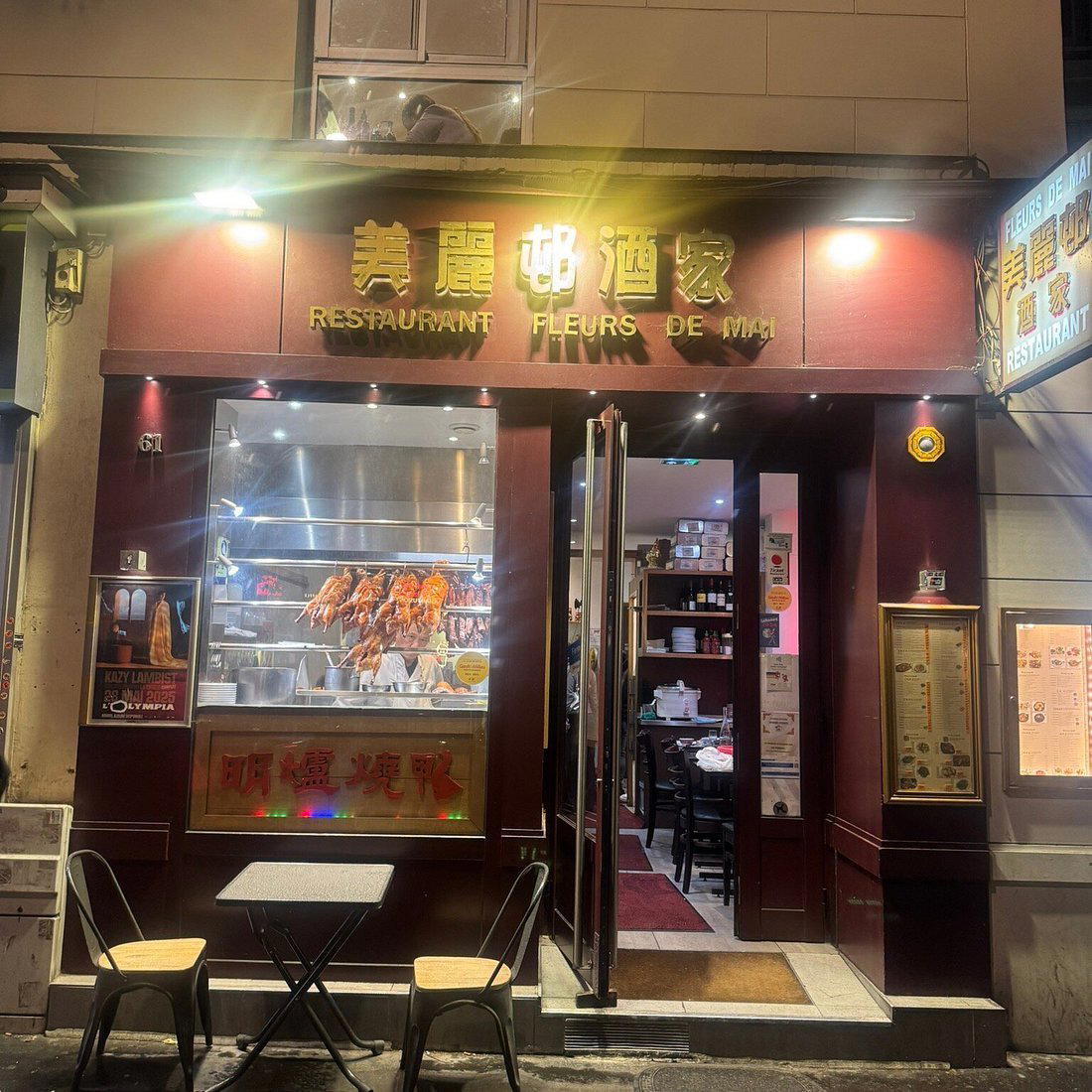
Where the 13th Arrondissement Sets the Table
Paris's 13th arrondissement has been the city's principal node for Southeast and East Asian dining since the late 1970s, when a wave of Vietnamese and Sino-Vietnamese arrivals reshaped the neighbourhood around the Avenue d'Ivry and Avenue de Choisy. That demographic shift produced something Paris lacked elsewhere: a dining corridor where the customs of the meal — communal plates, broth-centred ordering, unhurried service rhythms — weren't imported as novelty but arrived as lived practice. Fleurs de Mai, at 61 Avenue de Choisy, sits inside that tradition rather than commenting on it from the outside.
The address itself is instructive. Avenue de Choisy functions as the 13th's main artery for this style of eating, running through a grid of boulangeries, Asian supermarkets, and restaurants that price for neighbourhood regulars rather than tourist traffic. That pricing logic separates this corridor from the higher-tariff Vietnamese and pan-Asian restaurants that have spread across the 1st, 2nd, and 6th arrondissements in the past decade, where a bowl of pho can cost three times what it does here. For context on how Paris's French fine-dining tier prices and positions itself, venues such as L'Ambroisie and Le Cinq at the Four Seasons George V operate in an entirely separate economy, €€€€ menus built around tasting formats and classical French technique. The 13th operates by different rules, and Fleurs de Mai is calibrated accordingly.
The Grammar of the Meal Here
The dining ritual in this part of Paris follows a logic inherited from Cantonese and Vietnamese table customs. Orders arrive in overlapping sequence rather than strict courses; sharing is assumed rather than optional; broths and lighter preparations typically open the table before heavier dishes follow. This is not the tasting-menu architecture of Arpège or the creative plating of Alléno Paris au Pavillon Ledoyen, nor the Franco-Japanese precision of Kei. The 13th's leading tables ask something different of the diner: participation in the structure of the meal, an attention to the sequence in which dishes are requested, and a tolerance for tables that fill and turn without fuss.
That communal framework is worth understanding before arriving. At restaurants operating in this tradition, asking for dishes to arrive together, or requesting a European course sequence, tends to work against the kitchen's logic. The pacing is deliberate, but it follows the order's internal rhythm. Groups of three or four move through the format more naturally than solo diners, though solo eating at the 13th's counters and smaller tables is common and unremarkable.
French fine-dining outside Paris follows a different set of rituals entirely. The destination restaurants that define France's broader reputation, Mirazur in Menton, Flocons de Sel in Megève, Troisgros in Ouches, or the institution of Paul Bocuse in Collonges-au-Mont-d'Or, operate on extended, formal tasting sequences that are essentially the opposite of the 13th's shared-table informality. Both are legitimate expressions of French dining culture; they simply ask different things of the guest.
The 13th in the Context of Paris Dining
Paris has no shortage of arrondissements that claim a dining identity, but the 13th's is among the most geographically specific and historically grounded. The neighbourhood around Place d'Italie and south along the Choisy axis developed its Asian character gradually through the 1980s and into the 1990s, and unlike some European Chinatowns, it has retained density and commercial continuity rather than thinning into a few token restaurants. The result is a competitive corridor where quality is enforced by a local clientele that has strong reference points and little patience for diluted versions of familiar dishes.
For a broader read on how Paris distributes its restaurant culture across arrondissements and price tiers, the EP Club Paris guide maps the full range. The contrast between the 13th's value-driven communal format and the grand-room French dining of addresses like Les Prés d'Eugénie or Georges Blanc in Vonnas is not a hierarchy, it is a demonstration of the range French dining holds. Similarly, the regional French tradition embodied at Auberge de l'Ill in Illhaeusern, Bras in Laguiole, or Auberge du Vieux Puits in Fontjoncouse represents a separate lineage from the urban Asian-Paris dining that the 13th has built over forty years.
For comparison beyond France: the communal-plate, high-frequency dining rhythm of Paris's 13th shares more structural DNA with the neighbourhood-restaurant culture around Lazy Bear in San Francisco, where the communal format is also central, than it does with the precise, individually plated tasting sequences of Le Bernardin in New York or the classical rigour of La Table du Castellet.
Planning Your Visit
Avenue de Choisy is accessible from the Tolbiac or Place d'Italie metro stations on Line 7, placing Fleurs de Mai within a direct commute from central Paris. The 13th's dining corridor operates across lunch and dinner services, with weekend lunchtimes representing the highest-demand window at most addresses along this stretch. Arriving outside peak hours on weekdays tends to offer a more considered experience.
How Fleurs de Mai Paris compares with similar nearby venues.
| Venue | Cuisine | Price |
|---|---|---|
| Lao Lane Xang 2 | South East Asian | € |
| L'Hommage | Modern Cuisine | €€ |
| Impérial Choisy | Chinese | €€ |
| Pho Tai | Vietnamese | € |
Continue exploring
More in Paris
Restaurants in Paris
Browse all →
Bars in Paris
Browse all →
Hotels in Paris
Browse all →
At a Glance
- Cozy
- Classic
- Well Known
- Casual Hangout
- Group Dining
- Family
- Standalone
Current opening hours
- Monday
- 11:30 AM–11 PM
- Tuesday
- 11:30 AM–11 PM
- Wednesday
- Closed
- Thursday
- 11:30 AM–11 PM
- Friday
- 11:30 AM–11 PM
- Saturday
- 11:30 AM–11 PM
- Sunday
- 11:30 AM–11 PM
Hours can change for holidays and private events. Last verified .
Modest, unpretentious canteen-style boui-boui with a two-storey layout; casual, bustling atmosphere with quick service and authentic family-run charm
Know Before You Go
- Getting there
- 61 Av. de Choisy, 75013 Paris, France