

Macarfi 6.8 Food Rating
Our verdict
Compared to Madrid's Neapolitan pizza options, Grosso Napoletano sits in a different tier: a Spanish chain recognised by 50 Top Pizza as one of the world's leading artisan pizza operations, with wood-fired ovens and over 50 locations across Spain. The Hermosilla outpost plants this formula in the heart of Salamanca, one of Madrid's most address-conscious neighbourhoods.

Pearl is the En Primeur Club membership app, where members save venues, book tables and use the concierge.
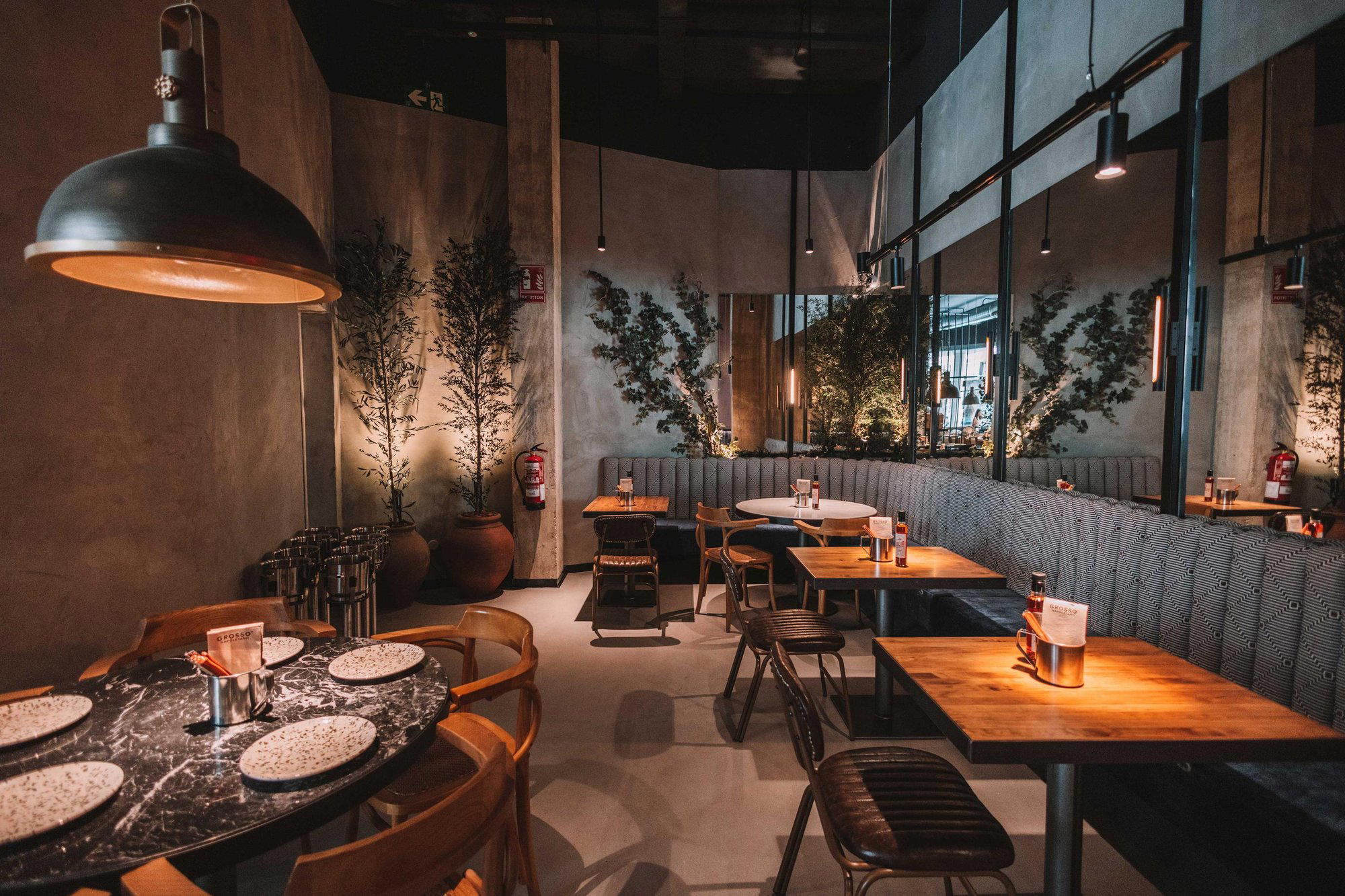
Pizza in the Postal Code That Cares About Postcodes
Calle de Hermosilla runs through the core of Salamanca, the barrio that has spent the better part of a century being Madrid's reference point for money, taste, and a certain studied composure. The boutiques are international, the apartment facades are limestone, and the dining rooms tend toward the formal end of the register. Into this context, Grosso Napoletano has positioned a wood-fired pizza operation that, by any reasonable reading, has no business being as seriously regarded as it is. And yet the 50 Leading Pizza guide, the most authoritative ranking system for Neapolitan-style pizza outside Naples itself, has placed Grosso Napoletano among the world's leading artisan pizza chains, a distinction that cuts across all 50-plus locations the brand now operates in Spain.
That tension between neighbourhood expectation and format, a pizza chain, in Salamanca, taken seriously by international critics, is the interesting part of the Grosso Napoletano story in Madrid. The Hermosilla address is not an accident. It pulls the brand into a residential and commercial zone where the audience has options, travels frequently, and has almost certainly eaten pizza in Naples. The implicit test is harder here than it would be in a tourist corridor, and the chain appears to pass it regularly.
The Neapolitan Standard and What It Actually Demands
Neapolitan pizza is one of the most legislated food categories in the world. The Associazione Verace Pizza Napoletana sets out specifications covering dough hydration, fermentation time, oven temperature, and the precise geography of approved ingredient sourcing. A wood-fired oven at 450-480°C is non-negotiable. The cornicione should char lightly, the centre should remain soft enough to fold without cracking, and the whole thing should be consumed within minutes of leaving the oven. These are not preferences; they are codified rules for a product that carries a UNESCO Intangible Cultural Heritage designation.
When Grosso Napoletano launched in Madrid in 2017, the chain premise was to apply those standards at scale, a proposition that sounds direct but almost never works at the volume the brand has since reached. Most pizza chains that start with artisan credentials compromise on fermentation time or ingredient sourcing as they expand. The sustained recognition from 50 Leading Pizza across multiple years suggests Grosso Napoletano has held the line more consistently than most, though the proof is always in a specific visit to a specific location rather than in brand-level rankings alone.
Madrid's pizza scene has matured considerably since 2017. The city now has a legible tier of Neapolitan-focused operators ranging from single-site independents with lengthy fermentation programs to Italian-owned imports. Grosso Napoletano sits in the chain segment of that tier, which means it trades some of the single-site intimacy and owner-present intensity for consistency and accessibility across the capital and beyond. Whether that trade-off suits a given diner depends on what they're optimising for.
Salamanca as Context, Not Backdrop
The neighbourhood matters to the experience in ways that go beyond the address. Salamanca's dining culture skews toward Spanish classics, high-end contemporary Spanish, and international formats that have earned their place through credential rather than novelty. The barrio hosts some of Madrid's most formally structured restaurants, not the experimental tasting-menu tier you find in venues like DiverXO or DSTAgE, but polished, confident cooking aimed at an audience that eats out often and has clear expectations.
Grosso Napoletano on Hermosilla operates in a different register from those rooms entirely. The format is casual in the sense that Neapolitan pizza culture is inherently casual, the tradition was born in working-class Naples, and no amount of limestone facades changes the fact that you're eating a flatbread with your hands. That informality, placed in Salamanca, reads as confidence rather than incongruity. The neighbourhood's residents appear to have decided the pizza is good enough to require no apology for the format, which is the clearest possible signal that the product is doing its job.
For visitors staying in or around Salamanca, the location has practical logic. The barrio's hotel stock runs to international business properties and boutique addresses. After a day working through Retiro or the Prado, a reliably executed Neapolitan pizza is a specific kind of relief, no tasting menu commitment, no dress code deliberation, no two-hour minimum. Madrid's broader restaurant calendar is demanding enough: the city has three-Michelin-star kitchens in DiverXO, two-star operations at Coque, Deessa, and Paco Roncero, and a wider creative dining scene covered in depth in our full Madrid restaurants guide. Grosso Napoletano sits in a different column of that decision entirely.
Chain Scale and What It Implies
Fifty locations across Spain is a significant operation. For context, most artisan pizza independents in Spain operate one, maybe two sites before the compromises required by expansion start to show in the product. The fact that 50 Leading Pizza has continued to recognise the brand as the chain has grown is a meaningful data point, because that guide is specifically structured to catch operations where scale dilutes quality. It does not guarantee that every location in every city performs identically, but it suggests the system is holding.
The 2017 founding date places Grosso Napoletano in the early wave of Madrid's more serious engagement with Neapolitan pizza as a category worth treating with the same ingredient rigour applied to other imported food traditions. Spanish food culture, particularly in Madrid, has become increasingly precise about provenance across all categories, a shift visible in everything from the city's natural wine bars to its jamón sourcing standards. Pizza arrived slightly later to that conversation but has since attracted operators willing to import Caputo flour, use San Marzano tomatoes, and manage 24-72 hour dough fermentation schedules.
Spain's broader restaurant scene commands international attention at the highest tier: El Celler de Can Roca in Girona, Arzak in San Sebastián, Azurmendi in Larrabetzu, Martín Berasategui in Lasarte-Oria, Aponiente in El Puerto de Santa María, and Cocina Hermanos Torres in Barcelona. Grosso Napoletano operates at the opposite end of the ambition spectrum from those rooms, and that's precisely its utility. It answers a different question.
Know Before You Go
| Detail | Information |
|---|---|
| Address | C. de Hermosilla, 85, Salamanca, 28001 Madrid, Spain |
| Neighbourhood | Salamanca, Madrid |
| Format | Casual wood-fired pizza, Neapolitan style |
| Recognition | Ranked among world's leading artisan pizza chains by 50 Leading Pizza; founded Madrid 2017 |
| Scale | 50+ locations across Spain |
| Reservations | |
| Dress code | No formal dress code; neighbourhood is smart-casual |
| Further Madrid reading | Hotels · Bars · Wineries · Experiences |
Frequently asked questions
Is Grosso Napoletano formal or casual?
The format is emphatically casual. Neapolitan pizza is an inherently informal tradition, and Grosso Napoletano maintains that character regardless of its Salamanca address. The neighbourhood skews polished, but the restaurant itself operates without dress codes or extended tasting-menu formats. That said, the 50 Leading Pizza recognition and the Salamanca context mean the room likely draws a more composed crowd than a tourist-corridor pizzeria would.
What do people recommend at Grosso Napoletano?
The kitchen's focus is Neapolitan pizza baked in a wood-fired oven, which is the category that earned the brand its 50 Leading Pizza recognition. Classic Neapolitan formats, Margherita and Marinara, are the reference points for judging any operation at this level, since they require the fewest ingredients to hide behind. Beyond that, specific dish recommendations require a current visit; menus at chain operations can shift across locations and seasons.
Is Grosso Napoletano reservation-only?
Chains operating at Grosso Napoletano's scale typically allow walk-ins, though peak hours in a neighbourhood like Salamanca can produce waits. The practical approach is to contact the Hermosilla location directly or arrive outside peak dinner hours. For the city's reservation-dependent fine dining rooms, see the starred options in our Madrid restaurants guide.
What is Grosso Napoletano leading at?
Consistent Neapolitan pizza at scale. The 50 Leading Pizza recognition is specifically awarded to operations maintaining artisan standards, and the chain has sustained that recognition across its expansion to 50-plus Spanish locations. Within Madrid, its position in Salamanca also makes it one of the more accessible quality pizza options in a barrio that is otherwise dominated by full-service restaurant formats. It is not in the same category as Madrid's tasting-menu destinations, it answers a different brief entirely.
A Lean Comparison
A small set of peers for context, based on recorded venue fields.
| Venue | Cuisine | Price | Awards | Notes |
|---|---|---|---|---|
| Grosso NapoletanoThis venue (the venue you are viewing) | Authentic Neapolitan Pizza | $20–30 | Macarfi 6.8 Food Rating | Not listed |
| DiverXO | Avant-Garde Spanish Tasting Menu | $300–500 | 3 Michelin Stars · World's 50 Best #4 | Progressive - Asian, Creative |
| Deessa | Modern Valencian Fine Dining | $150–200 | 2 Michelin Stars · La Liste Top Restaurants | Modern Spanish, Creative |
| Smoked Room | Modern Japanese Fire Omakase | $200–300 | 2 Michelin Stars · La Liste Top Restaurants | Progressive Asador, Contemporary |
| Coque | Modern Spanish Fine Dining | $300–500 | 2 Michelin Stars · La Liste Top Restaurants | Spanish, Creative |
| Paco Roncero | Avant-Garde Spanish Fine Dining | $150–200 | 2 Michelin Stars · La Liste Top Restaurants | Creative |
Recognition history
Dated appearances from independent guides and award organizations, with the underlying list record or original source where available.
Macarfi 6.8 Food Rating
Macarfi
50 Top Pizza 50 Top World Artisan Pizza Chains #2
50 Top Pizza
Continue exploring
More in Madrid
Restaurants in Madrid
All restaurants in Madrid →
Bars in Madrid
All bars in Madrid →


Details
- Lively
- Cozy
- Trendy
- Modern
- Industrial
- Family
- Group Dining
- Casual Hangout
- Open Kitchen
- Beer Program
- A La Carte
- Vegetarian Friendly
- Vegan Options
- Gluten Free Options
Current opening hours
- Monday
- 12:30–11 PM
- Tuesday
- 12:30–11 PM
- Wednesday
- 12:30–11 PM
- Thursday
- 12:30–11 PM
- Friday
- 12:30 PM–12 AM
- Saturday
- 12:30 PM–12 AM
- Sunday
- 12:30 PM–12 AM
Hours can change for holidays and private events. Last verified .
Cozy and modern atmosphere with industrial design elements, high ceilings, brick walls, and an open kitchen where guests can watch pizzas being made.