
Tabelog 100 #49
Our verdict
Kamata’s yoshoku culture rewards regulars who value old-school Western-in-Japanese cooking over ceremony. Grill Suzukou belongs to that practical Tokyo lineage: steak and yoshoku, a 31-seat room with counter seating, cash-only payment, and selection for Tabelog’s Yoshoku EAST “Tabelog 100” in 2025 and Yoshoku “Tabelog 100” in 2023.

Pearl is the En Primeur Club membership app, where members save venues, book tables and use the concierge.
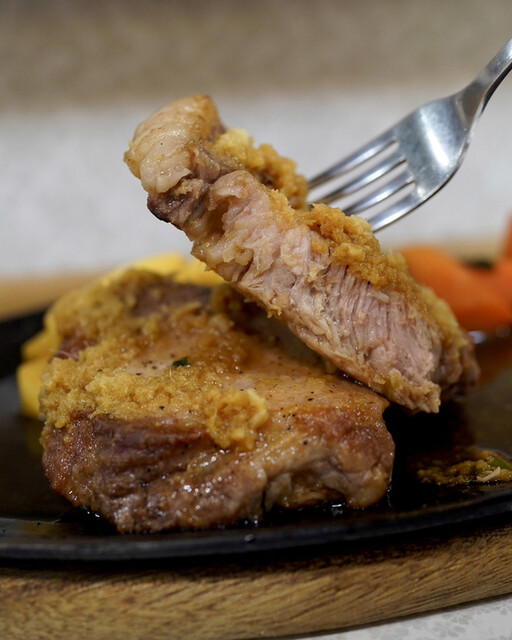
The menu
What to order
- Ginger pork (shouga-yaki)
- Pork sauté
- Hamburg steak
- Sirloin steak
- Crab cream croquette
Tokyo’s side streets can change the temperature of a meal. The city is dense, functional, and local in ways its more polished dining rooms are not always: short walks, modest rooms, quick decisions, and cooking traditions sustained by everyday demand. Yoshoku fits: Western food translated through Japanese kitchens, less European fidelity than rice-friendly sauces, grills, cutlets, steaks, and lunch-counter pragmatism.
That frames Grill Suzukou. The draw is not spectacle, chef theatre, or a tasting-menu arc, but where Tokyo’s yoshoku tradition has landed after long adaptation: familiar categories, disciplined repetition, and a price tier that keeps it close to everyday dining even after recognition. Selection for Tabelog’s Yoshoku Hyakumeiten in 2025 places the restaurant inside a narrow, crowd-judged canon of Japanese-style Western cooking, not the luxury restaurant conversation.
Tokyo yoshoku, after the white-tablecloth era
Yoshoku has always reinvented. Imported forms became domestic habits: beef with rice, pan-fried patties, demi-glace, curry, croquettes, gratin, omelette rice, and steakhouse shorthand absorbed into urban lunch culture. Tokyo now splits the category between nostalgic specialists, shopping-district counters, family restaurants, and polished retro rooms for travellers. Grill Suzukou favours the practical side.
In Tokyo, restaurants are shaped by commuters, local families, office workers, and everyday movement, not destination dining alone. A yoshoku room here has to work at lunch and dinner, not only as a weekend trophy reservation. Grill Suzukou’s listed dinner and lunch budget of JPY 1,000 to JPY 1,999 keeps it nearer the everyday-grill model than the premium steakhouse bracket. In the same Tokyo orbit, Tonkatsu Aoki Kamata honten and Tonkatsu Aoki no Curry Ya Ippekoppe Kamata honten help clarify the local market better than abstract ranking.
The evolution is not novelty but survival through a format Tokyo understands: yoshoku and steak, a practical room, and a category that rewards consistency more than seasonal reinvention. That is why the Tabelog Hyakumeiten signal matters: it identifies a restaurant in a popular, price-sensitive genre where repeat use and accumulated consensus count.
A small grill room in a city of specialist counters
Tokyo diners often read a room’s format as a promise. Sushi counters, yakitori rooms, tempura bars, and yoshoku grills communicate priorities through layout. Grill Suzukou should not be approached as an intimate omakase model; it is better understood as a Tokyo yoshoku address built around familiar categories, straightforward use, and regular meals. The grill identity still matters, because yoshoku and steak benefit from immediacy, but the experience is not performance-first.
The category follows a different Tokyo rhythm from contemporary high-end dining. Rather than framing the meal through concierge-managed luxury cues, Grill Suzukou sits in the older local-restaurant economy, where serious food can remain operationally plain. Its public listing identifies it as yoshoku and steak, with a budget that keeps the visit accessible by Tokyo restaurant standards.
That plainness is not a deficit. It is part of yoshoku’s grammar: Western ingredients and techniques made domestic, affordable, and repeatable. Grill Suzukou reflects that inheritance through a defined cooking category, weekday-friendly price band, and recognition from a domestic restaurant platform rather than an international fine-dining institution.
For a wider Tokyo itinerary, pair a Tokyo yoshoku meal with Our full Tokyo restaurants guide, while drinking and travel planning sit in Our full Tokyo bars guide, Our full Tokyo hotels guide, Our full Tokyo wineries guide, and Our full Tokyo experiences guide. Within the restaurant index, it contrasts with other Tokyo dining rooms, yakitori references, curry specialists, and casual café formats. For a different Tokyo register, the city offers many other neighbourhood grammars entirely.
How to read its recognition
Tabelog’s Hyakumeiten lists are useful because they are category-specific. A yoshoku selection should not be read like Michelin stars, hotel keys, or international bar awards. It is more precise: recognition within Japanese-style Western cuisine, where small differences in sauce work, grilling, portioning, value, and regular-customer trust define reputation. Grill Suzukou’s Tabelog score of 3.71 supports its position as a serious local address, not a broad tourist default.
The category says more about contemporary yoshoku than a long fine-dining narrative would. Japanese-style Western rooms absorb multiple dining cultures, letting diners move between grill dishes, rice, and casual restaurant habits without a single European template. Grill Suzukou’s listed categories, yoshoku and steak, place the room in daily Tokyo life rather than occasion-only dining.
The better comparison is not luxury steakhouses, but Japanese comfort-food specialists that make a narrow format worth crossing a city for. Grill Suzukou shares more DNA with a strong curry counter or tonkatsu shop than with a white-tablecloth grill. In Tokyo, peers such as CIVITAS, Ocha to Okashi Mayanchi, Tonkatsu Aoki Kamata honten, Tonkatsu Aoki no Curry Ya Ippekoppe Kamata honten, and Tori Ki Kamata ten show how specialist formats can anchor local attention without needing the language of grand dining.
Concise verdict: use Grill Suzukou to understand a Tokyo dining category that rarely needs English-language glamour to matter. Its value lies in category discipline, local scale, and recognised yoshoku standing. In a city where attention often drifts toward counters with long reservation cycles, this grill tradition teaches a different lesson: endurance can be quieter, cheaper, and firmly rooted in everyday Tokyo.
Frequently asked questions
What's the pricing like at Grill Suzukou?
Pricing at Grill Suzukou is listed as JPY 1,000 - JPY 1,999 JPY 1,000 - JPY 1,999.
What are Grill Suzukou's hours?
Specific opening hours for Grill Suzukou are not provided here.
What's the address for Grill Suzukou?
Tokyo.
What do critics highlight about Grill Suzukou?
Critics point first to the recognition: Grill Suzukou was selected for Tabelog Yoshoku Hyakumeiten in 2025. The category is part of the appeal as well: yoshoku, or Japanese-style Western cuisine, and steak, with a listed Tabelog score of 3.71.
How It Stacks Up
Comparable venues for context, by category and price tier.
| Venue | Cuisine | Price | Awards | Notes |
|---|---|---|---|---|
| Grill SuzukouThis venue (the venue you are viewing) | Classic Japanese-style Western grill (yoshoku) | $20–30 | Tabelog 100 #49 | Not listed |
| Azabu Kogaiken Hiroo honten | Japanese-style Western (yoshoku) restaurant | $20–30 | Tabelog 100 #44 | Minato |
| PÂTISSERIE BIEN-ÊTRE | French-style patisserie and dessert shop | $10–20 | Tabelog 100 #59 | Shibuya |
| SONG KEE JEE FAN | Singaporean bistro (Hainanese chicken rice) | $30–50 | Tabelog 100 #70 | Chiyoda |
| BURDIGALA Hiroo honten | French-style bakery & café | $10–20 | Tabelog 100 #13 | Minato |
| Paul Bassett Shibuya hikarie ShinQs toyoko norengai ten | Espresso Cafe | $10–20 | Tabelog 100 #99 | Shibuya |
Recognition history
Dated appearances from independent guides and award organizations, with the underlying list record or original source where available.
Tabelog 100 #49 · No. 49
Tabelog · Tabelog 100 - Yoshoku - EAST - 2025
Continue exploring
More in Tokyo
Restaurants in Tokyo
All restaurants in Tokyo →

Bars in Tokyo
All bars in Tokyo →



Details
- Classic
- Cozy
- Quiet
- Solo
- After Work
- Casual Hangout
- Group Dining
- Family
- Standalone
- Beer Program
- A La Carte
- Counter Dining
- Beer
- Sake
- Shochu
- Wine
Current opening hours
- Monday
- 11:30 AM–1:30 PM, 5–8:30 PM
- Tuesday
- 11:30 AM–1:30 PM, 5–8:30 PM
- Wednesday
- 11:30 AM–1:30 PM, 5–8:30 PM
- Thursday
- 11:30 AM–1:30 PM, 5–8:30 PM
- Friday
- 11:30 AM–1:30 PM, 5–8:30 PM
- Saturday
- Closed
- Sunday
- Closed
Hours can change for holidays and private events. Hours as of .
A small, old-fashioned yoshoku grill with a relaxed, nostalgic atmosphere; a cozy, calm dining room where a friendly owner-chef cooks at the counter and guests linger over simple Western-style plates and drinks.