
Tabelog 100 #70
Our verdict
In Kanda Tsukasamachi, SONG KEE JEE FAN places Singaporean cooking inside Tokyo’s small but serious Asian and ethnic dining circuit. Its Tabelog 100 selection for Asian and ethnic cuisine in Tokyo in 2024, 3.68 score, 26-seat table-only room, and Singaporean-bistro-wine-bar framing make it a useful read on how hawker-rooted food translates into a Tokyo restaurant format.

Pearl is the En Primeur Club membership app, where members save venues, book tables and use the concierge.
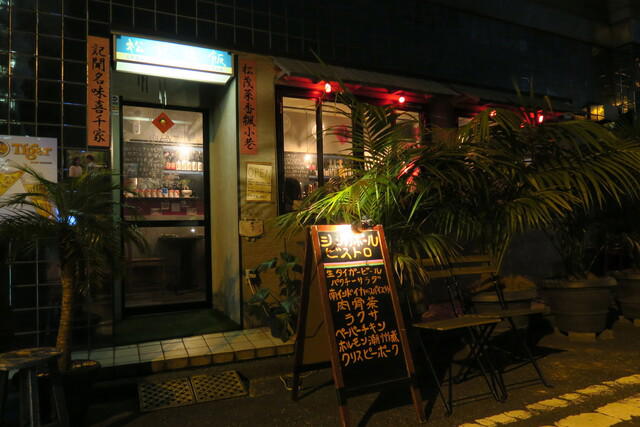
Approaching Tokyo’s everyday dining streets, office Tokyo gives way to after-work restaurants: low frontage, compact rooms, and tables for colleagues, friends, and regulars rather than ceremony. That context makes SONG KEE JEE FAN interesting. Singaporean food in Tokyo often appears as everyday comfort or broad Asian shorthand; here it is framed with bistro pacing and wine-bar drinking, a format that reflects both Tokyo dining habits and Singapore’s plural food culture.
Singaporean cuisine travels differently from some more narrowly defined dining categories because its references are already plural. Different traditions, techniques, and flavor registers can sit within one national food culture. In Tokyo, that breadth can flatten into a few familiar expectations. More serious rooms resist by treating the cuisine as a complete dining language: a full meal, drinks, pacing, and shared plates, not one dish with a national flag attached.
Singaporean food, translated for Tokyo's small-room dining culture
Tokyo suits this restaurant. The city sits between business-district practicality and an older habit of specialist places that pursue one category with conviction. Nearby eating ranges from quick meals to compact destination restaurants; the rhythm rewards places that work at lunch without becoming merely casual, then become more deliberate dinner rooms after dark.
Within Tokyo’s Asian and ethnic category, the restaurant’s Tabelog 100 selection in 2024 matters because the list separates specialist credibility from generic international dining. A 3.68 Tabelog score is meaningful too: high enough to show sustained diner approval, without suggesting the economics of Tokyo’s most formal luxury rooms. The format keeps the experience closer to a neighborhood specialist than a large-format destination restaurant.
Tokyo’s casual Asian comparison set is broad. KAMAYOSHI and Kagawa Ippuku Kanda ten sit in a more everyday, quick-meal bracket; Gin Cock belongs to the city’s casual dining conversation; Biriyani Osawa and Spice Box point to Tokyo’s deep appetite for spice-led cooking, where focused specialists have devoted audiences. SONG KEE JEE FAN occupies another lane: not a simple street-food replica, hotel-style international room, or single-category specialist, but a Singaporean bistro with a wine-bar dimension.
That drinking angle is not incidental. Tokyo’s casual-bistro culture gives Asian restaurants a second register. Wine places the meal in a contemporary Tokyo format, where Singaporean cooking can sit beside bottles rather than as an afterthought. It shows how the city now reads Asian food: not only quick comfort, but structured dinner.
What the format says about eating Singaporean in Tokyo
The listed categories, Singaporean, bistro, and wine bar, describe a broader shift. Tokyo diners are fluent in hybrid formats when the food has a clear center. A Singaporean bistro works when the cuisine is not decoration for the wine list. The better version lets the table move through the meal with the seriousness another room might apply to its own specialist format.
Planning matters more here than at a purely casual stop. The bistro and wine-bar framing asks diners to think beyond a single signature plate and treat the meal as a sequence: shared dishes, drinks, and pacing. In Singaporean food culture, ordering with intent is part of the pleasure; in Tokyo, that intent becomes reservation discipline and clear communication.
Value also differs culturally. Lunch pricing in Tokyo’s Asian restaurants often rewards speed and repeat custom, while dinner allows breadth: drinks, shared dishes, and slower pacing. Here, the listed budget is Dinner: JPY 6,000 - JPY 7,999; Lunch: JPY 1,000 - JPY 1,999, placing it above quick-service meals but below the city’s luxury tasting-menu economy. For travelers, that middle tier is often Tokyo at its most rewarding: structured enough to feel deliberate, informal enough to keep the cuisine in its natural register.
For Tokyo itinerary mapping, the surrounding category matters. Travelers interested in casual specialist restaurants can compare the mood with other Tokyo dining rooms. Diners tracking everyday rooms, compact counters, or informal destination cooking can use unnamed local places as points of contrast. For another casual Tokyo room, the city’s midrange dining map shows how elastic everyday eating has become, with SONG KEE JEE FAN standing out through its Singaporean, bistro, and wine-bar identity.
Know Before You Go
- Editorial fit: Choose it for Singaporean cooking treated as a seated dinner format, not only a fast casual stop.
- Recognition signal: Selected for Tabelog 100 Asian cuisine / Ethnic cuisine Tokyo 2024, with a Tabelog score of 3.68.
- Format: Listed as Singaporean, bistro, and wine bar, better suited to a planned meal than a one-dish checklist stop.
- Planning note: Confirm current availability and any reservation details directly by phone before building a meal around it.
- Budget note: Listed budget is Dinner: JPY 6,000 - JPY 7,999; Lunch: JPY 1,000 - JPY 1,999.
- Contact note: The provided phone number is +81-3-5577-6883.
For planning, place this meal inside a Tokyo dining day rather than treating it as a single-destination pilgrimage. EP Club readers can cross-reference the full Tokyo restaurants guide, then build the trip through Tokyo hotels, bars, wineries, and experiences coverage. Japan-wide comparisons can add texture when kept broad: regional dining identities outside Tokyo often show how local formats, imported cuisines, and casual specialist rooms evolve differently. For readers following Japanese food culture abroad, the same conversation can extend across the Pacific through unnamed restaurants and bars that reinterpret Japanese and Asian dining for local audiences.
Frequently asked questions
What are the opening hours for SONG KEE JEE FAN?
Opening hours for SONG KEE JEE FAN should be confirmed directly with the restaurant before visiting.
How much does it cost to eat at SONG KEE JEE FAN?
Pricing at SONG KEE JEE FAN is listed as Dinner: JPY 6,000 - JPY 7,999; Lunch: JPY 1,000 - JPY 1,999.
Where is SONG KEE JEE FAN located?
Tokyo.
What is SONG KEE JEE FAN known for?
SONG KEE JEE FAN is known for its Singaporean, bistro, and wine bar categories in Tokyo, with Tabelog 100 recognition in 2024 and a listed score of 3.68.
Accolades, Compared
Comparable options at the same price tier.
| Venue | Cuisine | Price | Awards | Notes |
|---|---|---|---|---|
| SONG KEE JEE FANThis venue (the venue you are viewing) | Singaporean bistro (Hainanese chicken rice) | $30–50 | Tabelog 100 #70 | Not listed |
| LADRIO | Classic Japanese kissaten café | $10–20 | Tabelog 100 | Chiyoda |
| Mr Cheesecake | Cheesecake Specialty Café | $10–20 | Not listed | Ginza |
| Wine Shop Okukagurazaka Shoten | Standing wine bar & bistro | $30–50 | Tabelog 100 #43 | Shinjuku |
| Azabu Kogaiken Hiroo honten | Japanese-style Western (yoshoku) restaurant | $20–30 | Tabelog 100 #44 | Minato |
| Paul Bassett Shinjuku | Specialty Coffee & Café | $10–20 | Tabelog 100 #63 | Shinjuku |
Recognition history
Dated appearances from independent guides and award organizations, with the underlying list record or original source where available.
Tabelog 100 #70 · No. 70
Tabelog · Tabelog 100 - Asian cuisine / Ethnic cuisine - TOKYO - 2024
Continue exploring
More in Tokyo
Restaurants in Tokyo
All restaurants in Tokyo →


Bars in Tokyo
All bars in Tokyo →


Details
- Cozy
- Lively
- Casual Hangout
- Group Dining
- After Work
- Solo
- Standalone
- Beer Program
- A La Carte
- Beer
- Wine
Current opening hours
- Monday
- 11:30 AM–1:30 PM, 6–9 PM
- Tuesday
- 11:30 AM–1:30 PM, 6–9 PM
- Wednesday
- 11:30 AM–1:30 PM, 6–9 PM
- Thursday
- 11:30 AM–1:30 PM, 6–9 PM
- Friday
- 11:30 AM–1:30 PM, 6–9 PM
- Saturday
- 11:30 AM–1:30 PM, 6–9 PM
- Sunday
- Closed
Hours can change for holidays and private events. Hours as of .
A down-to-earth, cozy bistro-style space with a relaxed, casual atmosphere, more functional than fancy, where guests come mainly for comforting Singaporean food and drinks rather than elaborate decor.