Our verdict
A Greek restaurant on Herbeder Strasse in Witten, Haus Kesper Nefeli sits within a city that has a modest but committed neighbourhood dining tradition. For those tracing authentic Greek cooking in the Ruhr region, it represents a practical entry point into a cuisine defined by sourcing discipline, olive oil provenance, and regional specificity that rarely surfaces in central European adaptations.

Pearl is the En Primeur Club membership app — saves, bookings, and concierge access live there. Same editors, same standards.
- Address
- Herbeder Str. 148, 58455 Witten, Germany
- Phone
- +4949230259246
- Hours
- Mon 4:30–11 PMTue ClosedWed–Sat 4:30–11 PMSun 11:30 AM–3 PM, 5–11 PM
- Website
- zagip.com
- Directions
- Get directions
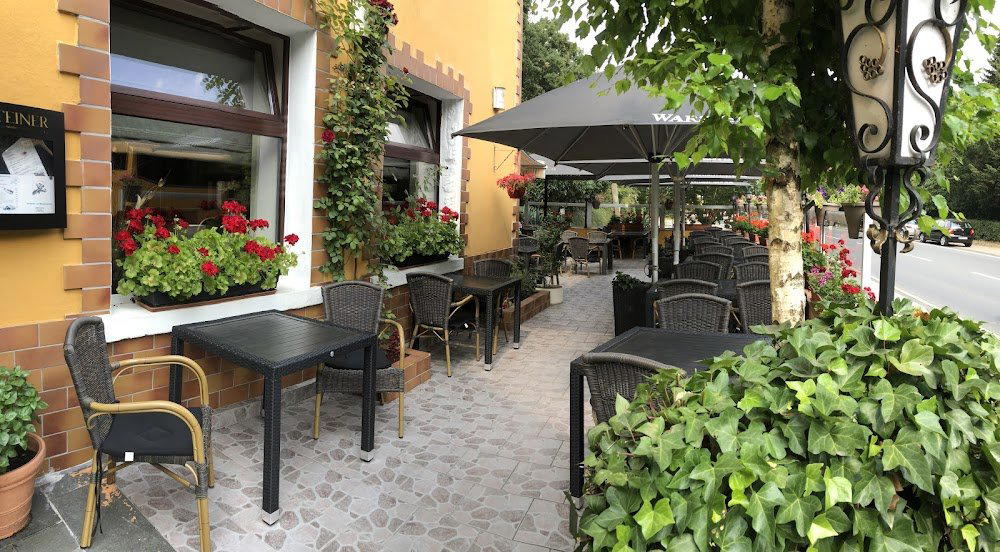
Greek Cooking in the Ruhr: What Witten's Neighbourhood Scene Tells You
The Ruhr Valley has never built its reputation on destination dining. Cities like Witten operate on a different register from the Michelin-circuit venues that draw weekend travellers to Germany's south and west — places like Schwarzwaldstube in Baiersbronn or Vendôme in Bergisch Gladbach. What the Ruhr does have is a layered immigrant food culture, built over decades of postwar labour migration, that produced genuine Greek, Turkish, and Italian cooking in residential streets rather than tourist centres. Herbeder Strasse, where Haus Kesper Nefeli sits at number 148, is that kind of address: a working neighbourhood road where restaurants survive on repeat local custom rather than passing trade.
That context matters when assessing what Greek cooking in this setting actually represents. It is not the sanitised taverna format designed for package-holiday familiarity, nor does it compete with the tasting-menu ambition of Aqua in Wolfsburg or CODA Dessert Dining in Berlin. It belongs to a different category entirely: the neighbourhood institution that earns its standing through consistency and through food that connects to a specific culinary geography rather than a generalised idea of Mediterranean eating. For context on what else Witten's dining scene offers, see our full Witten restaurants guide.
The Ingredient Logic of Traditional Greek Cooking
Greek cuisine is, at its structural core, an ingredient-sourcing tradition. The canonical dishes — lamb slow-roasted with oregano, octopus dried and grilled, white beans stewed with tomato and fennel, feta held in brine, derive their character from what the eastern Mediterranean produces rather than from technical elaboration. Extra-virgin olive oil from Kalamata or Crete, dried wild herbs from mountain regions, small-catch seafood from the Aegean, and aged cheeses from protected designations: these are the load-bearing elements of the cuisine. When Greek restaurants outside Greece work well, it is usually because they maintain some fidelity to those source materials rather than substituting generic equivalents.
This sourcing logic is what separates credible Greek cooking from its diluted counterparts across northern Europe. A tzatziki made with strained sheep's milk yoghurt behaves differently on the palate than one made with commercial full-fat dairy. Lamb raised on Aegean scrubland carries a mineral and herbal character that grain-finished alternatives do not replicate. The leading Greek restaurants in German cities, and they exist in meaningful numbers in the Ruhr and Rhine-Ruhr corridor, tend to be those that treat ingredient provenance as non-negotiable, even when the surrounding neighbourhood context does not demand it. That discipline is worth looking for at Haus Kesper Nefeli.
What to Expect at Herbeder Strasse 148
The address sits in the northern residential belt of Witten, away from the compact city centre. Approaching from the main road, the scale is domestic rather than grand: a neighbourhood restaurant format common across the Ruhr, where converted ground-floor spaces serve local populations who have been eating at the same tables for years. That physical environment signals something about the dining register, you are not walking into the composed minimalism of JAN in Munich or the architectural precision of ES:SENZ in Grassau. The setting is functional and familiar, which in Greek dining tradition is not a shortcoming. The taverna model has always prioritised hospitality over staging.
Greek restaurants at this neighbourhood tier typically organise around a broad menu of cold starters, grilled proteins, and shared plates rather than a set tasting format. The cold meze section, where the sourcing quality of olive oil, olives, and cheese is immediately legible, tends to be the most revealing part of the meal. Grilled dishes, when the kitchen is operating well, reflect the discipline of temperature control and seasoning that distinguishes competent Greek cooking from perfunctory execution. Desserts in the Greek tradition lean on honey, nuts, and pastry rather than the sugar-forward constructions common in central European patisserie contexts.
For German-speaking callers, most neighbourhood restaurants of this type in the Ruhr operate dinner service from early evening, with weekend lunch as an additional window.
Placing Haus Kesper Nefeli in the Wider German Dining Picture
Germany's fine dining tier, represented by venues like Victor's Fine Dining by Christian Bau in Perl, Waldhotel Sonnora in Dreis, and Restaurant Haerlin in Hamburg, operates at a remove from neighbourhood Greek cooking in the Ruhr. These are different categories serving different needs. The more instructive comparison is with the broader tradition of immigrant-origin restaurants that have become embedded in German urban life: the Greek and Italian establishments that opened in the 1960s and 1970s and in some cases maintained family-level consistency across generations. That category contains both reliable neighbourhood options and restaurants that have allowed their standards to drift. Determining which side of that line a given venue sits on requires a visit.
For those who travel specifically for food at the tasting-menu level, the relevant German destinations remain Wolfsburg, Baiersbronn, Hamburg, and Munich. Venues like Schanz in Piesport, Bagatelle in Trier, ammolite in Rust, ATAMA by Martin Stopp in Sankt Ingbert, AUGUST in Augsburg, and AURA in Wirsberg represent that tier. Internationally, the technical ambition of Le Bernardin in New York or the precision of Atomix sets a different benchmark altogether. Haus Kesper Nefeli does not compete in that space, nor should it be assessed against those criteria.
Planning Your Visit
Witten is accessible from Bochum and Dortmund by regional rail, placing it within a short commute of the wider Rhine-Ruhr urban network. The Herbeder Strasse address is in the northern part of the city; visitors arriving by public transport should plan for an onward connection or short taxi ride from the main station. Neighbourhood restaurants in this part of the Ruhr tend to be walk-in friendly at off-peak hours, with Friday and Saturday evenings being the periods where reservations, if accepted, would be advisable.
Frequently asked questions
Is Haus Kesper Nefeli Restaurant in Witten child-friendly?
The venue sits in a residential stretch of northern Witten at Herbeder Str. 148, a setting that typically suits relaxed, family-oriented dining rather than formal service. Traditional Greek restaurants in Germany commonly accommodate families across age groups, given the communal nature of the cuisine. check the venue's official channels to confirm any specific arrangements for children.
What's Griechisches Restaurant Haus Kesper Nefeli Restaurant - Witten's location?
Griechisches Restaurant Haus Kesper Nefeli Restaurant - Witten is located at Herbeder Str. 148, 58455 Witten, Germany, Witten.
Should I book Griechisches Restaurant Haus Kesper Nefeli Restaurant - Witten in advance?
Reservations are recommended for Griechisches Restaurant Haus Kesper Nefeli Restaurant - Witten in Witten. Confirm current policy via the venue's official channels.
What is Griechisches Restaurant Haus Kesper Nefeli Restaurant - Witten known for?
Griechisches Restaurant Haus Kesper Nefeli Restaurant - Witten is best approached by focusing on the core concept and signature offerings.
How It Stacks Up
Comparable venues nearby, for context on price, style, and recognition.
| Venue | Cuisine | Price | Notes |
|---|---|---|---|
| Griechisches Restaurant Haus Kesper Nefeli Restaurant - WittenThis venue — the venue you are viewing | Traditional Greek Grillhouse | $20–30 | Not listed |
| Restaurant Artemis | Greek Seafood | Not listed | Gladbeck |
| Shalimar Express | Authentic Indian & Pakistani Curry House | $10–20 | Herne |
| Jannis Restaurant | Greek | $20–30 | Oerlinghausen |
| coa | Modern Pan-Asian | $10–20 | City Center |
Continue exploring
More in Witten
Restaurants in Witten
Browse all →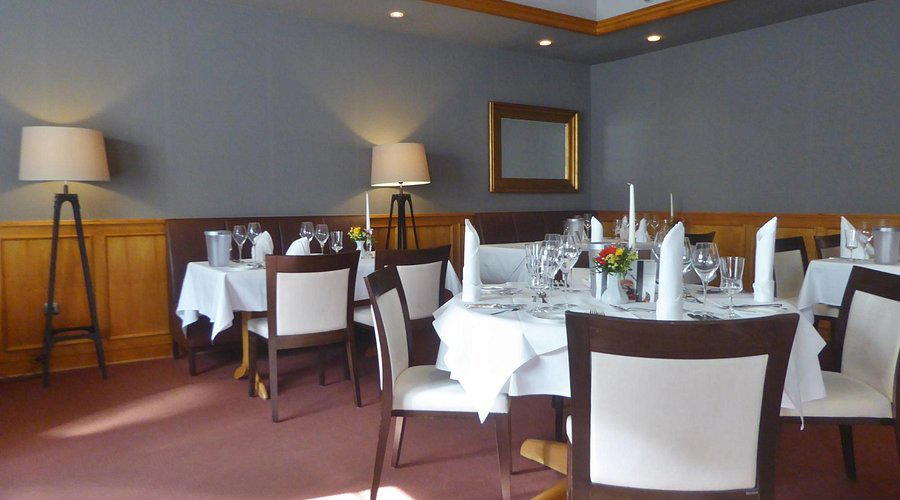
Bars in Witten
Browse all →
Hotels in Witten
Browse all →

Wineries in Witten
Browse all →
Details
- Cozy
- Classic
- Family
- Date Night
- Group Dining
- Open Kitchen
- Beer Program
- A La Carte
- Vegetarian Friendly
- Vegan Options
Current opening hours
- Monday
- 4:30–11 PM
- Tuesday
- Closed
- Wednesday
- 4:30–11 PM
- Thursday
- 4:30–11 PM
- Friday
- 4:30–11 PM
- Saturday
- 4:30–11 PM
- Sunday
- 11:30 AM–3 PM, 5–11 PM
Hours can change for holidays and private events. Last verified .