Gårdcafeen occupies a courtyard address on Studsgade in central Aarhus, positioning itself within the city's quieter, neighbourhood-rooted café tradition rather than its headline restaurant circuit. As a counterpoint to the city's Michelin-tracked New Nordic tier, it draws visitors seeking something closer to how Aarhus actually eats day to day. Check current hours and availability directly before visiting.
Pearl is the En Primeur Club membership app — saves, bookings, and concierge access live there. Same editors, same standards.
- Address
- Studsgade 6b, 8000 Aarhus, Denmark
- Phone
- +4530260056
- Website
- gaardcafeen.dk
- Directions
- Get directions
 Saves & bookings on Pearl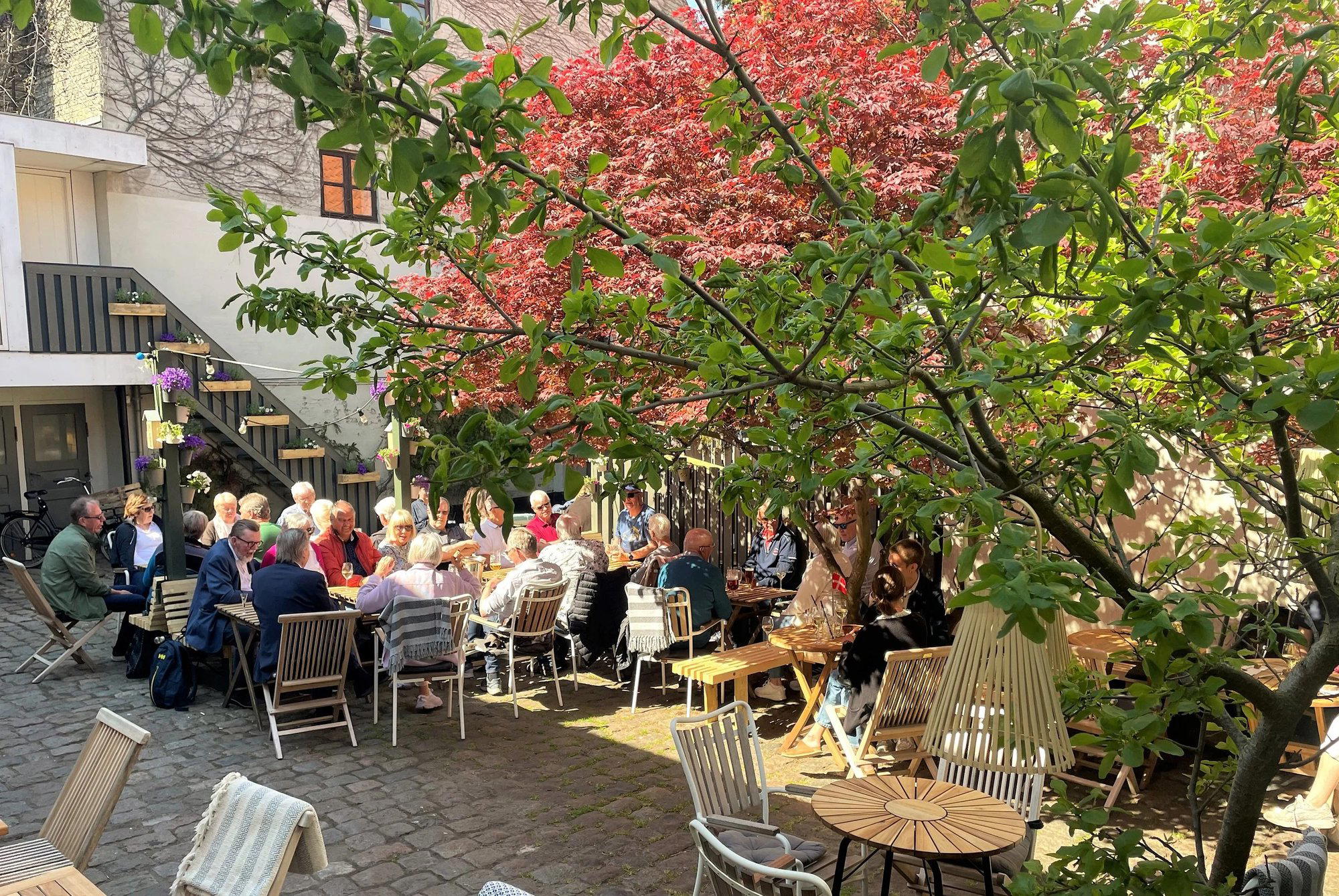
Courtyard Dining and the Aarhus Café Tradition
Aarhus has spent the better part of two decades building a fine-dining reputation that extends well beyond its size. Frederikshøj, Domestic, and Gastromé have collectively pushed the city onto the international dining map, drawing comparisons with Copenhagen's most decorated tables. But that headline tier accounts for only one register of how this city eats. The other register — quieter, more embedded in daily life, rooted in neighbourhood rhythms — runs through addresses like Gårdcafeen on Studsgade 6b, where the format is built around accessibility rather than occasion dining.
Courtyard cafés of this type occupy a specific role in Scandinavian urban culture. They tend to sit off the main pedestrian axis, discovered by a slight detour or a local recommendation, and they function as community anchors through multiple parts of the day. The physical setting signals the proposition before you order anything: a sheltered courtyard address in a dense city-centre block communicates a different pace than a street-front restaurant competing for passing trade.
Where Ingredients Come From, and Why That Framing Matters in Denmark
Denmark's café and restaurant culture has been shaped, more than most, by the sourcing conversation that began in earnest with New Nordic's formal articulation in the early 2000s. What started as a manifesto at the fine-dining level filtered steadily downward through the price tiers, so that today even neighbourhood cafés in Aarhus operate inside a broader cultural expectation that food should have a traceable relationship to its region. This isn't marketing language in Denmark, it reflects genuine infrastructure: the country's compact geography means that farm-to-table supply chains are shorter and more practically achievable here than in larger European markets.
The Jutland hinterland surrounding Aarhus has historically supplied the city's kitchens with root vegetables, dairy, preserved fish, rye, and seasonal produce across a relatively short growing window. Cafés working in this tradition tend to build menus around what that supply makes available, adjusting by season rather than maintaining a fixed year-round card. The result is a kind of enforced seasonality that produces menus weighted toward the root-and-preserve register in winter and the fresh-herb-and-garden register in the brief Danish summer. For visitors arriving between late spring and early August, the contrast with winter offerings is pronounced, a consideration worth factoring into any visit.
This sourcing context connects Gårdcafeen's Aarhus neighbourhood positioning to a much wider Danish tradition. The same emphasis on provenance and regional identity underpins the approach at Substans in Aarhus and, at the highest expression of the model, at places like Jordnær in Gentofte and Geranium in Copenhagen. The philosophical thread is consistent across price tiers; what changes is the level of technical elaboration applied to the raw material.
The Neighbourhood and Its Context
Studsgade sits within the inner city fabric of Aarhus, close enough to the Latin Quarter and the central station to be reached on foot from most of the city's visitor accommodation. The street itself carries a mix of residential and commercial use, which gives it a less curated feel than the pedestrianised core. Cafés in this part of the city draw a clientele that mixes students from the nearby university district with working residents and visitors who've moved past the obvious landmarks.
That demographic mix matters for understanding what a neighbourhood café on this street is doing. It isn't competing with Gastromé or with the broader Michelin tier that includes destinations like Henne Kirkeby Kro or Dragsholm Slot Gourmet. It occupies a different position in the city's hospitality structure, one that's arguably more representative of how Aarhus functions as a place to live, not just a place to visit.
Aarhus has a strong café culture partly by necessity: its winters are long, its public spaces are not designed for year-round outdoor life, and its population includes a large student body that socialises in seated indoor spaces. Courtyard formats like Gårdcafeen's address that need for a sheltered, slightly removed environment without the formality or cost of a restaurant booking.
How Gårdcafeen Sits Within the Wider Danish Café Scene
At the national level, Denmark's café tier is increasingly polarised between specialty coffee-led concepts, which compete on bean provenance and technique with the same seriousness that fine-dining restaurants apply to ingredient sourcing, and more generalist neighbourhood anchors that prioritise atmosphere and accessibility over any single category claim. The courtyard café model tends to fall into the latter group, though the leading examples still carry a considered approach to what they serve.
For visitors building a wider Danish itinerary, the contrast between Aarhus's neighbourhood café register and the country's destination-dining tier is worth appreciating. Properties like Frederiksminde in Præstø, LYST in Vejle, Ti Trin Ned in Fredericia, Tri in Agger, Pearl by Paul Proffitt in Kruså, and Syttende in Sønderborg all require advance planning, specific travel logistics, and a commitment of several hours. A courtyard café on Studsgade asks none of that. The two tiers serve different purposes in a well-constructed trip itinerary, and the leading Aarhus visits tend to make room for both.
Internationally, the neighbourhood café that anchors a city block without striving for destination status has clear parallels. The format shares structural DNA with the kind of low-key operator that quietly becomes a reference point in its immediate area, a dynamic that plays out in cities as different as Copenhagen, San Francisco (where places like Lazy Bear represent the opposite, high-production end of the hospitality spectrum), and New York (where the contrast with a tightly controlled operation like Le Bernardin underscores how wide the dining category actually runs). The neighbourhood café is not a lesser version of fine dining, it's a different service category with its own logic.
Planning a Visit
Gårdcafeen's address at Studsgade 6b places it in the walkable inner city. Current hours, seasonal closures, and booking requirements are best confirmed directly with the venue before visiting, as specific operational details are not available through this listing. For visitors spending time in Aarhus across multiple meals, the café fits naturally into a day that might also include lunch or dinner at A-Kin Thai or a longer evening at one of the city's New Nordic addresses. Our full Aarhus restaurants guide covers the city's dining range across all price tiers and formats.
Continue exploring
More in Aarhus
Restaurants in Aarhus
Browse all →
Bars in Aarhus
Browse all →
Hotels in Aarhus
Browse all →

Wineries in Aarhus
Browse all →
At a Glance
- Cozy
- Rustic
- Intimate
- Brunch
- Casual Hangout
- Courtyard
- Live Music
- Beer Program
Current opening hours
- Monday
- 9 AM–10 PM
- Tuesday
- 9 AM–10 PM
- Wednesday
- 9 AM–10 PM
- Thursday
- 9 AM–10 PM
- Friday
- 9 AM–12 AM
- Saturday
- 9 AM–12 AM
- Sunday
- 9:30 AM–5 PM
Hours can change for holidays and private events. Last verified .
Cozy and relaxed courtyard atmosphere with friendly service and occasional live music.
Know Before You Go
- Getting there
- Studsgade 6b, 8000 Aarhus, Denmark