
We're Smart World 2 Radishes
Our verdict
L'Estragon on Klostergade works from a straightforward premise: seasonal, colorful cooking built around organic produce from its own garden and nearby Danish farms. The kitchen has come close to achieving full organic certification across its supply chain, and a fully plant-based menu is available on request. Chef Sigrid Budtz-Jorgensen leads a room that regulars return to with genuine affection.

Pearl is the En Primeur Club membership app, where members save venues, book tables and use the concierge.
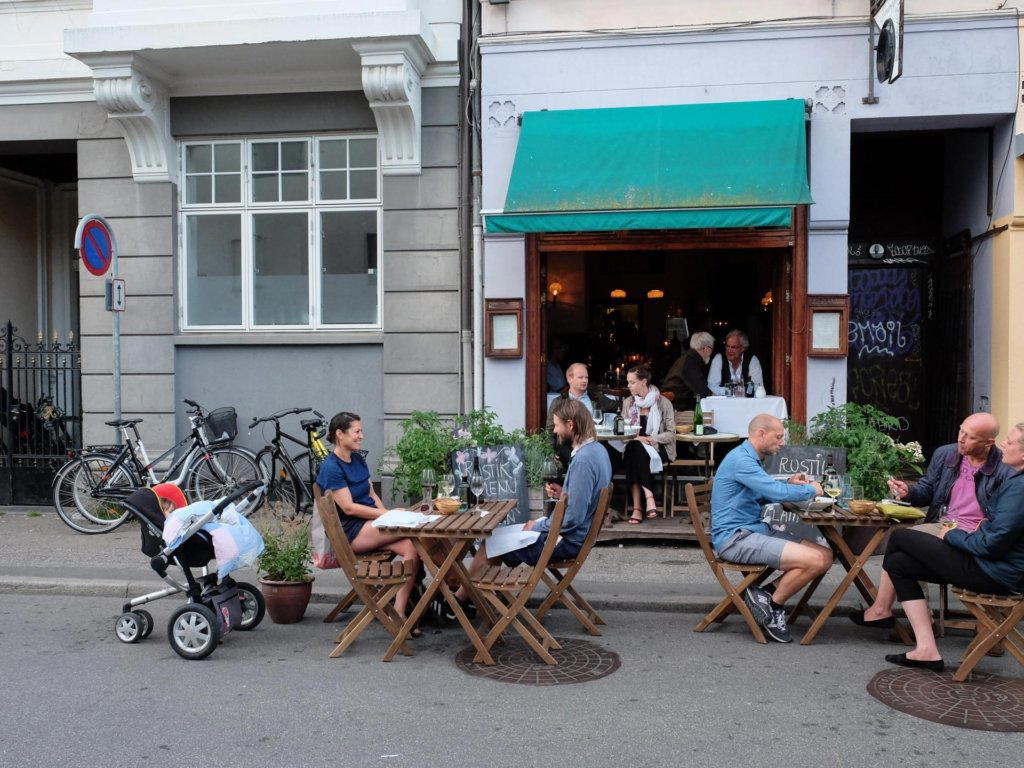
Where the Supply Chain Is the Starting Point
In Aarhus, the conversation about sourcing-led cooking predates the global appetite for it. The city's dining scene has long favored producers over spectacle, and the restaurants that earn lasting loyalty here tend to share a commitment to knowing exactly where their ingredients originate. L'Estragon on Klostergade sits firmly within that tradition, operating with its own garden as one anchor of the supply chain and local Danish farms as the other. That dual structure is less common than the marketing language around it suggests: many restaurants describe themselves as farm-to-table, but running an actual kitchen garden alongside supplier relationships requires a logistical discipline that shapes how menus are conceived and how far in advance they can be planned.
The practical result of this approach is cuisine that shifts with the seasons not as a stylistic gesture but as a functional necessity. What the garden yields, the kitchen uses. What local farms are producing at a given moment becomes the raw material for the week's plates. For diners accustomed to menus engineered around year-round availability, this kind of constraint-driven cooking can feel like a recalibration, color and texture determined by what's actually growing rather than what photographs well in January.
The Organic Ambition, Honestly Appraised
L'Estragon has made a specific and verifiable commitment: the goal is 100% organic sourcing across the entire kitchen operation. According to the restaurant's own account, the team has come close to fully achieving that standard. Close is worth taking seriously here. Full organic certification across a working kitchen, covering every oil, every grain, every dairy product, not just the headline vegetables, is one of the harder logistical targets a restaurant can set itself. Many kitchens that describe themselves as organic work at 60 or 70 percent, with conventional products filling gaps where certified alternatives are unavailable or cost-prohibitive. That L'Estragon has pushed the figure toward 100 percent places it in a meaningfully smaller category of Danish restaurants.
This matters to the broader Aarhus dining picture because it positions L'Estragon at the principled end of a spectrum that runs through much of Danish food culture. Restaurants like Frederikshøj in Aarhus operate at the fine-dining tier with rigorous technique as their organizing principle. L'Estragon's organizing principle is the supply chain itself, and the cooking grows outward from that foundation rather than from a tasting-menu architecture. For context on how Denmark's most decorated kitchens handle sourcing at the very best of the market, Noma in Copenhagen and Jordnær in Gentofte offer useful reference points, though the format and price tier at L'Estragon are considerably more accessible.
The Plant Menu: A Clarification Worth Making
A fully plant-based menu is available at L'Estragon, but the restaurant is clear on one logistical point: guests should flag this when booking. This is not a symbolic nod to dietary preferences managed at the table. The kitchen's approach to a plant menu requires advance preparation, and treating it as an afterthought would compromise the quality of what arrives. For anyone planning a visit with plant-based requirements, contacting the restaurant ahead of time is the functional prerequisite, not an optional courtesy.
The existence of a dedicated plant menu, served at the same standard as the main kitchen output, reflects how seriously the sourcing philosophy is applied. Vegetables from the kitchen garden are not treated as accompaniments here, they are the structural material of the cooking. That orientation aligns L'Estragon with a strand of Scandinavian culinary thinking that treats plant ingredients as primary rather than supplementary, a tradition that runs through kitchens across Denmark and has gained significant international recognition over the past decade. For a broader look at how this approach plays out at other Danish addresses, Kadeau Bornholm in Åkirkeby and Henne Kirkeby Kro in Henne each represent the tradition at different formats and price points.
Aarhus as a Dining City: Where L'Estragon Fits
Aarhus has developed a dining identity that is distinct from Copenhagen's, less defined by international attention and more by a compact, locally oriented restaurant culture where regulars matter and longevity is earned through consistency rather than press cycles. L'Estragon's position in this ecosystem is that of a neighborhood restaurant operating at an above-average standard of sourcing and cooking, without the formality or price infrastructure of the city's tasting-menu tier. That places it in a genuinely useful category for visitors and residents alike: serious about ingredients, accessible in format.
The address on Klostergade puts it within Aarhus C, the central district where the city's leading food and drink is concentrated. For anyone building an itinerary around the area's dining scene, our full Aarhus C restaurants guide maps the broader picture. Those extending a visit to explore the city's other offerings will find relevant context in our Aarhus C hotels guide, our bars guide, our wineries guide, and our experiences guide for the area.
For those comparing Aarhus to other Danish cities with strong restaurant programs, Alimentum in Aalborg, ARO in Odense, and LYST in Vejle each represent their respective cities' approach to ingredient-driven, regionally rooted cooking. Outside Denmark, the sourcing-first ethos finds international parallels at places like Dragsholm Slot Gourmet in Hørve and Frederiksminde in Præstø, both of which anchor their kitchens to estate-grown or hyper-local produce in a similar spirit.
Planning a Visit
L'Estragon is located at Klostergade 6 in central Aarhus, walkable from the main pedestrian zone and the ARoS art museum. Plant-based diners should note their preference at the time of booking, the kitchen accommodates a 100% plant menu but needs the information in advance to prepare it properly. Specific hours, pricing, and booking method are best confirmed directly with the restaurant, as these details change seasonally and the kitchen's output is responsive to what's available at any given time of year. For broader comparison on how Denmark's leading regional restaurants handle similar sourcing models, Domæne in Herning offers a useful data point from the Jutland interior.
Frequently asked questions
What distinctions does L’Estragon have?
L’Estragon has received recognition including: L’Estragon offers a playful, colorful, simple, and flavorful cuisine, with vegetables from its own garden or from lokal farms—and that almost says it all. But not quite: the goal is to make everything 100% organic, a challenge the team has ….
What's L’Estragon's location?
L’Estragon is located at Klostergade 6, 8000 Aarhus, Denmark, Aarhus C.
Is L'Estragon good for families?
The cooking at L'Estragon is described as playful, colorful, and straightforwardly flavorful, which tends to translate well across age groups. The vegetable-forward menu draws from the restaurant's own garden and local farms, so portion formats are likely more relaxed than a tasting-menu-only counter. Families with plant-based or dietary requirements should flag this at booking.
What kind of setting is L'Estragon?
L'Estragon sits at Klostergade 6 in central Aarhus, a short walk from the city's main pedestrian zone and the ARoS art museum. The restaurant's own description emphasizes simplicity alongside a colorful, playful approach to food, suggesting a room that matches the cooking: unfussy and direct rather than formally composed.
A Quick Peer Check
Comparable venues nearby, for context on price, style, and recognition.
| Venue | Cuisine | Price | Awards | Notes |
|---|---|---|---|---|
| L’EstragonThis venue (the venue you are viewing) | Organic French Bistro | $50–100 | We're Smart World 2 Radishes | Not listed |
| Cafe Viggo | French-Danish Café Cuisine | $30–50 | Not listed | Midtbyen |
| Mefisto | Modern Seafood with French Influences | $30–50 | Not listed | Latin Quarter |
| Bone's | American BBQ | $20–30 | Not listed | Midtbyen |
| Flammen | Danish Grill Buffet Steakhouse | $20–30 | Not listed | Aarhus C |
| Restaurant Nero | Authentic Italian Trattoria | $30–50 | Not listed | Midtbyen |
Recognition history
Dated appearances from independent guides and award organizations, with the underlying list record or original source where available.
We're Smart World 2 Radishes
We're Smart World
Continue exploring
More in Aarhus
Restaurants in Aarhus
All restaurants in Aarhus →
Bars in Aarhus
All bars in Aarhus →
Hotels in Aarhus
All hotels in Aarhus →
Wineries in Aarhus
Browse all →
Details
- Cozy
- Intimate
- Classic
- Date Night
- Special Occasion
- Open Kitchen
- Extensive Wine List
- Local Sourcing
- Organic
- Set Menu
- Vegetarian Friendly
Current opening hours
- Monday
- Closed
- Tuesday
- 5:30–9 PM
- Wednesday
- 5:30–9 PM
- Thursday
- 5:30–9 PM
- Friday
- 5:30–9 PM
- Saturday
- 12–9 PM
- Sunday
- 5:30–9 PM
Hours can change for holidays and private events. Hours as of .
Cozy and charming with panelled walls, wall sconces, and a warm French bistro atmosphere evoking a Parisian café.