
1 Michelin Star · We're Smart World 2 Radishes
Our verdict
Granite holds a Michelin star in the 1st arrondissement and sits within a Paris modern-cuisine tier defined by ingredient discipline and vegetable-forward cooking. Chef Tom Meyer's plates read as composed and colour-precise, with sustainability and near-zero waste shaping the sourcing logic. For the price bracket, the kitchen's commitment to produce over protein sets it apart from most of its Louvre-quarter neighbours.

Pearl is the En Primeur Club membership app, where members save venues, book tables and use the concierge.
A Corner of the 1st Arrondissement Where the Vegetables Lead
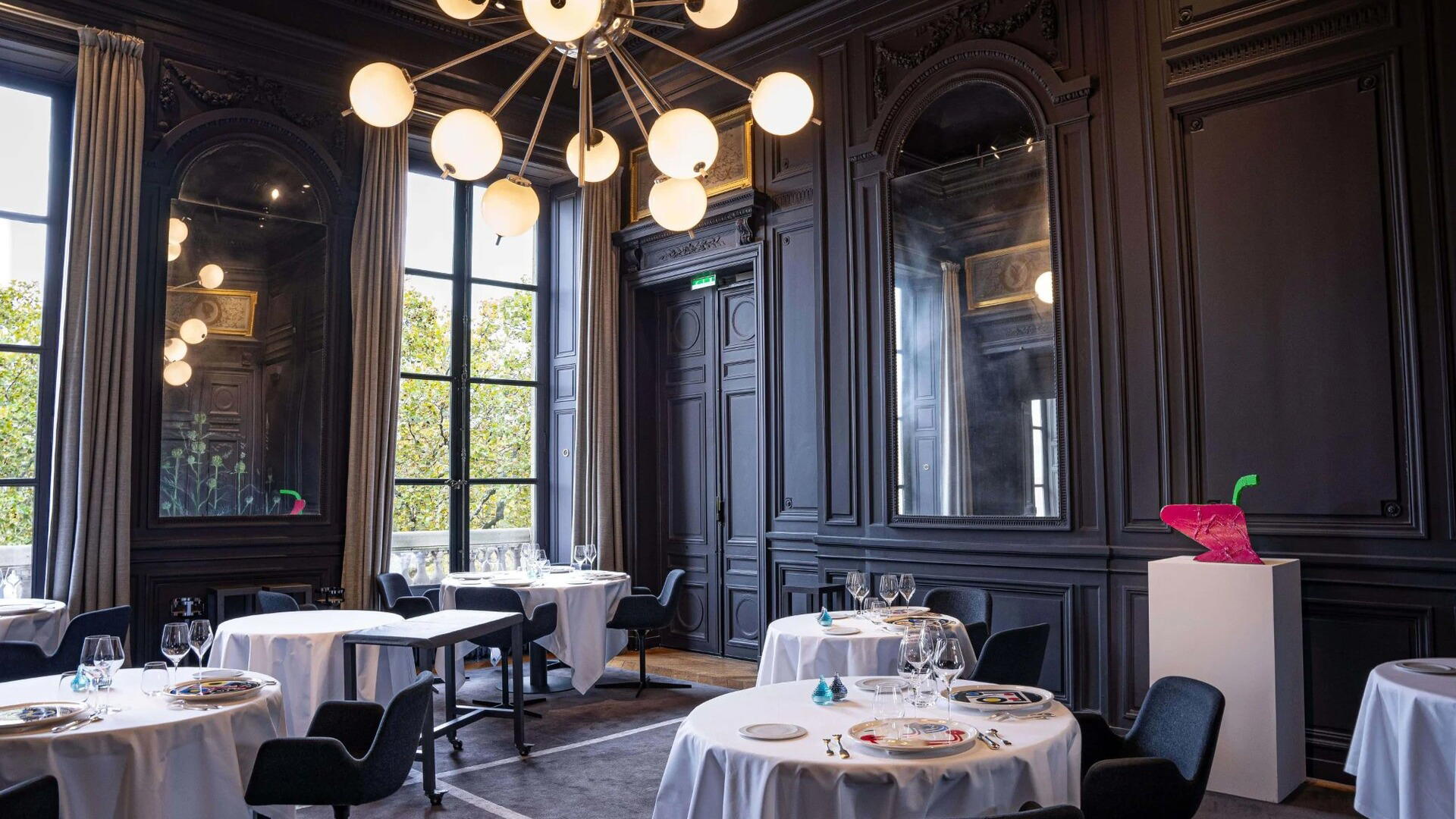
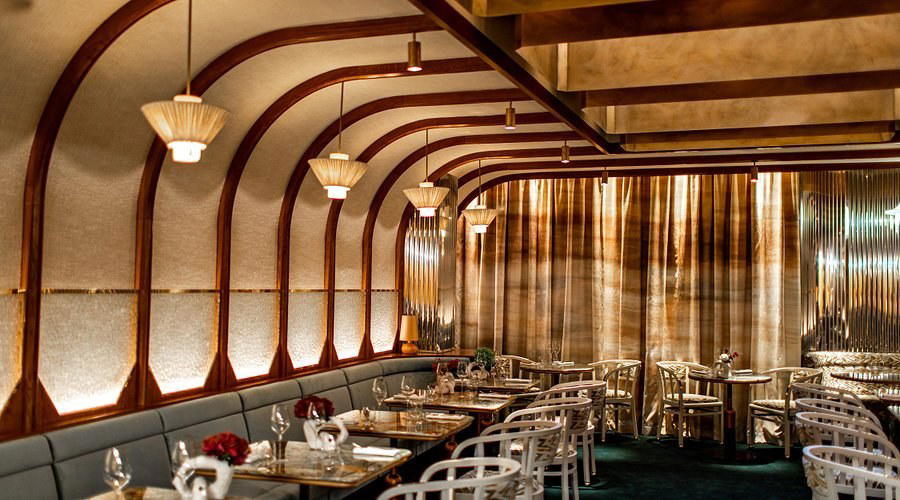
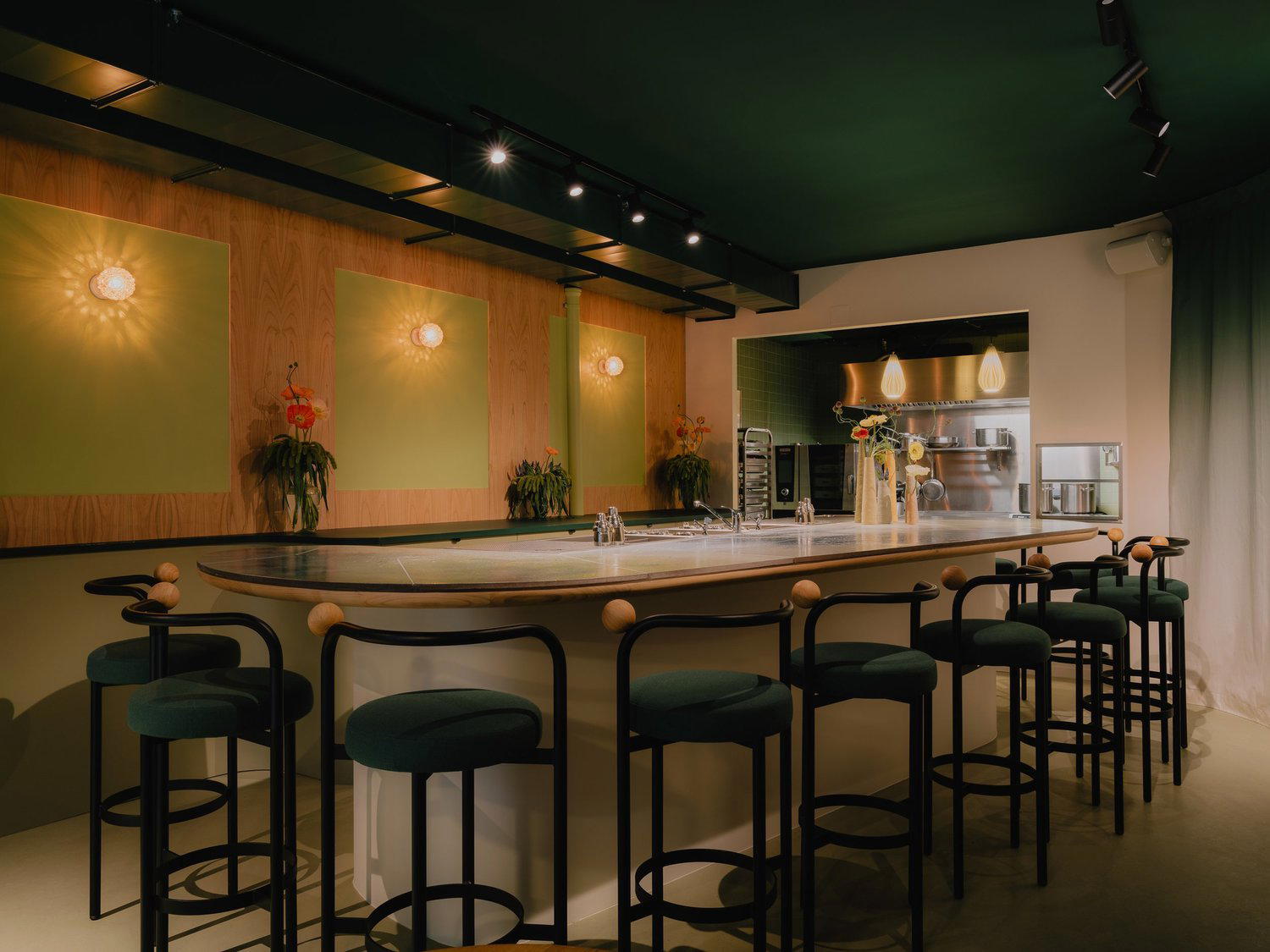
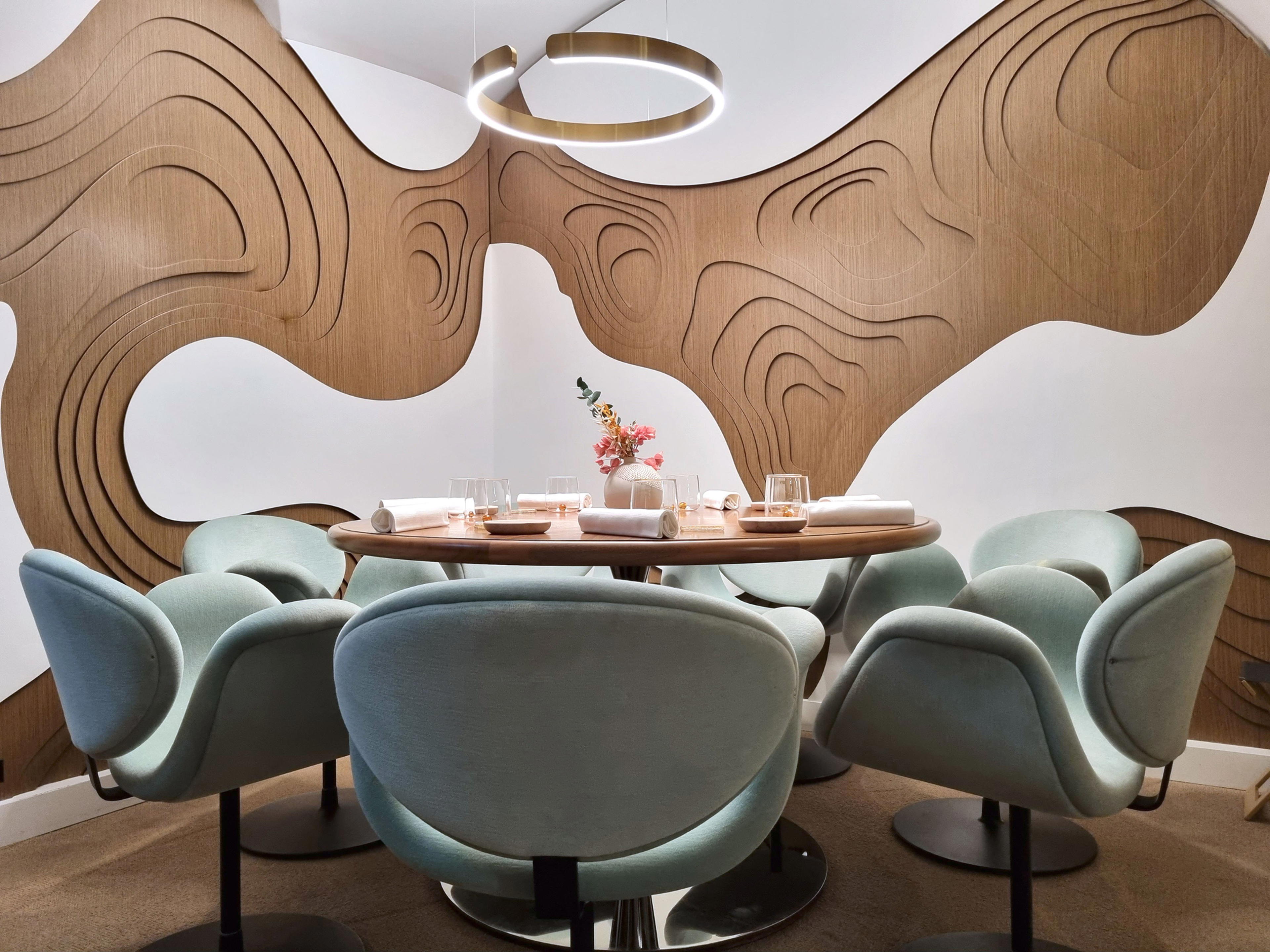
The streets immediately south of the Louvre have always attracted a particular kind of serious restaurant: not the grand-salon institutions of the 7th or the 8th, but tighter, more focused rooms where the cooking carries the room rather than the other way around. Rue Bailleul sits in that zone, and the room at Granite reflects the neighbourhood's quiet register. Stone textures, cool light, and a dining pace that doesn't rush, the setting primes you to pay attention to what lands on the plate rather than to the theatre of arrival.
That orientation toward the plate is not incidental. Paris's one-star tier in the 2020s has fractured into at least two distinct camps: those continuing the French classicist tradition with modern technique, and those actively reorienting the protein-to-vegetable ratio on the plate. Granite belongs to the second group. The kitchen's explicit commitment to sustainability and near-zero waste isn't a marketing footnote; it's the structural logic that determines what gets ordered, how it's broken down, and what gets served. In that sense, Granite has more in common with certain Nordic houses, places like Frantzén in Stockholm, than it does with the classicist €€€€ rooms around the Palais Royal.
Tom Meyer's Trajectory and What It Produces
The chef's background matters here as context for what the cooking does and doesn't do. Meyer trained in kitchens that prize technical precision and ingredient honesty over indulgence, and his time in the Björn Frantzén orbit, the same sensibility that animates FZN by Björn Frantzén in Dubai, shaped a cooking style that reads as restrained, colour-conscious, and produce-obsessed. When OAD reviewers note that the plates look like "culinary paintings" and that "it is the vegetables that make the difference," they are identifying a genuine departure from the Parisian norm, not offering hollow praise. At this price bracket in Paris, the default is still protein-centred, with vegetable work as support. Granite inverts that hierarchy without going fully plant-based, though the OAD commentary hints that Meyer has considered the possibility.
That consideration itself tells you something. The French fine-dining tradition, from Paul Bocuse's Auberge du Pont de Collonges through the generational refinements at Auberge de l'Ill and Troisgros, has always found ways to absorb and redirect influence from outside France without abandoning its own grammar. Meyer's work reads as that process in motion: the Nordic discipline of ingredient sourcing, the French discipline of plate composition, and a sustainability framework that gives both a clear editorial direction.
Where Granite Sits in Paris's €€€€ Modern Cuisine Tier
At the top end of Paris dining, the €€€€ bracket encompasses a wide range of approaches. Alléno Paris at Pavillon Ledoyen and Le Cinq at the Four Seasons George V operate grand-room formats with kitchen teams of considerable size. L'Ambroisie in the Place des Vosges represents the French classicist tradition at its most austere. Plénitude, Cheval Blanc's restaurant, and Kei each address the format from different angles. Granite, ranked 360th in the OAD Europe list for 2025, a ranking that places it in a tier that includes houses like Mirazur in Menton and Bras in Laguiole, is operating at a smaller, more focused scale than the grand-room competition.
That scale is relevant to what the meal feels like. One-star rooms in the 1st arrondissement that carry genuine OAD recognition alongside their Michelin status tend to attract a more engaged, ingredient-curious diner than the broader tourist circuit. Peers in the Paris modern-cuisine bracket include Accents Table Bourse and Anona, both of which share a commitment to sourcing transparency and seasonal produce discipline. Amâlia occupies a related space in the city's produce-forward conversation. The difference at Granite is the degree to which the zero-waste framework shapes every course rather than informing the sourcing of a few headline ingredients.
Further afield in France's modern table, Flocons de Sel in Megève offers a useful comparison point: a starred kitchen where mountain-terroir specificity drives the plate logic in ways that diverge sharply from the urban classicist norm. Granite achieves something similar within the constraints of a Parisian address, sourcing to a standard that most city kitchens don't attempt.
The Cooking: Colour, Discipline, and the Vegetable Argument
OAD's characterisation of the plates as "colourful and flavourful" and resembling "culinary paintings" is an aesthetic observation with a structural implication. Colour in vegetable-forward cooking is a proxy for seasonal discipline: you cannot produce that palette without working closely with producers, adjusting menus as harvest windows open and close, and building relationships that give you access to produce at its peak. The fact that the plates read as visually composed is a consequence of the sourcing being ingredient-led rather than concept-led. Granite has now held its Michelin star across both 2024 and 2025, which confirms that the approach is consistent rather than dependent on a single exceptional service.
What the kitchen has so far stopped short of is a full plant-based format. The OAD note, effectively an open invitation to Meyer to attempt a 100% plant-based menu, points to the logic of the cooking having already moved far enough in that direction that the question is worth asking. For diners at the price point who want to understand how far Paris's ingredient-forward conversation has progressed, that unresolved tension is part of what makes the meal interesting.
In the Neighbourhood and Beyond
The 1st arrondissement is not typically where Paris's most adventurous new cooking lands first. The Louvre quarter has a density of serious rooms, among them 114, Faubourg and Auberge de Montfleury, but most of the neighbourhood's fine dining has historically tilted toward classical execution. Granite's positioning within that context is quietly countercultural: a kitchen whose reference points are as much Scandinavian as they are French, operating at a price tier where the expectation is still, by default, that the main course will be a piece of fish or meat with vegetables in support. The room doesn't announce this deviation. It simply feeds you accordingly.
For anyone building a broader Paris eating week, Granite functions as a useful calibration point: a meal that shows where the sustainable, produce-first argument has arrived in mainstream starred cooking, rather than remaining confined to the natural-wine bistro register where it has been easiest to make. See our full Paris restaurants guide for the wider picture, alongside our Paris hotels guide, bars guide, wineries guide, and experiences guide.
Planning Your Visit
Address: 6 Rue Bailleul, 75001 Paris, France. Reservations: Advance booking is strongly advised for a Michelin-starred room in this quarter; walk-in availability at this price tier is rare. Contact directly via the restaurant's current booking channel. Budget: €€€€, expect tasting-menu pricing consistent with Paris's one-star modern-cuisine tier. Dress: Smart dress code consistent with the starred-room context. Nearest Metro: Louvre-Rivoli (line 1) or Pont Neuf (line 7).
Frequently asked questions
Has Granite won any awards?
Granite has received recognition including: Chef Tom Meyer has the will to play the card of sustainability, the right choice of ingredients and working towards zero waste. All creations look beautiful, colourful and flavourful, real culinary paintings. And yes, it is the vegetables t….
What's Granite's location?
Granite is located at 6 Rue Bailleul, 75001 Paris, France, Paris.
What's the signature dish at Granite?
No fixed signature dish is confirmed in the public record, which reflects the kitchen's sustainability-led sourcing approach under chef Tom Meyer. Opinionated About Dining's assessors noted the plates read as 'culinary paintings' with colour and flavour led by vegetables, suggesting the vegetable courses are the structural heart of the menu rather than any single recurring preparation.
What style of cooking does Granite do?
Is Granite expensive?
Pricing at Granite is listed as €€€€.
Who is the chef at Granite?
The chef associated with Granite is Tom Meyer.
Is Granite reservation-only?
For a Michelin-starred room at the €€€€ price point in Paris's 1st arrondissement, advance booking is effectively required. Walk-in availability at this tier in the Louvre quarter is rarely realistic; reservations should be secured well ahead of your intended visit.
Cuisine and Credentials
| Venue | Cuisine | Price | Awards | Notes |
|---|---|---|---|---|
| GraniteThis venue (the venue you are viewing) | Modern French Fine Dining | $150–200 | 1 Michelin Star · We're Smart World 2 Radishes | Not listed |
| Alléno Paris au Pavillon Ledoyen | Modern French Fine Dining | $150–200 | 3 Michelin Stars · World's 50 Best #79 | Creative |
| Kei | Modern French with Japanese Influences | $300–500 | 3 Michelin Stars · World's 50 Best #93 | Contemporary French, Modern Cuisine |
| L'Ambroisie | Classic French Haute Cuisine | $300–500 | 2 Michelin Stars · World's 50 Best #23 | French, Classic Cuisine |
| Le Cinq - Four Seasons Hôtel George V | Modern French Fine Dining | $300–500 | 3 Michelin Stars · World's 50 Best #24 | French, Modern Cuisine |
| Plénitude | Modern French Sauce-Led Fine Dining | $300–500 | 3 Michelin Stars · World's 50 Best #14 | Contemporary French |
Recognition history
Dated appearances from independent guides and award organizations, with the underlying list record or original source where available.
Michelin 1 Star
Michelin
Opinionated About Dining Top Restaurants in Europe Recommended
Opinionated About Dining
We're Smart World 2 Radishes
We're Smart World
Full recognition history (6 entries)
Michelin 1 Star
Michelin
Opinionated About Dining Top Restaurants in Europe Ranked #360
Opinionated About Dining
Michelin 1 Star
Michelin