
Tabelog 100 #37
Our verdict
Ginza Nair's Restaurant belongs to Tokyo’s older, practical side of Indian dining: curry and Indian cooking in Higashi-Ginza rather than ceremony-driven Ginza luxury. Its Tabelog 100 selections across curry and Asian / ethnic cuisine give it a serious local signal, while the price tier keeps it closer to everyday Tokyo eating than the district’s high-counter restaurants.

Pearl is the En Primeur Club membership app, where members save venues, book tables and use the concierge.
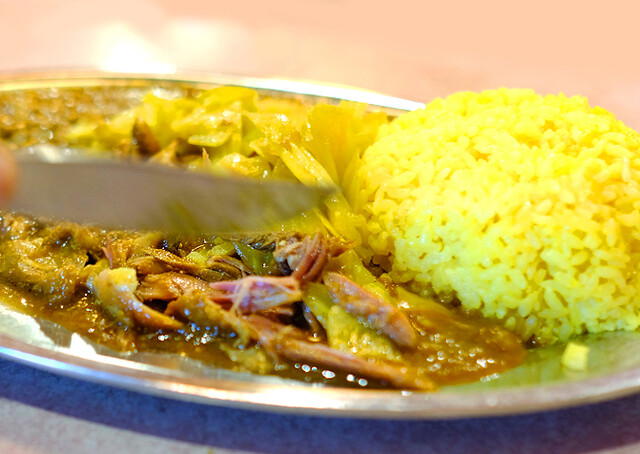
The menu
What to order
- Murghi Lunch (Indian Style Chicken Lunch)
- Chicken Masala
- Chana Masala
Tokyo changes tone quickly. Between theatre traffic, department-store polish, and office routes, the city shifts from hushed counters to places built for repeat meals. That matters for Indian food in Tokyo, where curry has long been both imported cuisine and local comfort, folded into lunch culture, family dining, and after-work routines. Ginza Nair's Restaurant sits in that practical current, not the luxury grammar often attached to Tokyo dining.
Read the room not as a splurge, but as a marker of how Tokyo classifies non-Japanese cooking once it earns local loyalty. Tabelog selected the restaurant for its Hyakumeiten recognition in 2024, and lists it in the Indian and Indian curry categories. That signal says more than one badge: Tokyo diners place it in both the curry conversation and the broader Indian dining category, reflecting how this cooking is consumed here. It is not just a foreign-cuisine night out; it belongs to the city’s daily dining vocabulary.
Indian curry through a Tokyo lens, not a luxury script
Tokyo’s curry culture is layered: yoshoku curry, railway-station curry, specialist spice curry, South Asian regional cooking, and hybrid plates that treat rice, pickles, vegetables, and sauce with a Japanese sense of portion and rhythm. Indian restaurants must sit somewhere in that crowded field. Ginza Nair's Restaurant is listed in the Indian and Indian curry categories, placing it closer to a flexible urban dining room than a narrow tasting-menu format.
That distinction matters in Tokyo, where seriousness often signals itself through scarcity: limited seats, set menus, fixed start times, and high per-person spend. Comparisons across the city underline the point. Kobikicho Tomoki, Nodoguro Senmon Ginza Nakamata, Hiroyuki, Ginza Yondaime TAKAHASHIYA, and 鮨 銀座おのでら本店 each sit in a different Tokyo dining lane. Against that field, Indian curry offers another measure of value: spice handling, consistency, range, and the ability to work for lunch, dinner, families, and mixed groups.
The local-ingredient question in Tokyo is rarely about purity. Imported methods meet Japanese expectations around rice texture, vegetable freshness, portion discipline, and service speed. Indian curry in Tokyo becomes a negotiation between spice architecture and the Japanese habit of a complete, efficient meal. A kitchen need not imitate formal Japanese dining to become part of the city; it must understand how Tokyo eats on weekdays, how groups order, and how curry moves from comfort to craft without losing usefulness.
Recognition here means repetition, not ceremony
Tabelog’s 100 lists are not Michelin stars and should not be read that way. In Tokyo, they often map specialist confidence: ramen, curry, tonkatsu, yakitori, sushi, ethnic cooking, and other categories where local diners compare many focused rooms. Selection for Tabelog Hyakumeiten recognition in 2024 places the restaurant in a category where repeatability matters. The city rewards places that can absorb regulars, first-timers, office workers, families, and out-of-town diners without turning the meal into theatre.
Tokyo’s dining geography has several identities at once: expense-account counters, long-established specialties, department-store restaurants, basement food halls, and casual rooms that survive because locals use them repeatedly. Indian curry belongs naturally to the last two categories, but a Tabelog 100 signal pushes it beyond convenience. It tells readers to judge the restaurant against Tokyo’s curry and Indian dining field, not just whatever sits nearby.
For travellers building a wider Tokyo itinerary, it corrects the city’s reservation-chasing narrative. A trip can include sushi, yakitori, unagi, cocktail bars, hotels, and regional day trips, but Tokyo’s daily food intelligence often appears in less ceremonial formats. The contrast is useful beside other Tokyo dining rooms, including Ginza Yondaime TAKAHASHIYA, Hiroyuki, Kobikicho Tomoki, Nodoguro Senmon Ginza Nakamata, and 鮨 銀座おのでら本店. Each points to a different Tokyo habit, while curry remains a category with its own hierarchy.
How to place it in a Tokyo dining day
The smartest use case is a meal that anchors a Tokyo day without surrendering it to formality. The restaurant’s Tabelog listing gives a dinner and lunch budget of JPY 1,000 - JPY 1,999, indicating practical access. Those details matter in Tokyo, where a restaurant can be critically serious and logistically difficult, or easy to enter but forgettable. Here, the appeal is the middle ground: recognized by a major Japanese dining platform, yet operating in a format that fits ordinary movement through the city.
It is also useful as part of a wider Tokyo itinerary rather than as a destination that consumes an entire evening. The city connects easily across shopping routes, theatre plans, and older food culture, while leaving room for other meals before and after. Travellers wanting a fuller read on the city can pair this meal with Our full Tokyo restaurants guide, then branch into broader Tokyo bars, hotels, experiences, and wineries coverage.
For wider Japan and diaspora context, curry and casual-format dining travel in revealing ways. Compare the Tokyo lens with other unnamed specialist rooms in Japan, or see how other cities frame compact everyday meals through their own local categories. Outside Japan, the same question appears differently: how everyday formats earn editorial attention, and how casual dining can carry a city’s habits without becoming formal or expensive.
The verdict is simple: this is the kind of Tokyo restaurant that rewards travellers not only chasing counters and omakase. Its value is contextual. In a city associated with expense and ritual, it shows how Indian curry can operate as serious local dining through repetition, category recognition, and a format Tokyo residents can actually use.
Frequently asked questions
Can I bring kids to Ginza Nair's Restaurant?
The provided listing does not specify a children policy. Its listed lunch and dinner budget is JPY 1,000 - JPY 1,999, which places it in a practical everyday price range for Tokyo.
What should I expect atmosphere-wise at Ginza Nair's Restaurant?
Expect an Indian and Indian curry restaurant in Tokyo rather than a formal luxury dining room. It has Tabelog Hyakumeiten recognition for 2024, with a listed score of 3.65.
Is Ginza Nair's Restaurant expensive?
Pricing at Ginza Nair's Restaurant is listed as JPY 1,000 - JPY 1,999 for dinner and JPY 1,000 - JPY 1,999 for lunch.
What are Ginza Nair's Restaurant's hours?
Specific hours are not provided in the verified listing. Check directly with Ginza Nair's Restaurant before visiting.
What's Ginza Nair's Restaurant's location?
Tokyo.
Cost Snapshot
Comparable venues for context, by category and price tier.
| Venue | Cuisine | Price | Awards | Notes |
|---|---|---|---|---|
| Ginza Nair's RestaurantThis venue (the venue you are viewing) | Historic South Indian curry house in Ginza | $20–30 | Tabelog 100 #37 | Not listed |
| Minami Indian Nandori | South Indian Meals & Tiffin | $20–30 | Tabelog 100 #97 | Arakawa, South Indian Meals & Tiffin |
| ERICK SOUTH KOENJI CURRY&BIRYANI CENTRE Kouenji karē&biriyani sentā | South Indian Curry & Hyderabadi Biryani | $10–20 | Tabelog 100 #29 | Suginami, South Indian Curry & Hyderabadi Biryani |
| COCHIN NIVAS | South Indian curry house | $10–20 | Tabelog 100 #26 | Shinjuku, South Indian curry house |
| Garam Masala | Creative Indian curry & spice dishes | $30–50 | Tabelog 100 #61 | Setagaya, Creative Indian curry & spice dishes |
| Andhra Kitchen | Andhra / South Indian Indian | $10–20 | Tabelog 100 #66 | Taitō, Andhra / South Indian Indian |
Recognition history
Dated appearances from independent guides and award organizations, with the underlying list record or original source where available.
Tabelog 100 #37 · No. 37
Tabelog · Tabelog 100 - Asian cuisine / Ethnic cuisine - TOKYO - 2024
Continue exploring
More in Tokyo
Restaurants in Tokyo
All restaurants in Tokyo →

Bars in Tokyo
All bars in Tokyo →


Details
- Classic
- Lively
- Well Known
- Family
- Group Dining
- Casual Hangout
- After Work
- Solo
- Historic Building
- Standalone
- Street Scene
- A La Carte
- Set Menu
- Vegetarian Friendly
Current opening hours
- Monday
- 11:30 AM–9:30 PM
- Tuesday
- Closed
- Wednesday
- 11:30 AM–9:30 PM
- Thursday
- 11:30 AM–9:30 PM
- Friday
- 11:30 AM–9:30 PM
- Saturday
- 11:30 AM–9:30 PM
- Sunday
- 11:30 AM–8:30 PM
Hours can change for holidays and private events. Hours as of .