.png)
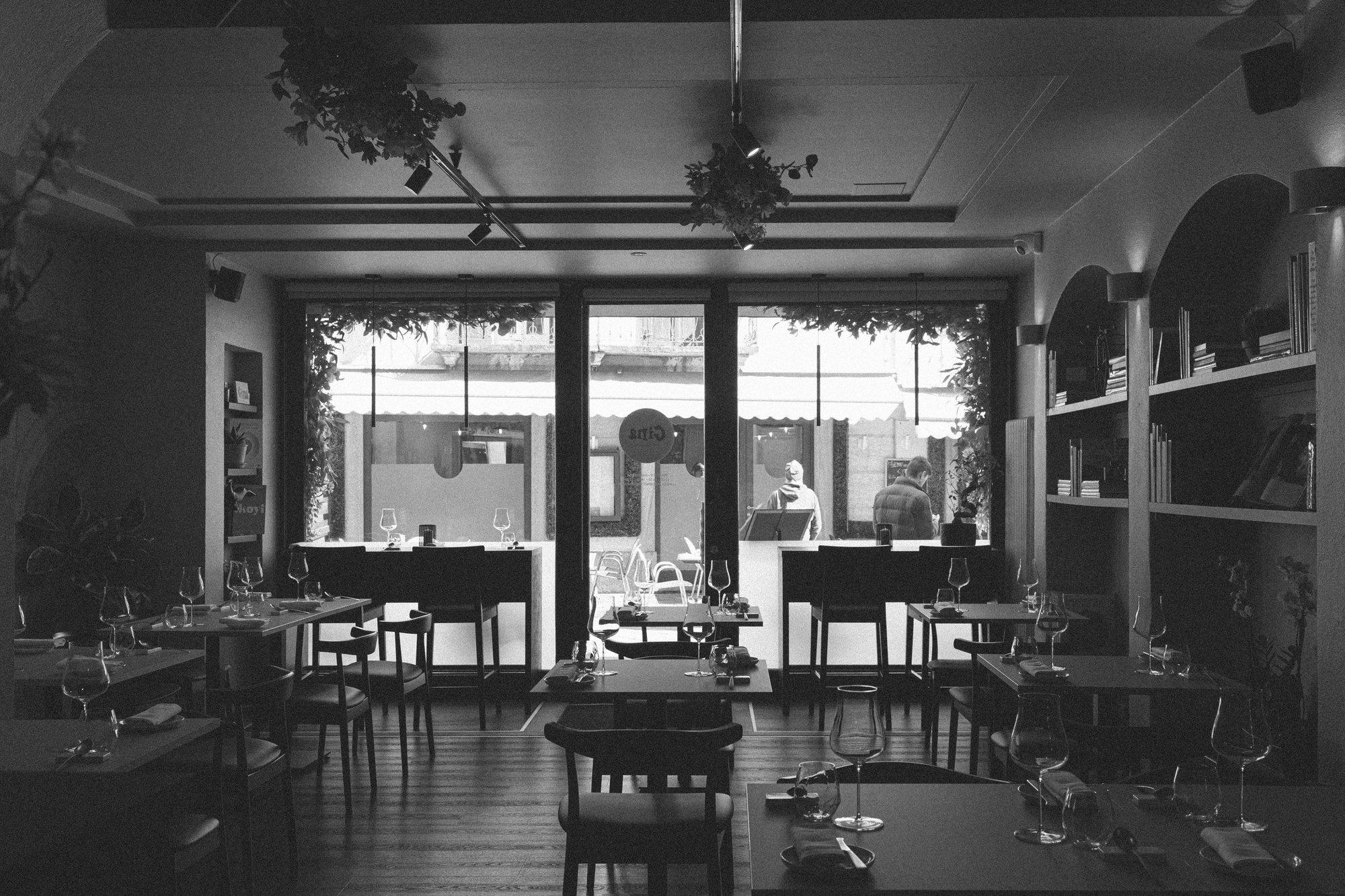
Set in a pair of basement rooms built against Aosta's Roman walls, Gina casa con cucina brings together traditional Valle d'Aosta cooking and personalised modern Italian dishes in one of the old town's most characterful settings. The informal atmosphere and locally grounded menu make it a reference point for understanding what this mountain region actually tastes like, beyond the tourist circuit.
 Discover on Pearl
Pearl is the En Primeur Club membership app — saves, bookings, and concierge access live there. Same editors, same standards.
- Address
- via Croce di Città 25
- Phone
- +39 351 750 8560
- Website
- ginacasaconcucina.com
Stone, History, and the Logic of Mountain Cooking
There is a particular kind of restaurant that exists in Italy's smaller cities, the kind that doesn't announce itself with a design statement or a famous name, but earns its reputation through consistent, grounded cooking tied to the place it occupies. In Aosta's old town, the building stock alone tells you something about the seriousness of the location. The Romans built here with an intent to last, and some of those original walls are still doing structural work. At Gina casa con cucina on Via Croce di Città, two basement rooms are set directly against those Roman walls, which means you are eating beside the city's ancient skeleton. The atmosphere this creates is not theatrical, it is simply a fact of the space, and a telling one.
The informal character of the rooms sets the tone for what arrives at the table. This is not the formal tasting-menu register of Vecchio Ristoro or the creative Italian seafood approach of Paolo Griffa al Caffè Nazionale, both of which operate at the higher end of the Valle d'Aosta dining tier. Gina casa con cucina occupies a different position in the local picture: accessible, personal, and oriented toward the kind of cooking that draws from regional tradition without treating it as a museum piece.
What the Valle d'Aosta Actually Produces
To understand why ingredient sourcing matters so much in this valley, it helps to understand the geography. The Aosta Valley is Italy's smallest and most mountainous region, hemmed in by the Alps on every side. The agricultural output is limited but specific: mountain cheeses with protected designations, cured meats, wild herbs, game, and the kinds of root vegetables and grains that thrive at altitude. The valley also sits at a cultural crossroads, where French and Italian culinary traditions have overlapped for centuries, producing a regional identity that is neither straightforwardly Italian nor straightforwardly Alpine.
Restaurants here that work seriously with local tradition are drawing from a larder with genuine constraints and genuine character. The leading dishes in Valle d'Aosta cooking tend to reflect both: they are built around what is available rather than what is fashionable, and the flavours carry the directness of mountain produce. This is a different kind of sourcing logic from the produce-driven new Italian cooking found at restaurants like Osteria Francescana in Modena or the long-rooted Italian tradition represented by Dal Pescatore in Runate. In Aosta, the regional identity is more compact, harder to fake, and often harder to access outside the valley itself.
The Menu: Local Tradition and Modern Italian, in Balance
Gina casa con cucina's menu runs along two tracks. One follows local traditions, drawing on the ingredients and preparations associated with Valle d'Aosta cooking. The other moves into modern and personalised Italian territory, with meat-focused dishes that extend beyond the strictly regional. The quality across both tracks is notable, placing the kitchen in a category of consistent seriousness rather than casual ambition.
This dual approach is worth understanding in context. Aosta's more formal restaurants, including the established names in the valley, tend to commit entirely to regional cooking as a positioning statement. The more informal end of the market can drift toward generic Italian that loses the local thread entirely. Gina casa con cucina works in the space between, using local tradition as a foundation while allowing the kitchen room to extend into broader Italian cooking. The result is a menu that reads as coherent rather than confused, which is harder to achieve than it sounds.
For comparison within the city, Osteria da Nando operates at a similar price point and regional focus, while Stefenelli Desk and Gina each take a more contemporary Italian direction. Knowing the comparable set helps calibrate expectations: Gina casa con cucina is not trying to be the most ambitious restaurant in the valley, but it is trying to be a reliable one with a clear sense of where its cooking comes from.
Aosta's Old Town as Context
The address on Via Croce di Città places the restaurant inside the historic centre, where the Roman grid of ancient Augusta Praetoria is still legible in the street plan. The Porta Praetoria, the triumphal arch, and the theatre ruins are all within a short walk, which means the setting carries a density of history that visitors from larger cities may find surprising. Aosta is a small city by Italian standards, but its old town punches well above its size in terms of architectural and historical weight.
Eating in a basement room built against Roman walls, in this context, is not a gimmick. It is what happens when a small city builds on top of itself for two thousand years. Restaurants in this kind of setting carry an implicit obligation to the location, and the informal, locally grounded character of Gina casa con cucina reads as appropriate to its surroundings in a way that a more self-consciously designed space might not.
For a broader Aosta visit, the city's food and drink scene rewards a wider look, alongside its bars, hotels, wineries, and experiences. The valley's wine production, in particular, is small in volume and easy to overlook from outside Italy, but it is worth seeking out alongside the local cooking.
Elsewhere in Italy, reference points include Enoteca Pinchiorri in Florence, Enrico Bartolini in Milan, and Le Calandre in Rubano. For a sense of how mountain-sourced cooking is being handled elsewhere in northern Italy, Atelier Moessmer Norbert Niederkofler in Brunico offers a strong comparison. Further afield, Le Bernardin in New York City and Emeril's in New Orleans represent the kind of long-running, city-defining restaurant identity that Aosta's leading tables aspire to in a smaller register.
Visit Notes
The restaurant is located at Via Croce di Città 25 in Aosta's old town, easily reachable on foot from the main historical sites. Given the basement setting and limited rooms, capacity is not large, and the informal atmosphere suits groups, couples, and solo diners equally. Booking in advance is advisable, particularly during the peak summer and winter mountain seasons when Aosta sees higher visitor volumes. Phone and website details are not currently available in our records, so contacting the restaurant directly via the address or seeking a booking through local concierge services is the most reliable route.
Comparison Snapshot
Comparable venues nearby, for context on price, style, and recognition.
| Venue | Cuisine | Price | Awards | Notes |
|---|---|---|---|---|
| Gina casa con cucinaThis venue — the venue you are viewing | Modern Italian | $$$ | Michelin Plate | |
| Gina | Traditional Italian with Local Aosta Flavors | $$$ | Michelin Plate | Aosta center |
| Osteria da Nando | Traditional Valdostan Italian | $$ | Michelin Plate | historic center |
| Stefenelli Desk | Modern Alpine | $$$ | Michelin Plate | historic centre |
| Paolo Griffa al Caffè Nazionale | Contemporary Italian Fine Dining | $$$$ | Michelin 1 Star | Piazza Emile Chanoux |
| Vecchio Ristoro | Contemporary Aosta Valley Cuisine | $$$$ | Michelin 1 Star | central Aosta |
Continue exploring
More in Aosta
Restaurants in Aosta
Browse all →
Bars in Aosta
Browse all →
Hotels in Aosta
Browse all →
At a Glance
- Cozy
- Elegant
- Date Night
- Special Occasion
- Open Kitchen
- Extensive Wine List
Cozy and elegant atmosphere with modern touches.