


A Michelin-starred address on Aosta's central square, Paolo Griffa al Caffè Nazionale runs creative tasting menus across 3, 5, or 7 courses inside a historic café building that operates from breakfast through dinner. The kitchen, led by Paolo Griffa, draws on Italian technique while leaning into vegetable-forward composition and chromatic plating. Ranked #423 in Europe by Opinionated About Dining in 2024, it holds its own against Aosta Valley peers at a similar price tier.
Pearl is the En Primeur Club membership app — saves, bookings, and concierge access live there. Same editors, same standards.
- Address
- Piazza Émile Chanoux, 9, 11100 Aosta AO, Italy
- Phone
- +39 0165 525356
- Website
- paologriffa.com
 Saves & bookings on Pearl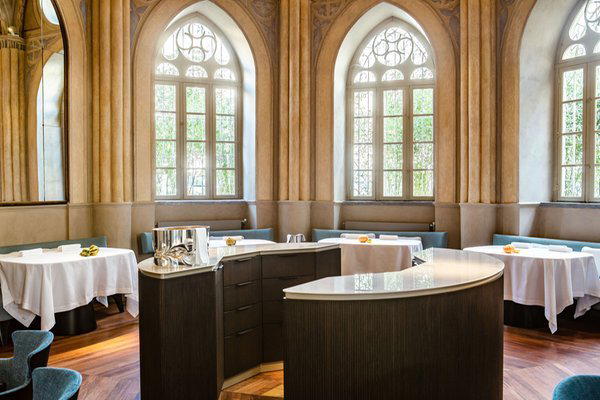
Piazza Émile Chanoux is Aosta's central gathering point, the kind of square where the city's daily rhythms play out in full view: morning coffee drinkers at one table, afternoon aperitivo at another, tourists crossing toward the Roman arch. The building that houses Caffè Nazionale has occupied this position for generations, and the decision to place a serious contemporary kitchen inside it rather than opening elsewhere in the city is itself an editorial statement. The star-rated restaurant does not retreat from the town's social life; it sits at the centre of it.
That choice shapes the experience in ways a conventional fine-dining room would not permit. The café format means the address operates across the full day, from early breakfast through to late evening service, making it one of the few Michelin-starred venues in the Italian Alps where the same address functions credibly at 8 AM and at 9 PM. The pastry corner is a serious operation in its own right, not a decorative afterthought, and the coffee programme reflects the institutional weight of a building that has been serving the city in some form for decades.
Creative Cooking in an Alpine Context
Aosta Valley's restaurant scene sits at an interesting intersection. The region's culinary identity is rooted in mountain produce: fontina, lard d'Arnad, salted meats, and the short-season vegetables that high-altitude farming permits. Several of the city's better addresses, including Vecchio Ristoro and Osteria da Nando, hold firmly within that regional tradition. Paolo Griffa's kitchen does something different: the cuisine is classified as Italian Seafood and Creative, a combination that signals an intentional departure from the valley's comfort zone.
Bringing seafood cooking into a landlocked alpine city requires either logistics or conviction, and the tasting menu structure here suggests it is the latter. The approach is not about recreating coastal Italy in the mountains; it is about building a contemporary Italian kitchen that happens to be located in Aosta, drawing on the full breadth of Italian ingredient culture rather than limiting itself to what the valley immediately supplies. Against the more regionally anchored dining at Vecchio Ristoro or the mid-range localism of Osteria da Nando, this reads as the more explicitly cosmopolitan offering in the city.
The Vegetable Proposition
Across contemporary Italian fine dining, the handling of vegetables has become a meaningful signal. Italy's pasta and protein traditions are so deeply embedded that a kitchen's decision to foreground vegetables in a tasting menu structure tends to reflect a deliberate culinary position rather than a trend-chasing move. At Osteria Francescana in Modena, Massimo Bottura's kitchen has used ingredient transformation as a philosophical tool for decades. Across the broader northern Italian fine-dining circuit, from Enrico Bartolini in Milan to Enoteca Pinchiorri in Florence, vegetable intelligence has become a marker of kitchen seriousness rather than an accommodation for dietary restriction.
At Paolo Griffa al Caffè Nazionale, vegetarian dishes are a standing presence on the menu rather than a special-request option. The kitchen's growing command of vegetable cookery and its chromatic attention to how dishes are composed visually are central to the menu. In a price tier where the experience is expected to justify itself course by course, the vegetable dishes carry weight. This is the cuisine classification's creative component made tangible: the kitchen is not defaulting to what alpine Italy already does well, but building its own set of reference points.
The Pasta Question in a Creative Kitchen
Italy's pasta tradition is one of the most codified systems in world cooking, and a creative kitchen operating at this level inevitably makes a statement about how it relates to that tradition. In the northern Italian fine-dining context, the approach to pasta tends to split between those who anchor their identity in handmade regional shapes, treated with technical fidelity, and those who use pasta as one element within a broader modernist vocabulary. The creative classification here suggests the latter orientation, but the degree to which the kitchen maintains dialogue with alpine and northern Italian pasta forms is part of what defines its position in relation to peers.
Aosta Valley's own pasta culture is less prominent in the national conversation than Emilia-Romagna's or Piedmont's, which gives a kitchen working in this city more interpretive freedom than one operating in Bologna or Bra. The tasting menu format, available across three lengths (3, 5, or 7 courses), creates room for pasta to appear as a structured course within a broader arc rather than as the centrepiece of an à la carte proposition. What the format signals, when taken alongside the seafood and creative classification, is that pasta here is likely treated as one voice in a composed sequence rather than as the defining identity of the cooking.
Where This Sits in the Aosta Dining Order
Aosta is not a large city, and its fine-dining tier is correspondingly compact. At the leading price point, Paolo Griffa al Caffè Nazionale and Vecchio Ristoro share the €€€€ bracket, with each representing a distinct philosophical approach: regional fidelity on one side, contemporary creative range on the other. Below them, Gina operates at €€€ with a modern cuisine positioning, and Stefenelli Desk and Osteria da Nando anchor the €€ tier with Italian contemporary and valley-rooted cooking respectively.
The Michelin star places Paolo Griffa in a recognisable position within northern Italy's broader circuit. That circuit runs from Norbert Niederkofler at Atelier Moessmer in Brunico across the alpine arc and down into Piedmont and Lombardy. The OAD ranking positions this kitchen within the same general conversation as Dal Pescatore in Runate and the broader northern Italian fine-dining canon, though at a different scale and register than Quattro Passi in Marina del Cantone or Uliassi in Senigallia, both of which operate from coastal Italian contexts with fundamentally different ingredient access.
For international reference points, the creative Italian tasting menu format shares structural DNA with progression-led menus at venues like Atomix in New York City, where multi-course sequencing carries significant conceptual weight, even if the culinary traditions are entirely distinct. The technical seriousness expected at Le Bernardin in New York City when handling seafood as a fine-dining centrepiece offers a useful frame for thinking about what the seafood classification means in a landlocked alpine context: it is not casual or rustic in its ambition.
Planning Your Visit
The restaurant operates six days a week, closing on Wednesdays. Opening hours vary by day: Monday and Thursday service runs until 9 PM; Friday and Saturday extend to 9 PM; Tuesday closes slightly earlier at 8:30 PM; and Sunday follows the 9 PM close. All services begin at 7:30 AM, except Saturday and Sunday, which begin at 8 AM. The tasting menu format in three lengths gives flexibility: a 3-course option suits those who want a focused experience rather than a full-evening commitment, while the 7-course arc is appropriate for visitors treating the meal as the evening's main event. The address is on Piazza Émile Chanoux at the centre of Aosta's old town. Google reviews score the venue at 4.4 across 951 responses.
What It’s Closest To
Comparable venues nearby, for context on price, style, and recognition.
| Venue | Cuisine | Price | Awards | Notes |
|---|---|---|---|---|
| Paolo Griffa al Caffè Nazionale | Contemporary Italian Fine Dining | $$$$ | Michelin 1 Star | Piazza Emile Chanoux |
| Vecchio Ristoro | Contemporary Aosta Valley Cuisine | $$$$ | Michelin 1 Star | central Aosta |
| Stefenelli Desk | Modern Alpine | $$$ | Michelin Plate | historic centre |
| Osteria da Nando | Traditional Valdostan Italian | $$ | Michelin Plate | historic center |
| Gina | Traditional Italian with Local Aosta Flavors | $$$ | Michelin Plate | Aosta center |
| Gina casa con cucina | Modern Italian | $$$ | Michelin Plate | Aosta center |
Continue exploring
More in Aosta
Restaurants in Aosta
Browse all →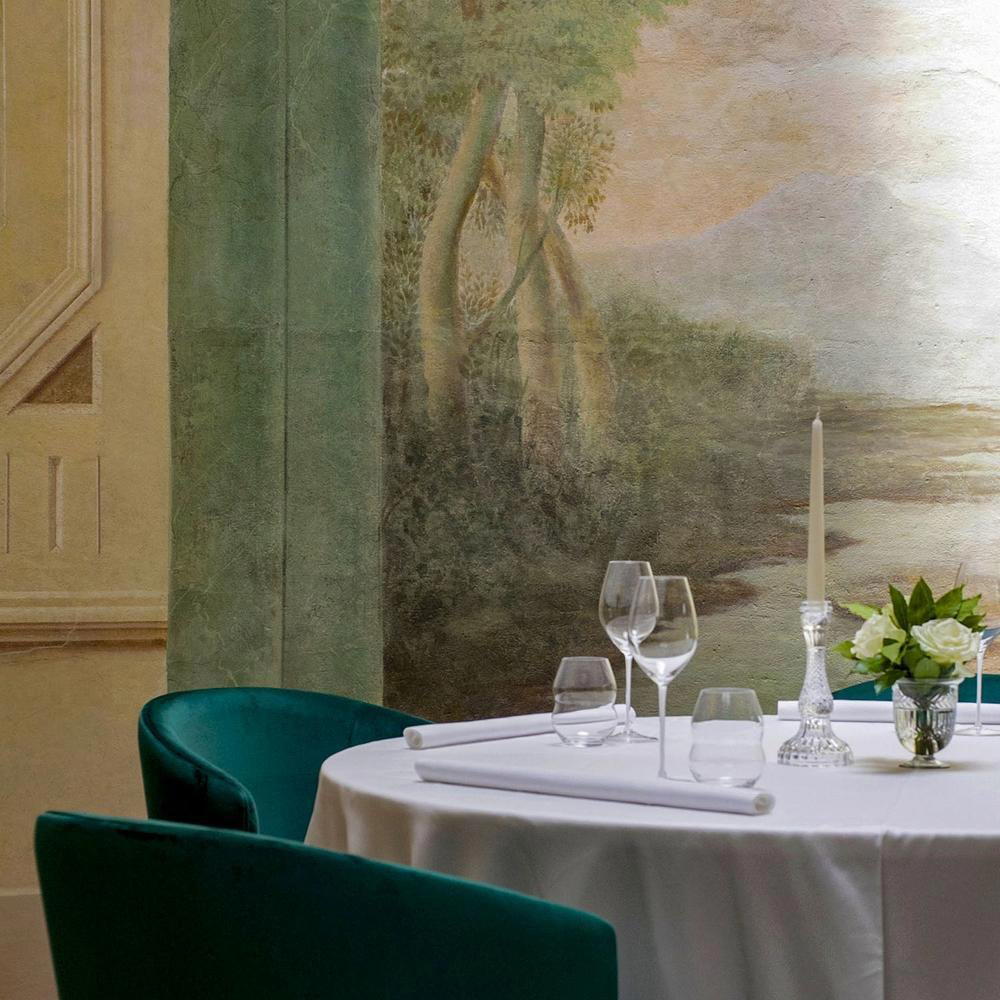
Bars in Aosta
Browse all →
Hotels in Aosta
Browse all →
At a Glance
- Elegant
- Sophisticated
- Intimate
- Iconic
- Classic
- Date Night
- Special Occasion
- Celebration
- Business Dinner
- Historic Building
- Design Destination
- Private Dining
- Open Kitchen
- Wine Cellar
- Extensive Wine List
- Craft Cocktails
- Sommelier Led
- Local Sourcing
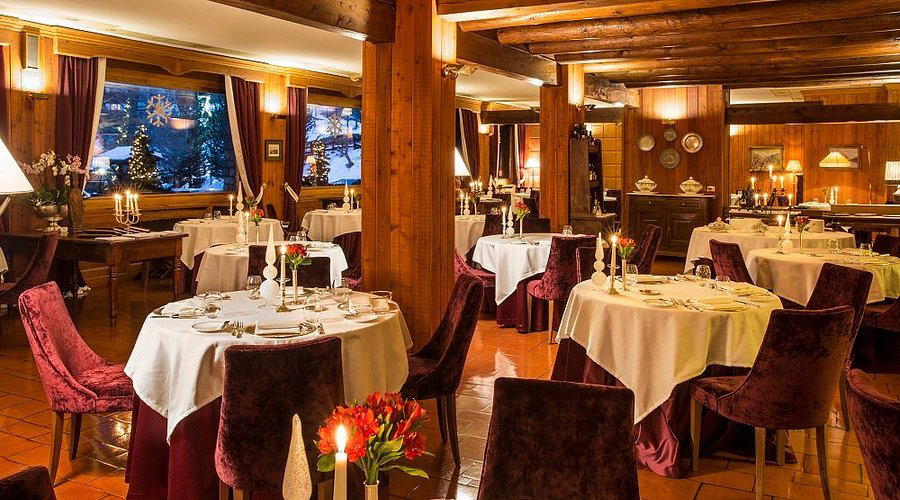
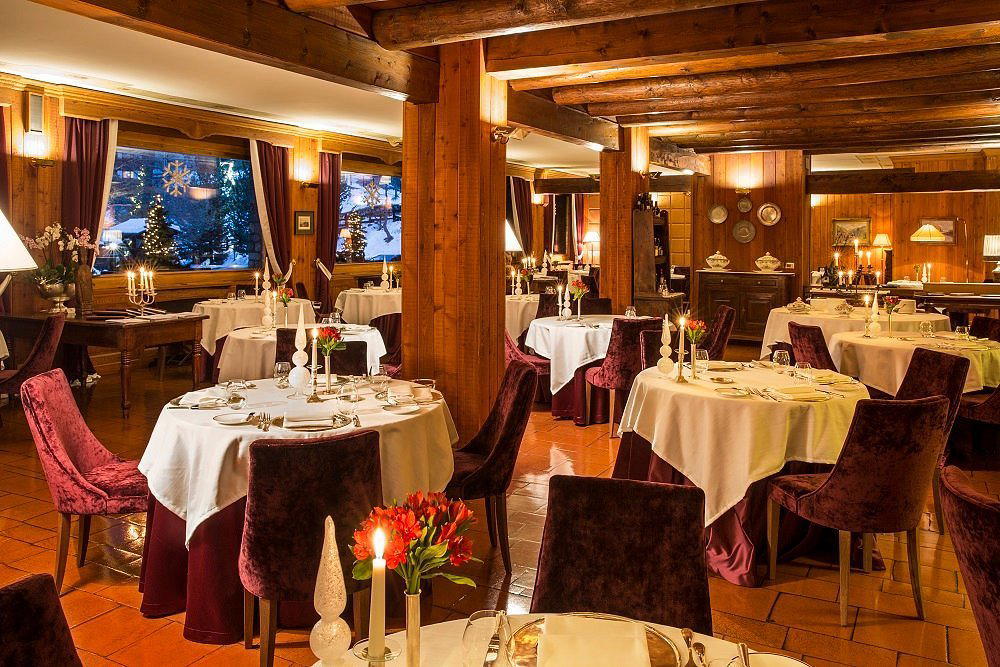
Elegant and refined with carefully restored historic interiors featuring original architectural details, complemented by state-of-the-art lighting and design; intimate dining rooms with an atmosphere that balances historical grandeur with modern sophistication.