GAYA
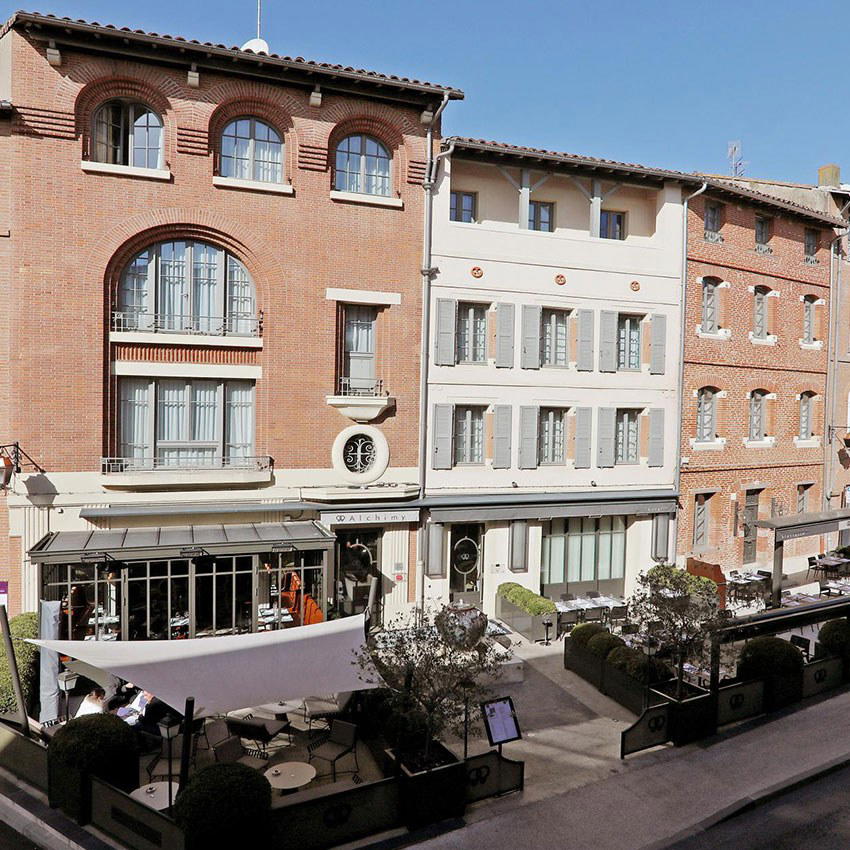
In the medieval bastide town of Villefranche-de-Rouergue, GAYA occupies a space shaped by the Aveyron's deep-rooted food culture — a region where ingredient provenance and rural craft have always done the talking. The restaurant sits within a broader French provincial dining tradition that prizes place over spectacle, making it a considered stop for anyone moving through the Midi-Pyrénées with serious appetite.
Pearl is the En Primeur Club membership app — saves, bookings, and concierge access live there. Same editors, same standards.
- Address
- 2 Rue de l'Hôtel Dieu, 12200 Villefranche-de-Rouergue, France
- Phone
- +33565452595
- Website
- restogaya.fr
- Directions
- Get directions
 Saves & bookings on Pearl
Where the Aveyron's Larder Does the Work
Villefranche-de-Rouergue is a thirteenth-century bastide town built on a grid, its arcaded central square still functioning the way it was designed to: as a marketplace. The covered halles and the weekly Thursday market that spill out around them are not heritage decoration — they represent a living supply chain that has fed this part of the Aveyron for centuries. Restaurants that operate in this environment either engage with that supply chain or sit apart from it. GAYA, at 2 Rue de l'Hôtel Dieu, occupies a position close to the historic core, which means the distance between producer and plate is, in the most literal sense, short.
The Aveyron is one of France's more quietly serious food departments. It is the home territory of Aubrac cattle, Laguiole cheese, and a lamb culture that traces back to the causses — the limestone plateaux that dominate the northern part of the region. Chefs working here do not need to construct a provenance narrative; the narrative is already embedded in the terrain. The question for any restaurant in Villefranche is how honestly and how skillfully it draws on what the surrounding land and its producers offer. That question, more than any single dish, is the lens through which GAYA is worth assessing.
The Bastide Context: Provincial Dining Without Apology
Provincial French restaurants occupy an interesting position relative to their starred urban counterparts. Places like Bras in Laguiole, roughly 80 kilometres northeast of Villefranche, have demonstrated that deeply regional cooking, rooted in specific landscapes and micro-seasons, can achieve international recognition without abandoning its source material. The Aveyron has form here. But the category Bras operates in, three Michelin stars and a global reputation, is a different competitive set from the mid-tier provincial restaurant that serves a local clientele alongside passing travellers.
Restaurants in this middle band, serious about sourcing, skilled in execution, but operating without the infrastructure of a destination gastronomic house, are, in many ways, where French regional cooking is most honestly expressed. They are less likely to perform regionality for an audience and more likely to simply practice it. The weekly market at Villefranche, the fromageries along the arcades, the local cooperatives supplying Aubrac beef: these are practical inputs, not aesthetic choices.
For comparison, look at how rural Languedoc restaurants around Auberge du Vieux Puits in Fontjoncouse or the Provence-adjacent dining at L'Oustau de Baumanière in Les Baux have built their identities around specific landscape and producer relationships. The Midi-Pyrénées operates on the same principle, with the Aveyron offering a particularly self-contained set of ingredients, the plateau lamb, the river fish from the Lot and Dourdou, the farmhouse cheeses, that give local kitchens a coherent palette to work from.
Ingredient Provenance as the Baseline
The Aveyron's food culture makes ingredient sourcing less a marketing position and more an operational default. Aubrac cattle, for instance, are raised under an AOC framework with strict pasture and rearing requirements, which means the beef arriving in a local kitchen carries verifiable provenance by definition. The same applies to Laguiole and Salers cheeses, both of which have protected designations tied to specific altitudes and seasonal milk windows. A restaurant in Villefranche that sources locally is not doing anything especially progressive, it is doing what geography and agricultural infrastructure make direct.
What matters, then, is the skill applied to those ingredients. French provincial cooking at its most effective does not compete with the technical complexity of, say, Alléno Paris au Pavillon Ledoyen or the creative ambition of Mirazur in Menton. It competes on a different axis: depth of relationship with the place, consistency across seasons, and the kind of institutional knowledge that comes from cooking the same terrain for years. This is the standard against which a restaurant like GAYA should be read.
The Aveyron's seasonal calendar is specific. Spring brings the first lamb from the causses, summer opens up market produce from the Lot valley, autumn is Roquefort country and the return of root vegetables and preserved goods. A restaurant anchored in this cycle will read differently in March than in October, and that variability is not a weakness, it is the mechanism through which regional cooking maintains its honesty.
Planning a Visit to Villefranche-de-Rouergue
Villefranche-de-Rouergue sits roughly equidistant between Rodez to the northeast and Cahors to the northwest, making it a natural waypoint for travellers moving through the Lot and Aveyron valleys. The town is accessible by train on the Toulouse-Rodez line, and by road it sits on the D922. The Thursday market is the most useful planning anchor: arriving midweek or on market day aligns a visit with the town at its most animated and gives a clearer sense of the supply infrastructure that local restaurants draw from.
Dining in a historic bastide of this scale carries practical expectations worth setting in advance. The restaurant scene here is not comparable to a regional capital, Villefranche has a small but considered set of options, and the better ones typically operate lunch and dinner services that reflect the rhythms of a working French town rather than extended metropolitan hours. Checking current service hours directly before visiting is advisable, as seasonal adjustments are common in this type of market.
For those building a broader Midi-Pyrénées and Massif Central itinerary, GAYA works as one point in a longer arc. Bras in Laguiole is the region's reference point for destination dining, while a southward route connects to Auberge du Vieux Puits in Fontjoncouse in the Corbières. Our full La Bastide restaurants guide covers the wider area in detail. For those extending into the Alps or the Atlantic southwest, further context is available on Flocons de Sel in Megève and Les Prés d'Eugénie in Eugénie-les-Bains.
How GAYA La Bastide compares with similar nearby venues.
| Venue | Cuisine | Price |
|---|---|---|
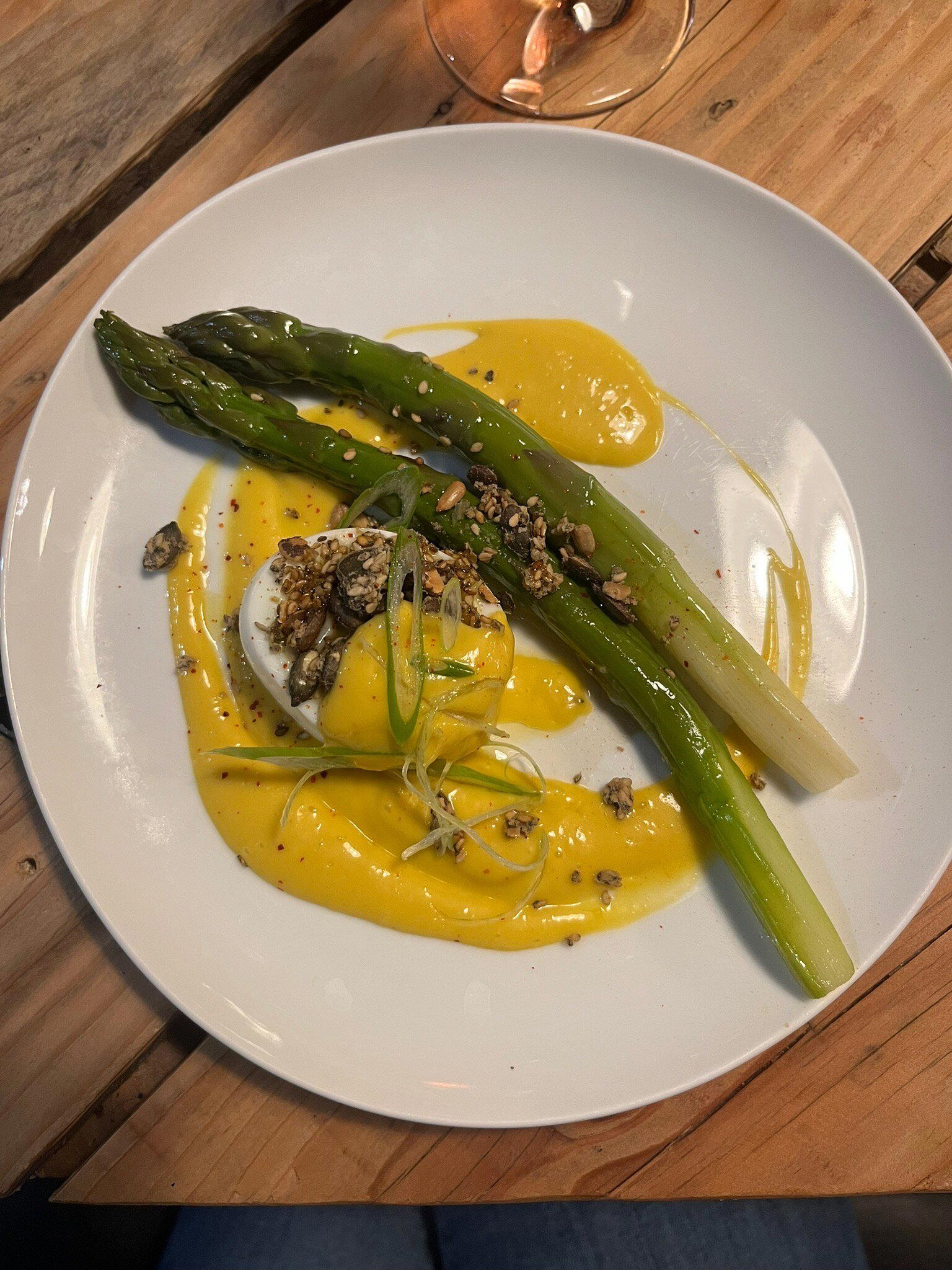
| L'Atelier de Damien | Modern Cuisine | €€ |
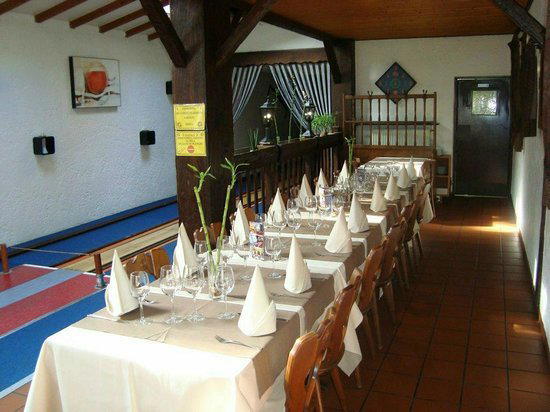
| Jeu de Quilles | Modern Cuisine | € |
Continue exploring
More in La Bastide
Restaurants in La Bastide
Browse all →
Hotels in La Bastide
Browse all →
Wineries in La Bastide
Browse all →
At a Glance
- Cozy
- Elegant
- Date Night
- Special Occasion
- Terrace
- Street Scene
Current opening hours
- Monday
- Closed
- Tuesday
- Closed
- Wednesday
- 12–2 PM, 7–9:30 PM
- Thursday
- 12–2 PM, 7–9:30 PM
- Friday
- 12–2 PM, 7–9:30 PM
- Saturday
- 12–2 PM, 7–9:30 PM
- Sunday
- 12–2 PM
Hours can change for holidays and private events. Last verified .
Warm and pleasant atmosphere with nice terrace seating and attentive, smiling staff.
Know Before You Go
- Getting there
- 2 Rue de l'Hôtel Dieu, 12200 Villefranche-de-Rouergue, France