What Gault & Millau's 2025 Distinction Actually Signals
Gault & Millau's Exceptional Hotel designation, awarded in 2025, places La Réserve in a specific tier of French hospitality recognition. Gault & Millau's hotel scoring is not distributed generously across the country's accommodation stock, the Notable category with five points represents the programme's upper register, applied to properties that consistently perform across physical environment, welcome, and overall guest experience. For context, French properties earning this distinction tend to sit alongside peers from Provence, the Loire Valley, and the Alpine corridor: compare the calibre of properties such as Baumanière Les Baux-de-Provence or Domaine Les Crayères in Reims, both operating in regions with far denser premium hospitality ecosystems.
That La Réserve earns that designation in Albi, without the structural advantages of a Riviera setting, an Alpine backdrop, or a champagne appellation to draw on, is the more significant signal. It suggests a property maintaining standards through operational discipline rather than location premium. Its 5-star status underlines that consistency.
For travellers already familiar with the design-led French regional hotel tier, properties like La Bastide de Gordes, Château de Montcaud, or Château de la Gaude in Aix-en-Provence, La Réserve fits the same cohort but occupies a different geography: the Tarn Valley rather than Provence or the Languedoc garrigue, which changes the visual reference points and the pace of the surrounding region considerably.
Architecture and Physical Environment as Editorial Subject
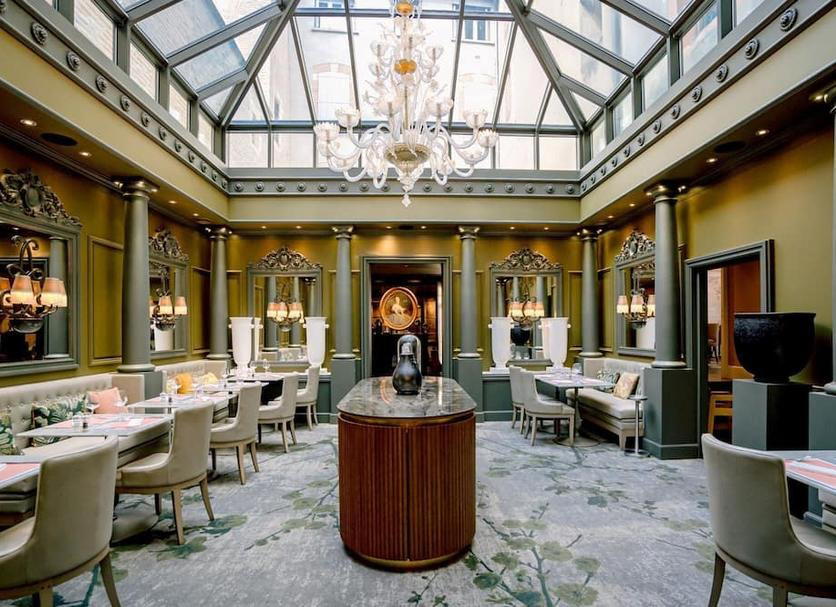
The design conversation around French regional luxury hotels has shifted considerably over the past decade. The earlier model, where a historic building did most of the aesthetic heavy lifting and interiors were filled with period reproduction furniture and toile de Jouy, has given way to a more demanding standard. Properties in the upper Gault & Millau bracket now tend to treat architecture and interior design as continuous rather than separate concerns, and the quality of materials, light management, and spatial proportion carries weight in the assessment.
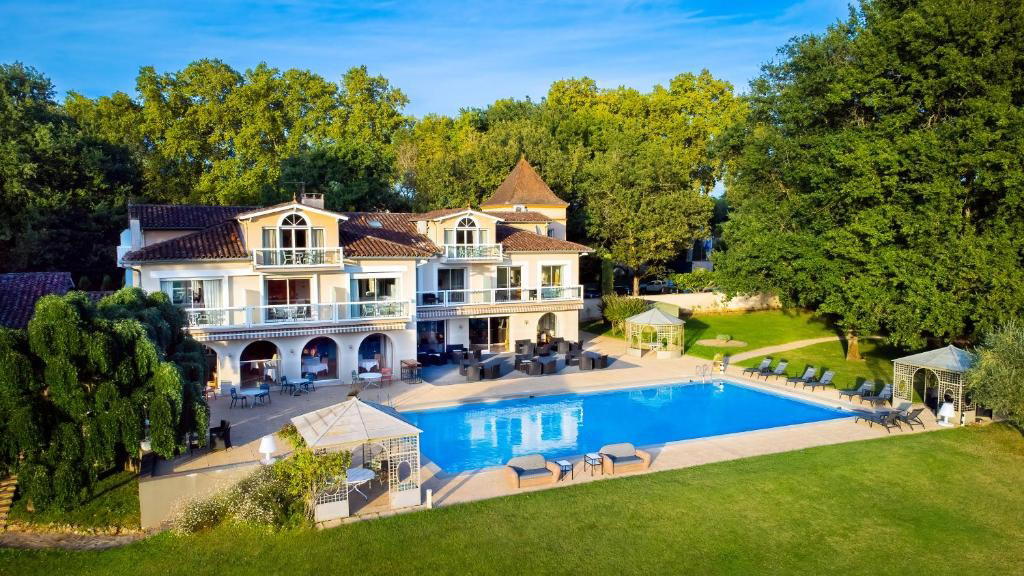
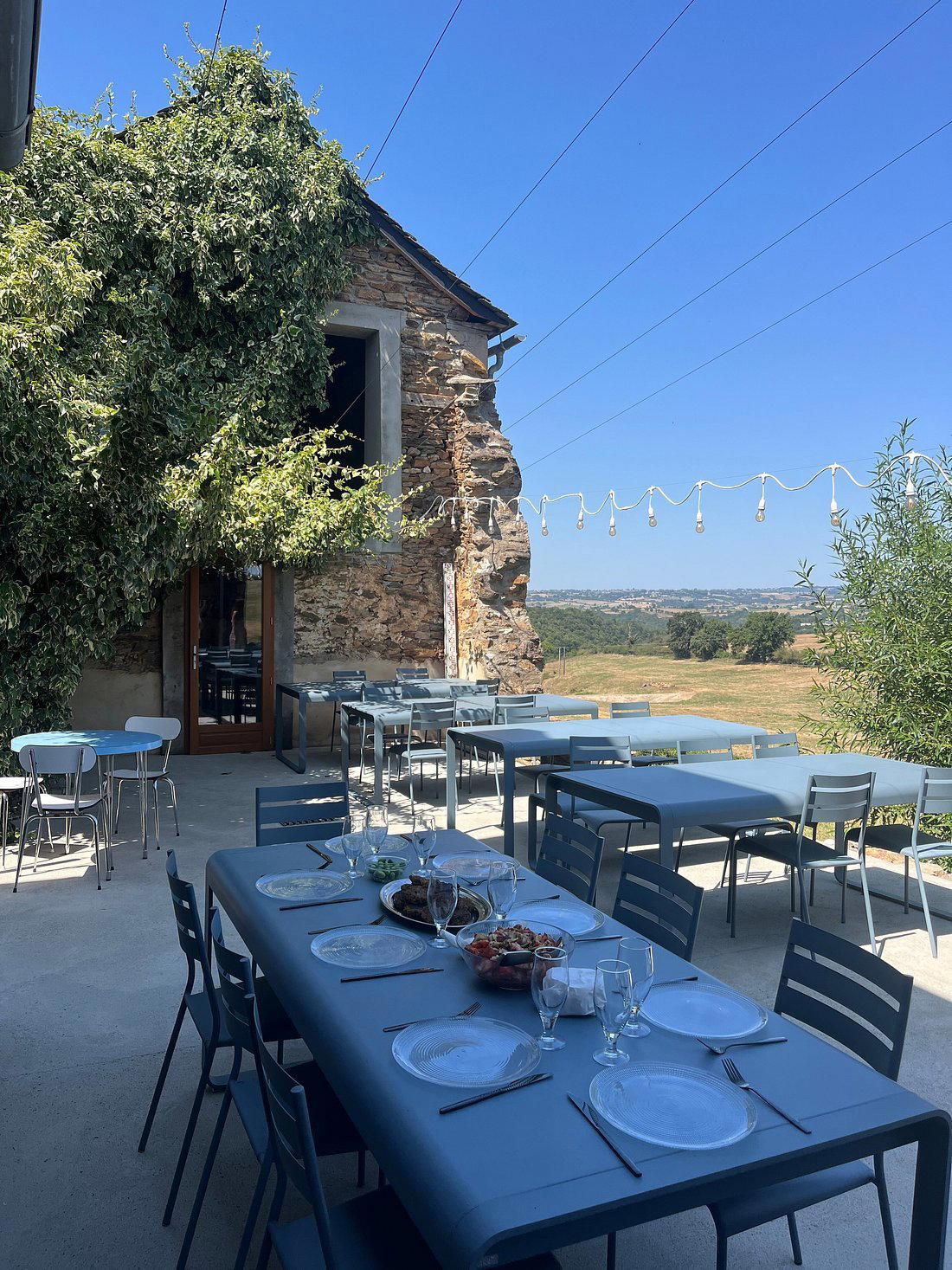
La Réserve's position on the Route de Cordes, 81 Route de Cordes, places it in a setting that allows for spatial generosity that the city centre cannot offer. Properties able to work with exterior grounds, poolside volumes, and garden-facing rooms occupy a different design register from those compressed into urban plots. That spatial margin is typically where the design argument is either made or lost: interiors can be specified to a high standard almost independently of site, but the relationship between built envelope and surrounding terrain requires site-specific thinking that no amount of interior budget can substitute.
Among the broader set of French properties balancing historic or vernacular architecture with contemporary interior approaches, the reference points range from the conversion rigour of Château du Grand-Lucé to the landscape-dominant logic of Villa La Coste. La Réserve operates in a different register from either, shaped by the particularities of the Tarn Valley rather than the Loire or Provence, but the underlying design challenge, how to make a property feel rooted without feeling static, is the same across the category.
Albi as a Destination Context
Understanding La Réserve requires understanding what kind of traveller arrives in Albi and why. The city's two primary draws are the Musée Toulouse-Lautrec, one of France's most significant single-artist museum collections, and the Cathédrale Sainte-Cécile, a southern Gothic fortress-cathedral that dominates the skyline above the Tarn river and holds UNESCO World Heritage status. Together, they generate a visitor profile that skews toward cultural travel rather than resort tourism, which means the premium accommodation expectation is driven more by architectural interest and gastronomy than by pool size or spa programming.
That context shapes the competitive logic for La Réserve. It is not competing against Riviera resort properties like Hotel Du Cap-Eden-Roc or La Réserve Ramatuelle for beach-season bookings. Its comparable set is the cluster of serious regional properties that attract travellers building itineraries around cultural depth: the kind of trip that might pair Albi with Cordes-sur-Ciel to the north, the Abbaye de Sylvanès to the east, or extend south toward Toulouse for a longer Occitanie circuit. For those constructing that kind of itinerary, the hotel is not incidental, it is part of the argument for spending meaningful time in the region.
Planning a Stay
La Réserve sits at 81 Route de Cordes, close enough to Albi's historic centre to make it walkable for evening access to the cathedral quarter and the restaurants clustered near the Pont Vieux, but sufficiently removed to operate at a pace the centre itself cannot offer. Travellers arriving by rail will find Albi-Ville station approximately two kilometres from the property, a short taxi or transfer ride. Those driving from Toulouse, where the nearest major airport is located roughly 75 kilometres southwest, will find the Route de Cordes approach direct from the A68 autoroute exit.
Given its Gault & Millau standing, advance booking is advisable for summer months, when Albi's cultural calendar fills with visitors and room availability at the upper tier of the city's accommodation compresses. Spring and early autumn offer the Tarn Valley at its most temperate and typically allow more flexibility in planning. Advance booking is advisable for summer months, when Albi's cultural calendar fills with visitors and room availability at the upper tier of the city's accommodation compresses.
Travellers for whom Albi is one stop in a broader French itinerary may find it usefully positioned between Toulouse and the Aveyron. Les Sources de Caudalie or the Sauternes region's Château Lafaurie-Peyraguey. Cheval Blanc Paris, The Maybourne Riviera, Royal Champagne Hotel & Spa, Castelbrac in Dinard, Airelles Saint-Tropez, Casadelmar in Porto-Vecchio, Château de la Chèvre d'Or in Èze, and Hôtel & Spa du Castellet. For Alpine stays, Cheval Blanc Courchevel and Four Seasons Megève represent the upper bracket. Beyond France, EP Club covers international properties from Aman Venice to Aman New York and The Fifth Avenue Hotel.