Gasthof zur Kanne
Gasthof zur Kanne occupies a historic address on Sankt Florian's Marktplatz, placing it squarely within Upper Austria's tradition of market-square Gasthöfe that have fed travellers and locals alike for generations. The inn sits minutes from the Augustinian monastery that defines the town, making it a natural stop for those visiting the Bruckner organ or the adjacent crypt. For a read on the broader dining scene, see our full Sankt Florian restaurants guide.
Pearl is the En Primeur Club membership app — saves, bookings, and concierge access live there. Same editors, same standards.
- Address
- Marktpl. 7, 4490 St. Florian, Austria
- Phone
- +434372244288
- Website
- gasthof-koppler.at
- Directions
- Get directions
 Saves & bookings on Pearl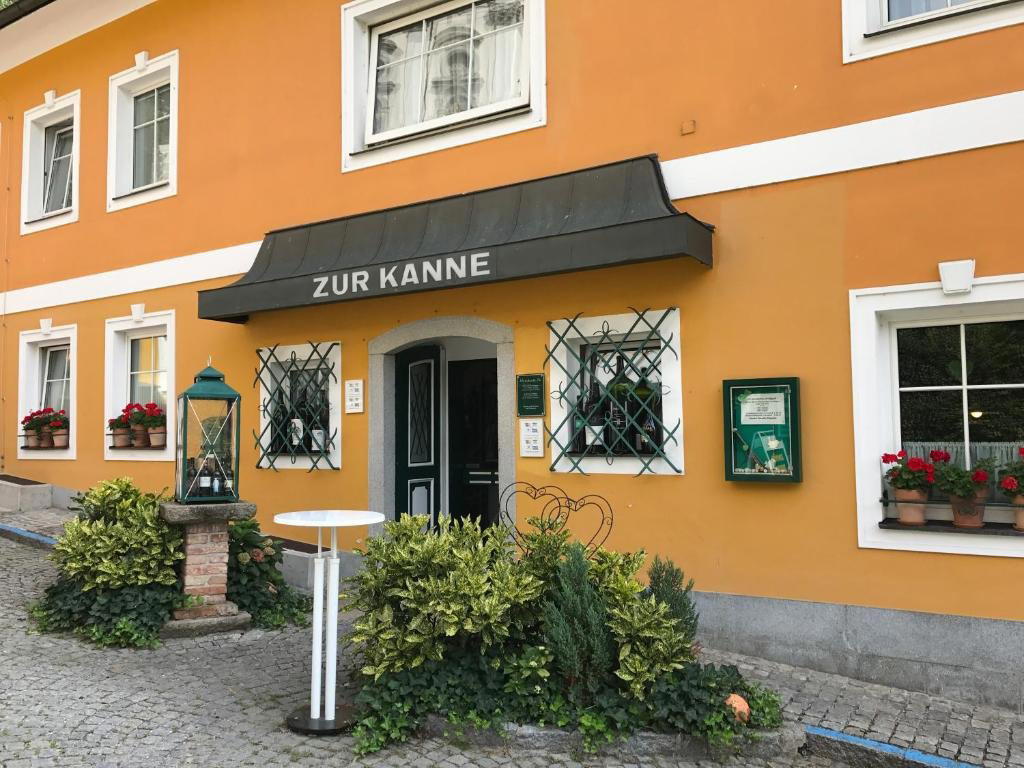
Market Square, Stone Walls, and the Logic of Austrian Inn Cooking
Austria's market-square Gasthöfe follow a consistent architectural grammar: thick stone or rendered walls, low-beamed ceilings, and a position facing the Rathaus or parish church that dates back to when inns and civic life were inseparable. Gasthof zur Kanne is a traditional Austrian Gast Haus in St. Florian, Austria, on Marktpl. 7. Walk the square on a weekday morning and the inn reads as a working part of the townscape rather than a heritage set piece, a distinction that matters when you're deciding where to eat.
Sankt Florian is small enough that a single address on the Marktplatz carries the weight of the whole settlement's hospitality tradition. Unlike Linz, twenty kilometres north, the town has no restaurant cluster to navigate. There is the monastery, the Bruckner organ, the Altdorfer altarpiece in the gallery, and a handful of places to eat. That concentration puts Gasthof zur Kanne in an unusual position: it functions simultaneously as a neighbourhood local, a post-excursion lunch option for monastery visitors, and the default dinner table for overnight guests in the area. Austrian Gasthöfe in similarly positioned market towns tend to carry that multiplicity well, because the format was designed for it.
Ingredient Sourcing and the Upper Austrian Pantry
The editorial angle that matters most for an inn like this one is not the chef's biography or a particular dish, but the sourcing logic that underpins Upper Austrian inn cooking at its most grounded. Upper Austria sits between the Danube valley's market gardens and the forested uplands of the Mühlviertel, with the Salzkammergut lakes within reach to the south. That geography produces a pantry with a coherent identity: freshwater fish from cold alpine lakes, pork and game from forested hinterland farms, root vegetables and legumes from river-flat cultivation, and dairy products, particularly butter and cream, that anchor the sauce work in traditional kitchens.
The Gasthof tradition across this region has historically drawn on proximity rather than prestige sourcing. A market-square inn in a town like Sankt Florian would have bought from the weekly market held in the square outside its door, from local butchers, and from the Augustinian monastery's own agricultural output, monasteries of that scale historically maintained productive farms and orchards. That relationship between religious institution and adjacent hospitality is one of the defining patterns of Austrian inn culture, and Sankt Florian's Gasthöfe have operated within it for centuries.
For comparison, Upper Austria's most prominent farm-to-table operations, including those at the Wachau end of the Danube corridor (see Landhaus Bacher in Mautern an der Donau), have formalised their sourcing into a selling point. At the inn level, the same principle operates without the marketing apparatus: local because that is what is available and affordable, seasonal because Austrian markets do not pretend otherwise. That unforced seasonality is one reason why well-run Gasthöfe often outperform their category expectations at the table. Elsewhere in Austria, similar sourcing rigour has shaped the kitchens at Obauer in Werfen and Döllerer in Golling an der Salzach, both of which built their reputations on Austrian regional produce before the concept had a name.
Where Gasthof zur Kanne Sits in the Austrian Dining Spectrum
Austria's restaurant hierarchy runs from Michelin-starred destination dining, Steirereck im Stadtpark in Vienna at the summit of the creative tier, mountain fine-dining operations like Gourmetrestaurant Tannenhof in Sankt Anton am Arlberg or Stüva in Ischgl in the Alpine resort bracket, down through a broad middle tier of regional Gasthöfe where the cooking is defined by tradition rather than innovation. The restaurant operates in that middle register, which in Austria carries more cultural weight than the term implies. The Gasthof format predates the modern restaurant by centuries and represents the working vocabulary of Austrian food culture: Schweinsbraten, Tafelspitz, Wienerschnitzel, seasonal game, freshwater fish, and the Mehlspeisen tradition of baked and pastry desserts.
That is a different comparable set from the herb-garden creativity of Kräuterreich by Vitus Winkler in Sankt Veit im Pongau or the Alsace-influenced modern Austrian cooking at Taubenkobel in Schützen am Gebirge. It is also distinct from the hyper-local Oberösterreich focus at Ois in Neufelden. The restaurant's market-square address in a monastery town places it closer to the civic hospitality tradition than to any fine-dining trajectory. That is not a limitation; it is a specific function, and Austrian inn culture delivers it with authority when the kitchen is attentive.
For those approaching Sankt Florian from Linz, the drive takes approximately twenty minutes south on the B1. The town is compact enough that Marktplatz 7 is immediately orientating once you enter the centre. Sankt Florian's visitor peak follows the monastery's open hours and the summer concert season linked to Anton Bruckner, the composer was organist here and is buried in the crypt, so midday on weekends in summer is when competition for tables at any of the town's limited dining options is highest. Visiting in the shoulder season or on weekday afternoons aligns with the inn's natural rhythm. Speiserberg is the other address worth knowing in the same town.
Across Austria, the inns that have held their position over generations share a few consistent qualities: a kitchen that respects classical Austrian technique without nostalgia, a cellar that draws from regional wine production (Wachau, Kremstal, and Kamptal are all within reach of Upper Austria), and a relationship with the town that makes the room feel inhabited rather than staged. The restaurant is a casual restaurant where reservations are recommended.
Comparable Venues
Comparable venues nearby, for context on price, style, and recognition.
| Venue | Cuisine | Price | Notes |
|---|---|---|---|
| Gasthof zur KanneThis venue — the venue you are viewing | Traditional Austrian Gast Haus | $$ | Not listed |
| Speiserberg | Seasonal International | $$ | St. Florian |
| Seegasthof Hois'n Wirt | Traditional Austrian Lakeside Cuisine | $$ | Traunsteinstrasse |
| Mostschenke im Heustadl Restaurant & Heurige | Traditional Austrian Heuriger | $$ | Rindbach |
| Moar in Grünbach | Traditional Austrian Regional | $$ | Grünbach |
| Schupfer's Dorfschmiede | Traditional Austrian with Innovative Twists | $$ | Bad Mitterndorf |
Continue exploring
More in Sankt Florian
Restaurants in Sankt Florian
Browse all →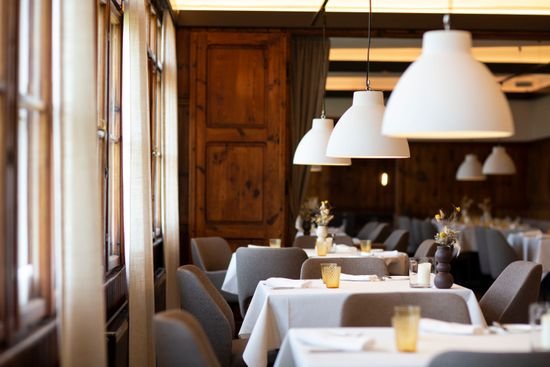
Bars in Sankt Florian
Browse all →


Hotels in Sankt Florian
Browse all →

At a Glance
- Rustic
- Cozy
- Classic
- Family
- Casual Hangout
- Historic Building
- Beer Program
Current opening hours
- Monday
- Closed
- Tuesday
- 11:30 AM–2 PM, 5–10:30 PM
- Wednesday
- 11:30 AM–2 PM, 5–10:30 PM
- Thursday
- 11:30 AM–2 PM, 5–10:30 PM
- Friday
- 11:30 AM–2 PM, 5–10:30 PM
- Saturday
- 11:30 AM–3 PM
- Sunday
- Closed
Hours can change for holidays and private events. Last verified .
Cozy and traditional atmosphere in a historic building with classic Austrian charm.