
Tabelog 100 #54
Our verdict
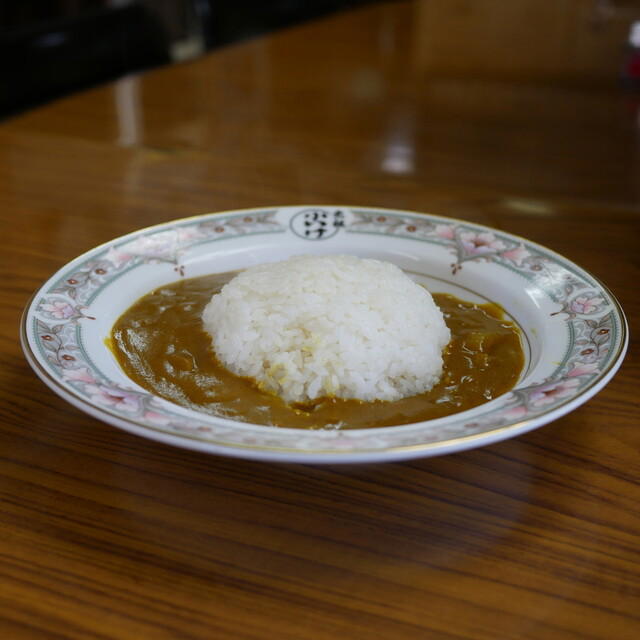
Hakodate’s curry culture has a different pulse from the city’s seafood counters: quicker, cheaper, and rooted in local routine rather than occasion dining. Ganso Indian Curry Koike sits in that lane, with Tabelog Curry EAST 100 selections from 2017, 2018, 2019, 2020, 2023, and 2024 giving a humble format measurable weight.

Pearl is the En Primeur Club membership app — saves, bookings, and concierge access live there. Same editors, same standards.
- Address
- 22-4 Horaicho, Hakodate, Hokkaido 040-0043, Japan
- Phone
- +81 138-23-2034
- Hours
- Mon 11 AM–3:30 PMTue ClosedWed–Sun 11 AM–3:30 PM
- Website
- ganso-koike.com
- Directions
- Get directions
The menu
What to order
- Katsu curry
- Tonkatsu curry rice
- Indian curry rice
Hakodate gives one of its more grounded restaurant moods: tramline scale, practical shopfronts, and lunch rooms built for regulars rather than spectacle. In that setting, curry is not an intermission between seafood meals; it is part of the city’s everyday eating grammar, closer to a repeatable meal habit than a destination ritual. Ganso Indian Curry Koike belongs to that local register, where the appeal is less about ceremony than routine, speed, and a sauce style with enough identity to earn Tabelog Curry EAST 100 recognition in 2024.
Hakodate is often reduced to morning-market seafood and salt ramen, yet its casual dining map is broader and more practical. A reader planning the city through our full Hakodate restaurants guide will see the range quickly: local dining rooms, established meals at Asari Honten, another Hakodate dining register at Colz, and other informal Hakodate meals. Curry sits beside those categories as the low-friction choice, the meal that works when the day has been shaped by weather, trams, or a ferry-timetable appetite.
Hakodate curry with source logic, not luxury theatre
Japanese curry is often discussed as comfort food, but the category is more technical than that label suggests. Its credibility depends on balance: spice blend, sweetness, fat, viscosity, and how the sauce behaves against rice or fried proteins. In Hokkaido, the broader ingredient conversation tends to tilt toward dairy, seafood, and agricultural abundance, but curry shops translate that regional plenty into a different question: how much local identity can a daily dish carry without becoming a tourist performance?
Koike’s public category listing is telling: curry appears alongside katsu-don and oyako-don, placing it in the world of practical Japanese meal sets rather than tasting-menu ambition. That matters. The sourcing argument here is not about named farms or rare produce; none is needed to understand the format. It is about how a modest restaurant in Hakodate channels pantry logic, rice culture, and sauce craft into a dish that can hold local loyalty. Tabelog’s Curry EAST 100 selection in 2024 gives that claim external weight without pretending the room is a luxury address.
The comparison inside Hakodate is useful. Colz operates in a different dining register, Asari Honten carries another strand of local restaurant culture, and other dining in the city can move into more formal territory. Curry functions differently. It is not trying to compete with a seafood counter for ritual value or with longer-format dining for paced indulgence. Its strength is immediacy: a clear purpose, direct appetite, and a format that rewards a decisive meal.
A counter-room rhythm in a city often read through seafood
Hakodate’s dining identity is shaped by port history, morning markets, squid, ramen, and a long habit of absorbing outside influences through trade. Curry fits that history more naturally than it first appears. It is an imported idea that Japan made domestic, then regional kitchens adapted to local taste and routine. In a city where travelers often chase the obvious seafood narrative, a curry shop can be the clearer reading of how residents actually eat between marquee meals.
The restaurant’s practical structure reinforces that point. The meal does not need to be treated like a special-occasion performance, and its public budget range of JPY 1,000 - JPY 1,999 for both lunch and dinner keeps it in an everyday bracket. It is a democratic format, which is why recognition from a curry-specific list carries more meaning than a generic popularity claim. The award category judges the venue within its own culinary language.
For travelers building a fuller Hakodate itinerary, this is the kind of stop that prevents the city from becoming a sequence of expensive reservations. Pair it with broader planning through our full Hakodate hotels guide, our full Hakodate bars guide, our full Hakodate wineries guide, and our full Hakodate experiences guide, then use restaurants like this to anchor the unglamorous but essential meals between sightseeing windows.
Where it fits in a Japan curry itinerary
Japan’s curry map is unusually deep because the dish crosses class, region, and format. Specialist curry counters, canteen-style shops, nostalgic restaurants, and modern spice kitchens all sit under the same umbrella. Koike’s case is defined by recognition inside the Curry EAST field and by the restraint of its everyday format. That combination makes it more instructive than a flashier dining room: it shows how a regional city participates in a national curry conversation without relying on bigger-city spectacle.
Readers comparing curry and casual Japanese dining beyond Hakodate can widen the frame through other regional dining rooms, casual specialists, and Japanese food formats abroad. The useful comparison is not a list of famous names, but the way specific everyday formats travel, adapt, and find new audiences while still depending on clarity, price, and routine.
The editorial case for Ganso Indian Curry Koike is direct: in a city where visitors often over-index on seafood, this is a Tabelog Curry EAST 100-recognized curry room that reveals another layer of Hakodate eating. It is not the grand meal of a trip. It is the corrective one, the lunch that makes the city feel less curated and more lived-in.
Frequently asked questions
Is Ganso Indian Curry Koike a family-friendly restaurant?
Ganso Indian Curry Koike is a casual curry restaurant in Hakodate, with pricing listed in the everyday JPY 1,000–JPY 1,999 range for both lunch and dinner. Check the venue's official channels for the latest details.
How would you describe the vibe at Ganso Indian Curry Koike?
It reads as a practical curry spot rather than a long-form dining room. The Tabelog 100 Curry EAST 2024 selection gives it credibility without changing the everyday format.
What does dinner at Ganso Indian Curry Koike typically cost?
Pricing at Ganso Indian Curry Koike is listed as JPY 1,000 - JPY 1,999.
What is Ganso Indian Curry Koike known for?
Ganso Indian Curry Koike is known for curry in Hakodate, with public categories also listing katsu-don and oyako-don.
How It Stacks Up
Comparable venues by cuisine and price in the same metro.
| Venue | Cuisine | Price | Awards | Notes |
|---|---|---|---|---|
| Ganso Indian Curry KoikeThis venue — the venue you are viewing | Traditional Japanese curry (Indian-style) | $10–20 | Tabelog 100 #54 | Not listed |
| Jiyouken (滋養軒) | Traditional Hakodate shio ramen | $1–10 | Tabelog 100 #32 | Daimon (大門) |
| Sushi Dokoro Minami | Traditional Sushi Omakase | $150–200 | Tabelog 100 #91 | Suehirocho |
| Ajisai Honten | Hakodate shio ramen | $10–20 | Tabelog 100 #11 | Goryokaku |
| Uni Senmon Ten Yoichiya Hakodate asaichi ten | Hokkaido uni and seafood donburi | $50–100 | Tabelog 100 #66 | Hakodate Asaichi (Morning Market) / near Hakodate Station |
| RAMEN ROOM 18 | Modern Hokkaido Ramen by Tsuta | $10–20 | Tabelog 100 #81 | Showa |
Recognition history
Dated appearances from independent guides and award organizations, with the underlying list record or original source where available.
Tabelog 100 #54 · No. 54
Tabelog · Tabelog 100 - Curry - EAST - 2024
Details
- Classic
- Cozy
- Well Known
- Solo
- Casual Hangout
- Family
- Group Dining
- After Work
- Standalone
- A La Carte
- Counter Dining
Current opening hours
- Monday
- 11 AM–3:30 PM
- Tuesday
- Closed
- Wednesday
- 11 AM–3:30 PM
- Thursday
- 11 AM–3:30 PM
- Friday
- 11 AM–3:30 PM
- Saturday
- 11 AM–3:30 PM
- Sunday
- 11 AM–3:30 PM
Hours can change for holidays and private events. Last verified .
Small, retro curry shop with simple counter and table seating, a classic Showa-era feel, and a casual, bustling lunchtime atmosphere centered on quick curry meals rather than lingering dining.