Gambrinus
Gambrinus occupies a direct address on Marktstrasse in Weinfelden, a market town that anchors the Thurgau wine country of eastern Switzerland. The restaurant sits in a region where agricultural proximity shapes what appears on the plate, placing it within a broader Thurgau tradition of kitchens drawing from orchards, dairies, and small farms within a short radius. For visitors tracing Swiss regional dining beyond the headline destinations, it represents a grounded entry point into that eastern Swiss tradition.
Pearl is the En Primeur Club membership app — saves, bookings, and concierge access live there. Same editors, same standards.
- Address
- Marktstrasse 2, 8570 Weinfelden, Switzerland
- Phone
- +41716221140
- Website
- gambrinus-weinfelden.ch
- Directions
- Get directions
 Saves & bookings on Pearl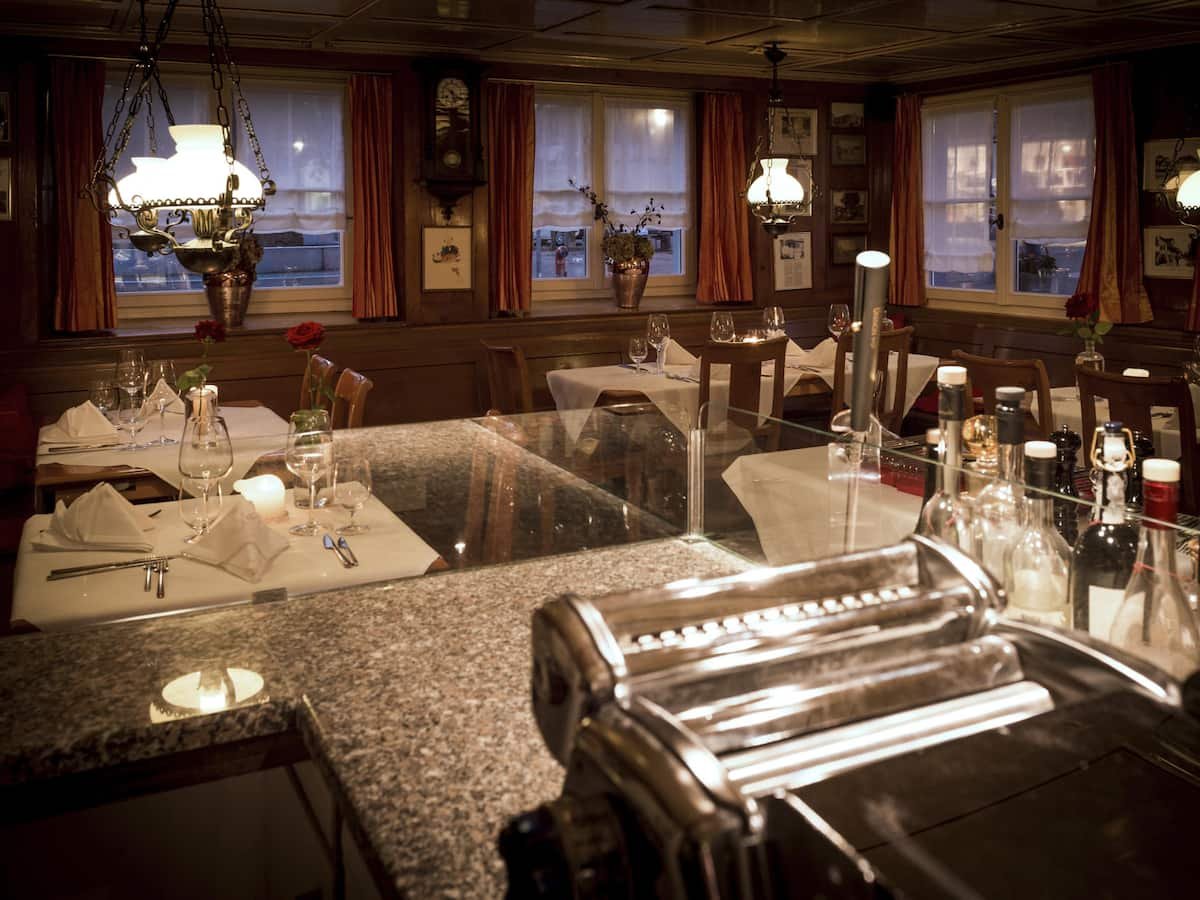
Market Town, Market Table: Dining in Thurgau's Agricultural Heartland
Eastern Switzerland's relationship with its food supply is different in character from the high-altitude Alpine kitchens or the Franco-Swiss border restaurants that tend to dominate national dining conversation. In canton Thurgau, the agricultural infrastructure is low-lying and productive: apple orchards running toward Lake Constance, dairy operations spread across gentle hills, and a network of small producers whose output has historically fed local tables rather than export markets. Weinfelden sits at the practical centre of this, a market town with the infrastructure of a regional hub and a dining scene shaped more by what the surrounding land yields than by culinary ambition imported from elsewhere. Gambrinus, at Marktstrasse 2, is positioned directly within that civic and agricultural context.
The address itself tells a story about how Swiss market towns organise their hospitality. Marktstrasse, as the name indicates, is the commercial artery of Weinfelden, the kind of street where a restaurant has been feeding market-day traffic for generations. In towns of this scale across the German-speaking Swiss cantons, these addresses tend to house venues with deep local roots rather than trend-following newcomers. The physical approach, along a working commercial street rather than down a lane or through a hotel lobby, signals a different kind of operation from the destination restaurants that have made eastern Switzerland's fine dining reputation in recent years.
The Thurgau Sourcing Context
Understanding what ingredient sourcing means in Thurgau requires a brief geography lesson. The canton is Switzerland's orchard country, responsible for a significant share of national apple and pear production, and the lake proximity to the north creates a moderating microclimate that supports soft fruit, brassicas, and root vegetables well into the autumn. Dairy is woven through the regional economy, with small-scale operations producing cheeses and cream products that rarely travel far. The Rhine and smaller waterways historically supplied freshwater fish, a component of eastern Swiss tables that contemporary kitchens have returned to with some interest.
Restaurants in towns like Weinfelden that take this geography seriously operate differently from those in urban centres. Seasonal availability is less negotiable when your supply chain is a network of farms rather than a distribution hub. The rhythm of what appears on the plate shifts with what the land is doing, which means a table in October eats differently from a table in April, not because a chef has engineered a seasonal menu, but because the sourcing logic demands it. This is the tradition that a Marktstrasse address in Weinfelden inherits, whatever the current kitchen's specific interpretation of it may be.
For context on how eastern Swiss kitchens at the upper end translate this sourcing philosophy into formal dining, the region around St. Gallen and Thurgau has produced serious reference points. Einstein Gourmet in Sankt Gallen represents one version of this, as does the nearby Mammertsberg in Freidorf, where the sourcing provenance is built explicitly into the dining proposition. Further afield in the Swiss east, Schloss Schauenstein in Fürstenau has made ingredient origin a defining part of its identity at the highest level, and Memories in Bad Ragaz works within a similarly territory-conscious framework.
Weinfelden as a Dining Destination
Weinfelden is not a town that draws visitors primarily for its restaurants. It functions as a cantonal capital with a working population, a weekly market, and the kind of civic life that sustains local hospitality rather than destination dining. This is not a limitation; it is a different kind of proposition. The restaurants that survive over time in towns like this do so because they serve the community consistently, not because they attract pilgrimage bookings from Zurich or Basel. That community-service model produces a different set of strengths: reliability, portion generosity, a menu that reflects what people in this part of Switzerland actually eat, and pricing calibrated to local rather than tourist expectations.
That said, Thurgau sits within reasonable reach of broader Swiss dining circuits. Visitors who combine a Weinfelden stop with exploration of the Lake Constance shore, the nearby wine routes, or the historic towns of the Thurgau interior will find that a local restaurant on Marktstrasse provides useful grounding in regional food culture before or after encounters with the canton's more formal dining options. For those using the region as a base, the Taverne zum Schäfli in Wigoltingen offers a reference point for Swiss creative cooking in a similar rural-town format, while Magdalena in Schwyz demonstrates how seriously some Swiss cantonal kitchens now take vegetable-forward sourcing.
The Swiss dining scene at large has shifted noticeably toward terroir-conscious cooking in the past decade, a trend visible from Hotel de Ville Crissier in the French-speaking west to Cheval Blanc by Peter Knogl in Basel and on to the Alpine dining formats found at venues like focus ATELIER in Vitznau and La Table du Valrose in Rougemont. At the international level, the sourcing conversation has matured significantly, with kitchens from Le Bernardin in New York City to Lazy Bear in San Francisco building their identity around traceable supply chains. Weinfelden sits in a different register from those destinations, but it participates in the same broader shift toward knowing where food comes from.
Planning a Visit
Gambrinus is located at Marktstrasse 2, 8570 Weinfelden, in the canton of Thurgau. Weinfelden is served by the Swiss Federal Railways network, with direct connections from St. Gallen and Winterthur making it accessible without a car. The Marktstrasse address is within walking distance of the train station, consistent with the town's compact walkable centre.
For those extending their eastern Switzerland itinerary toward the Italian-influenced south of the country, La Brezza in Ascona and Da Vittorio St. Moritz represent the regional range, while Maison Wenger in Le Noirmont anchors the Jura end of the Swiss dining arc. The Japanese Restaurant in Andermatt and Skin's in Lenzburg demonstrate the breadth of contemporary Swiss dining formats for those building a longer itinerary.
Comparable Venues
Comparable venues nearby, for context on price, style, and recognition.
| Venue | Cuisine | Price | Notes |
|---|---|---|---|
| GambrinusThis venue — the venue you are viewing | Traditional Italian with Mediterranean Specialties | $$$ | Not listed |
| Enoteca Riviera | Contemporary Italian Enoteca & Cucina povera | $$$ | Seefeld / Kreis 8 |
| Portofino | Italian Lakeside with Neapolitan Pizza | $$$ | Thalwil |
| L'altro | Classic Italian | $$$ | Enge |
| Barbatti | Traditional Italian | $$$ | old town |
| La Pergola | Traditional Italian Pizza & Pasta | $$ | Winterthur |
Continue exploring
More in Weinfelden
Restaurants in Weinfelden
Browse all →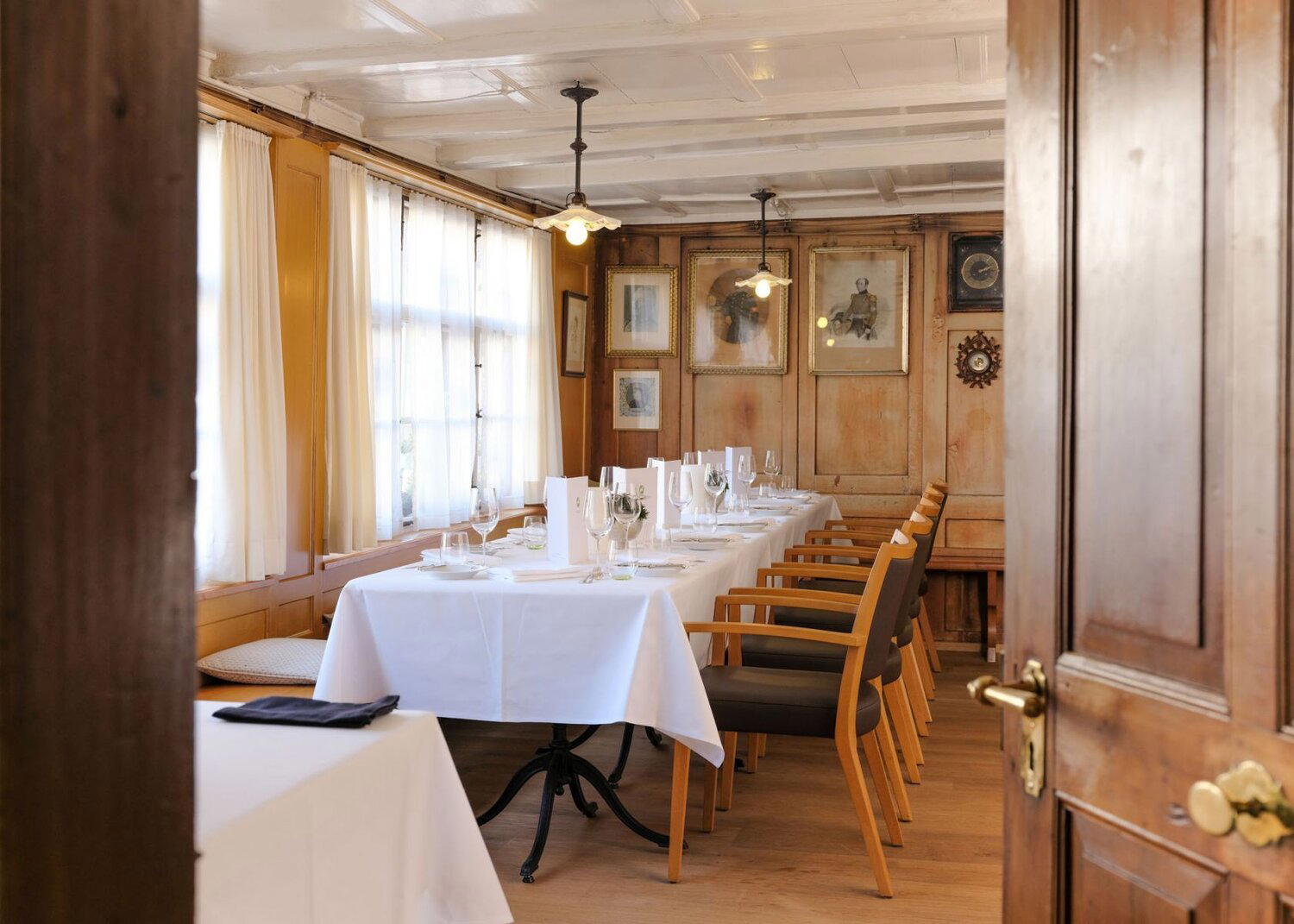
Bars in Weinfelden
Browse all →
At a Glance
- Classic
- Cozy
- Intimate
- Date Night
- Family
- Special Occasion
- Terrace
Current opening hours
- Monday
- Closed
- Tuesday
- 11 AM–2 PM, 6 PM–12 AM
- Wednesday
- 11 AM–2 PM, 6 PM–12 AM
- Thursday
- 11 AM–2 PM, 6 PM–12 AM
- Friday
- 11 AM–2 PM, 6 PM–12 AM
- Saturday
- 11 AM–2 PM, 6 PM–12 AM
- Sunday
- Closed
Hours can change for holidays and private events. Last verified .
Timeless, gemütlich (cozy) traditional atmosphere with herzliche (heartfelt) hospitality.