Taverne zum Schäfli






A two-Michelin-star address in the Thurgau countryside, Taverne zum Schäfli earns 88.5 points on La Liste 2025 under chef-owner Christian Kuchler. The menu bridges Swiss and creative French-Asian registers, backed by a 7,000-bottle cellar strong in Burgundy, Germany, and Switzerland. Open Wednesday through Saturday for lunch and dinner; the four-star price tier and advance planning requirements make this a considered destination rather than a casual stop.
Pearl is the En Primeur Club membership app — saves, bookings, and concierge access live there. Same editors, same standards.
- Address
- Oberdorfstrasse 8, 8556 Wigoltingen, Switzerland
- Phone
- +41 52 763 11 72
- Website
- schaefli-wigoltingen.ch
- Directions
- Get directions
 Saves & bookings on Pearl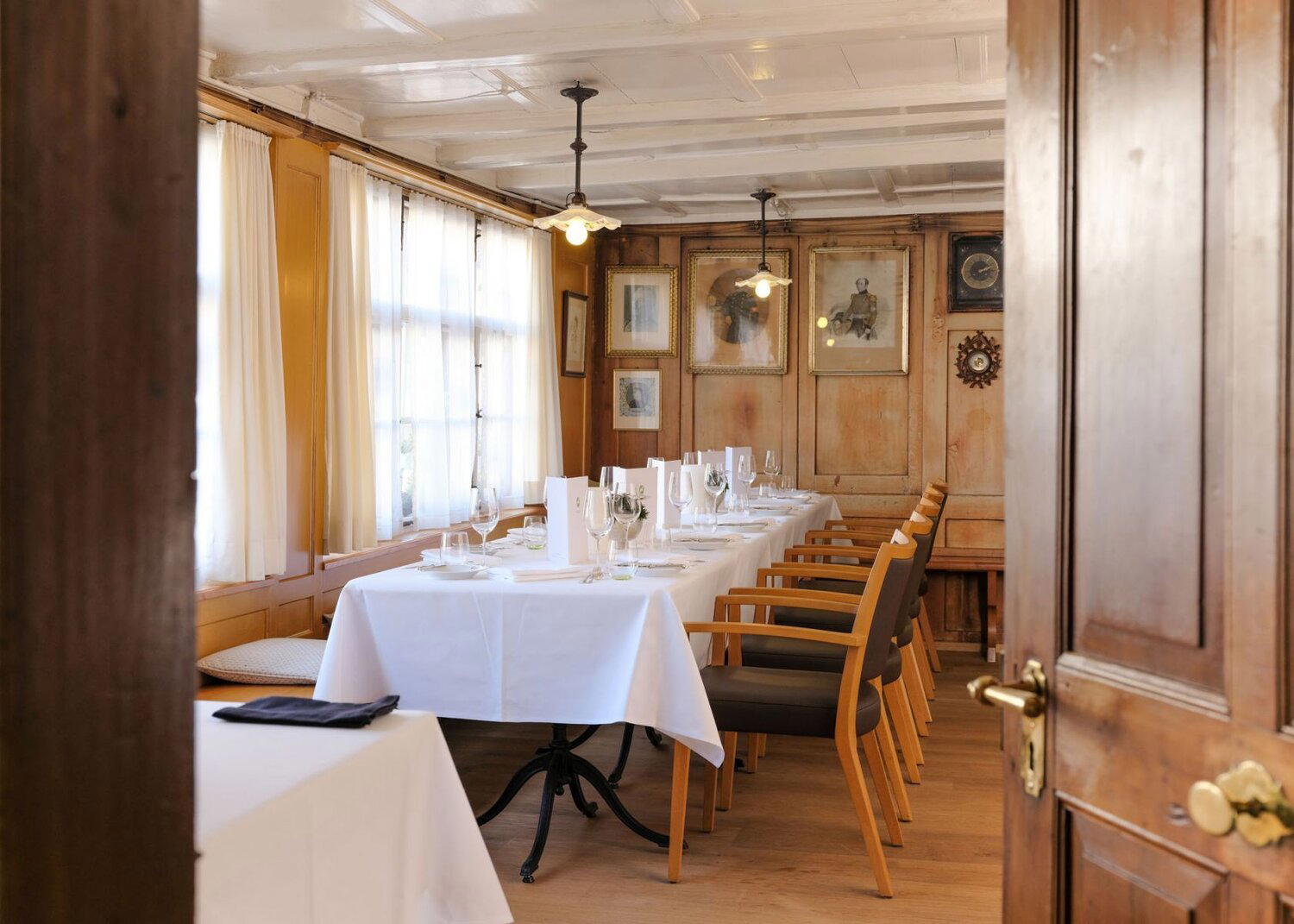
A Village Address with Serious Ambitions
Switzerland's fine-dining geography tends to cluster around cities and resort towns. Two-star kitchens in Zurich, Basel, and St. Moritz benefit from dense visitor traffic and expense-account clientele. The more telling achievement, then, is when a restaurant at the same award level operates not in a city hotel or alpine resort but in a small Thurgau village. Taverne zum Schäfli sits on Oberdorfstrasse in Wigoltingen, a commune of a few thousand people between Lake Constance and the Rhine. The physical setting is a traditional inn format, the kind of low-profile building that reads as local rather than destination, until the Michelin two-star confirmation and an 88.5-point placement on La Liste 2025 tell a different story. For context on what else this part of Switzerland offers, see our full Wigoltingen restaurants guide.
Where the Produce Comes From
The creative direction at Schäfli positions the kitchen at an intersection that Swiss gastronomy has increasingly occupied over the past decade: regional Swiss ingredients interpreted through French technique with Asian structural influence. This is not fusion in the decorative sense. It reflects a generation of Swiss chefs trained partly in French kitchens, partly exposed to Japanese and Korean precision, who return to work with ingredients that are geographically specific. Thurgau is agricultural territory, a canton known for orchards, dairy farming, and proximity to Lake Constance fisheries. The broader Mittelland supplies meat and grain; the lake provides freshwater fish. A kitchen that commits to sourcing within this radius works with seasonal constraints that French haute cuisine long ago ironed out through airfreight, but that are now treated, at restaurants of this type, as an asset rather than a limitation.
The cuisine classification in the record, which notes both Asian and French registers at the €€€€ price tier, signals a kitchen that uses French architectural discipline while reaching for flavour vocabulary and technique from East Asian traditions. That combination appears at other Swiss addresses in this tier. Schloss Schauenstein in Fürstenau works a modern European-creative line; Memories in Bad Ragaz operates a modern Swiss register. What distinguishes Schäfli's position is the village-inn container holding a technically sophisticated kitchen, a pairing that sharpens the sourcing story: the place looks like it should be serving regional staples, and in a sense it is, only through a considerably more calibrated lens.
The Wine Program
At 850 selections and a 7,000-bottle inventory, the cellar at Taverne zum Schäfli operates at a scale that would be notable in a city restaurant and is particularly pronounced for a rural address. Sommelier Fabian Mennel oversees a list with documented strengths in Germany, Burgundy, Switzerland, and Austria, covering the four regions most relevant to European fine dining at this level. The pricing tier is listed as $$$, meaning the list carries many bottles above $100, which aligns with the food pricing and the overall positioning of the restaurant. Corkage sits at $70 for those choosing to bring bottles from outside.
The geographic emphases are worth reading as editorial choices. Germany and Burgundy point toward Pinot Noir and Chardonnay, wines suited to the French-inflected cooking. Switzerland signals local commitment, with the Thurgau and eastern Swiss producers sharing shelf space with more internationally traded names. Austria rounds out the quartet with Grüner Veltliner and Riesling, both varieties that work across a wide range of food textures. A cellar built on these four regions rather than Bordeaux-heavy or Champagne-forward is a statement about the kitchen's register and what the sommelier expects to pour alongside it.
For comparison, Swiss peers at the same award level tend to carry similarly serious wine programs. Cheval Blanc by Peter Knogl in Basel and Einstein Gourmet in Sankt Gallen both operate in urban centres where a deep cellar is standard. Finding comparable depth at a rural Thurgau inn reinforces how seriously the operation takes every element of the experience.
The Award Trajectory
The recognition record here is consistent over multiple years. Michelin awarded two stars in both 2024 and 2025, indicating that the kitchen's performance has been stable rather than a single notable cycle. On La Liste, the score moved from 88.5 points in 2025 to 86 points in the 2026 edition, a minor adjustment within the same general tier rather than a significant repositioning. The Opinionated About Dining classical Europe ranking, which placed the restaurant at #254 in 2025 following a recommended notation in 2023, adds a third data stream from a database that evaluates classical kitchens by a different methodology than Michelin.
The OAD classical category is worth noting specifically. That ranking system weights kitchens operating within French-classical or European-classical traditions, and its recognition signals that despite the Asian inflections in the cuisine description, the structural foundation of the cooking reads as classically grounded. Two-star Swiss peers with OAD recognition form a specific sub-tier within the country's fine-dining ecosystem. For other addresses within that cohort, Hotel de Ville Crissier in Crissier and focus ATELIER in Vitznau represent different expressions of where Swiss creative cooking sits at the summit of the national scale.
Google's 4.8 rating across 182 reviews provides a consumer-side signal that aligns with the critical recognition, suggesting the gap between critic evaluation and diner experience is narrow. For restaurants at this price tier, that alignment is not guaranteed.
Scheduling and Practical Planning
Taverne zum Schäfli opens Wednesday through Saturday, with both lunch (11:30 am to 2:30 pm) and dinner (6:30 pm to 11:30 pm) service on each of those days. Monday, Tuesday, and Sunday are closed. The four-day operating week is a pattern common among two-star kitchens in Europe where a small team manages a high-labour menu format, and it concentrates the kitchen's output rather than spreading it thin across seven days.
The practical implication for travellers is that the window for booking is narrower than it might appear. Four days of service per week, at a rural address that draws visitors from Zurich, St. Gallen, and across the German-Swiss border, means tables fill well in advance. Arriving in Wigoltingen without a confirmed reservation is not a productive strategy at this level. The village location also means there is no drop-in alternative nearby if your timing is off. For those planning a wider regional trip, our full Wigoltingen hotels guide, bars guide, and wineries guide offer further orientation. Those extending into broader Switzerland might consider what the 7132 Silver in Vals, Colonnade in Lucerne, or Da Vittorio in St. Moritz offer within the same tier, or look further afield to IGNIV Zürich by Andreas Caminada for a contrasting sharing format. The food pricing is listed at $$$, meaning a typical two-course meal runs above $66 per person before wine, and the wine list's upper-tier pricing means full-evening costs at this address sit comfortably in the range of what similarly rated city restaurants charge. A companion address worth considering for the classical French register in the same area is Landgasthof Wartegg.
For those travelling internationally to Switzerland specifically for this tier of dining, the Thurgau location integrates well with other northeastern Swiss addresses. The drive from Zurich is manageable, and the region's agricultural character makes the sourcing story the kitchen tells feel grounded in something you can actually observe on the approach. That coherence between landscape and plate is what distinguishes particularly compelling rural fine-dining addresses from those that simply happen to be located outside a city.
Budget and Context
Comparable venues nearby, for context on price, style, and recognition.
| Venue | Cuisine | Price | Awards | Notes |
|---|---|---|---|---|
| Taverne zum SchäfliThis venue — the venue you are viewing | Swiss, Creative | $$$$ | Michelin 2 Star | Not listed |
| Landgasthof Wartegg | Wigoltingen, Traditional Swiss | $$$ | Michelin Plate | Not listed |
| Einstein Gourmet | Not listed | $$$$ | Michelin 2 Star | St. Gallen Center, French-influenced Fine Dining |
| Colonnade | Lakeside, Modern French Haute Cuisine | $$$$ | Michelin 2 Star | Not listed |
| Magdalena | Not listed | $$$$ | Michelin 2 Star | Rickenbach, Modern Vegetarian Fine Dining |
| Mammertsberg | Freidorf, Modern Creative Fine Dining | $$$$ | Michelin 2 Star | Not listed |
Recognition history
Dated appearances from independent guides and award organizations, with the underlying list record or original source where available.
Falstaff Restaurant - 98 Falstaff Points
Falstaff
La Liste Top Restaurants
La Liste
Wine Spectator Best of Award of Excellence
Wine Spectator
La Liste Top Restaurants
La Liste
Michelin 2 Stars
Michelin
Opinionated About Dining Classical in Europe Ranked #254
Opinionated About Dining
The Best Chef One Knife
The Best Chef
Wine Spectator Best of Award of Excellence
Wine Spectator
Michelin 2 Stars
Michelin
Opinionated About Dining Classical in Europe Recommended
Opinionated About Dining
Continue exploring
More in Wigoltingen
Restaurants in Wigoltingen
Browse all →
Bars in Wigoltingen
Browse all →
At a Glance
- Cozy
- Rustic
- Classic
- Intimate
- Special Occasion
- Date Night
- Historic Building
- Terrace
- Extensive Wine List
- Sommelier Led
- Farm To Table
Current opening hours
- Monday
- Closed
- Tuesday
- Closed
- Wednesday
- 11:30 AM–2:30 PM, 6:30–11:30 PM
- Thursday
- 11:30 AM–2:30 PM, 6:30–11:30 PM
- Friday
- 11:30 AM–2:30 PM, 6:30–11:30 PM
- Saturday
- 11:30 AM–2:30 PM, 6:30–11:30 PM
- Sunday
- Closed
Hours can change for holidays and private events. Last verified .
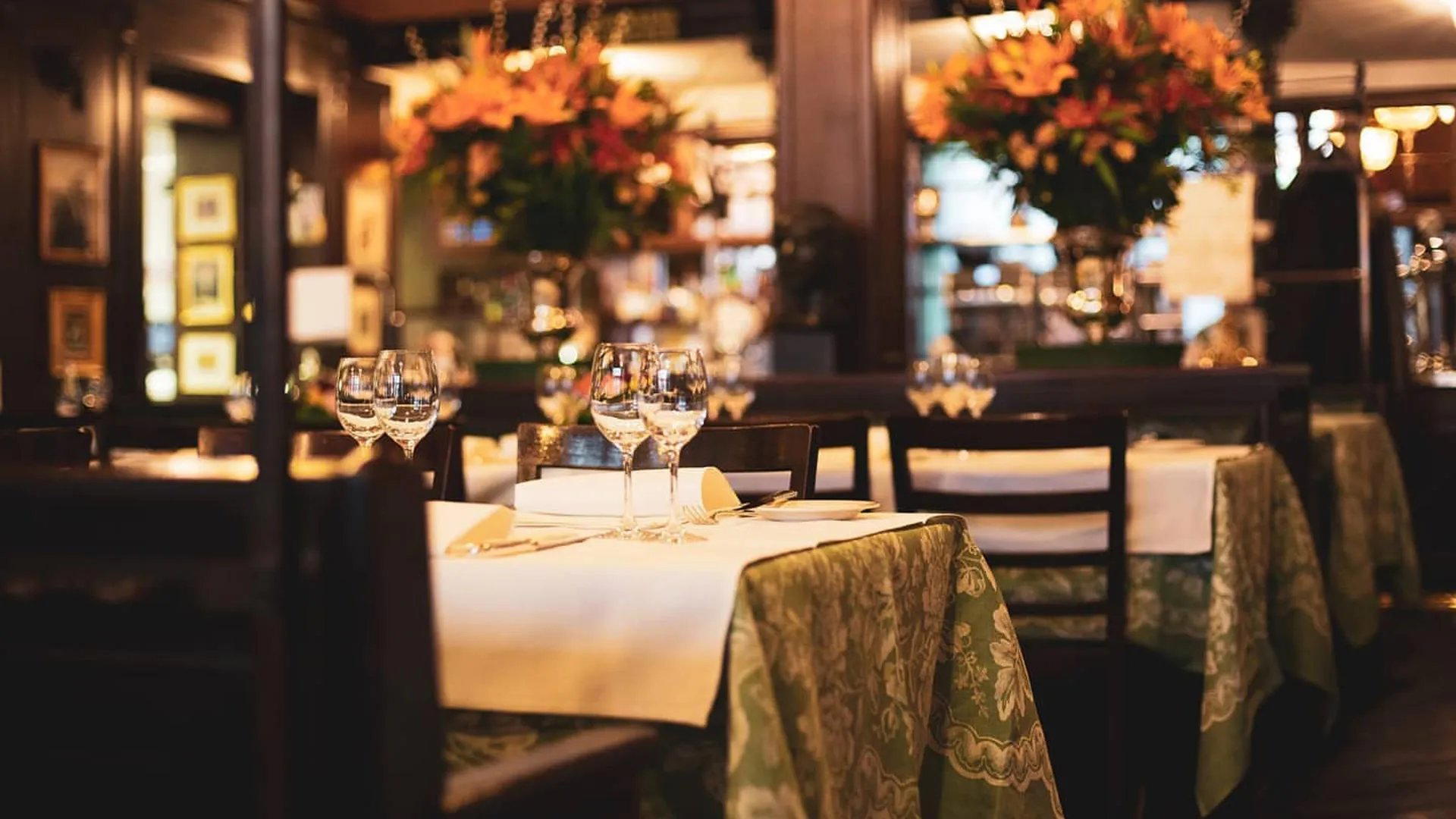
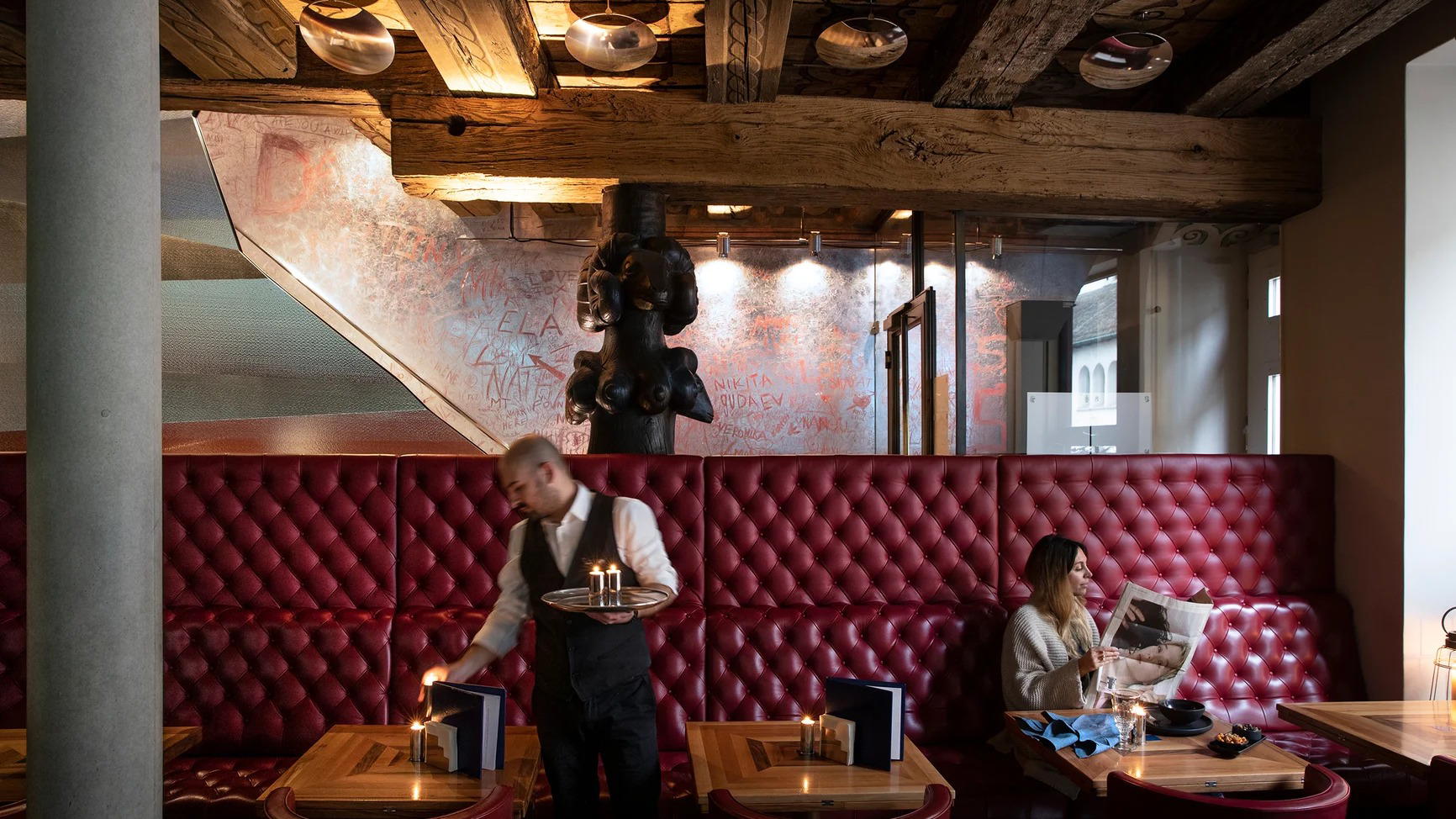
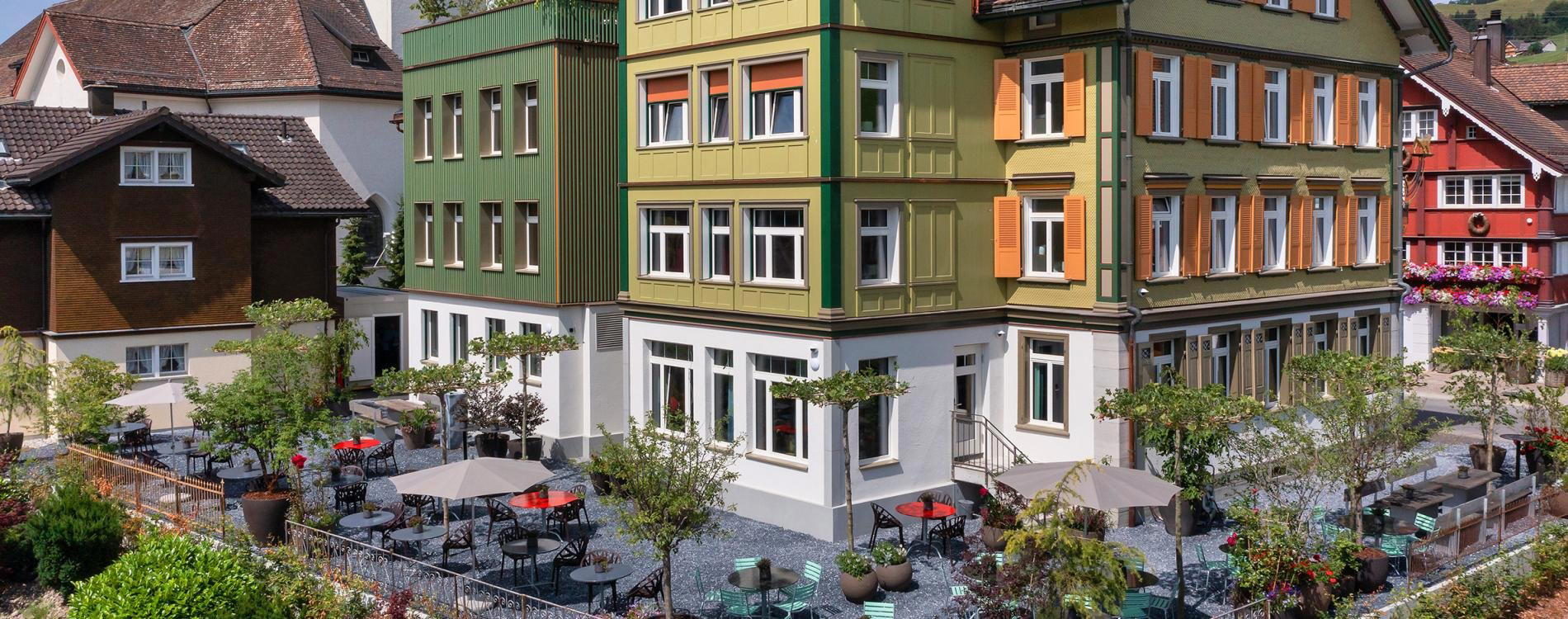
Tastefully furnished and cosy lounges with a comfortable, gemütlich farmhouse parlour atmosphere, plus charming terrace.