Our verdict
Ga Jeong Jip occupies a quiet address at 14 Rue Sauval in Paris's 1st arrondissement, where Korean culinary traditions meet one of Europe's most demanding dining cities.

Pearl is the En Primeur Club membership app — saves, bookings, and concierge access live there. Same editors, same standards.
- Address
- 14 Rue Sauval, 75001 Paris, France
- Phone
- +33140261529
- Hours
- Mon ClosedTue–Sun 12–3 PM, 6:30–10:30 PM
- Website
- gajeongjip.fr
- Directions
- Get directions
- Booking
- Book on Zenchef

The menu
What to order
- Dwaeji gukbap
- Tteokbokki
- Ganjang gyeran-bap
Korean Dining in Paris's 1st Arrondissement: Where to Place Ga Jeong Jip
Paris's relationship with Korean cuisine has changed significantly over the past decade. What was once a cluster of affordable Korean restaurants concentrated around the Opéra district has split into two distinct tiers: high-volume restaurants serving the Korean diaspora and a smaller, more selective group of addresses that have drawn the attention of the broader Parisian dining public. Ga Jeong Jip, at 14 Rue Sauval in the 1st arrondissement, sits in proximity to Les Halles and the Louvre, a neighbourhood where the surrounding restaurant density is high and tolerance for mediocrity is low. That address alone signals a certain ambition. Rue Sauval is a short walk from some of Paris's most competitive dining territory, including addresses like L'Ambroisie on the Place des Vosges and the 1st arrondissement institutions that have defined Parisian fine dining for generations.
Korean cooking has earned serious critical attention across European capitals in recent years, partly because its structural complexity — fermented bases, layered seasoning, long-developed stocks — maps well onto the language that French food culture already respects. In Paris specifically, the appetite for precision-driven Asian cooking is well-documented: Kei, the Franco-Japanese address in the 1st, holds three Michelin stars and sits within a few minutes' walk of Ga Jeong Jip. The question for any Korean restaurant in this postcode is not whether it can find an audience, but whether it can hold its own in a neighbourhood that measures everything against a high baseline.
The Booking Experience: What Planning a Visit Actually Requires
This is where Ga Jeong Jip presents a genuine practical challenge. The restaurant's digital footprint is limited. This is not unusual for smaller Korean dining rooms in Paris, where word-of-mouth has historically been the primary discovery channel. It does, however, mean that the standard Paris restaurant research process, checking a booking platform, cross-referencing a review aggregate, scanning a menu, does not apply cleanly here.
For anyone planning a visit to Paris and hoping to include Ga Jeong Jip, the practical advice is to treat it like a reservation-dependent address even without confirmation that reservations are required. Walk-ins may be possible, but a restaurant at this address, in a neighbourhood with strong lunchtime and dinner competition from established French kitchens, is unlikely to carry excess capacity during peak hours. The broader Paris dining pattern is relevant here: even mid-tier Paris restaurants in the 1st arrondissement tend to fill midweek dinner slots by Tuesday for the following weekend. A conservative approach means making contact before arrival rather than relying on same-day availability. For confirmed booking options, opening hours, and menu pricing, visitors should verify details directly with the venue, as conditions can change between editorial publication and travel dates.
For comparison, the booking difficulty at addresses like Alléno Paris au Pavillon Ledoyen or Le Cinq runs to months in advance with clearly structured online systems. Ga Jeong Jip's lower profile means that lead times are likely shorter, but the absence of a transparent booking infrastructure introduces a different kind of friction. The reward, for restaurants in this category across Paris, is typically a more personal experience and a room that has not been optimised for tourist throughput.
Korean Food Traditions in a French Context
The culinary tradition that Ga Jeong Jip works within is one of the most fermentation-forward in the world. Korean cuisine relies on processes that take months or years to develop, doenjang, ganjang, gochujang, and those foundational elements distinguish it sharply from the faster-assembled flavour profiles of many other Asian cuisines. In Paris, where the appreciation for aged, fermented, and slow-developed ingredients runs through the entire cheese and wine culture, this aspect of Korean cooking tends to land well with educated diners. The parallel is not forced: a long-aged kimchi and a washed-rind cheese occupy different gastronomic universes, but they share a respect for time as a primary ingredient.
Paris has also seen the broader pattern, visible in cities like New York, where Le Bernardin has long modelled how a non-French tradition can earn French-trained critical respect, of kitchens that speak multiple culinary languages finding their clearest audience among diners who already have a reference point for technical precision. The Korean addresses in Paris that have gained traction with French critics tend to be those that present traditional technique without the kind of heavy fusion framing that softens the dish for a presumed audience. Whether Ga Jeong Jip operates along those lines is something that only a direct visit can confirm, given the limited available data.
The 1st Arrondissement as a Dining District
Rue Sauval and its immediate surroundings form part of a dining corridor that runs between Les Halles and the Louvre, historically one of Paris's highest-density restaurant zones. The neighbourhood has evolved through several cycles, the demolition of Les Halles market in 1969 and the subsequent decades of redevelopment changed its character significantly, but its core remains a mix of long-established French addresses, specialist international kitchens, and the occasional younger restaurant that has chosen the postcode for its footfall and symbolic weight rather than its affordability. Rents in the 1st are among the highest in Paris for restaurant space, which means that operators here are either well-capitalised or operating on a lean model with low seat counts and high per-cover revenue. Ga Jeong Jip's position on Rue Sauval places it in that context. For further reference on the full dining range available across Paris, the EP Club Paris guide maps the city's restaurant tier by neighbourhood and cuisine type.
For those building a broader Paris itinerary around high-quality French cooking, the 1st and surrounding arrondissements offer a full range of reference points: the classical precision of Arpège, the French regional depth available at destinations like Flocons de Sel in Megève or Mirazur in Menton, and the longer tradition represented by addresses such as Paul Bocuse, Troisgros, Bras, Auberge de l'Ill, Les Prés d'Eugénie, La Table du Castellet, Georges Blanc, and Auberge du Vieux Puits. Ga Jeong Jip fits into this broader travel picture as a Korean dining option in one of the city's most active culinary districts, with the practical caveat that advance verification of hours and availability is necessary before visiting.
Frequently asked questions
What dish is Ga Jeong Jip famous for?
Can I walk in to Ga Jeong Jip?
What makes Ga Jeong Jip worth seeking out?
How does Ga Jeong Jip handle allergies?
Is Ga Jeong Jip overpriced or worth every penny?
Is Ga Jeong Jip a good option for a pre-theatre or pre-museum dinner near the Louvre?
Pricing, Compared
Comparable venues nearby, for context on price, style, and recognition.
| Venue | Cuisine | Price | Notes |
|---|---|---|---|
| Ga Jeong JipThis venue — the venue you are viewing | Traditional Korean Bistro | $20–30 | Not listed |
| Hangari (Hang-A-Li) | Authentic Korean | $20–30 | Vivienne, Authentic Korean |
| Kokogrill | Korean Barbecue | $20–30 | Montparnasse, Korean Barbecue |
| Jinmi | Traditional Korean Bistro | $20–30 | Bastille, Traditional Korean Barbecue |
| JJIN | Korean Barbecue | $20–30 | Montparnasse, Korean Barbecue |
| Mogo | Korean Home-Style Canteen | $10–20 | 9th Arrondissement (Opéra), Korean Home-Style Canteen |
Continue exploring
More in Paris
Restaurants in Paris
Browse all →
Bars in Paris
Browse all →
Hotels in Paris
Browse all →

Details
- Cozy
- Intimate
- Retro
- Casual Hangout
- Standalone
- A La Carte
Current opening hours
- Monday
- Closed
- Tuesday
- 12–3 PM, 6:30–10:30 PM
- Wednesday
- 12–3 PM, 6:30–10:30 PM
- Thursday
- 12–3 PM, 6:30–10:30 PM
- Friday
- 12–3 PM, 6:30–10:30 PM
- Saturday
- 12–3 PM, 6:30–10:30 PM
- Sunday
- 12–3 PM, 6:30–10:30 PM
Hours can change for holidays and private events. Last verified .
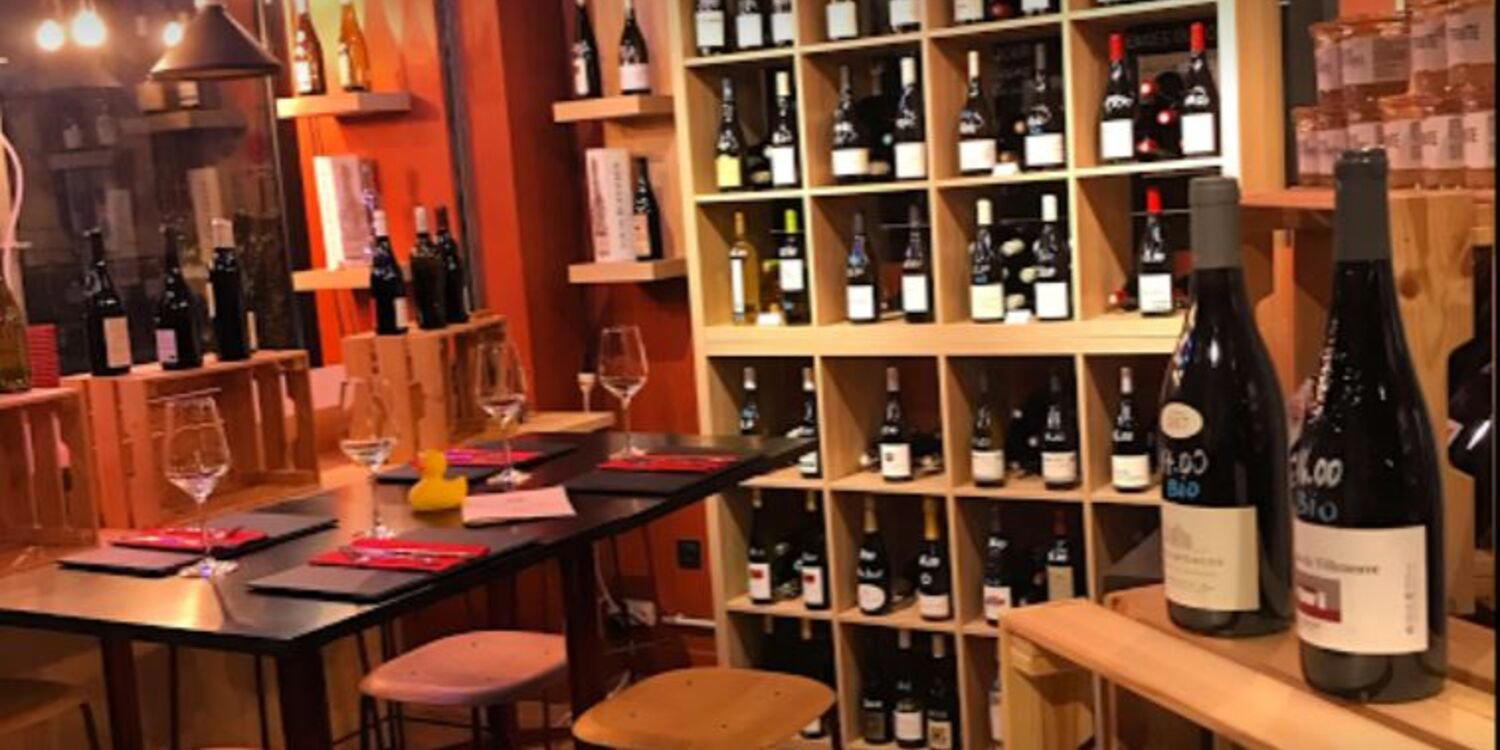
Intimiste interior with retro chic decor featuring Korean accessories evoking 1980s-1990s Seoul.