
A compact Sichuan and tantan-men address in Tenma, Fukuryu En belongs to Osaka’s everyday Chinese dining tier rather than the city’s formal tasting-menu circuit. Its Tabelog Chinese WEST 100 selection in 2026, 15-seat scale, and modest lunch and dinner budgets make it a sharp lens on how serious cooking often hides inside small neighbourhood rooms near Osaka Tenmangu.
Pearl is the En Primeur Club membership app — saves, bookings, and concierge access live there. Same editors, same standards.
- Address
- Japan, 〒530-0043 Osaka, Kita Ward, Tenma, 4 Chome−16−8 ハイツ天満宮
- Phone
- +81 6-6353-7224
- Website
- tabelog.com
 Saves & bookings on Pearl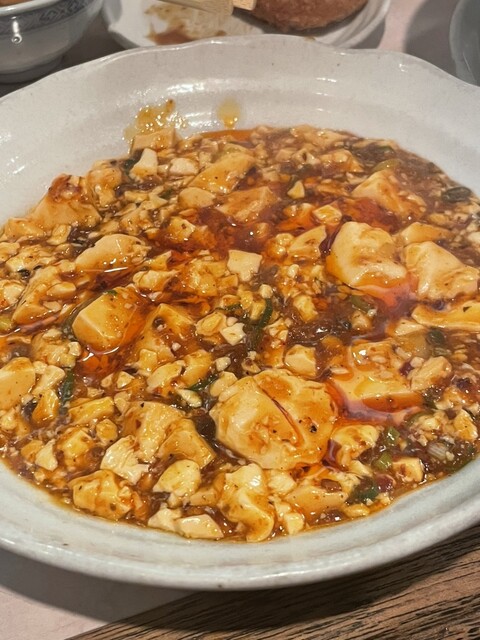
Tenma’s dining rhythm changes quickly around Osaka Tenmangu: office workers move through lunch sets, regulars settle into counter seats after work, and the area’s smaller rooms often carry more culinary weight than their street frontage suggests. In that context, Fukuryu En reads as part of Osaka’s compact Chinese dining tradition: close-quarters, neighbourhood-facing, and serious enough to draw regional attention without adopting the choreography of a luxury restaurant.
Osaka has a wide spread of Chinese restaurants, from banquet rooms to noodle counters, but the city’s more interesting middle tier often lives in places where Sichuan, tantan-men, and local drinking culture overlap. This is not the expensive end occupied by destination-only dining; compared with Osaka peers such as Tori Yasu at JPY 8,000 to JPY 9,999 or Mato MATO at JPY 20,000 to JPY 29,999, this address sits in a lower-spend bracket while carrying a 2026 Tabelog Chinese WEST 100 selection and a 3.68 Tabelog score. That combination matters: it signals a restaurant judged within a specialist category rather than a place surviving on convenience alone.
Tenma's small-room Chinese cooking, seen through Sichuan and tantan-men
The defining idea here is not a single named dish but a category position: Sichuan, tantan-men, and Chinese cooking in a small Osaka room. Tantan-men has become one of Japan’s most adaptable Chinese-rooted formats, moving between ramen-adjacent lunch utility and deeper Sichuan seasoning depending on the kitchen. In Osaka, where value and frequency matter, that flexibility gives neighbourhood Chinese restaurants a different appeal from ceremonious counter dining. The point is repetition rather than spectacle: a compact menu genre that works at lunch, dinner, and take-out, and does not need a chef’s biography to justify itself.
The listed food notes point toward fish and health-conscious options, which adds another layer to the usual expectations around Sichuan cooking. That does not license assumptions about specific dishes, but it does place the restaurant away from the narrow stereotype of heat for its own sake. Better Sichuan cooking in Japan often depends on balance: chilli, aroma, texture, and rice-or-noodle compatibility. A small restaurant in Tenma has to make that balance work for locals, not only for visitors chasing intensity.
Recognition gives the room its broader relevance. Tabelog’s Chinese WEST 100 list is a regional signal, and the repeated selections noted for 2021, 2023, 2024, and 2026 suggest continuity inside a crowded category. Awards alone never explain a meal, but they help separate this kind of restaurant from the many competent neighbourhood Chinese rooms that rarely travel beyond local word of mouth.
A 15-seat format changes the meal's tempo
Scale is part of the editorial story. Fifteen seats, divided between counter and table seating, puts the restaurant closer to Osaka’s small independent dining culture than to the banquet model many travellers associate with Chinese restaurants. Counter seating changes how a Sichuan or noodle-focused meal feels: it shortens the distance between kitchen pace and guest pace, and it makes the room better suited to small groups than elaborate occasions.
The Tenma address also matters. Kita Ward contains transport hubs, business districts, shrines, shotengai energy, and late-evening drinking routes; Tenma in particular rewards diners who treat Osaka as a city of neighbourhood circuits rather than a checklist of central dining rooms. A meal here fits that pattern. It belongs beside casual specialist stops, bakery detours, and bars rather than a single grand evening built around theatre. Readers mapping a day across Osaka can place it near other grounded city addresses such as .cafe, 52CHO-ME BAKERY, 551 Horai (551蓬莱), 99 Pizza Napoletana Gourmet, and a canto (Italian), then widen the search through Our full Osaka restaurants guide.
The practical read is simple without becoming secondary. The restaurant operates across lunch and dinner on most weekdays and Saturdays, closes on Sundays and public holidays, accepts reservations, and has no private rooms. Payment is cash-oriented: credit cards, electronic money, and QR payments are not accepted. For a 15-seat restaurant with regional recognition, that combination rewards planning, especially for travellers who usually rely on card payment in Japan’s larger hotels and department-store restaurants.
Where it fits in an Osaka itinerary
Fukuryu En is strongest as a neighbourhood-focused meal for travellers who want Osaka beyond the obvious corridors. It suits diners interested in Chinese-Japanese crosscurrents, tantan-men culture, and the way serious small restaurants function in residential-commercial districts. It is not the right target for a formal tasting-menu evening or a room built around luxury service codes; the evidence points instead to compact scale, specialist category recognition, and an approachable budget.
That makes it useful in a broader Osaka plan. Pair the restaurant with a Tenma walk, a shrine-area afternoon, or a low-key dinner before a bar route rather than treating it as a self-contained destination. For the rest of the city, the wider planning frame belongs in Our full Osaka hotels guide, Our full Osaka bars guide, Our full Osaka wineries guide, and Our full Osaka experiences guide. Travellers building Japan-wide dining context can also compare how compact specialist formats show up elsewhere, from -Grilled beef Sukiyaki- KAMAKURA TANUKIAN 鎌倉 たぬき庵 in Kamakura and. 鮪と炭火焼き うお炭 秋葉原店 in Tokyo to.know in Kumamoto, (Shoku) Vietnam in Kawasaki, [Curry Senmon Ten] Maruyama Kyoju. in Sapporo, [ki:] in Kyoto, Jōdo Saké Bar in Los Angeles, and Onigiri Time in Pasadena.
Standing Among Peers
Comparable venues to anchor price and recognition.
| Venue | Cuisine | Price | Notes |
|---|---|---|---|
| Fukuryu EnThis venue — the venue you are viewing | Sichuan & Tantanmen Chinese | $$ | Not listed |
| Yokobori | Creative Chinese Stand-up Bar | $$ | Chūō |
| Kuro Hitsuji Youniku Kushiten BLACK SHEEP | Charcoal-grilled lamb Chinese with natural wine | $$ | Kita |
| Shokudo Kuro Usagi | Modern Chinese Izakaya | $$ | Kita |
| Bullet | Reservation-only seasonal Chinese course at an 8-seat counter | $$$ | Nishi |
| Gyoza no Danchan Mikuni Tei Yahatasuji ten | Gyoza & Chinese small plates | $ | Chūō |
Recognition history
Dated appearances from independent guides and award organizations, with the underlying list record or original source where available.
Tabelog 100 #27 · No. 27
Tabelog · Tabelog 100 - Chinese cuisine - WEST - 2026
Continue exploring
More in Osaka
Restaurants in Osaka
Browse all →




Bars in Osaka
Browse all →




Hotels in Osaka
Browse all →




Wineries in Osaka
Browse all →
At a Glance
- Cozy
- Intimate
- Casual Hangout
- Group Dining
- After Work
- Solo
- Standalone
Current opening hours
- Monday
- 11:30 AM–2 PM, 6–10 PM
- Tuesday
- 11:30 AM–2 PM, 6–10 PM
- Wednesday
- 11:30 AM–2 PM, 6–10 PM
- Thursday
- 11:30 AM–2 PM, 6–10 PM
- Friday
- 11:30 AM–2 PM, 6–10 PM
- Saturday
- 11:30 AM–2 PM, 6–10 PM
- Sunday
- Closed
Hours can change for holidays and private events. Last verified .
A small, non-smoking house-style hideout with counter and a few table seats, casual and cozy rather than polished, often busy with friends sharing boldly spiced Sichuan dishes.