Franciscan Crab Restaurant
Perched at Pier 43½ on the Embarcadero, Franciscan Crab Restaurant is one of San Francisco's most enduring waterfront dining addresses, where Dungeness crab and bay views have defined the ritual of a seafood meal for generations. The setting, salt air, ferry traffic, and the silhouette of Alcatraz, frames a dining tradition that connects visitors and locals alike to the city's deep commercial fishing heritage.
Pearl is the En Primeur Club membership app — saves, bookings, and concierge access live there. Same editors, same standards.
- Address
- Pier 43 1/2, 43 1/2 The Embarcadero, San Francisco, CA 94133
- Phone
- +14153627733
- Website
- franciscanrestaurant.com
- Directions
- Get directions
 Saves & bookings on Pearl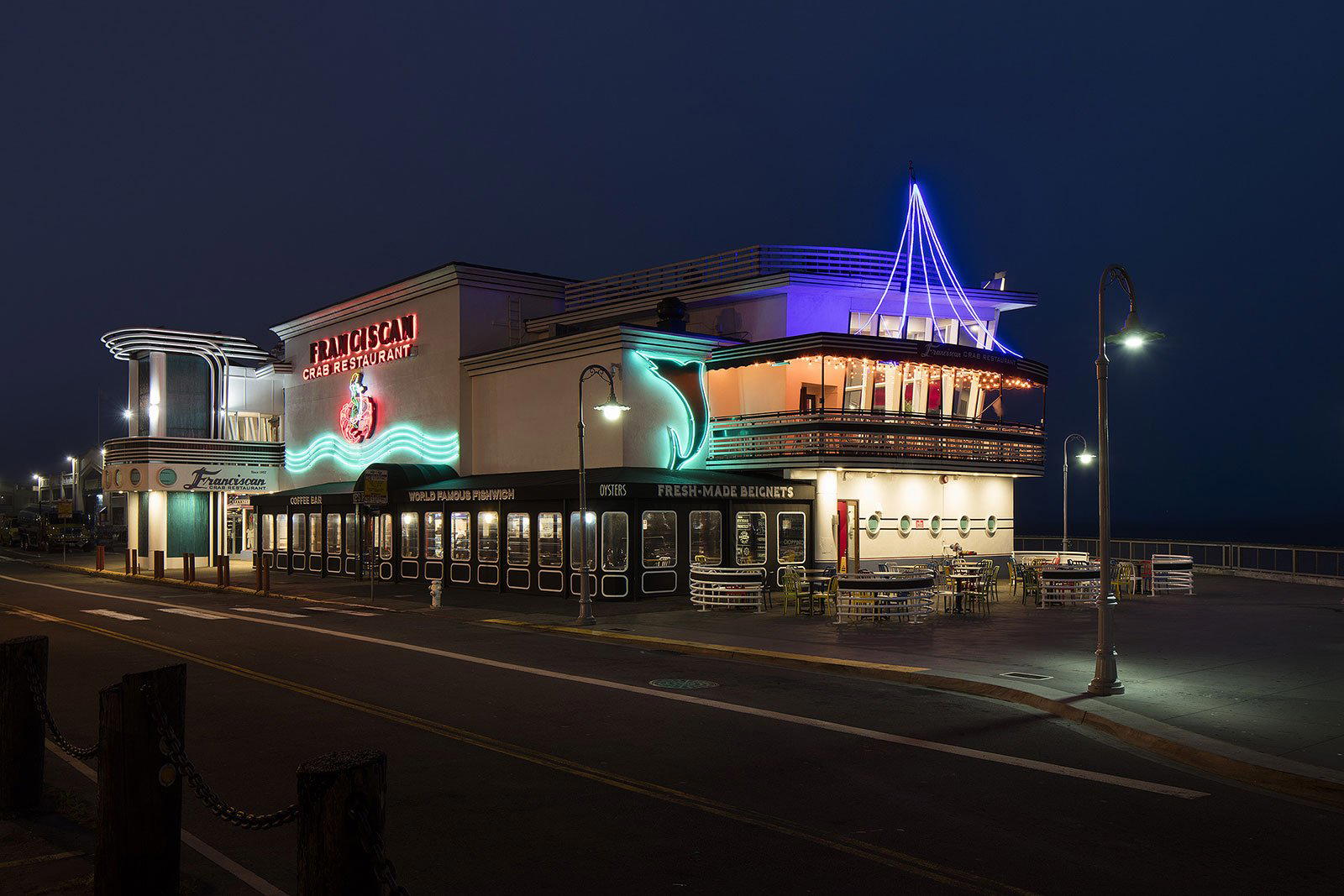
The Embarcadero Table: Eating Seafood the San Francisco Way
There is a particular ritual to eating seafood on San Francisco's waterfront that has nothing to do with white tablecloths or tasting menus. It begins before you sit down, the walk along the Embarcadero, the smell of brine and diesel from the working piers, the view across the bay to Alcatraz and Marin. By the time you reach Pier 43½, the meal has already started. Franciscan Crab Restaurant occupies that threshold between city and bay, a position that shapes how diners arrive, what they order, and how long they tend to stay.
San Francisco's seafood dining tradition is inseparable from Dungeness crab, a species so central to Northern California's culinary identity that the annual opening of crab season, typically in November, is treated with something close to civic ceremony. The commercial fishing fleet that once dominated the northern waterfront has contracted significantly over the decades, but the cultural weight of that industry persists in the restaurants that line the Embarcadero and Fisherman's Wharf. Franciscan Crab sits inside that tradition rather than merely trading on it. The pier address is not set dressing; it is a geographic fact that connects the restaurant directly to the working-harbour history of this stretch of shoreline.
The Ritual of the Crab Meal
The conventions of a proper Dungeness crab meal are worth understanding before you sit down. The crab arrives whole or cracked, depending on the preparation, and the process of eating it, working through the shell, extracting the leg meat, the back-and-forth with butter or aioli, sets a pace that is deliberately unhurried. This is not a meal you eat quickly, and waterfront restaurants on the Embarcadero have long accommodated that rhythm with generous table spacing and sightlines designed to keep the bay in view throughout.
The format sits at some distance from the high-intensity omakase counters or progressive tasting menus that define San Francisco's ambitious fine-dining tier. Venues like Lazy Bear, Atelier Crenn, Benu, Quince, and Saison operate in a different register entirely, multi-course, reservation-heavy, price points that push into the hundreds per head. The waterfront seafood house occupies a separate category: accessible, informal, and anchored to a specific ingredient and a specific place rather than to a chef's evolving concept.
That distinction matters when you are deciding what kind of meal you want. If the goal is to eat well in a setting that reads as authentically San Franciscan, salt air, a working bay, a whole Dungeness crab in front of you, then the waterfront register is the correct one. If the goal is to track the city's contemporary fine-dining conversation, the comparison set shifts entirely, toward the restaurants referenced above and covered in depth in our full San Francisco restaurants guide.
Waterfront Dining in a National Context
The seafood-forward waterfront restaurant is a distinct American dining institution, one that appears in port cities from New Orleans to New York with its own set of conventions. Emeril's in New Orleans and Le Bernardin in New York City both engage with seafood at high levels of technical ambition, but neither occupies the same cultural register as the pier-based, catch-driven seafood house. The latter is less about technique and more about provenance and place, the idea that where you sit and what swam nearby are the primary credentials.
California's coastline supports several restaurants that have turned that provenance argument into something more formally rigorous. Providence in Los Angeles works with Southern California's seafood supply with considerable precision. Single Thread Farm in Healdsburg integrates coastal ingredients into a hyper-seasonal format that draws comparisons with farm-to-table landmarks like Blue Hill at Stone Barns in Tarrytown. At the far end of the technical spectrum, The French Laundry in Napa has long set the benchmark for seafood preparation in a Californian fine-dining context.
Franciscan Crab competes on different terms: consistency, setting, and the straightforwardness of a meal built around a single local ingredient.
The Bay as Context
Eating at Pier 43½ means eating with a view that most restaurant designers would struggle to replicate. The bay is not a backdrop here in the way that a cityscape functions as ambient scenery in a rooftop bar. The water is active, ferries crossing to Larkspur and Sausalito, container traffic moving through the channel, gulls working the air above the fishing boats. The physical environment contributes to the meal in a way that has no equivalent in the city's interior dining rooms, however well those rooms are designed.
For visitors arriving from other American cities with serious dining cultures, the Embarcadero waterfront offers a contrast that sharper-edged fine-dining addresses cannot provide. Smyth in Chicago, Addison in San Diego, Atomix in New York City, Frasca Food and Wine in Boulder, and The Inn at Little Washington all deliver high-craft meals in controlled interior environments. The Embarcadero meal offers something different: a looseness of format, a dependence on the outdoors, and an ingredient, Dungeness crab, that is genuinely difficult to source at comparable quality in most of those cities.
For those tracking broader international currents in seafood-focused cooking, the Alpine precision of Atelier Moessmer Norbert Niederkofler in Brunico represents one extreme of ingredient-led philosophy. The San Francisco pier tradition represents a different but equally coherent position: that some ingredients, in some places, require little intervention to be worth eating.
Planning Your Visit
Pier 43½ sits on the northern waterfront between the Ferry Building and Fisherman's Wharf, accessible on foot from the Embarcadero BART and Muni station in roughly fifteen to twenty minutes, or directly by ferry from Marin and East Bay terminals. The Embarcadero is most atmospheric in the morning and at dusk. Dungeness crab season runs from approximately mid-November through June, though the precise opening date varies annually based on California Department of Fish and Wildlife assessments.
Pier 43½, The Embarcadero, San Francisco, CA 94133.
Budget Reality Check
Comparable venues nearby, for context on price, style, and recognition.
| Venue | Cuisine | Price | Notes |
|---|---|---|---|
| Franciscan Crab RestaurantThis venue — the venue you are viewing | Not listed | $$$ | Not listed |
| Bar Crudo | Hayes Valley, Modern Seafood Raw Bar | $$$ | Not listed |
| Pacific Catch | Marina, Pacific Rim Seafood Fusion | $$ | Not listed |
| Flore on Market | Not listed | $$ | Castro/Upper Market, Sustainable Seafood & American |
| Sirene | Not listed | $$$ | Grand Lake, Modern Seafood and Fried Chicken |
| Anzu | Not listed | $$$ | Tenderloin, Contemporary Japanese-Californian Fusion |
Continue exploring
More in San Francisco
Restaurants in San Francisco
Browse all →
Bars in San Francisco
Browse all →
Hotels in San Francisco
Browse all →
At a Glance
- Well Known
- Scenic
- Classic
- Lively
- Group Dining
- Casual Hangout
- Brunch
- Date Night
- Waterfront
- Panoramic View
- Historic Building
- Standalone
- Beer Program
- Sustainable Seafood
- Waterfront
Current opening hours
- Monday
- 12–8 PM
- Tuesday
- 12–8 PM
- Wednesday
- 12–8 PM
- Thursday
- 12–8 PM
- Friday
- 12–8 PM
- Saturday
- 12–8 PM
- Sunday
- 12–8 PM
Hours can change for holidays and private events. Last verified .
Bright and airy with white tiled walls, beautiful marble bar, and expansive bay views; unpretentious 1950s vibe with a lively tourist-friendly atmosphere.