Fortune Garden

Among Hangzhou's Cantonese dining options, Fortune Garden occupies a distinctive position: two consecutive Michelin Plate recognitions (2024 and 2025) at a mid-premium price point (¥¥¥) signal consistent kitchen standards without the full-star premium of the city's most expensive tables. It attracts diners seeking Cantonese technique in a city more associated with Zhejiang tradition.
Pearl is the En Primeur Club membership app — saves, bookings, and concierge access live there. Same editors, same standards.
- Address
- 4245 Belmont Ave #1003, Youngstown, OH 44505
- Phone
- (330) 759-9166
- Website
- smorefood.com
- Directions
- Get directions
 Saves & bookings on Pearl
Cantonese in a Zhejiang City
Hangzhou's dining identity is built around Zhejiang cuisine: the braised pork of dongpo rou, the fresh-water fish from the lake, the tea-scented dishes that carry West Lake's proximity into the kitchen. Cantonese restaurants, then, operate as a counterpoint in this city rather than its default expression. They serve a different logic: the clean, restrained approach to seafood and poultry that defines Guangdong cooking, where the primary question is whether the ingredient was good enough to arrive at the table tasting primarily of itself. Fortune Garden positions itself inside that counterpoint, offering a Cantonese menu at a ¥¥¥ price point in a city where particularly decorated Chinese-cuisine tables, Ru Yuan (Zhejiang), a two-Michelin-star house, sits at ¥¥¥¥, tend to anchor around local Zhejiang traditions rather than southern Chinese technique.
This positioning matters because it shapes who Fortune Garden is actually competing with. The comparison is horizontal across Chinese fine dining at the ¥¥¥ tier, and vertically against Cantonese houses in other cities: Dai Yuet Heen in Nanjing, or further afield, the benchmark Cantonese counters in Hong Kong and Macau such as Forum, Cantonese in Hong Kong and Jade Dragon, Cantonese in Macau. What separates those starred houses from a Michelin Plate recognition is a question of consistency, refinement, and whether the kitchen can sustain its technique across a full menu at volume, not simply whether any individual dish is good.
What the Michelin Plate Signals
Two consecutive Michelin Plate awards, 2024 and 2025, tell a specific story. The Plate designation in the Michelin system means the inspectors found cooking of sufficient quality to merit acknowledgment, even if not at the one-star threshold. In a city with Zhejiang specialists already holding stars (Jin Sha sits at ¥¥¥ with one star; Ru Yuan holds two at ¥¥¥¥), a Cantonese kitchen earning repeated Plate recognition signals that the cooking is being taken seriously by inspectors, not merely noted and passed over. Consecutive recognition, rather than a single-year acknowledgment, suggests the kitchen is stable rather than intermittently capable.
For context on how Cantonese technique reads in competitive fine-dining markets across China, the bar is demanding. Houses such as Imperial Treasure Fine Chinese Cuisine in Guangzhou and Chef Tam's Seasons in Macau operate at the sharper end of that tradition. Closer geographically, Xin Rong Ji (Xinyuan South Road) in Beijing and Xin Rong Ji in Chengdu demonstrate how a flagship Taizhou-adjacent kitchen extends across cities at a similar or adjacent price tier. Fortune Garden's recognition, read against that map, places it in the second tier of China's broader Cantonese fine dining scene: not at the pinnacle, but verified and consistent.
Reading the Menu's Architecture
Cantonese menus carry a structural logic that differs from most other Chinese regional cuisines. At this price and formality level, a well-composed Cantonese menu typically sequences through cold starters that demonstrate knife work and seasoning precision, moves into roasted or braised proteins where the kitchen's control of heat and timing shows most clearly, incorporates a seafood section where ingredient sourcing becomes the primary variable, and closes with rice or noodle dishes that, in a technically confident kitchen, are treated as seriously as the courses preceding them, not as afterthoughts. The dim sum tradition, with its own distinct skill set, may also appear in some form depending on the service format.
Within that architecture, the dishes that tend to separate a reliable Cantonese restaurant from a distinguished one are the simpler preparations: steamed fish, roasted suckling pig or poultry, clear-broth soups. These dishes offer nowhere to hide. A braised abalone or a wok-tossed lobster involves complexity that can mask small failures; a clean-steamed garoupa with ginger and spring onion does not. Diners looking to test a Cantonese kitchen in a city less saturated with Cantonese competition than Hong Kong or Guangzhou should lean toward those simpler, more revealing preparations when ordering.
At the ¥¥¥ mid-premium tier, the expectation is ingredients at or above average market quality, service attentive enough to pace a multi-course meal properly, and a wine or tea program that does not undercut the food. Hangzhou's broader restaurant scene at this price tier, including Li' An and Ambré Ciel (Innovative), operates at a reasonably high standard, and Fortune Garden competes within that context. Innovative formats and experimental menus are handled by other addresses in the city; the restaurant's role in the Hangzhou dining map is to represent Cantonese tradition with enough competence to earn repeated Michelin attention.
The Wider Hangzhou Context
Hangzhou has developed a dining scene with real range. The city's Zhejiang backbone is covered thoroughly by specialists at multiple price points. For contemporary cooking that pushes further from regional tradition, Hangzhou now hosts French-influenced and innovative tables, L'éclat 19 holds a Michelin star in the ¥¥¥¥ bracket for French contemporary work. That spread means a diner spending several days in Hangzhou can move through Zhejiang classics, refined Cantonese, French technique, and contemporary hybrid cooking without repetition. The restaurant fills the Cantonese slot in that itinerary at a price point that does not require the full commitment of a starred evening.
For reference points on how the Cantonese fine dining tradition plays out in other Chinese cities, 102 House in Shanghai provides a useful Shanghai-side comparison.
Planning the Visit
The restaurant operates at ¥¥¥, placing it in Hangzhou's mid-premium tier. At that price point, the meal is a commitment but not an occasion that requires months of advance planning at the level of the city's most-starred tables. The restaurant carries, a volume sufficient to treat the score as indicative rather than coincidental.
What Fortune Garden is Known For
The restaurant does not have verified signature dishes in the public record. As a Cantonese kitchen with two consecutive Michelin Plate recognitions, the restaurant's standing rests on its command of the core Cantonese repertoire: precisely handled seafood, roasted and braised proteins, and the clean technique that defines southern Chinese fine dining at this level. Diners researching what to order should cross-reference recent visitor accounts, as specific preparation strengths are best confirmed through current firsthand reports rather than sourced from static editorial records. The awards anchor it to consistent quality; the cuisine type anchors it to a tradition with well-established benchmarks for anyone familiar with Cantonese cooking in Hong Kong, Macau, or Guangzhou.
At a Glance
Comparable venues nearby, for context on price, style, and recognition.
| Venue | Cuisine | Price | Notes |
|---|---|---|---|
| Fortune Garden | Binjiang, Modern Cantonese | $$$ | Not listed |
| GuiYu Restaurant | Not listed | $$$ | Xihu, Refined Zhejiang (Hangzhou) cuisine in a garden villa setting |
| Guiyu Family Noodles | Xihu District, Zhejiang Cuisine | $$$ | Not listed |
| Four Seasons Hotel Hangzhou at West Lake Jin Sha | Not listed | $$$$ | Xihu, Seasonal Zhejiang Fine Dining in a Lakeside Four Seasons |
| 如院 | Xihu, Modern Zhejiang | $$$$ | Not listed |
| Four Seasons Jin Sha Restaurant (金沙厅) | Not listed | $$$$ | Xihu (West Lake), Zhejiang Neo-Classics with Shanghainese & Cantonese Influences |
Recognition history
Dated appearances from independent guides and award organizations, with the underlying list record or original source where available.
Michelin Plate
Michelin
Michelin Plate
Michelin
Continue exploring
More in Youngstown
Restaurants in Youngstown
Browse all →

At a Glance
- Modern
- Cozy
- Elegant
- Intimate
- Sophisticated
- Business Dinner
- Special Occasion
- Private Dining
- Sake Program
Current opening hours
- Monday
- 11 AM–9 PM
- Tuesday
- 11 AM–9 PM
- Wednesday
- 11 AM–9 PM
- Thursday
- 11 AM–9 PM
- Friday
- 11 AM–9 PM
- Saturday
- 11:30 AM–9 PM
- Sunday
- Closed
Hours can change for holidays and private events. Last verified .
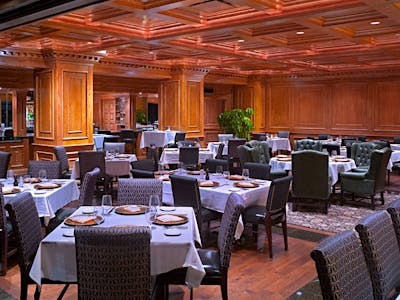
Softly luminous with silk-paneled interiors, jade tones, burnished wood, and lantern-lit warm glow creating an elegantly hushed atmosphere.