Feskekörka
Gothenburg's most recognisable fish market occupies a 19th-century church-shaped hall on Rosenlundskanalen, where wholesale stalls and a handful of counters operate in the same building that has traded seafood for generations. The ritual here is unhurried: inspect the catch, place an order, eat at the counter. It is one of the clearest expressions of how the city relates to its coastline.
Pearl is the En Primeur Club membership app — saves, bookings, and concierge access live there. Same editors, same standards.
- Address
- Fisktorget 4, 411 20 Göteborg, Sweden
- Phone
- +46 31 12 72 27
- Website
- feskekorka.se
- Directions
- Get directions
 Saves & bookings on Pearl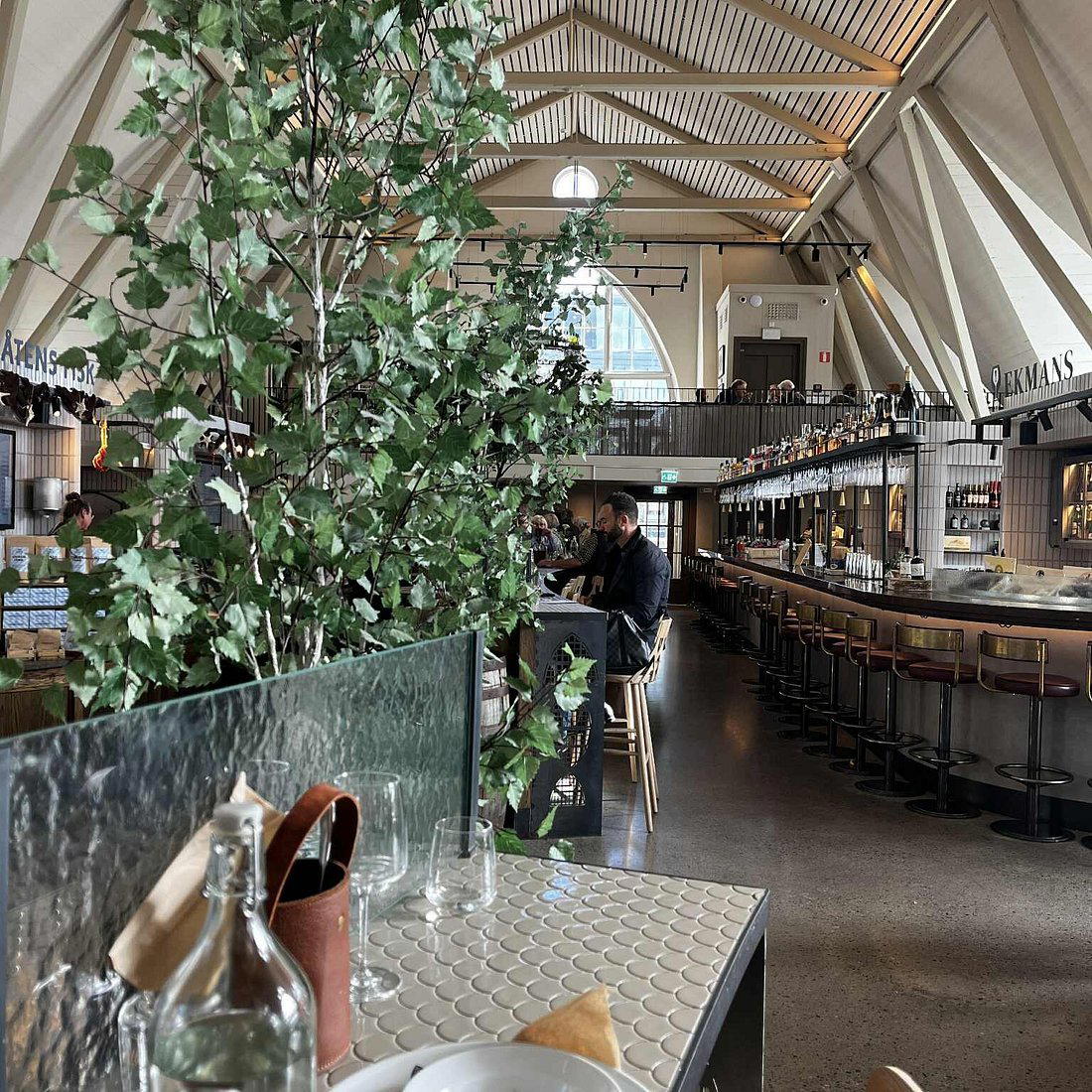
The Hall, the Habit, and the Fish
Gothenburg orients itself around water in ways that most port cities have long since abandoned. The canals that grid the city centre are not ornamental; they are working infrastructure, and the habits built around them persist. Feskekörka, the fish market hall at Fisktorget 4, is the most legible of those habits. Designed in 1874 by Victor von Gegerfelt to resemble a Gothic church, the building has never stopped functioning as a market. That continuity is the point. While other European cities converted their covered markets into food halls oriented around Instagram and evening crowds, this one continues to open in the morning and close when the fish is sold.
The architecture does the atmospheric work before you cross the threshold. The pitched roof and lancet windows read as ecclesiastical from the canal side, which is where most visitors arrive on foot from the city centre. Inside, the scale is smaller than the exterior suggests: a single hall, daylit from high windows, with the smell of cold saltwater and ice arriving immediately. There is no ambient music, no mood lighting calibrated for dinner service. The room is organised around the transaction between seller and buyer, and everything about the physical environment reinforces that.
How the Ritual Works
The dining customs at a market hall like this sit outside the conventions of restaurant service, and that gap is worth understanding before you arrive. There is no front-of-house team, no table assignment, and no menu delivered with a preamble. The format is closer to the French poissonnier tradition, where the counter serves as both point of sale and point of consumption: you assess what is available, you order, you eat. The pacing is self-directed in a way that a tasting-menu dinner at somewhere like Koka or Project is not.
This format demands a different kind of attention from the diner. The quality question is answered by looking at the display case rather than reading a description. Shrimp from the Bohuslän coast, oysters, cold-smoked salmon, and whatever the trawlers have brought in that week are assessed directly. For visitors arriving from a dining culture built around fixed menus and chef mediation, the shift in responsibility takes a beat to register. The food does not come to you curated; you select it. That distinction shapes the entire experience of the meal.
Sweden's west coast produces some of Northern Europe's most respected shellfish. The cold, high-salinity waters of the Skagerrak create conditions that oyster and prawn fisheries in warmer climates cannot replicate. A market hall positioned to take advantage of that geography is not a novelty. It is a sensible piece of civic infrastructure, and Gothenburg has treated it as such for a century and a half.
Where Feskekörka Sits in the Gothenburg Dining Picture
The city's restaurant scene has developed a recognisable upper tier over the past decade. 28+ operates in the premium modern cuisine bracket; Hoze addresses the high-end sushi counter format; SK Mat & Människor sits within the New Nordic tradition. These venues share an orientation toward chef authorship, fixed formats, and advance booking. Feskekörka operates on an entirely different axis. It is not competing with that tier; it predates and exists independently of it.
The same relationship plays out across Scandinavian cities. In Sweden, the dining conversation often gravitates toward Stockholm addresses like Frantzén or destination venues in the south such as Vollmers in Malmö or VYN in Simrishamn. Those references make sense when the question is about tasting menus and wine pairings. When the question is about how a city actually eats, a fish market hall that has operated continuously since 1874 is a more direct answer.
Internationally, the format has parallels. Le Bernardin in New York represents the opposite end of the spectrum: seafood as fine-dining theatre, every variable controlled. Markets like Feskekörka sit at the other pole, where the ingredient leads and the preparation is minimal by design. Both approaches take the source material seriously; they simply disagree about how much mediation is appropriate.
Planning a Visit
Feskekörka operates as a daytime destination. The building functions as a market first, and the counters follow market hours rather than restaurant hours, which means arriving in the morning or early afternoon gives you access to the full selection. By mid-afternoon on busy days, the better shellfish moves quickly. The market is located at Fisktorget 4, within walking distance of the city centre, and is accessible without a car for visitors staying centrally.
There is no booking process in the conventional sense, and no dress expectation. The format is walk-in and counter-based. For visitors building a wider itinerary around Gothenburg, the market works well as an anchor for the middle of a day that might extend to dinner at one of the city's table-service restaurants. Those planning a broader sweep of the Swedish west coast may also find useful context in venues like Signum in Mölnlycke or, further along the coast, Bistro Jarlen in Halmstad. For a complete picture of where Feskekörka sits within the city's food options, the EP Club Gothenburg restaurants guide covers the full range.
Sweden's west coast dining circuit has expanded considerably, with addresses like ÄNG in Tvååker, Knystaforsen in Rydöbruk, and PM & Vänner in Växjö drawing visitors who combine destination dining with regional exploration. Within that circuit, a morning at Feskekörka functions as orientation rather than side trip: it is where the ingredient story of the coast begins, before chefs in formal kitchens take it further. For those whose interest extends into Skåne, Sydkustens at Pillehill in Skivarp and Claesgatan 8 in Malmö operate in a comparable regional-produce tradition further south.
How Feskekörka Gothenburg compares with similar nearby venues.
| Venue | Cuisine | Price |
|---|---|---|
| Tavolo | Italian-American | €€ |
| Poppy | Seasonal Cuisine | €€ |
| Koka | New Nordic, Modern Cuisine | €€€ |
Continue exploring
More in Gothenburg
Restaurants in Gothenburg
Browse all →
Bars in Gothenburg
Browse all →
At a Glance
- Well Known
- Lively
- Historic
- Casual Hangout
- Historic Building
- Open Kitchen
- Local Sourcing
- Sustainable Seafood
Current opening hours
- Monday
- 11:30 AM–6 PM
- Tuesday
- 11:30 AM–8 PM
- Wednesday
- 10 AM–9 PM
- Thursday
- 10 AM–9 PM
- Friday
- 10 AM–10 PM
- Saturday
- 10 AM–10 PM
- Sunday
- 12–8 PM
Hours can change for holidays and private events. Last verified .
Bright and carefully restored historic interior resembling a fish church, with a lively market atmosphere and lively energy from fish stalls and dining areas.
Know Before You Go
- Getting there
- Fisktorget 4, 411 20 Göteborg, Sweden