Fatty Loh Chicken Rice

Michelin Plate
Our verdict
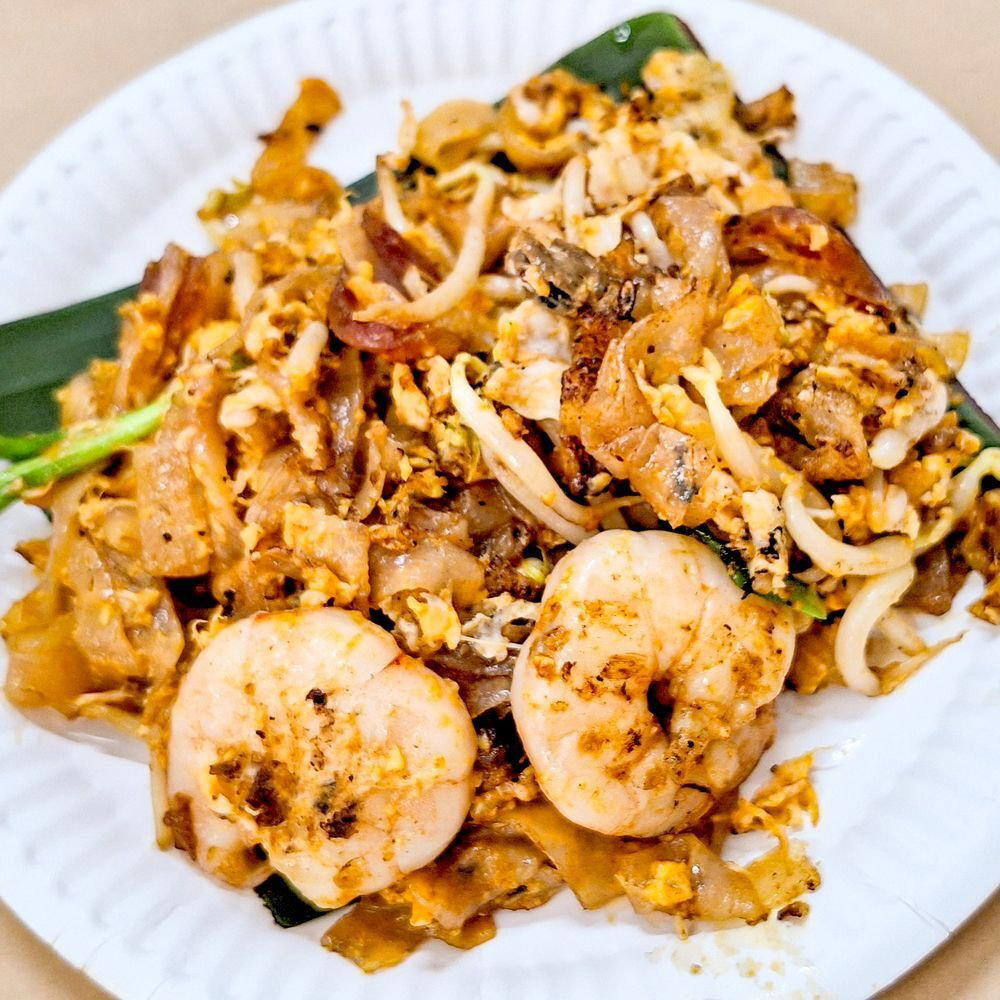
Into its third generation, Fatty Loh Chicken Rice at Tanjung Tokong has built a quiet following around one of George Town's most consistent plates of Hainanese chicken rice. The price point sits at the lower end of the street food scale, making it an accessible benchmark for the dish in Penang. Portions come in halves or standard servings, with the chicken ordered alongside a short menu of Southeast Asian accompaniments.

Pearl is the En Primeur Club membership app, where members save venues, book tables and use the concierge.
The menu
What to order
- Hainanese chicken rice
- Char siew
Tanjung Tokong and the Quiet Persistence of the Chicken Rice Shop
Jalan Fettes in Tanjung Tokong runs north along Penang's coastline, away from the tourist density of the George Town UNESCO core and into a stretch of older shophouses and residential roads that most visitors never reach. The shops here open early, serve a neighbourhood clientele, and operate without menus designed for foreign eyes. It is in this kind of environment that certain dishes survive across generations intact, not because of awards or media attention, but because the regulars would notice immediately if something changed. Fatty Loh Chicken Rice sits on that street, now in its third generation of operation, and belongs entirely to that tradition.
Hainanese chicken rice is one of the more deceptively demanding dishes in the Nanyang Chinese canon. The variables are significant: poaching temperature, the age and breed of the bird, the ratio of fat to rice, the quality of the broth used to cook both, and the balance of the accompanying sauces. When any of these slip, the result is technically a plate of chicken rice but not a convincing one. The dish's reputation in Penang, Singapore, and across the region rests on a small number of shops that have held those variables steady over decades. George Town has its own cluster of practitioners, and Fatty Loh is among the older names in that group.
What You Get for What You Pay
The price tier here is the single dollar sign, the bottom of the street food scale in Malaysia, where a full meal rarely crosses a few ringgit. That positioning is not incidental. It reflects the economics of a neighbourhood coffee shop serving a local clientele rather than a tourist-facing operation that has adjusted pricing upward with its profile. For the visiting diner, it means one of the more direct value exchanges available in George Town: a dish with genuine generational depth, served at a price point that requires no calculation or compromise.
Portions at Fatty Loh are available in halves or standard servings, which gives the solo diner or a small group the flexibility to order across the table without committing to a full bird. The menu extends beyond chicken rice to include other Southeast Asian favourites, which is standard practice for shops of this type, the core dish anchors the identity, but the supporting items keep regulars coming back across different meals and moods. That format is common to George Town's older coffee shop tradition, visible at places like Ah Boy Koay Teow Th'ng and Air Itam Duck Rice, where a single signature item drives the reputation but broader utility keeps the room full.
The chicken at Fatty Loh has been described in consistent terms across the shop's public record: springy skin and velvety flesh. Those two qualities are, in fact, the technical markers that separate well-executed Hainanese chicken rice from an ordinary poached bird. Springy skin indicates a controlled poach followed by an ice bath, which tightens the exterior without toughening it. Velvety flesh points to precise temperature management through the bird's core, avoiding the dry overcooking that ruins most mediocre versions. At a single-dollar price point, achieving both consistently across three generations is the clearest evidence of what this shop represents in George Town's street food structure.
George Town operates as one of Southeast Asia's most concentrated street food cities, a status reinforced by the density of long-running hawker operations across its neighbourhoods. The UNESCO heritage designation brought international attention to the inner city, but many of the most durable food shops sit in outer residential areas like Tanjung Tokong, Air Itam, and Farlim, less photographed, more embedded in daily life.
That score should be read in context. Shops like Air Itam Sister Curry Mee and Ali Nasi Lemak Daun Pisang The relevant question for a dish like Hainanese chicken rice is not the aggregate score but the longevity signal: three generations of continuous operation in a single-dish format is a more reliable quality indicator than any star rating.
For comparison outside Penang, Singapore's hawker scene has produced its own version of this durability test, with shops like Hill Street Tai Hwa Pork Noodle receiving formal Michelin recognition for a single-dish format held across generations. George Town's equivalent shops, including Fatty Loh, operate largely outside that awards infrastructure but within the same tradition of generational single-dish specialisation. Across the region, from A Pong Mae Sunee in Phuket to Bee See Heong in Seberang Perai, the same pattern holds: small, family-run operations focused on one or two items, surviving on neighbourhood loyalty and technical consistency rather than on external validation.
Placing Fatty Loh in the George Town Food Argument
George Town's food culture runs from the hawker extreme, single-dish shops with decades behind them, all the way to contemporary Peranakan operations and the kind of European contemporary cooking found at a different price tier entirely. 888 Hokkien Mee on Lebuh Presgrave represents the inner-city version of this tradition. Fatty Loh sits in the outer-neighbourhood version: less visited by tourists, more consistent in its customer base, and operating at a price point that reflects zero expectation of destination dining traffic.
For a visitor constructing a serious itinerary of George Town's food culture, the outer-neighbourhood shops are the harder argument to make logistically but the more revealing one editorially. A trip that only covers the George Town heritage core misses the residential food infrastructure that actually sustains the city's reputation. Tanjung Tokong, where Fatty Loh operates, is accessible by car or rideshare from the centre and pairs naturally with a morning or early afternoon window before the lunch crowd thins out.
Planning a Visit
Fatty Loh Chicken Rice is at 21 Jalan Fettes, Tanjung Tokong, in the northern residential section of Penang island. No booking is required or available for a shop of this type. The price point is at the lower end of George Town's street food range, meaning a full meal for two should cost well under 30 ringgit in most scenarios. No website or phone contact is listed publicly.
For a fuller picture of what George Town offers across price tiers and formats, see our full George Town restaurants guide, along with our George Town hotels guide, bars guide, experiences guide, and wineries guide. For a broader view of Malaysian fine dining at the opposite end of the price spectrum, Dewakan in Kuala Lumpur and The Planters at The Danna in Langkawi offer useful reference points. Singapore's hawker equivalents, including 545 Whampoa Prawn Noodles, 91 Fried Kway Teow Mee, and A Noodle Story, sit in the same generational single-dish tradition and make for instructive comparisons across the Strait.
Frequently asked questions
Where exactly is Fatty Loh Chicken Rice?
Fatty Loh Chicken Rice is located at 21, Jalan Fettes, Tanjung Tokong, 11200 George Town, Pulau Pinang, Malaysia, George Town.
Has Fatty Loh Chicken Rice won any awards?
Fatty Loh Chicken Rice has received recognition including: Into the third generation, this shop famous for Hainanese chicken rice also serves other Southeast Asian favourites. Chicken that boasts springy skin and velvety flesh can be ordered in halves or standard portions.; Into the third generatio….
What's the signature dish at Fatty Loh Chicken Rice?
Hainanese chicken rice is the core of what this three-generation shop does. The chicken is available in halves or standard portions, and the Michelin recognition singles out the skin and flesh texture as the defining quality marker. Rice, chilli sauce, and soup are the expected accompaniments at a price point sitting at the bottom of Malaysia's street food scale.
Peers Worth Knowing
| Venue | Cuisine | Price | Awards | Notes |
|---|---|---|---|---|
| Fatty Loh Chicken RiceThis venue (the venue you are viewing) | Hainanese Chicken Rice | $1–10 | Michelin Plate | Not listed |
| Au Jardin | Modern European with Local Accents | $200–300 | 1 Michelin Star · World's 50 Best #39 | European Contemporary |
| Auntie Gaik Lean's Old School Eatery | Peranakan (Nyonya) | $10–20 | 1 Michelin Star | Peranakan |
| Ah Boy Koay Teow Th'ng | Teochew Koay Teow Th'ng | $1–10 | Michelin Bib Gourmand | Street Food |
| Aria | Modern American | Not listed | Not listed | Not listed |
| Communal Table by Gēn | Modern Malaysian Fusion | $30–50 | Michelin Bib Gourmand · Star Wine List | Malaysian |
Recognition history
Dated appearances from independent guides and award organizations, with the underlying list record or original source where available.
Michelin Plate
Michelin
Full recognition history (3 entries)
Michelin Plate
Michelin
Michelin Plate
Michelin